The one-bedroom apartment represents a unique challenge and a profound opportunity in the world of renovation. It is a compact canvas where every decision is magnified, every square foot must earn its keep, and the line between clutter and clarity is razor-thin. A successful renovation here is not about adding more; it is about refining what exists to create a sense of expanded space, seamless function, and personalized style. This is a strategic exercise in spatial intelligence, requiring a shift from conventional thinking to a philosophy of maximum efficiency and intentional design. This guide will navigate the intricate process of transforming a standard one-bedroom unit into a custom-fit home that feels both larger and more luxurious, all while making a sound financial investment.
The constraints of a one-bedroom layout—limited square footage, a single bathroom, and often a lack of storage—are also its catalysts for innovation. The goal is to move beyond mere cosmetic updates and orchestrate a holistic transformation that improves flow, light, and utility, creating a home that outperforms its footprint.
The Pre-Renovation Audit: Diagnosing the Space
Before any demolition begins, a period of deep observation is required. This is not about what you want to change, but about understanding the inherent strengths and weaknesses of the existing layout.
- The Circulation Path: Trace the natural pathways through the apartment. Where is the flow awkward or interrupted? Does furniture currently block movement? The ideal layout will create a clear, uncluttered circuit.
- The Light Audit: Note the sources of natural light at different times of day. Which walls are bright, and which are perpetually in shadow? How does light move from the living area to the bedroom? The renovation must work to capture and distribute this light.
- The Storage Assessment: Open every closet and cabinet. Identify what you own and categorize it. The renovation must provide a dedicated, accessible home for every category—from linens and cleaning supplies to luggage and seasonal clothing—or force a necessary reckoning with possessions.
- The Soundscape: Be aware of noise from neighbors, hallways, or the street. This will influence material choices, such as adding area rugs or considering acoustic panels.
The Foundational Strategy: The Five Pillars of Small-Space Renovation
Every decision in a one-bedroom renovation should be filtered through these five core principles.
1. The Illusion of Space: The primary goal is to make the apartment feel larger than it is.
- Continuous Flooring: Using the same flooring material throughout the entire apartment (excluding the bathroom) eliminates visual seams and creates an uninterrupted flow that expands the sense of space. Light-colored, wide-plank engineered wood or large-format luxury vinyl plank are ideal.
- Sight Lines: Strategically place mirrors to reflect light and create the illusion of depth. Avoid visual blockages; use low-profile furniture and ensure key sight lines from the entry are long and unobstructed.
- A Cohesive Color Palette: A monochromatic or tonal color scheme for walls, trim, and major furnishings makes boundaries recede. Pops of color can be introduced through easily changeable accessories like art and pillows.
2. Zoning Without Walls: In an open-plan area, you must define functions without building partitions that chop up the space.
- Furniture as Architecture: A sofa can float with its back to the “dining zone,” a large area rug can anchor the “living zone,” and a console table can define an “entry zone.”
- Change in Level or Material: A slight change in ceiling height (e.g., a coffer over the dining table) or a different, but complementary, floor material can subtly signal a change in room function.
- Lighting as a Zoning Tool: Dedicated pendant lights over a dining table or a floor lamp in a reading nook naturally draw the eye and define a specific area’s purpose.
3. Vertical Storage Integration: When square footage is limited, you must build upwards.
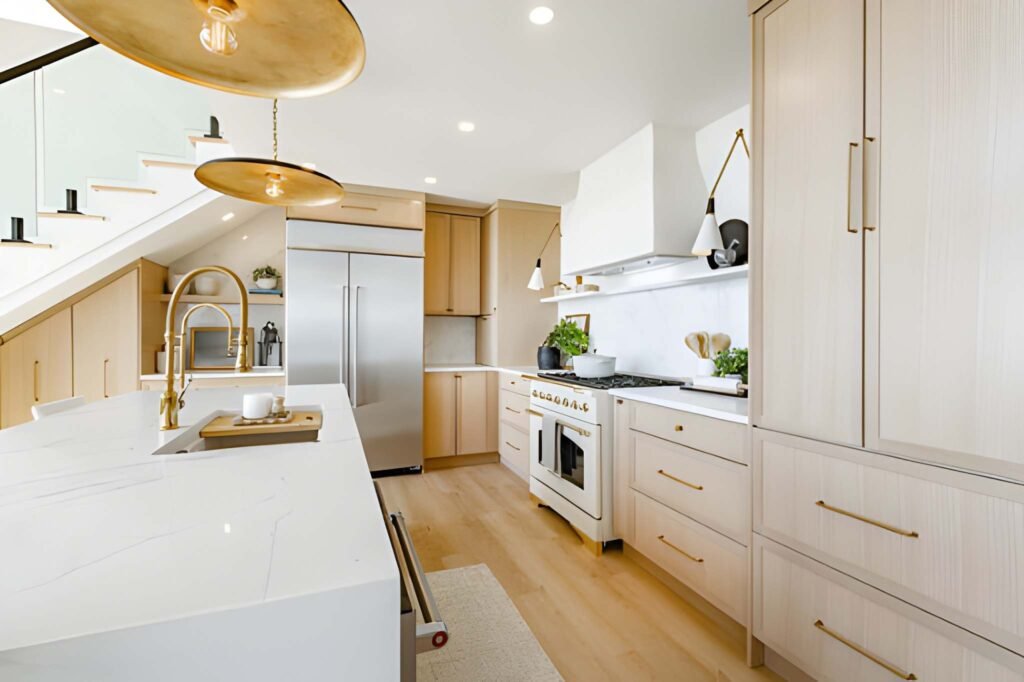
- Floor-to-Ceiling Millwork: Instead of a standard bookshelf, install built-in floor-to-ceiling cabinets. This draws the eye upward, utilizes dead space, and provides immense storage capacity with a clean, built-in look.
- High-Level Cabinetry: In the kitchen and bathroom, cabinets should extend all the way to the ceiling. The space above is too valuable to waste and collecting dust.
4. The Multi-Functional Everything: Every element should serve more than one purpose.
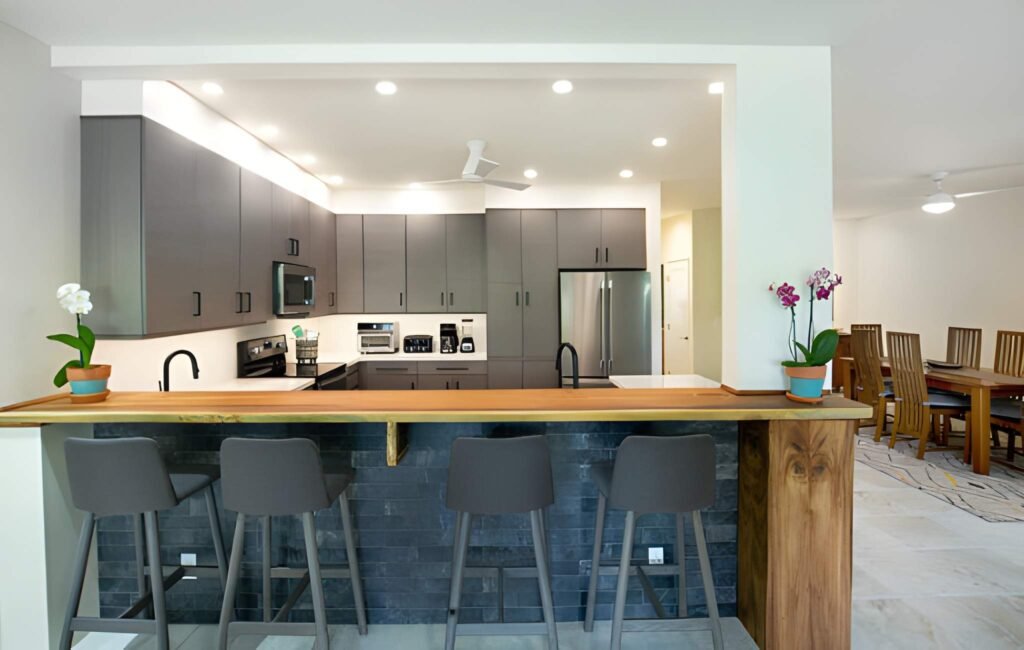
- The Island that Works: A kitchen island can provide prep space, storage, seating, and even house appliances.
- The Convertible Room: The living room might need to function as a guest room. A high-quality sleeper sofa or a wall bed (Murphy bed) with integrated shelving or a desk is a transformative solution.
- The Desk that Disappears: A fold-down desk mounted on a wall can create a full-time office nook that vanishes when not in use.
5. Quality Over Quantity: In a small space, you interact with every surface and fixture intimately. Cheap materials feel cheaper in close quarters.
- Invest in Touchpoints: Splurge on the fixtures you interact with daily: cabinet pulls, faucets, and light switches. Their tactile quality defines the experience of the home.
- Choose Durable Surfaces: Select countertops, flooring, and paint that can withstand the wear and tear of concentrated use. This is an investment in the long-term enjoyment and value of the apartment.
The Budget Allocation: A Strategic Blueprint
For a one-bedroom apartment, a renovation budget of $20,000 to $40,000 can achieve a comprehensive transformation if allocated wisely. The focus should be on elements that define space and function.
Table 1: Sample $30,000 One-Bedroom Renovation Budget
| Category | Allocation | Rationale & Focus |
|---|---|---|
| Cabinetry & Custom Millwork | $9,000 | The highest impact. For a custom kitchen solution, a floor-to-ceiling storage wall in the living room, and a built-in closet system in the bedroom. |
| Flooring & Preparation | $4,000 | Continuous, high-quality LVP or engineered hardwood throughout the main living area. Includes sound-deadening underlayment if required by the building. |
| Appliances | $3,500 | Apartment-sized or standard suite from a reliable mid-range brand (e.g., Bosch, GE Profile). Prioritize quiet operation and integrated looks. |
| Countertops & Tile | $3,500 | Quartz countertops in the kitchen and bathroom. Durable, large-format tile for the bathroom floor and walls. |
| Lighting & Electrical | $3,000 | A fully redesigned lighting plan: recessed LEDs, statement pendants, and all new dimmers and switches. Rewiring outdated systems is a common need. |
| Labor & Professional Fees | $4,000 | For a skilled handyman or small GC to manage the project, especially for complex millwork and electrical. |
| Plumbing & Fixtures | $1,500 | A new vanity faucet, showerhead, and kitchen faucet from a quality brand. Focus on design and function. |
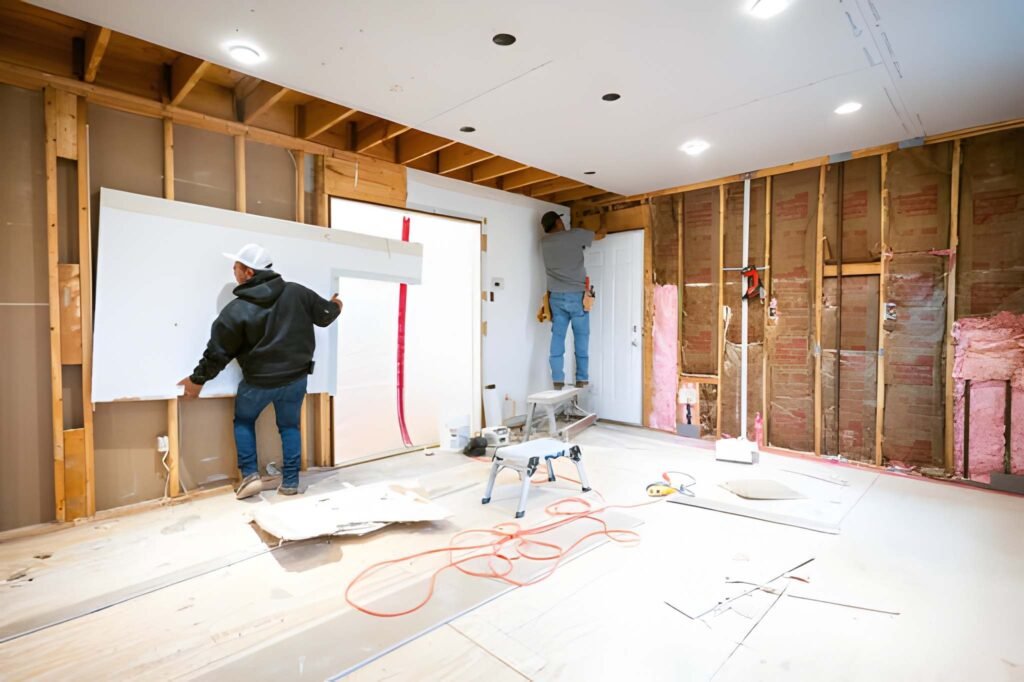
| Contingency (15%) | $4,500 | Essential. For unforeseen issues like discovering faulty wiring, plumbing problems, or structural surprises when opening walls. |
The Kitchen: The Efficient Heart
The kitchen in a one-bedroom is often small but must be highly functional.
- Layout is Everything: Optimize the classic work triangle. If space allows, a galley layout or a small L-shape with an integrated peninsula is ideal.
- Appliance Strategy: Choose a slim-profile refrigerator and consider a combination oven (microwave and convection) to save space.
- Smart Storage: Incorporate deep drawers for pots, vertical dividers for baking sheets, and pull-out shelving in every base cabinet. Every inch must be accessible.
The Bedroom: The Serene Retreat
The bedroom should be a sanctuary for sleep, not a storage unit.
- The Built-In Wardrobe: Replace a bulky, freestanding dresser with a custom, floor-to-ceiling closet system with drawers, hanging space, and shelves. This clears the floor and makes the room feel larger.
- Lighting Control: Install a dimmer on the main overhead light and provide task lighting on bedside tables (or wall-mounted sconces to save table space).
The Bathroom: The Spacious Wet Room
Even a 5’x8′ bathroom can feel luxurious with the right choices.
- The Vanity: Choose a wall-mounted vanity to expose more floor space, making the room feel larger. A single-slot, rectangular sink provides more usable counter space than a round bowl.
- The Shower: A frameless glass shower enclosure eliminates visual barriers. Using large-format tile on the walls and floor with minimal grout lines creates a seamless, expansive look.
- Storage: A medicine cabinet with a mirror front provides storage without consuming space. Niche shelving in the shower is essential.
Conclusion: The Art of Curated Space
A one-bedroom apartment renovation is the ultimate test of design discipline. It forces a clarity of purpose that is often lost in larger homes. The result of a successful project is not just a updated interior, but a elevated quality of life. By embracing the principles of spatial illusion, multi-functional design, and vertical integration, you transform limitations into virtues. You create a home that is not defined by its square footage, but by its intelligence, its comfort, and its flawless reflection of the life lived within it. It becomes a proof that true luxury is not about abundance, but about the perfect curation of space.