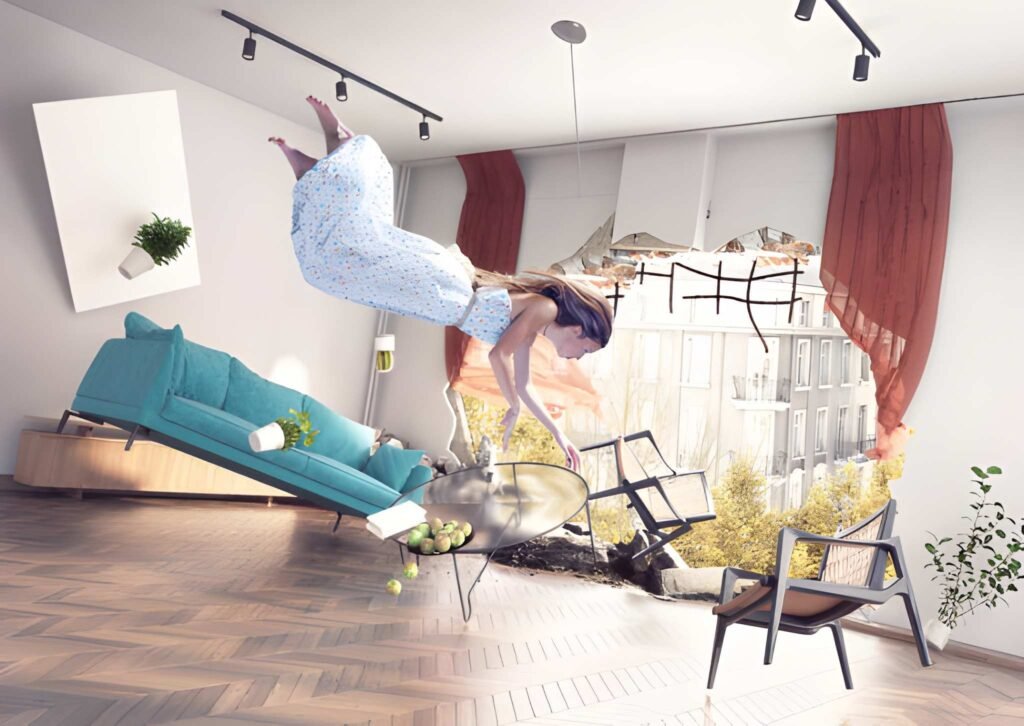
The concept of a “zero-gravity renovation” represents the absolute zenith of architectural and interior design ambition, a niche once confined to science fiction that is now becoming a tangible, albeit exclusive, frontier. In the context of Dubai—a city that has built its identity on surpassing the impossible—this term transcends a single definition. It operates on two parallel tracks: the literal preparation of habitats for orbital or lunar environments, and the metaphorical creation of earthbound interiors that evoke the sensation of weightlessness. This guide explores the cutting-edge principles, materials, and technologies driving this radical field, positioning Dubai not just as an adopter, but as a future epicenter for the renovation of space-bound and hyper-aesthetic environments.
This is not a renovation defined by paint swatches and cabinet finishes. It is a fundamental re-engineering of the human relationship with interior space, demanding a paradigm shift in how we conceptualize everything from structural mechanics to the psychology of comfort.
The Literal Frontier: Renovating for Orbital and Lunar Habitats
For a select group of engineers and designers in Dubai, a “zero-gravity renovation” refers to the retrofitting and optimization of manned spacecraft, orbital stations, or future lunar bases. The principles here are dictated not by aesthetics, but by the unforgiving physics of space.
1. The Paramount Principle: Mass is the Enemy
Every kilogram launched into orbit carries an astronomical cost. Renovation in this context is an exercise in radical weight reduction and multi-functionality.
- Material Science: The use of advanced composites, aerogels, and carbon-fiber laminates is standard. Walls are not merely partitions; they are structural, radiation-shielding, and often contain embedded electrical and life-support systems.
- Additive Manufacturing: 3D printing using regolith (lunar soil) or recycled polymers is a cornerstone of in-situ renovation. Instead of shipping a new component, the design file is transmitted, and the part is manufactured on-site.
2. Adhesive and Mechanical Integration: Replacing the Nail and Screw
In a environment where drilling into a wall could compromise pressure integrity and create hazardous debris, traditional fasteners are obsolete.
- Gecko-Tape and Reusable Adhesives: Inspired by biomimicry, these materials provide a powerful, temporary hold for tools, interfaces, and personal items, allowing for reconfigurable spaces without perforating surfaces.
- Magnetic and Electromagnetic Mounting: For a more permanent but still non-invasive hold, customized magnetic systems can secure everything from experiment racks to furniture.
3. The Interface Revolution: The Disappearing Control Panel
The cluttered, button-filled control panels of early spacecraft are being renovated into seamless, integrated systems.
- Projected and Haptic Interfaces: Controls are projected onto any flat surface, and haptic feedback provides tactile confirmation without physical buttons.
- Voice and Gesture Control: The ultimate in minimalist design, where the environment responds to spoken commands and recognized gestures, reducing the need for fixed hardware.
4. Psycho-Biological Considerations: Renovating for the Human Spirit
The renovation of a space habitat must address the psychological toll of confinement and monotony.
- Dynamic Lighting Systems: Tunable LED systems that mimic the 24-hour circadian rhythm of Earth, helping to regulate sleep and maintain mental health.
- Immersive Virtual Windows: Screens displaying real-time views of Earth, Martian landscapes, or other calming environments to combat the claustrophobia of a windowless module.
- Acoustic Renovation: Strategic use of sound-absorbing materials to dampen the constant hum of machinery, a critical factor in reducing stress.
The Metaphorical Frontier: Earth-Bound Interiors that Defy Gravity
In Dubai’s terrestrial luxury market, a “zero-gravity renovation” aims to create the visceral sensation of weightlessness through architectural illusion, advanced engineering, and minimalist philosophy.
1. The Architectural Illusion: Cantilevers and Floating Forms
The goal is to make structural elements appear to defy physics.
- Dramatic Cantilevers: Extending pools, balconies, or entire rooms far beyond the building’s support core, creating a heart-stopping illusion of floating over the city or desert.
- Floating Staircases and Furniture: Stairs with hidden stringers and furniture anchored to walls or ceilings create a sense of visual weightlessness, making objects appear to hover in space.
2. The Zen of Minimalism: A Visual Vacuum
Clutter is the enemy of the weightless sensation. This renovation style embraces an extreme form of minimalism.
- Concealed and Automated Storage: A place for everything, and everything hidden from view. Motorized panels, floor-to-ceiling pocket doors, and furniture with integrated storage create a seamless, unbroken visual field.
- Monolithic and Continuous Surfaces: Using the same material for floors, walls, and even ceilings (e.g., micro-cement or large-format porcelain slabs) eliminates visual seams and corners, blurring the perception of spatial boundaries.
3. The Technological Veil: The Invisible Engine
The machinery of daily life must be utterly concealed to maintain the illusion of effortless floating.
- Wireless Power and Data: True to its name, this technology eliminates the need for power outlets and cables, allowing for completely clean surfaces.
- Invisible Integration: Televisions that disappear into a cabinet or become art when not in use, speakers embedded within walls and ceilings, and climate control through disguised, silent laminar airflow panels.
4. The Color and Light Palette: Ethereal and Airy
The material and color choices are deliberately chosen to feel light and reflective.
- Predominance of Whites and Light Neutrals: These colors reflect light and make spaces feel larger and more open.
- Reflective and Translucent Materials: Glass, polished metals, high-gloss finishes, and acrylic are used to bounce light and create a sense of depth and immateriality.
The Dubai Context: A Natural Nexus
Dubai is uniquely positioned to lead in both interpretations of zero-gravity renovation.
- Space Ambition: With the UAE’s Mars Mission and the Mohammed Bin Rashid Space Centre, the city has a growing ecosystem of aerospace expertise that can be applied to orbital habitat design.
- Luxury Market: The city’s appetite for the unprecedented and its concentration of wealth drive demand for hyper-luxurious, concept-driven interior design that pushes the boundaries of what is possible on Earth.
- Engineering Prowess: A proven track record of executing seemingly impossible architectural feats (Burj Khalifa, Palm Jumeirah) provides the engineering confidence necessary for both orbital modules and gravity-defying cantilevers.
Conclusion: The Final Frontier of Design
A zero-gravity renovation, whether for a space station or a Palm Jumeirah penthouse, represents the ultimate expression of human ingenuity in design. It is a discipline that forces a departure from millennia of Earth-bound construction habits, demanding new materials, new techniques, and a new understanding of human spatial perception. For the elite clientele of Dubai and the pioneers of the new space age, it is no longer enough to renovate for style or function alone. The new imperative is to renovate for an experience—to create an environment that liberates its inhabitants from the very ground beneath their feet, offering a taste of the sublime, whether in orbit or at home.