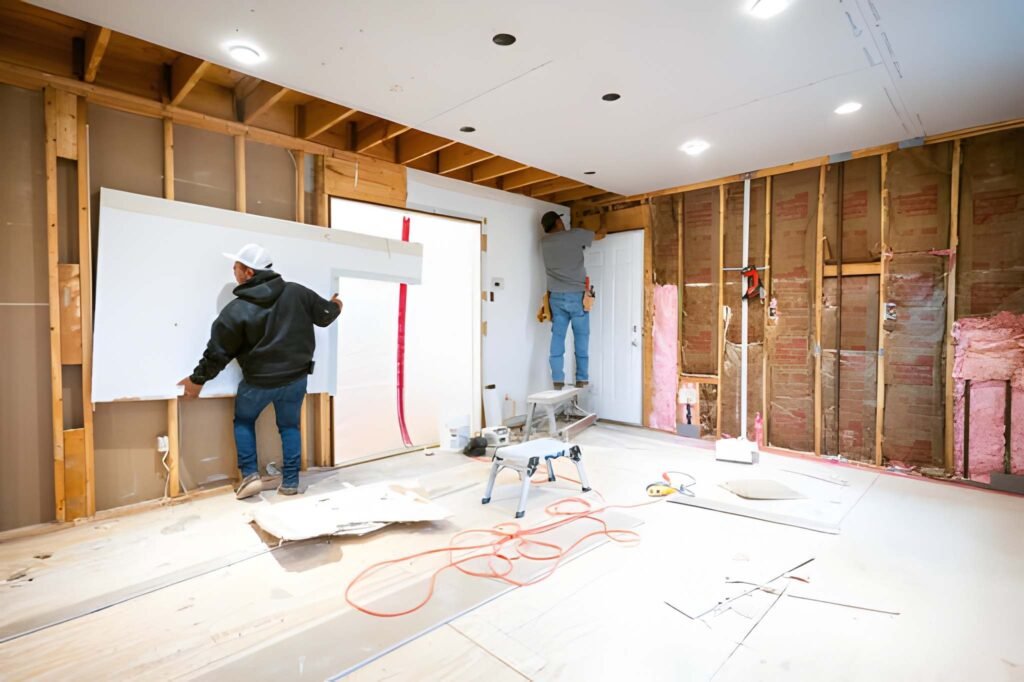

The promise of 0% interest financing for a home renovation projects a powerful and seductive image: acquiring the kitchen of your dreams or the essential new roof without the immediate burden of finance charges. It presents itself as a financial magic trick, a way to have your renovation now and pay for it later, seemingly for free. This financing mechanism, however, is not a gift. It is a sophisticated financial instrument whose true cost is not measured in interest rates, but in discipline, timing, and a clear understanding of the underlying mechanics. For the savvy homeowner, it can be a powerful tool to manage cash flow and accelerate a project. For the unprepared, it can become a debt trap that ultimately costs more than a traditional loan.
The Mechanics of “Free” Money: How 0% Financing Really Works
At its core, 0% interest financing is a form of deferred interest promotion. The lender—whether a large home improvement retailer, a furniture store, or a specialty contractor partnered with a finance company—is betting that a significant number of borrowers will fail to meet the strict terms required to keep the loan interest-free. The cost of offering 0% to the disciplined few is offset by the substantial penalties collected from the many who stumble.
The structure almost always follows a specific pattern: a promotional period, typically ranging from 6 to 24 months, during which no interest accrues if and only if the entire balance is paid in full by the end of that period. The critical, often overlooked detail is the “deferred interest” clause. This means that from the very first day of the loan, the standard Annual Percentage Rate (APR), which can be exceptionally high (often 25-30%), is being calculated in the background. If a single dollar of the original principal balance remains at the end of the promotional period, the borrower is typically charged all of the accumulated interest from the original date of purchase. This is not merely interest on the remaining balance; it is retroactive interest on the entire initial amount for the entire promotional term.
Consider a $20,000 renovation financed at 0% for 24 months with a deferred interest APR of 29.99%. The monthly payment to pay off the balance in time would be approximately $833.33. If the borrower pays $800 per month and has a remaining balance of $800 at the end of the 24 months, they would not be charged interest on just that $800. They would be charged 24 months’ worth of interest on the full $20,000—a sum that could exceed $5,000—immediately added to their debt.
The Landscape of Lenders: Where to Find 0% Offers
These promotions are not ubiquitous across the entire lending landscape but are concentrated in specific channels.
Big-Box Retailer Credit Cards: Home Depot, Lowe’s, and Menards are the most prominent players. They offer store-specific credit cards that frequently feature 0% interest promotions for large purchases, especially on big-ticket items like appliances, cabinets, or entire kitchen and bath suites. The convenience is high—financing is often approved at the point of sale—but the offers are strictly for purchases made at that specific retailer, which may limit your choice of materials or contractor.
Specialized Contractor Lending Partners: Many established contractors have relationships with third-party lenders like GreenSky, Hearth, or EnerBank USA. These lenders provide 0% promotional loans that are paid directly to the contractor for the work. This can be advantageous as it allows you to choose your contractor and materials freely, but it requires that your contractor participates in such programs.
Furniture and Appliance Stores: While not for structural renovations, stores like Best Buy, RC Willey, or local high-end furniture dealers offer 0% financing on the components that furnish a newly renovated space. This can be a way to manage the total cost of a home transformation without tying everything to a single, large loan.
The Strategic Calculation: When Does 0% Financing Make Sense?
The prudent use of 0% financing is a deliberate strategy, not an impulsive decision. It is a tool best deployed under specific conditions.
You Have a Secure, Predictable Income and a Bulletproof Payment Plan. Before accepting the financing, you must calculate the exact monthly payment required to pay the balance to zero one month before the promotional period ends. This builds in a safety margin for unexpected financial hiccups. This payment must be treated as a non-negotiable monthly obligation, akin to a mortgage or car payment.
The Project is for a Discrete, Budgeted Amount. 0% financing is ideal for a project with a fixed, known cost. It is far riskier for open-ended projects where change orders and unforeseen issues could inflate the initial budget, making the target payoff amount a moving and potentially unattainable goal.
You Are Financially Disciplined and Organized. This strategy demands meticulous attention to detail. You must set up automatic payments, track the balance religiously, and never, ever miss a payment. A single late payment can sometimes void the promotional terms immediately, triggering the deferred interest.
The Alternative is Draining Emergency Savings or Liquidating Investments. If the choice is between using 0% financing to preserve a crucial cash safety net or selling assets, the financing can be a rational choice. The “cost” of the loan is the risk of the deferred interest, while the cost of draining savings could be an inability to handle a true emergency.
The Pitfalls and Hidden Costs: Reading the Fine Print
The dangers of these programs lie in the details that are often glossed over in the sales pitch.
The “Same as Cash” Misnomer: This common marketing phrase is technically accurate but practically misleading. While it is “same as cash” in terms of the principal, the consequences of failure are vastly different than simply not having made the purchase. The retroactive interest penalty is severe and can be financially devastating.
Minimum Payment Traps: The required minimum monthly payment during the promotional period is almost always calculated to be so low that it will not pay off the balance in time. This is by design. It lulls borrowers into a false sense of security, making them believe they are meeting their obligation while the final, massive interest bill quietly looms.
The Impact on Credit: Opening a new line of credit causes a hard inquiry on your credit report and lowers the average age of your accounts, which can temporarily ding your credit score. Furthermore, utilizing a high percentage of this new available credit (a high “credit utilization ratio”) can further negatively impact your score during the payoff period.
Qualification Hurdles: The best 0% terms are typically reserved for borrowers with good to excellent credit scores (typically 700+). Those with lower scores may be offered a shorter promotional period or may not qualify at all, making this a tool inaccessible to some.
A Prudent Path Forward: A Framework for Decision-Making
Before signing on the dotted line, a disciplined evaluation process is essential.
- Get a Fixed-Price Contract: Never use 0% financing with a time-and-materials contract. Ensure your contractor provides a detailed, fixed-price proposal so you know the exact total you are financing.
- Read the Entire Agreement: Do not rely on the salesperson’s summary. Find the section on “deferred interest” and “default APR.” Confirm the exact end date of the promotional period and the standard APR that will apply.
- Calculate the True Monthly Payment: Divide the total financed amount by the number of months in the promotional period, minus one. Set up an automatic payment for this amount.
- Have a Backup Plan: Acknowledge the risk. Do you have savings you could tap to pay off the balance if you lost your job or faced another financial setback? If not, the risk may be too great.
- Compare to Alternatives: Weigh the 0% offer against a traditional home equity loan or line of credit (HELOC). While these carry interest, they offer more flexibility, longer repayment terms, and lack the predatory “deferred interest” trap. The interest on a HELOC may also be tax-deductible if the renovation is a capital improvement.
0% interest financing is a double-edged sword. Wielded with extreme caution, financial discipline, and a comprehensive understanding of its terms, it can be a legitimate way to manage a necessary or desirable home improvement without upfront capital. Viewed as free money without consequences, it is one of the most expensive financial mistakes a homeowner can make. The zero is only real for those who possess the foresight and discipline to navigate the narrow path it provides.