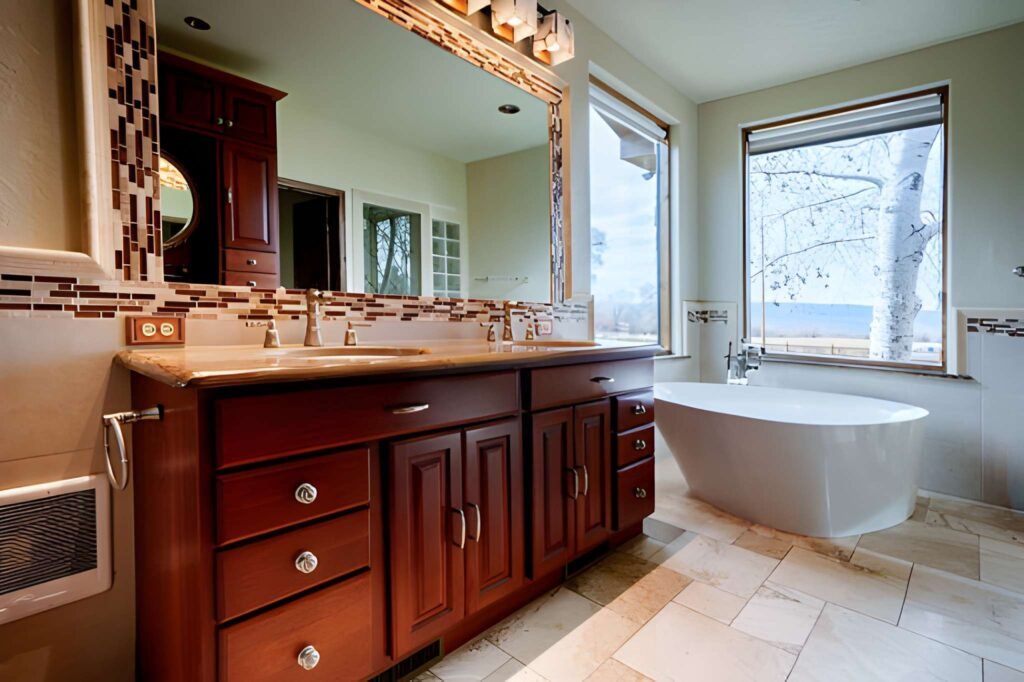
A custom bathroom renovation represents the pinnacle of personalized home improvement. It transcends the mere replacement of fixtures and finishes, venturing into the realm of architectural design and tailored craftsmanship. This is not about selecting from a catalog of pre-determined options, but about creating a space that is uniquely calibrated to your rituals, your body, and your sense of peace. A custom renovation dissolves the standard template of the American bathroom, challenging the conventional layouts and off-the-shelf solutions to forge a room that is both profoundly functional and deeply resonant. It is a collaborative process between homeowner, designer, and artisan, resulting in a space that could not exist anywhere else.
The Philosophy of Custom: Beyond the Standard Template
The core distinction of a custom renovation lies in its intent. While a standard remodel might ask, “What new vanity fits in this spot?”, a custom approach asks, “How should this entire space be reconfigured to serve me better?” It begins with a critique of the existing room’s failures and an aspirational vision for its potential. This process prioritizes experiential goals over material ones. The question is not just what the room will look like, but how it will feel to inhabit at six in the morning versus ten at night. How will sound travel? How will light fall? How will steam dissipate?
This philosophy demands a shift from consumer to co-creator. You are not just buying products; you are commissioning an environment. This requires a deep level of self-awareness about your daily habits. Do you require a dedicated space for a lengthy skincare routine? Would a shower bench and a handheld sprayer alleviate physical constraints? Is the morning rush a chaotic bottleneck that a dual-sink vanity won’t solve? A custom renovation seeks to solve these nuanced problems through design, not just to surface-level upgrades. It often involves a willingness to invest in things that will never be seen—the structural reframing, the soundproofing insulation, the perfectly sloped shower floor—with the same conviction as the visible marble or tile.
The Anatomy of a Custom Renovation: The Iterative Design Process
The journey of a custom bathroom is methodical and iterative, relying heavily on professional guidance. It typically unfolds in distinct phases.
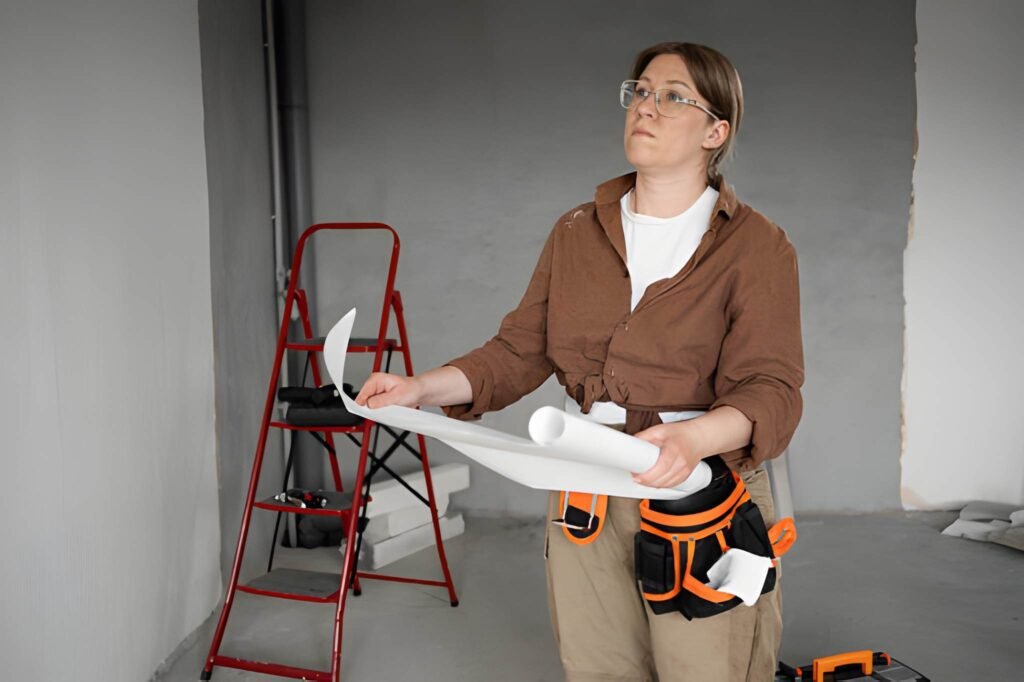
Phase 1: Programming and Discovery. This is the information-gathering stage, led by a designer or architect. They will conduct in-depth interviews to understand your lifestyle, inventory your belongings, and document your physical needs and preferences. They will measure the existing space with laser precision, noting the location of every joist, pipe, and duct. This phase results in a “program”—a written document that lists all the needs, wants, and dreams for the space, which becomes the blueprint for all design decisions.
Phase 2: Conceptual and Schematic Design. Here, the designer translates the program into initial spatial concepts. This is where walls are moved on paper. They may explore several radically different layouts: perhaps stealing space from an adjacent closet to create a larger shower, or reorienting the toilet to a private water closet, or opening up a wall to borrow light from a bedroom. These are not yet detailed plans, but big-picture diagrams that test the limits of the space’s potential.
Phase 3: Design Development and Detailing. This is the most intensive collaborative phase. The schematic layout is refined into a precise construction drawing. Every element is specified and dimensioned. This is where the true custom work emerges. It involves:
- Custom Millwork: Designing built-in vanities, linen towers, or medicine cabinets that are fabricated specifically for your space, maximizing every inch and matching your home’s architectural style.
- Tile and Material Schematics: Creating detailed elevation drawings that show exactly how every tile will be laid out, from the herringbone pattern on the floor to the vertical stack of the shower wall and the precise placement of a decorative mosaic band.
- Lighting Plan: Designing a layered lighting scheme that includes not just fixtures, but their placement, beam angles, and the specific type of light (warm, cool, dimmable) for each task and mood.
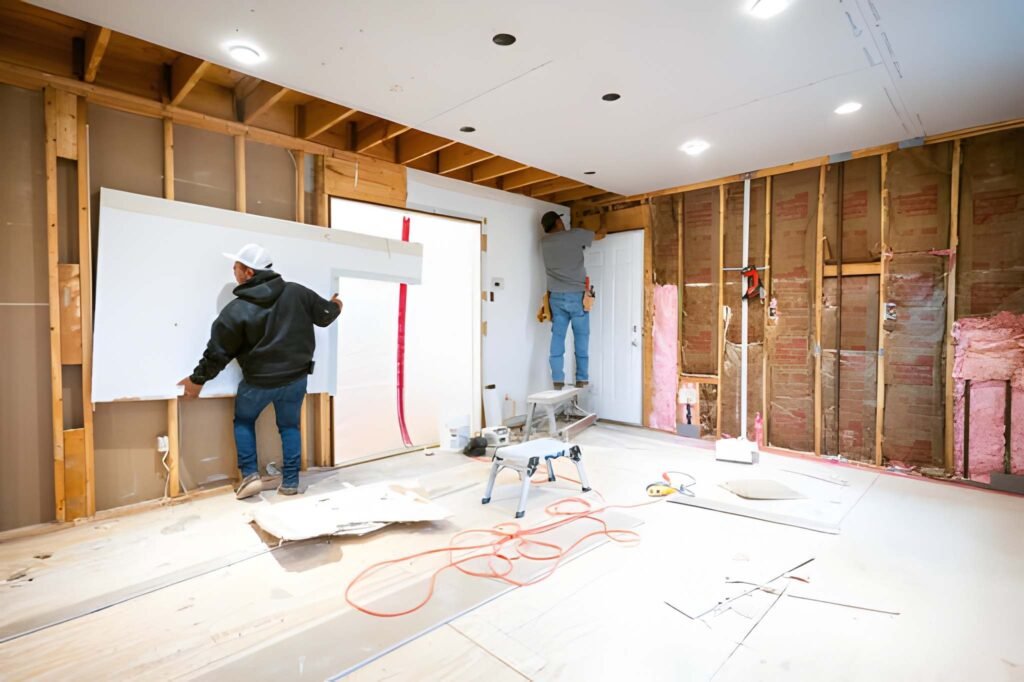
Phase 4: Implementation and Craftsmanship. With a complete set of drawings and specifications, the construction begins. The general contractor and specialized tradespeople become essential partners. The plumber is not just installing a valve; they are setting it to the exact height and location specified for the custom shower system. The tile setter is not just laying tile; they are executing a complex pattern that requires meticulous cutting and planning. This phase is defined by problem-solving and a commitment to a level of precision that is absent in standard remodeling.
The Hallmarks of a Truly Custom Bathroom
Several key features distinguish a custom bathroom from a high-end but standard one.
The Wet Room. A hallmark of modern custom design, the wet room eliminates the traditional shower curb and often the shower enclosure itself. The entire room is waterproofed and sloped to a central or linear drain. This creates a seamless, accessible, and expansive feeling, turning the whole space into a shower area when desired. It represents a complete integration of architecture and function.
Fully Integrated Storage. Instead of a freestanding vanity, custom bathrooms feature built-in storage solutions that address specific needs. This could be a shallow-depth medicine cabinet for toiletries, a tall cabinet for towels and a hamper, a built-in niche in the shower for specific bottle sizes, or a vanity with dedicated dividers for hair tools and cleaning supplies. Every item has a designated home, eliminating counter clutter.
Sensory Engineering. A custom bathroom is designed for the senses. This includes:
- Thermal Comfort: Heated floors are a given. Beyond that, a thermostatic shower valve that maintains exact temperature, a dedicated heat lamp in the shower area, and even towel warmers are integrated for a consistent, luxurious thermal experience.
- Acoustic Control: Soundproofing insulation in the walls and a high-quality, quiet exhaust fan ensure the room is a quiet refuge.
- Olfactory Experience: Built-in niches can be designed to hold diffusers or candles, integrating scent into the design.
The Custom Shower. The shower is treated as a personal hydrotherapy room. This goes beyond a rain head. It involves designing a multi-outlet system with a mix of overhead, hand, and body sprays, all fed by a pressure-balancing or thermostatic valve that can handle the simultaneous demand. The placement of each spray head is determined by the user’s height and preferences. A teak or stone shower bench is not an afterthought but a central feature for comfort and utility.
The Furniture Approach. In a custom bathroom, elements are often treated like furniture. A freestanding vanity on legs, rather than one attached to the floor, can make the room feel less built-in and more curated. A freestanding tub is positioned as a sculptural centerpiece, with space around it to appreciate its form.
The Realities of Investment and Timeline
A custom bathroom renovation is a significant undertaking in both time and money. Budgets often start at $50,000 and can easily reach $100,000 or more for a primary suite, with a significant portion allocated to design fees, custom fabrication, and highly skilled labor. The timeline is equally substantial, typically spanning four to six months from initial design to final installation. This extended period accounts for the design iteration, the fabrication of custom cabinetry and millwork, and the meticulous on-site work.
A custom bathroom renovation is not a transaction; it is a journey of creation. It is for the homeowner who sees their daily routine as a ritual worthy of a perfect stage, who understands that true luxury is not about opulence but about perfect suitability. It results in a room that is not just an amenity, but an extension of self—a deeply personal sanctuary that is both a joy to use and a lasting testament to the power of intentional design.