
House Leveling and Foundation Repair: A Localized Guide to Stabilizing Your Home
House leveling and foundation repair are among the most critical and complex services a homeowner may ever need. These processes address the very stability of a structure, correcting issues caused by settling, soil movement, and hydrostatic pressure. Finding the right local professional is not a matter of a simple online search; it requires diligent vetting to ensure the company possesses the necessary engineering knowledge, proper licensing, and a track record of permanent solutions rather than temporary fixes. The consequences of poor work here are not just cosmetic; they are structural and can drastically affect your home’s safety and value.
Understanding the Problem: Signs You Need Professional Assessment
Before searching for a local provider, recognize the symptoms that warrant an inspection. Some are obvious, while others are more subtle.
Major Red Flags (Require Immediate Attention):
- Visible, widening cracks in interior drywall, especially around door frames and windows, or stair-step cracks in exterior brick or masonry.
- Doors and windows that stick, won’t latch, or no longer appear square in their frames.
- Sloping or uneven floors that you can feel when walking across a room (a marble test can confirm this).
- Gaps between the walls and the ceiling or floor.
- Cracks in the foundation slab or walls that are wider than 1/4 inch.
Secondary Indicators:
- Cabinets and countertops separating from the wall.
- Cracks in ceramic tile or grout.
- Water pooling near the foundation after rain.
The “Near Me” Search Strategy: Vetting Local Providers
A generic search for “house leveling and foundation repair near me” will yield many results, but not all are equal. Your goal is to filter for the most qualified.
1. Look for Engineering Expertise, Not Just Contractors
The most reputable foundation repair companies employ or work directly with professional structural engineers. An engineer is not the salesperson. They provide an unbiased diagnosis of the cause of the problem and prescribe the correct solution.
- What to Ask: “Will a licensed structural engineer perform the initial inspection and provide a written report?”
- Red Flag: A company that immediately quotes a price over the phone or during a first visit without a thorough engineering evaluation.
2. Verify Credentials and Local Knowledge
Foundation repair is hyper-local. Soil conditions in Texas (expansive clay) are entirely different from those in Florida (sandy, high water table) or California (seismic activity). A local company understands regional challenges.
- Licensing: Check with your state’s licensing board to ensure the company holds the proper General Contractor license for foundation work, if required in your state.
- Insurance: Verify they carry both liability insurance and workers’ compensation.
- Associations: Look for membership in national organizations like the Foundation Performance Association (FPA) or state-specific associations, which often require adherence to higher standards.
3. Understand the Common Repair Methodologies
A reputable company will explain why a specific solution is right for your home’s problem. Common permanent solutions include:
- Steel Push Piers / Helical Piers: These are hydraulically driven or screwed deep into the ground until they reach stable, load-bearing soil or bedrock. They are then used to lift and permanently support the foundation. This is the gold standard for major settling.
- Concrete Pilings / Bell Bottom Piers: A traditional method where concrete is poured into drilled holes that have a bell-shaped bottom, creating a stable base. Common in some regions but less common than steel piers for new repairs.
- Slabjacking / Mudjacking: For sunken concrete slabs (like a patio or driveway), a grout mixture is pumped underneath to lift it back into place. This is generally not for repairing a home’s structural foundation.
- Wall Anchors or Carbon Fiber Straps: For bowing or leaning basement walls caused by hydrostatic pressure from the outside soil.
4. The Critical Importance of Multiple Quotes and the Proposal
Obtain at least three detailed, written proposals. Do not make a decision based on price alone.
A proper proposal should include:
- Cause of Problem: A clear explanation of the soil and hydrological issues causing the failure.
- Scope of Work: A detailed description of the repair method (e.g., number and depth of piers, specific products used).
- Engineering Report Reference: Reference to the underlying engineering assessment.
- Warranty: A clear, transferable warranty that covers both the materials and the labor. A lifetime warranty that is transferable to the next homeowner is the industry benchmark for reputable companies.
- Total Price & Payment Schedule: Be wary of companies demanding large upfront payments.
The Realistic Cost of Stability
Foundation repair is a significant investment, but it is an investment in the core asset of your home.
- Minor Repairs: (e.g., a few piers, carbon fiber straps) can range from $5,000 to $15,000.
- Major Repairs: (e.g., a full perimeter of piers for a settling house) typically range from $20,000 to $45,000+, depending on the home’s size and the severity of the issue.
The Process from Inspection to Completion
- Inspection & Engineering Assessment: A thorough evaluation by a professional to diagnose the cause and extent of the damage.
- Proposal & Contract: Review the detailed proposal, ask questions, and ensure you understand the warranty before signing.
- Permitting: The reputable company will pull all necessary local building permits.
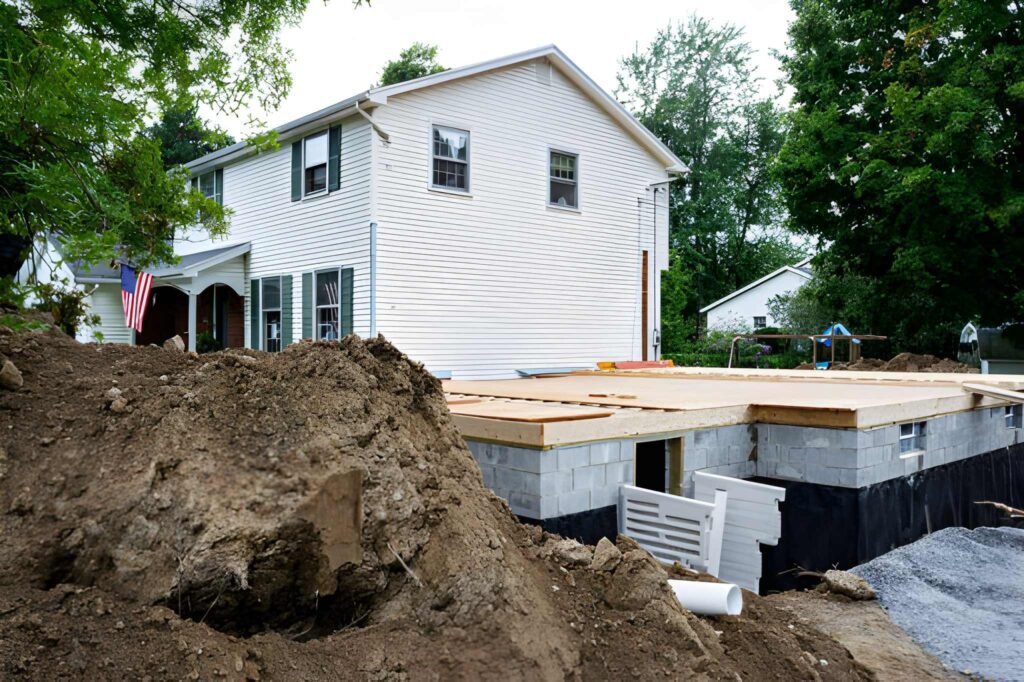
- Repair Execution: The crew will perform the work, which often involves excavation and heavy equipment.
- Final Inspection: The work is inspected by the local building official to ensure it meets code. The company should also provide a final engineering report certifying the work.
Finding the right “house leveling and foundation repair near me” is a process of due diligence. Prioritize companies that lead with engineering, offer transparent and detailed proposals, and stand behind their work with robust, transferable warranties. This is not an area to choose the lowest bidder; it is an area to choose the most knowledgeable and reputable professional who will provide a permanent solution, ensuring your home remains safe, stable, and valuable for decades to come.