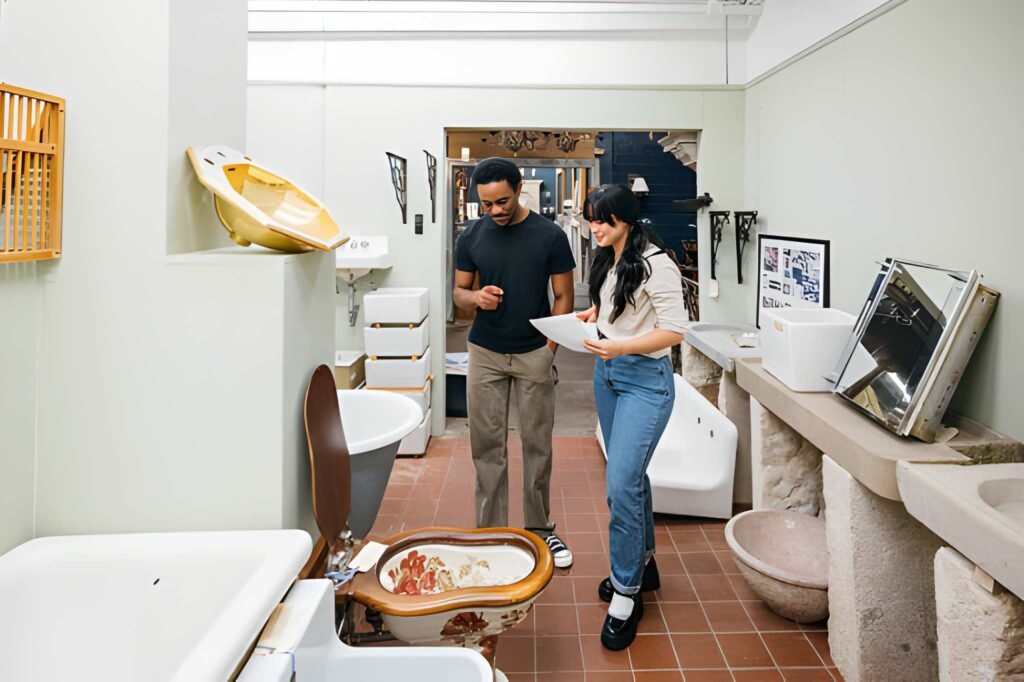
A five-thousand-dollar bathroom renovation exists in a distinct and challenging category. It is not a gut job. It will not allow for moving plumbing lines or reconfiguring the entire footprint. Instead, this budget demands a surgical approach. It is the art of maximizing visual and functional impact through a series of carefully chosen, cost-effective upgrades. The goal is not to create a spa-like retreat from the ground up, but to transform a dated, tired bathroom into a clean, modern, and efficient space that feels new. Success hinges on a disciplined focus on cosmetics, preservation of the existing layout, and a willingness to undertake a significant portion of the labor yourself. This is a project of reinvention, not reconstruction, where strategic choices with paint, fixtures, and surfaces can yield a return that belies the modest investment.
The Realistic Scope: Defining What $5,000 Can Achieve
The first and most critical step is to set firm boundaries. With a $5,000 budget, every dollar must be allocated with precision. The core principle is to work with what you have. The bathtub or shower base, the toilet location, and the vanity plumbing rough-in will all need to remain in place. Moving a drain or water supply line can easily cost $1,000-$2,000 alone, instantly consuming a catastrophic portion of your funds. Therefore, the project scope is a comprehensive refresh. This includes replacing the vanity and faucet, updating the toilet, installing a new mirror and lighting, re-tiling the floor, applying a fresh wall treatment, and modernizing all hardware and accessories. The shower or tub area may receive a new surround or a meticulous re-grouting and deep cleaning rather than a full tear-out. The power of this approach lies in the cumulative effect. While no single change is monumental, the combination of seven or eight updated elements creates a completely new environment.
The Budget Blueprint: A Line-by-Line Allocation
A project at this financial level cannot survive vague budgeting. You must operate with a clear, line-item plan that includes a non-negotiable contingency for the unexpected. The following table outlines a strategic allocation for a standard 5′ x 8′ bathroom, assuming a mix of DIY labor and selective hiring of professionals for skilled trades like plumbing and electrical.
| Budget Category | Allocation | Rationale & Material Options |
|---|---|---|
| Vanity, Countertop & Sink | $1,000 – $1,400 | The room’s focal point. This budget covers a ready-to-assemble (RTA) or stock vanity (36-48″) with an integrated countertop/sink or a separate solid surface top. |
| Plumbing: Toilet & Faucet | $600 – $800 | Funds a new, water-efficient elongated toilet and a quality single-handle bathroom faucet. Includes new supply lines and a wax ring. |
| Flooring | $500 – $700 | Covers materials for a DIY-friendly floor: Luxury Vinyl Tile (LVT), sheet vinyl, or ceramic tile. Includes underlayment and adhesive. |
| Shower/Tub Area Update | $400 – $600 | Does not cover a custom tile job. Instead, funds a new acrylic or fiberglass tub/shwall unit, or a high-quality tile-refreshing kit and new caulk. |
| Lighting & Electrical | $300 – $500 | Allows for a new vanity light bar (2-4 bulbs) and a GFCI outlet. Covers an electrician’s minimum service charge for safe installation. |
| Mirror & Accessories | $250 – $400 | Funds a new frameless or framed mirror, a towel bar, toilet paper holder, and a new shower curtain rod. |
| Paint & Supplies | $150 – $200 | Covers high-quality, mold-resistant bathroom paint, primer, brushes, rollers, and painter’s tape. |
| Professional Labor (Plumber/Electrician) | $400 – $600 | A critical reserve for hiring licensed pros to install the toilet and faucet, and hardwire the new light fixture, ensuring safety and code compliance. |
| Contingency Fund (10%) | $500 | Essential for unforeseen issues: rotten subfloor discovered under old vinyl, corroded plumbing connections, or damaged drywall behind the vanity. |
This allocation is a strategic framework. If you discover a perfect vanity for $800, you can reallocate the surplus to a higher-end tile or a more elaborate lighting fixture. The contingency fund is your project’s insurance policy; do not begin without it.
The Vanity: The Centerpiece of the Transformation
In a bathroom, the vanity is the anchor. It is the largest piece of furniture and sets the stylistic tone for the entire room. With a $5,000 budget, a custom-built vanity is out of reach, but the market for stock and ready-to-assemble (RTA) vanities offers impressive quality and style. Focus on a simple, timeless design, such as a shaker style, in a finish that resists moisture. While real wood is desirable, engineered wood with a melamine or thermofoil coating can be a durable and cost-effective choice for a bathroom environment. The budget should include a vanity top. Cultured marble is a common, budget-friendly option, but solid surface materials like quartz composite are becoming more accessible and offer superior stain resistance and a more modern look. An integrated sink bowl eliminates the dirt-trapping seam between a separate sink and the countertop, simplifying cleaning and creating a sleek profile.
The Plumbing Puzzle: Toilet and Faucet
Replacing the toilet and faucet are two of the most impactful upgrades for both aesthetics and performance. For the toilet, prioritize function over fancy features. A standard, two-piece, elongated-bowl toilet is the most practical choice. Look for a WaterSense label, which certifies it uses 1.28 gallons per flush or less, providing significant water savings over older models. The style is simple and inoffensive, and the two-piece design is easier for a DIYer to handle during installation.
The faucet is the jewelry of the vanity. While you may be tempted by the lowest-priced option, this is a place to invest in quality. A mid-priced faucet from a reputable brand will have a ceramic disk cartridge that ensures drip-free performance for years, unlike cheap alternatives that use rubber washers and fail quickly. Choose a finish that is both stylish and durable, such as brushed nickel or chrome, which are easier to keep clean of water spots than a polished finish. While a confident DIYer can install a faucet, hiring a plumber to handle the final hookups for both the toilet and faucet is a wise use of the professional labor budget, guaranteeing a leak-free result.
Surface Strategies: Flooring, Walls, and the Shower
The surfaces in a bathroom define its character and are paramount to a successful refresh.
Flooring: The old vinyl floor must go. The ideal replacement is modern Luxury Vinyl Tile (LVT) or plank (LVP). This product is 100% waterproof, durable, and designed for DIY installation with a click-lock system. It convincingly mimics wood, stone, or ceramic tile at a fraction of the cost and installation difficulty. Sheet vinyl is another budget-friendly option, though achieving a professional-looking seam can be challenging.
Walls: A fresh coat of paint is the most cost-effective transformation. You must use a paint formulated for bathrooms, which contains mildewcides to resist mold growth in the humid environment. A satin or semi-gloss sheen is preferable as it is more washable than flat paint. A light, neutral color will make the space feel larger and brighter, providing a clean canvas for your new fixtures.
Shower/Tub Area: A custom tile shower is not feasible here. The strategic solution is one of three paths. First, you can install a new, one-piece tub and shower wall unit. These acrylic systems are inexpensive, install relatively quickly, and provide a seamless, easy-to-clean surface. Second, if the existing tile is structurally sound, you can use a tile refinishing kit to paint over it, and then meticulously re-caulk every seam with a high-quality silicone caulk. This is a temporary solution but can be remarkably effective for 2-3 years. Third, you can install new shower wall panels over the existing tile, a DIY-friendly project that creates a fresh, modern look.
The Finishing Touches: Lighting, Mirror, and Accessories
The final 10% of the effort delivers 50% of the polish. Do not neglect the details.
Replace the dated, frosted-glass light bar with a modern fixture that provides ample, flattering light. Look for one that uses standard LED bulbs and offers a finish that complements your faucet.
Swap the old, framed medicine cabinet or wall mirror for a simple, frameless mirror or one with a clean, modern frame. This instantly opens up the space.
Install a new, coordinated set of accessories: a towel bar, toilet paper holder, and a robe hook. Replace the flimsy shower curtain rod with a sturdy, curved rod that adds both function and a feeling of spaciousness.
A $5,000 bathroom renovation is a test of strategy and resourcefulness. It proves that a limited budget, when applied with focus and intelligence, can produce a result that feels not just updated, but thoughtfully and completely renewed. By preserving the existing layout, making smart choices on key fixtures, and embracing DIY where practical, you can achieve a transformation that enhances your daily routine and adds tangible value to your home.