A $50,000 renovation budget represents a pivotal moment in homeownership. This is not a simple update or a single-room refresh. It is a substantial financial commitment that grants the power to fundamentally alter the function, flow, and value of a property. With this level of investment, the project scope shifts from tactical upgrades to strategic transformation. The focus moves beyond surfaces and into the very anatomy of the home—its layout, its systems, its relationship with light and space. This guide provides a comprehensive framework for deploying a $50,000 renovation fund, exploring how to prioritize projects that deliver the greatest impact, whether that impact is measured in daily comfort, long-term equity, or both.
We will dissect the high-leverage opportunities available at this budget tier, from foundational system upgrades to the removal of load-bearing walls. The philosophy here is one of holistic improvement, where decisions about flooring, lighting, and layout are made in concert, creating a cohesive and intentional result that feels entirely new. This is the budget that allows a homeowner to correct the fundamental flaws of a property and craft an environment that truly reflects a modern way of living.
The Strategic Imperative: Defining the “Why”
Before a single dollar is allocated, the overarching goal of the renovation must be crystal clear. A $50,000 project can take several distinct paths, each with its own priorities and metrics for success.
The Forever Home Enhancement: This approach prioritizes the homeowner’s long-term comfort, enjoyment, and quality of life. The decisions are driven by personal taste and daily needs, with resale value as a secondary consideration. This might involve creating a highly specific feature, like a home library or a professional-grade kitchen, that may not appeal to every future buyer but brings profound satisfaction to the current owner.
The Maximum Resale Value Play: Here, the renovation is an investment vehicle. Every decision is filtered through the lens of Return on Investment (ROI). The focus is on projects with proven market appeal: kitchen and bathroom remodels, adding a bathroom, or increasing square footage. The choices tend to be more neutral and aligned with broad buyer preferences.
The Hybrid Approach: This is the most common strategy. It involves making improvements that significantly enhance daily living while also being shrewd investments. The goal is to create a home you love more today that will also be highly desirable to others tomorrow.
Your guiding “why” will serve as a compass for every subsequent decision, from the grandest architectural change to the smallest finish selection.
High-Impact Project Pathways for $50,000
With $50,000, you can undertake one major transformation or a coordinated series of significant upgrades. The following pathways represent the most effective ways to allocate these funds.
Pathway 1: The Heart-of-the-Home Overhaul (Kitchen + Adjacent Spaces)
This is the most powerful single investment for both lifestyle and value. A $50,000 budget allows for a truly high-end kitchen renovation, plus the ability to enhance the spaces around it.
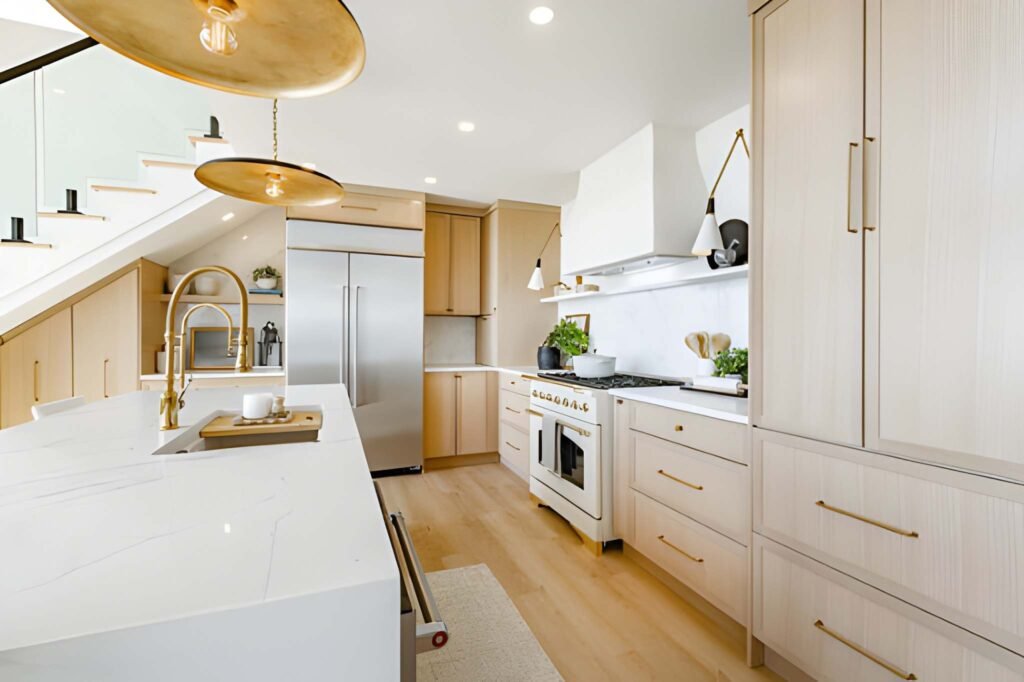
- The Kitchen ($35,000 – $40,000): This budget tier opens the door to custom or semi-custom cabinetry with specialized storage solutions, professional-grade appliances (e.g., Wolf, Sub-Zero, or equivalent), and premium countertops like natural stone (marble, exotic granite) or large-format quartz. It also covers intricate tile work, a dedicated lighting plan with dimmers and multiple circuits, and high-end plumbing fixtures. The result is a kitchen that is both a chef’s workspace and a design statement.
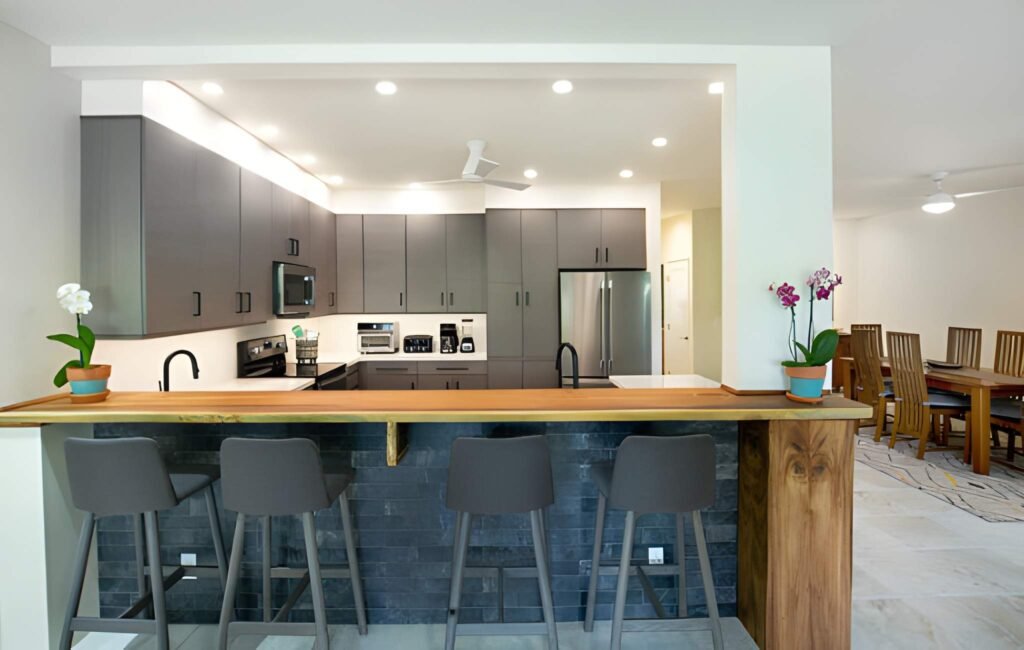
- The Adjacent Space ($10,000 – $15,000): The remaining funds can be used to knock down a non-load-bearing wall to create an open-concept flow to a living or dining area. This would include refinishing the new, continuous flooring (e.g., site-finished hardwood or luxury vinyl plank), repairing the ceiling, and creating a cohesive paint scheme throughout the now-unified space.
Pathway 2: The Primary Suite Creation
Transforming an ordinary bedroom into a true primary suite is a luxury that pays immense dividends in daily life and property value.
- Ensuite Bathroom Addition ($25,000 – $35,000): This involves carving out space from an existing bedroom or a little-used adjacent room to add a full, private bathroom. Costs include framing, plumbing, electrical, ventilation, and all finishes. At this budget, you can include a walk-in shower with multiple showerheads, a freestanding tub, a double vanity, and heated floors.
- Bedroom and Closet Remodel ($15,000 – $25,000): The remaining budget refurbishes the bedroom itself. This could involve adding a custom walk-in closet system, installing large windows or French doors to a patio, adding recessed lighting, and upgrading to premium flooring.
Pathway 3: The Multi-Room Modernization
This approach spreads the investment to update several key areas of the home, creating a widespread sense of renewal.
- Two Full Bathroom Renovations ($20,000 – $25,000 each): A $50,000 budget can comfortably cover the complete gut and renovation of two bathrooms. This allows for consistent, high-quality materials and finishes in both, modernizing the home’s hygiene spaces comprehensively.
- Main Living Area Refresh ($5,000 – $10,000): The leftover funds can refresh the core living space, including new flooring throughout, fresh paint, updated light fixtures, and perhaps the removal of a dated fireplace surround.
The Foundational Investments: The Unseen Engine of Value
A sophisticated $50,000 renovation plan must allocate a portion of the budget to the bones of the house. These investments may not be glamorous, but they are what separate a profound, lasting improvement from a superficial one.
Structural and Layout Improvements: This budget can accommodate the strategic removal of a load-bearing wall (requiring an engineer’s assessment and a steel beam), which can fundamentally redefine an entire floor plan, creating an open, light-filled living area. It can also fund the addition of a new window or a set of French doors to flood a dark room with natural light and connect it to the outdoors.
System Upgrades: Modernizing aging systems improves safety, efficiency, and comfort.
- Electrical: Upgrading a 100-amp electrical service to 200 amps to support modern appliances and technology. Adding dedicated circuits and modern wiring.
- HVAC: Replacing an old, inefficient furnace and air conditioner with a new, high-efficiency system. Adding zoning or a smart thermostat.
- Insulation: Blowing in new insulation into walls or attic spaces to dramatically improve thermal performance and reduce energy bills.
Table 1: Foundational vs. Finish Investment
| Foundational Investment | Impact | Finish Investment | Impact |
|---|---|---|---|
| Load-Bearing Wall Removal | Transformational: Alters spatial perception and flow. | Custom Cabinetry | High-Impact: Defines style and function of a room. |
| HVAC System Replacement | Performance & Comfort: Improves air quality and temperature control. | Premium Hardwood Flooring | Aesthetic & Value: Creates a sense of quality and warmth. |
| Electrical Service Upgrade | Safety & Capacity: Enables modern living and prevents overload. | Natural Stone Countertops | Luxury & Durability: Serves as a design centerpiece. |
| New Insulation | Efficiency & Comfort: Reduces noise and energy consumption. | Designer Light Fixtures | Atmosphere & Style: Acts as jewelry for the home. |
The Allocation Matrix: A Sample $50,000 Budget
A project of this magnitude requires a disciplined and detailed budget that anticipates both the visible and invisible costs.
Table 2: Sample $50,000 Allocation for a Kitchen-Centric Renovation
| Category | Allocation | Description & Rationale |
|---|---|---|
| General Contractor & Fees | $10,000 | Critical for managing trades, timeline, and permits on a complex project. |
| Cabinetry & Storage | $12,000 | Semi-custom or custom cabinets for kitchen and new pantry. Soft-close, full-extension hardware. |
| Appliances | $7,000 | A suite of high-performance, integrated or pro-style appliances. |
| Countertops & Tile | $6,000 | Premium-level quartz or natural stone for kitchen and backsplash. |
| Structural & Layout | $5,000 | Removal of one wall (including beam), and minor framing adjustments. |
| Flooring | $4,000 | Site-finished hardwood or entire main level to unify the new open space. |
| Plumbing & Electrical | $3,000 | Upgrading fixtures, adding dedicated appliance circuits, and under-cabinet lighting. |
| Contingency (15%) | $7,500 | Essential. For unforeseen structural issues, material price increases, or design changes. |
The Execution: Phasing and Professional Management
A $50,000 renovation is not a weekend project. It requires professional management and a clear phasing plan.
Phase 1: Deep Planning (4-8 Weeks)
This phase is about reducing uncertainty. It involves:
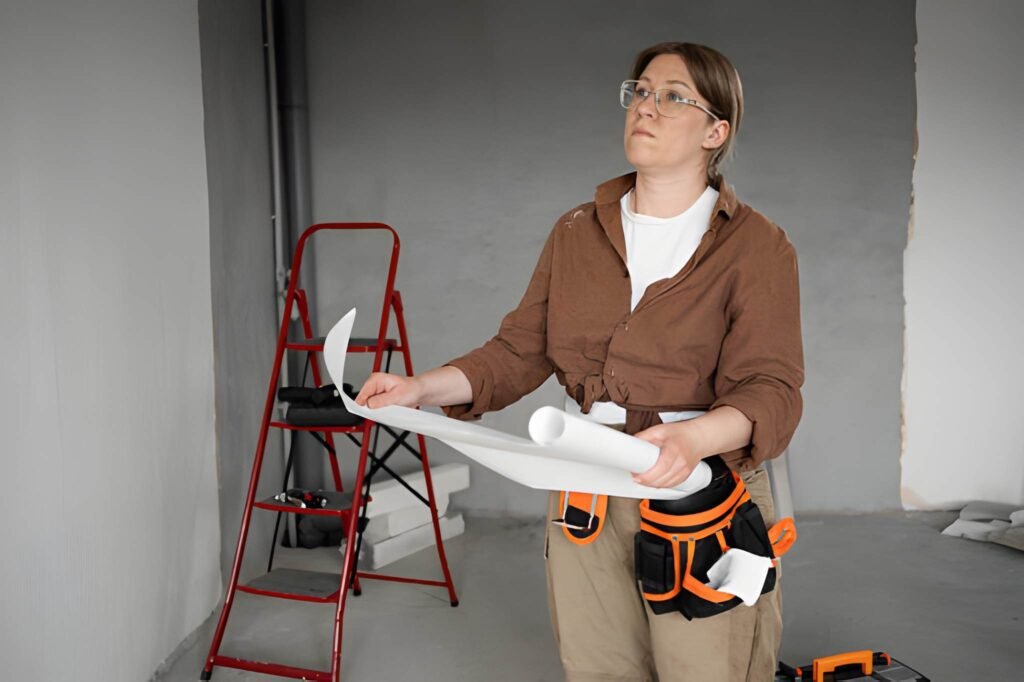
- Architect/Designer Consultation: For space planning and detailed drawings, especially if walls are being moved.
- Contractor Selection: Obtaining at least three detailed, fixed-price bids from licensed and insured contractors with strong references.
- Material Procurement: Ordering all major materials with long lead times (cabinets, windows, special-order tiles) before demolition begins.
Phase 2: The Deconstruction (1-2 Weeks)
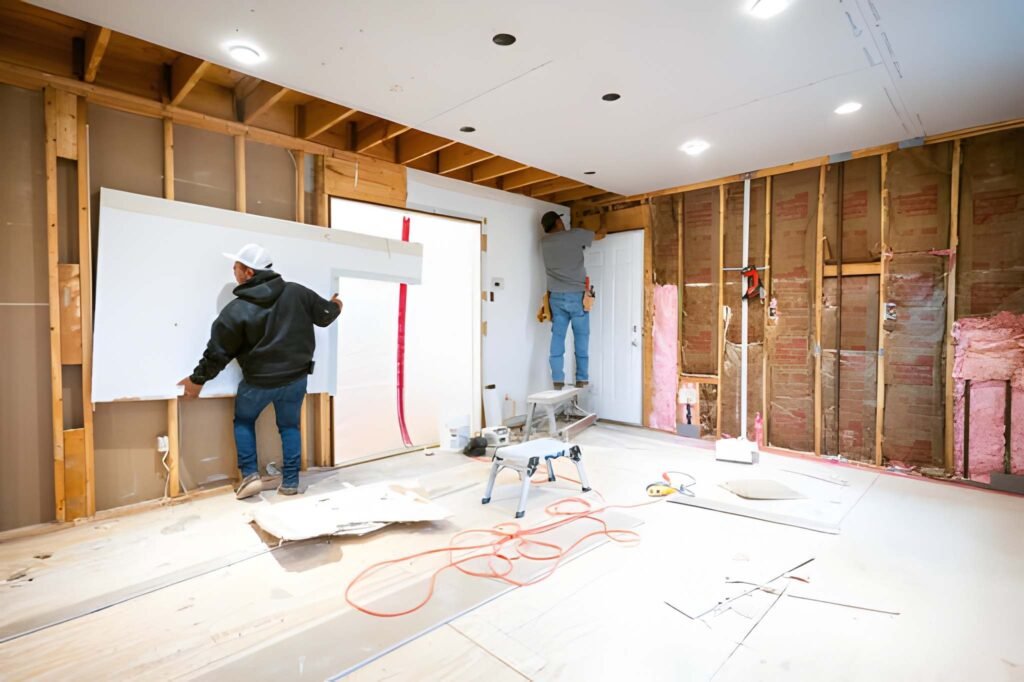
Demolition down to the studs in the affected areas. This is when hidden issues—like rotten subfloor or outdated wiring—are discovered and addressed using the contingency fund.
Phase 3: The Rebuild (4-8 Weeks)
The work happens in a specific sequence:
- Structural: Any beam installation, framing changes.
- Rough-In: Plumbing, electrical, and HVAC lines are run inside the walls.
- Inspections: Building, plumbing, and electrical inspections occur before walls are closed.
- Enclosure: Drywall is hung, taped, and sanded.
- Finishes: Flooring, painting, cabinet installation, countertop templating and installation, tile work, and final plumbing/electrical trim-out.
Conclusion: The Art of the Transformative Investment
A $50,000 renovation is a profound opportunity to imprint your vision onto a property. It is the budget that allows you to move beyond addressing shortcomings and into the realm of creating possibilities. By focusing on high-leverage projects, investing in the unseen foundational elements that ensure longevity, and managing the process with strategic discipline, this investment becomes more than a series of construction tasks. It becomes the method through which a house is refined into a home that is not only more beautiful and functional but also smarter, safer, and more resilient. It is a deliberate step toward crafting a living environment that supports your life now and stands as a valuable asset for the future.