A one hundred thousand dollar home renovation is a significant undertaking. It sits in a powerful sweet spot of residential improvement—a budget substantial enough to facilitate a profound transformation, yet not so vast as to be without need for careful strategy and disciplined choices. This is not the realm of a simple paint job or appliance upgrade; it is the territory of foundational changes, of reimagining layouts, and of addressing the core systems that make a house function. How you allocate these resources will determine whether you create a personalized sanctuary that also builds equity or embark on a costly journey that yields little return. The outcome hinges not on the sum itself, but on the intelligence of its application.
The Foundational Philosophy: Strategy Before Hammer
Before you select a single fixture or entertain a single design idea, you must establish a clear, written plan. A $100,000 renovation without a blueprint is a guarantee of budget overruns, timeline delays, and potential regret. The first and most critical step is to define your primary objective. This objective will become the lens through which every subsequent decision is filtered.
Are you renovating for immediate resale, with the goal of maximizing your return on investment when you list the property? This path demands a focus on broad market appeal, neutral aesthetics, and proven value-add projects. Alternatively, are you renovating for your own long-term enjoyment, planning to live in the home for a decade or more? This objective allows for more personalization, prioritizing your family’s specific needs and desires over what might be trendy in the current market. A third path is the strategic purchase and renovation of a property for rental income, where the focus shifts to durability, low maintenance, and creating a functional layout that appeals to tenants.
Once your objective is clear, you must confront the single most important rule of any renovation: the budget breakdown. Professional contractors and savvy homeowners do not view a lump sum; they see a detailed allocation across categories. A typical, well-balanced allocation for a comprehensive $100,000 renovation might look like this:
| Category | Allocated Budget | Purpose & Examples |
|---|---|---|
| Labor & Professional Fees | $30,000 – $40,000 | Covers general contractor, skilled trades (plumbers, electricians, carpenters), and potentially an architect or designer. |
| Materials & Finishes | $40,000 – $50,000 | Includes lumber, drywall, windows, flooring, cabinetry, countertops, tile, and plumbing/lighting fixtures. |
| Contingency Fund | $10,000 – $15,000 | A non-negotiable buffer for unforeseen issues like structural problems, outdated wiring, or plumbing surprises. |
| Permits & Fees | $2,000 – $5,000 | City/county building permits, impact fees, and potential HOA approval costs. |
This allocation is not rigid, but it illustrates a crucial principle: nearly half of your budget will be consumed by labor and professional expertise. Attempting to slash this portion by acting as your own general contractor without experience is the most common path to disaster. The contingency fund is equally vital. In the world of renovation, the unknown is a certainty. You will discover a problem behind a wall or under a floor. A 10-15% contingency is not pessimism; it is professional-grade planning.
High-Impact Renovation Archetypes: Choosing Your Path
With your philosophy and budget framework in place, you can now consider the archetypal paths a $100,000 renovation can take. These are not mutually exclusive, but they represent distinct strategic focuses.
The Kitchen and Primary Suite Overhaul
This is perhaps the most classic and personally rewarding path for a homeowner planning to stay. The kitchen and primary bathroom are the two rooms that sell homes and define daily luxury. With a budget of $100,000, you can completely transform both spaces to a high standard.
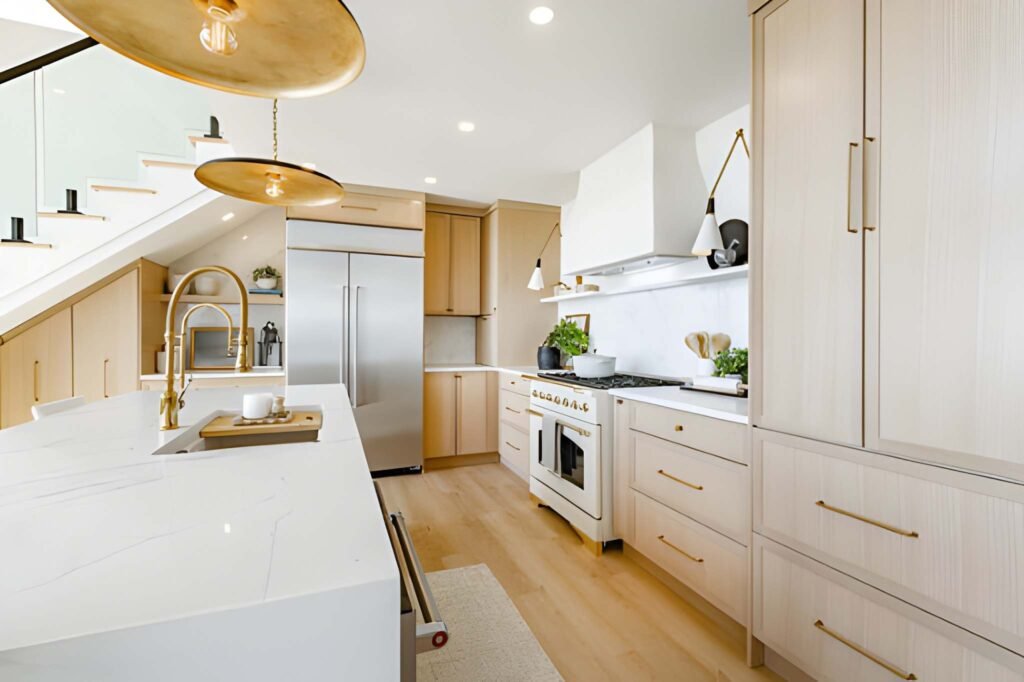
A kitchen renovation in this scenario might command $60,000-$70,000. This allows for custom or semi-custom cabinetry, solid stone countertops (like quartz or granite), high-end professional-grade appliances, a new layout with an island, and premium flooring. The remaining $30,000-$40,000 can fund a primary bathroom suite renovation, featuring a large, tiled shower with a frameless glass enclosure, a freestanding tub, double vanities with quality fixtures, and intelligent lighting. This approach directly targets the two areas that offer the highest return on investment for personal enjoyment and, if done with some restraint, for future resale.
The Whole-House Cosmetic and Systems Update
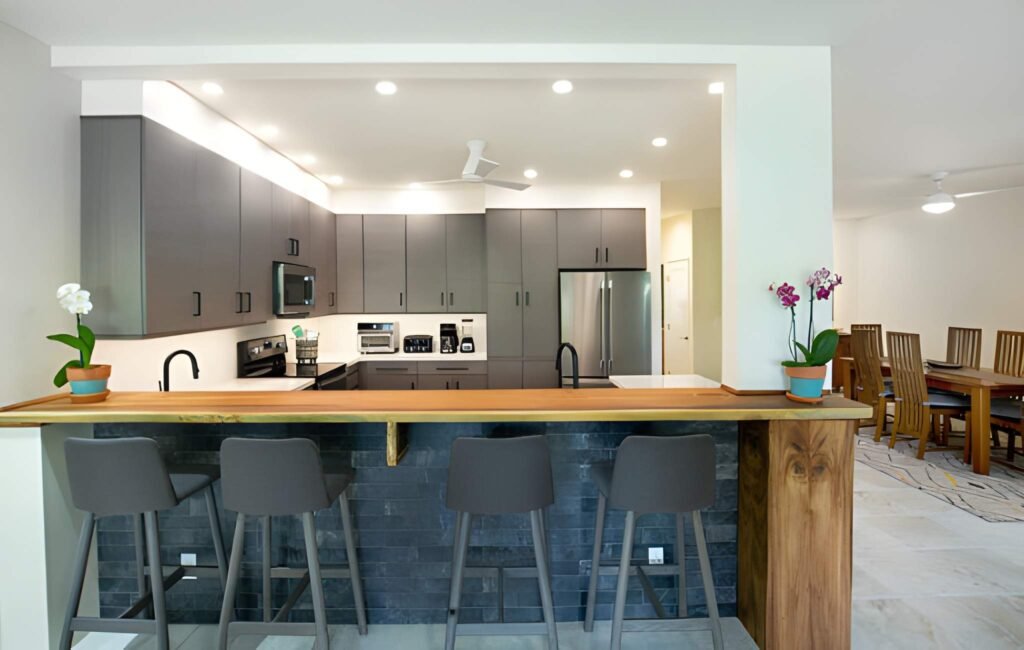
This path is ideal for a structurally sound but dated home—think a 1990s or early 2000s property with popcorn ceilings, honey-oak cabinets, and worn carpeting. Instead of focusing the entire budget on two rooms, you spread it across the entire home to achieve a cohesive and comprehensive update. The breakdown is more distributed:
| Project Scope | Estimated Cost | Details |
|---|---|---|
| Interior Paint & Flooring | $20,000 – $25,000 | Painting all interior walls, ceilings, and trim; installing luxury vinyl plank or engineered hardwood throughout main living areas. |
| Kitchen Cosmetic Update | $15,000 – $20,000 | Refacing or painting existing cabinets, new hardware, new countertops, new sink/faucet, and a new backsplash. Appliance package. |
| Bathroom Updates (x2) | $15,000 – $20,000 | Updating vanities, mirrors, lighting, and toilets; reglazing tubs/showers; new flooring and fixtures. |
| Critical Systems & Lighting | $20,000 – $25,000 | Replacing the HVAC system for efficiency, updating the electrical panel, and replacing old light fixtures with modern LED alternatives throughout. |
| Exterior Curb Appeal | $10,000 – $15,000 | New front door, modern garage door, refreshed landscaping, and exterior paint touch-ups. |
This approach modernizes the home from top to bottom, addressing both aesthetics and the hidden, aging systems that can cause major problems. It creates a move-in-ready property that appeals to a broad audience and prevents near-term maintenance crises.
The Addition: Expanding Your Square Footage
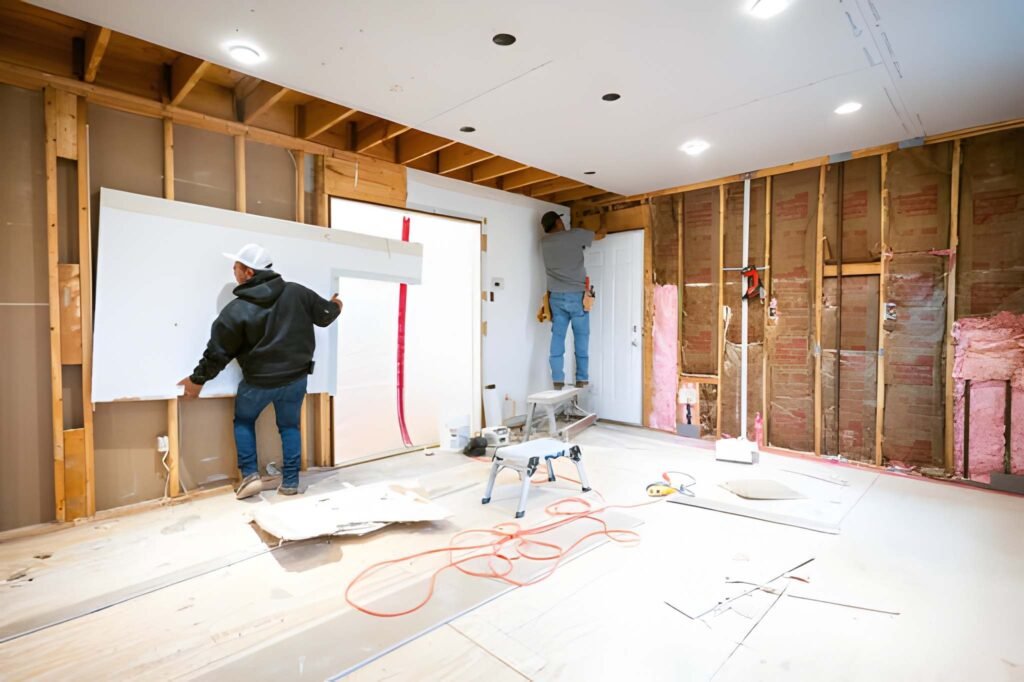
In some markets, adding conditioned square footage is the most powerful way to increase a home’s value. A $100,000 budget places you at the threshold for a modest but significant addition. This is a complex path, heavy on labor, permits, and foundational work. You are not just building a room; you are tying a new structure into your existing roof, foundation, and HVAC system.
For this budget, a realistic project might be a 300-400 square foot addition. This could serve as a main-floor family room, a dedicated home office, or a primary suite expansion. The costs are intense: site work and foundation ($15,000), framing and roofing ($20,000), siding and exterior work ($10,000), and the interior finish (electrical, drywall, flooring, etc. for the remaining $55,000). This path offers the least “finish” for your money per square foot, as so much capital is consumed by the structure itself, but it can solve a fundamental lack of space in a way that remodeling cannot.
The Unseen Essentials: Where the Money Really Goes
A sophisticated renovation plan accounts for the elements you cannot see but cannot live without. These are the projects that lack the visual appeal of a new kitchen but form the bedrock of a safe, efficient, and durable home.
Structural and Envelope Integrity. If your home has foundation issues, rotten roof sheathing, or failing windows, your $100,000 budget can evaporate on a single, unglamorous problem. A portion of your contingency fund must be reserved for these discoveries. Proactively, you might allocate funds to replace old, drafty windows with modern, energy-efficient units—a significant expense that improves comfort and reduces utility bills.
Mechanical Systems. The heart and lungs of your home are its electrical, plumbing, and HVAC systems. An outdated electrical panel is a fire hazard and cannot support the load of a modern household. Re-piping a home with old galvanized steel or polybutylene pipes prevents future leaks and water damage. Replacing a 20-year-old furnace and air conditioner with a high-efficiency heat pump can cut your energy consumption in half. These projects are not Instagram-friendly, but they are non-negotiable for long-term viability.
Building Code and Permits. Any significant structural, electrical, or plumbing work requires a permit from your local municipality. The permit process ensures the work is done to code, protecting you and future owners. The fees are a line item, but the larger cost is the time and potential redesign required to meet modern standards for egress, electrical grounding, and plumbing venting. Ignoring permits to save time or money is a catastrophic risk that can result in fines, forced demolition of completed work, and an inability to sell the home.
The Execution: Navigating the Human Element
A renovation is a management exercise as much as a construction project. Your relationship with your contractor will define your experience. Vetting is paramount. Obtain at least three detailed, written bids for the exact same scope of work. The lowest bid is often the most dangerous; a reputable contractor’s bid will reflect realistic costs for quality labor and materials. Check references not just for the quality of work, but for their communication, adherence to schedule, and handling of problems when they arose.
Communication is the currency of a successful project. Establish a regular schedule for updates—a weekly meeting is standard. Use a written change order for any deviation from the original plan. A change order details the new work, the adjusted cost, and the impact on the timeline. This prevents “scope creep” and financial surprises. You must manage your own expectations; delays due to weather, material backorders, and unforeseen structural issues are the rule, not the exception. Patience, backed by a solid contract and contingency fund, is your greatest asset.
The Final Analysis: Value Beyond the Price Tag
Upon completion, the success of your $100,000 investment is measured against your original objective. If you renovated for resale, a comparative market analysis from your real estate agent will quantify the new value of your home. According to industry reports like Remodeling Magazine’s Cost vs. Value Report, a minor kitchen remodel, a window replacement, and a new garage door consistently offer some of the highest returns, often recouping 70-95% of their cost depending on the region.
If you renovated for your own enjoyment, the value is calculated in different terms: the comfort of a safe, efficient home; the joy of a kitchen that functions for your family; the peace of a primary bathroom that serves as a retreat. This is value that compounds daily. The final walk-through is not just an inspection of craftsmanship; it is the moment you take possession of a home you have not just bought, but built. A $100,000 renovation, when guided by strategy, discipline, and a clear vision, is one of the most powerful tools a homeowner possesses to shape their environment and secure their investment.