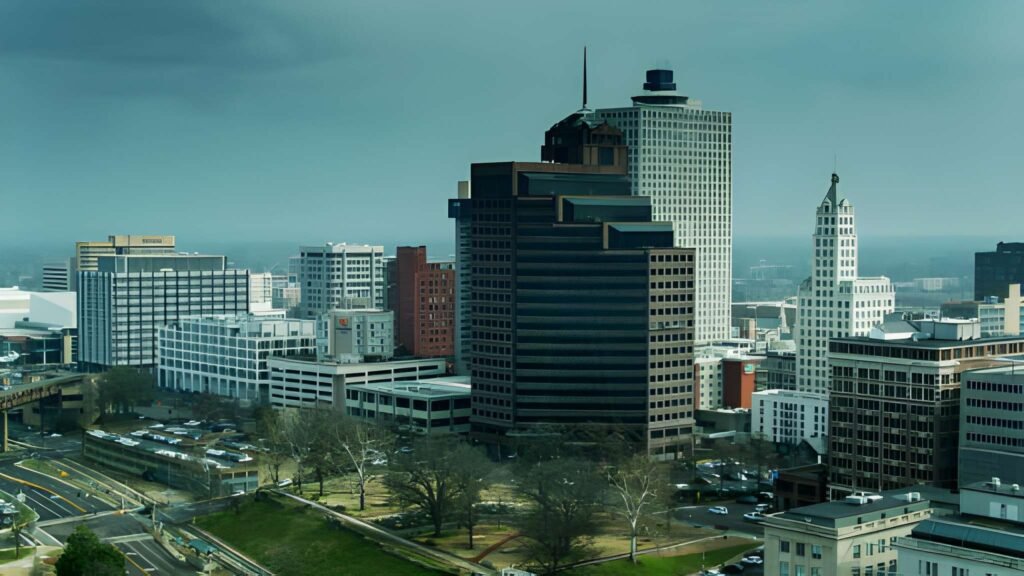
Memphis does not apologize. It is a city of profound contrasts, where the birth of rock ‘n’ roll and the pain of the civil rights movement reside on the same streets. Living here means embracing a place of raw authenticity, where a rich cultural legacy lives alongside deep-seated socioeconomic challenges. It is a city of soul—both musical and spiritual—that offers a low cost of living, a unique identity, and a sense of community that is hard to find in more polished, transient metros. This guide moves beyond Beale Street and Graceland to explore the tangible reality of building a life in the Bluff City, a place that rewards those who look beyond its surface with a deeply rewarding and authentic experience.
The River City’s Legacy: A Crossroads of Culture and Contention
Memphis’s identity is inextricably linked to its location on the Mississippi River. It was, and is, a crossroads—for commerce, for music, and for the struggle for human rights. The city’s 20th-century history is a tapestry of revolutionary creativity (Sun Studio, Stax Records) and profound tragedy (the assassination of Dr. Martin Luther King Jr. at the Lorraine Motel). This history is not past; it permeates the present. Living here means understanding that this tension between glorious achievement and ongoing struggle is the essence of Memphis. It is a city that is real, unvarnished, and fiercely proud of its identity.
The Affordability Anchor: Cost of Living in the Bluff City
Memphis’s most compelling feature is its rock-bottom cost of living. It is one of the most affordable major cities in the United States. Tennessee has no state income tax, which provides an immediate boost to take-home pay. This financial accessibility is the city’s primary magnet, allowing residents to own homes, start businesses, and live comfortably on modest incomes.
A detailed monthly budget for a professional or family living in a desirable area like Midtown or East Memphis illustrates this value:
- Rent (2-Bed apartment): $1,000 – $1,300
- Utilities (Electricity – AC is critical): $150 – $250 (summer peak)
- Internet: $70
- Groceries: $400
- Gasoline & Car Maintenance: $250 (a car is essential)
- Dining & Entertainment: $400 (incredible food at non-inflated prices)
This puts a baseline monthly expenditure between $2,270 and $2,670, not including savings or healthcare. This financial breathing room is Memphis’s superpower.
The Logistics and Healthcare Hub: Job Market and Career Opportunities
Memphis’s economy is a tale of two cities: a world-class logistics sector and a struggling local job market. The highest-paying jobs are often with the large corporate anchors.
- Logistics & Transportation: Memphis is a global logistics powerhouse. FedEx is headquartered here, with its massive World Hub at Memphis International Airport (the busiest cargo airport in the Western Hemisphere for decades). This ecosystem supports thousands of jobs in logistics, supply chain management, and aviation.
- Healthcare & Bio-Science: The other pillar of the economy. St. Jude Children’s Research Hospital is a world-renowned, free-to-patients research institution and a top employer. Methodist Le Bonheur Healthcare and Baptist Memorial Health Care operate vast hospital networks.
- Corporate Headquarters: AutoZone and International Paper are Fortune 500 companies headquartered in Memphis, providing stable corporate jobs.
- Tourism & Hospitality: A significant employer, centered around Graceland, Beale Street, and the National Civil Rights Museum.
While these anchors provide stability, the broader local job market can be challenging, with a higher prevalence of lower-wage service work. The lack of a state income tax helps offset lower average salaries.
A City of Distinct Neighborhoods: Finding Your Community
Memphis is a city of fiercely independent neighborhoods, each with a strong sense of identity. The city is often discussed in terms of its zip codes, with a general divide between the more affluent East Memphis and the historic core.
- Midtown: The cultural and creative heart of Memphis. Anchored by the Overton Park shell, the Memphis Zoo, and a vibrant stretch of restaurants and bars along Cooper-Young, it is bohemian, walkable, and full of character. It attracts artists, musicians, and young professionals.
- East Memphis: The affluent, suburban-style heart of the city. This is where you find upscale shopping (Laurelwood Shopping Center), corporate offices, beautiful parks (Audubon Park), and some of the city’s best public schools. It is the preferred choice for many established families and professionals.
- Downtown: The urban core is experiencing a residential renaissance, with historic buildings converted into apartments and condos. It is home to the FedExForum, Beale Street, and the National Civil Rights Museum. It offers a true urban lifestyle with views of the Mississippi River.
- Harbor Town: A master-planned community on Mud Island, connected to downtown by a monorail. It feels like a separate, idyllic village with its own marina, parks, and upscale homes. It is quiet, safe, and family-friendly.
- Crosstown: The site of the city’s most exciting urban revitalization project. The massive former Sears Crosstown building has been transformed into the Crosstown Concourse, a vertical urban village with apartments, offices, arts organizations, and retail. It is a model of community-focused redevelopment.
- Binghampton: A historically underserved neighborhood that is now seeing significant investment and gentrification, thanks in part to its proximity to the Crosstown Concourse. It offers affordability and a strong sense of community.
The Bluff City Calculation: Renting vs. Buying
The decision to rent or buy in Memphis is heavily skewed towards ownership, given the incredibly low barrier to entry.
The Case for Renting: Renting offers flexibility to explore different neighborhoods without commitment. It is a good option for newcomers or those who may not want the responsibility of maintaining an older home.
The Case for Buying: For anyone committed to staying even a few years, buying is an exceptionally achievable path to building equity. The low home prices make mortgages cheaper than rent in many cases.
A Simplified Financial Comparison:
Consider a $200,000 home in Midtown.
- Renting: Monthly rent for a similar property: ~$1,200. This is a pure expense.
- Buying:
- Down Payment (10%): $20,000
- Mortgage Principal & Interest (30-year fixed at 7%): ~$1,200/month
- Property Taxes (Shelby County, effective rate ~1.0%): \frac{1.0}{100} \times 200,000 = \$2,000 per year, or ~$167/month
- Homeowners Insurance: ~$80/month
- Total Monthly Cost (P&I + Taxes + Insurance): ~$1,447
This calculation shows that buying can be marginally more expensive than renting, but the principal portion of the mortgage payment builds equity, making it a far wiser long-term financial decision.
The Housing Market: Bungalows, Ranches, and Southern Charms
Memphis is a treasure trove of early and mid-20th-century architecture, from Craftsman bungalows in Midtown to sprawling ranch homes in East Memphis.
Average Home Prices: The median home price in the Memphis metro is remarkably affordable, typically hovering between $180,000 and $220,000.
Most Affordable Areas to Buy a Home: The most affordable options are found throughout the city, particularly in North Memphis, South Memphis, and Westwood. These areas offer significant potential but require thorough research and community engagement.
Luxury Real Estate Hotspots: The luxury market is concentrated in:
- Central Gardens: A historic district in Midtown known for its majestic, early 20th-century homes and tree-canopied streets.
- East Memphis: Particularly the neighborhoods around Chickasaw Gardens and along Poplar Avenue.
- Harbor Town: Waterfront properties on Mud Island.
Rental Market: The market is balanced. Expect to pay:
- 1-Bed Apartment: $800 – $1,100
- 2-Bed Apartment: $1,000 – $1,400
- 3-Bed Single-Family Home: $1,200 – $1,800
Investing in the Soul: Real Estate Investment and Growth
Memphis’s affordability and steady demand from its corporate anchors make it a strong market for cash-flow investment properties.
- Best Places to Invest: Neighborhoods adjacent to ongoing revitalization efforts are prime. Binghampton and the Orange Mound area show potential for long-term appreciation. The Medical District near downtown is also a target for investment.
- Future Growth Neighborhoods: The continued expansion and influence of St. Jude and the Memphis Medical District are the city’s biggest future growth catalysts.
The Commute: A Car-Centric City with a Straightforward Grid
Memphis is designed for the automobile. Its grid system is generally easy to navigate, though traffic on the main arteries can be heavy during rush hour.
- The Car: This is the primary mode of transport for all residents. The interstate loop (I-240) defines the city’s core, and highways I-40 and I-55 converge downtown.
- Public Transit: The Memphis Area Transit Authority (MATA) operates a bus system and the Riverside Trolley, but coverage is limited and often slow, primarily serving those without other options.
- Biking/Walking: Some neighborhoods like Midtown and Downtown are walkable for daily errands, but the city as a whole is not designed for biking or walking as primary transportation.
Life in the Bluff City: Music, Food, and a Deep Sense of Place
Memphis culture is soulful, authentic, and deeply connected to its history.
- The Music: This is the city’s heartbeat. The legacy of Elvis, B.B. King, and Otis Redding is everywhere. Live music, from blues on Beale Street to indie rock in Cooper-Young, is a nightly occurrence.
- The Food: Memphis is a world-class food city, and barbecue is its religion. The debate over ribs vs. pulled pork and dry rub vs. wet sauce is a serious local pastime. Beyond BBQ, the city has incredible soul food, and its culinary scene is increasingly diverse.
- The Greenspace: The city is home to incredible parks. Overton Park (home to the Old Forest, one of the few old-growth forests in a U.S. city), Shelby Farms (one of the largest urban parks in the country), and Tom Lee Park on the riverfront provide ample space for recreation.
- The Challenges: The city grapples with high poverty and crime rates. Property crime is common, and violent crime is a serious issue in certain areas. This reality is an inescapable part of life in Memphis and requires awareness and vigilance.
The Family Equation: Schools, Safety, and Suburbs
The question of schools is the primary driver for family movement within the metro, often to the suburbs or specific private schools.
- Best Schools & Universities: Shelby County Schools is a merged district that faces significant challenges. The highest-rated public schools are often optional programs within the district or located in the outer suburbs. For higher education, the University of Memphis is a major public research university.
- Best Suburbs: For families, the premier destinations are Collierville, Germantown, and Arlington. These suburbs have their own highly-rated school districts and are known for safety and community amenities.
- Raising a Family & Safety: Crime is the most significant challenge. Safety is highly neighborhood-dependent. East Memphis, the suburbs, and Harbor Town are considered very safe, while other areas require extreme caution.
The Practicalities: Heat, Humidity, Healthcare, and Relocation
- Weather and Climate: Memphis has a humid subtropical climate. Summers are long, brutally hot, and oppressively humid. Winters are mild and damp, with occasional ice storms. Spring brings a risk of severe thunderstorms and tornadoes.
- Healthcare: The region is a major healthcare hub, anchored by St. Jude and the other large hospital systems. Access to quality healthcare is a significant benefit.
- Relocation Checklist:
- Research Neighborhoods Intensely: Safety and character vary dramatically block by block.
- Secure Off-Street Parking: Especially in older neighborhoods, this is a valuable asset.
- Invest in Serious AC: A functioning, efficient air conditioning system is non-negotiable.
- Embrace the Local Culture: Get involved in the community; Memphians are fiercely loyal and welcoming to those who engage.
- Be Aware of Your Surroundings: Develop habits of situational awareness to navigate the city safely.
Memphis is not an easy city. It demands that you engage with its complexities—its profound beauty and its deep problems. It is a city for those who value authenticity over polish, community over convenience, and soul over slickness. Living in Memphis is a choice to be part of a real, raw, and deeply human place. For those who can navigate its challenges, the rewards are a low-cost, high-quality life filled with incredible music, food, and a sense of belonging that is increasingly rare in modern America. It is the soul of the South, unabashed and true.