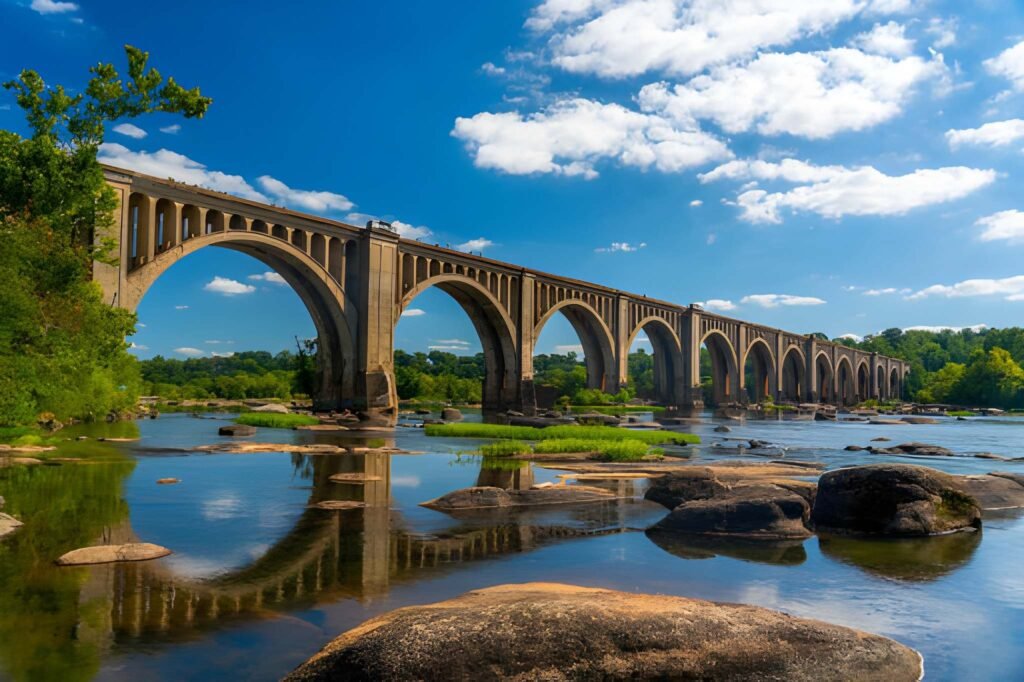
Richmond is a city that proudly wears its history on its sleeve, but its heart beats with a vibrant, modern, and occasionally rebellious energy. Living in Richmond means engaging with a place of profound American legacy—as both the former capital of the Confederacy and a hub of Black entrepreneurship—that is now a center for art, food, and outdoor adventure. It is a city of contrasting textures: cobblestone streets and world-class whitewater rapids, stately monuments and sprawling street art, Southern tradition and punk rock ethos. This guide moves beyond the textbook history to examine the intricate realities of life in RVA, from its unbeatable affordability and creative culture to its complex past and evolving identity, providing a clear-eyed view of what it truly means to build a life in this compelling and authentic city.
The RVA Vibe: Life on the James River
Life in Richmond is defined by its river and its resilience. The pace is relaxed and intentional; it’s a city that values quality of life over relentless ambition. The vibe is unpretentious, creative, and fiercely independent. It’s a city of makers: artists, chefs, brewers, and craftspeople who are drawn to its affordability and authentic character. The energy is one of transformation, both personal and civic, as the city reckons with its difficult history while building a more inclusive future. The cultural fabric is a deep tapestry of Black history, collegiate influence (from VCU), and a thriving LGBTQ+ community. It’s a place where you can kayak through the city center after work, explore a world-class art museum for free, and then debate the merits of a new brewery in a century-old factory building.
The Affordability Advantage: Cost of Living
Richmond’s greatest strength is its affordability. It delivers a rich, historic urban experience with a cost of living that feels like a secret hack, especially for the East Coast.
A detailed budget for a single professional living in a one-bedroom apartment in a popular area like Scott’s Addition or The Fan might look like this:
- Rent: $1,300 (for a 700-800 sq ft apartment)
- Utilities (Electricity, Gas, Internet): $180
- Groceries: $350
- Dining & Entertainment: $450 (a phenomenal and affordable food/brewery scene)
- Transportation (Many walk/bike; car costs estimated): $400
- Miscellaneous: $250
This creates a baseline monthly expenditure of approximately $2,930. To afford this comfortably (using the standard guideline that rent should not exceed 30% of gross income), your pre-tax annual income would need to be at least $52,000.
This calculation is shown as:
\text{Required Annual Income} = \frac{\$1,300 \times 12}{0.3} = \$52,000This accessibility is a primary driver attracting artists, remote workers, and young professionals.
A City of Distinct Districts: Best Neighborhoods
Richmond’s identity is found in its diverse and walkable neighborhoods, each with a unique history and character.
- The Fan & Museum District: The iconic heart of RVA. The Fan is a massive area of stunning row houses, tree-lined streets, and a vibrant main drag (Cary Street). The adjacent Museum District is slightly more subdued, home to the Virginia Museum of Fine Arts (VMFA) and the Virginia Historical Society. Highly walkable and coveted.
- Scott’s Addition: The epicenter of Richmond’s renaissance. A former industrial district now packed with more than 30 breweries, cideries, distilleries, and rooftop bars. The ultimate walkable entertainment district, with new apartment complexes rising among the old factories.
- Church Hill: The city’s oldest neighborhood, overlooking the river and downtown. Features historic homes, incredible views, and a burgeoning food scene on its main street. A mix of long-term residents and newcomers.
- Jackson Ward: A historic hub of Black culture and commerce, known as the “Harlem of the South.” Home to the Black History Museum, incredible jazz history, and a community undergoing both preservation and gentrification.
- Shockoe Bottom: The oldest commercial district, nestled along the river. Has a mix of nightclubs, apartments, and historic sites, including the notorious slave trading grounds now being memorialized.
- Forest Hill / Westover Hills: Family-friendly neighborhoods south of the river with a more suburban feel, great local businesses, and easy access to the James River Park System.
The Path to Homeownership: Renting vs. Buying
The decision to rent or buy in Richmond is heavily weighted towards buying, thanks to a stable market of incredibly affordable, historic housing stock.
Renting offers flexibility to explore different neighborhoods and is a low-commitment way to experience the city. The rental market is competitive in the most desirable areas.
Buying is an exceptionally achievable goal. The barrier to entry is remarkably low. A 20% down payment on a median-priced city home is a realistic target for many single professionals and couples. Richmond is full of beautiful, historic homes, from Fan row houses to Church Hill Victorians.
The financial break-even point is very short, often around 3-5 years. A simplified formula illustrates the compelling math:
\text{Break-Even Point (years)} = \frac{\text{Total Upfront Costs}}{\text{Annual Rent} - (\text{Annual Mortgage Interest} + \text{Annual Property Taxes} + \text{Annual Insurance} + \text{Annual Maintenance})}Upfront costs include down payment and closing costs. The low purchase price is the dominant variable making buying so advantageous.
The Eds, Meds, and Legs Economy: Job Market and Career Opportunities
Richmond’s economy is a stable mix of government, finance, and education, providing a buffer against economic downturns.
- Finance & Law: A major sector. Richmond is a hub for banking and law firms, with Capital One having a massive operational campus in the suburbs and several Fortune 500 companies like CarMax and Altria headquartered here.
- Government: As the state capital, government administration is a significant and stable source of employment.
- Healthcare & Education: VCU Health is a major academic medical center and a top employer. Virginia Commonwealth University (VCU) and the University of Richmond are vital cultural and economic anchors.
- Manufacturing: A historic strength that persists, with companies like Titan America and DuPont having a presence.
- Creative Industries: A growing sector of artists, designers, and makers drawn by the city’s culture and low cost of living.
Educational Landscape: Best Schools and Universities
Richmond Public Schools (RPS) has faced significant challenges, leading to high demand for charter schools and magnet programs. The perception of school quality is the primary driver of movement to the suburbs (Henrico and Chesterfield Counties).
For higher education, Richmond is a strong hub:
- Virginia Commonwealth University (VCU): A major public research university known for its top-ranked arts school (VCUarts) and medical center. It defines the energy of downtown.
- University of Richmond (UR): A prestigious private liberal arts university with a beautiful, secluded campus.
- Virginia State University (VSU): A public historically black university (HBCU) located nearby in Ettrick.
Getting Around: Transportation and Reality
Richmond is a highly navigable city. Its core neighborhoods—The Fan, Museum District, Scott’s Addition, and Church Hill—are very walkable and bikeable. The GRTC Pulse, a Bus Rapid Transit (BRT) line, runs a dedicated lane along Broad and Main Streets, providing efficient crosstown travel. For most residents, a car is still useful for trips to the suburbs or grocery stores, but it is entirely possible to live a car-lite or car-free life in the urban core, a rarity for a city of its size.
The Housing Market: A Tactical Overview
The Richmond housing market is hot for a city its size, characterized by high demand for a limited inventory of historic homes.
- Average Home Prices: As of late 2023, the median sale price for a home in the city of Richmond is approximately $350,000. The metro-wide median is higher, pulled up by the suburbs.
- Most Affordable Areas to Buy a Home: Look to the city’s North Side and South Side: Highland Park, Oakwood/Beleview, and Manchester (across the river). These areas offer significant value and are seeing increased investment.
- Luxury Real Estate Hotspots: Windsor Farms (riverfront estates), The Fan (particularly Monument Avenue), and Westhampton are the premier addresses.
- Rental Market: Competitive in walkable neighborhoods (The Fan, Scott’s Addition). More affordable and plentiful in other areas. Landlords typically require proof of income.
- Best Places to Invest & Future Growth Neighborhoods: Investment follows the Pulse line and the river. Manchester is rapidly transforming. Northside and Southside neighborhoods along the transit corridor are seen as having strong potential for appreciation.
The Cultural Repertoire: Things to Do
| Activity Category | Iconic Examples | Hidden Gems |
|---|---|---|
| Cultural Attractions | Virginia Museum of Fine Arts (VMFA – free general admission), American Civil War Museum, Virginia State Capitol | Institute for Contemporary Art (ICA) at VCU, The Valentine, Poe Museum |
| Parks & Outdoors | James River Park System (hiking, biking, kayaking, swimming), Maymont Park, Lewis Ginter Botanical Garden | Texas Beach, Pony Pasture Rapids, Pipeline Walkway |
| Food & Drink | Virginia Ham Biscuits, BBQ, incredible breweries (The Veil, Hardywood) | Mama J’s (soul food), Sub Rosa Bakery, Proper Pie Co. |
| Nightlife | Scott’s Addition breweries, bars in The Fan and Shockoe Bottom | The Hofheimer Building (dive bar), The Jasper (cocktails), live music at The Broadberry |
Annual Festivals and Events: Richmond Folk Festival, Watermelon Festival, French Film Festival, and VCU Rams basketball games.
Shopping: From the unique boutiques of Carytown (“The Mile of Style”) to the thrift stores of Broad Street and the Stony Point Fashion Park.
Quality of Life & Relocation Essentials
- Raising a Family: Challenging within the city limits due to the public school system. Many families who stay navigate the charter/magnet system or opt for private schools. The suburbs (Henrico, Chesterfield) are the primary choice for families seeking strong public schools.
- Crime and Safety: Like any city, crime is not evenly distributed. Property crime is the most common issue. Violent crime is concentrated in specific, economically disadvantaged areas. Researching specific neighborhoods is crucial.
- Healthcare and Hospitals: High-quality healthcare is available through VCU Medical Center (a Level I trauma center) and HCA Virginia Health System.
- Weather and Climate: A humid subtropical climate. Summers are hot and humid. Winters are generally mild but can bring snow and ice. Spring and fall are glorious.
- Cost of Utilities: For a 1,500 sq ft home, average monthly costs are:
- Electricity (Dominion Energy): $120 – $180
- Gas (Washington Gas): $100 – $150 (in winter)
- Water/Sewer: $60 – $90
- Internet: $70 – $100
The Relocation Checklist
- Secure Employment: Have a job lined up. The economy is stable but not explosively growing.
- Choose Your Neighborhood Meticulously: Richmond is a city of micro-neighborhoods. Visit at different times of day. The difference of a few blocks can be significant.
- Consider a Car-Lite Lifestyle: If you live and work in the core, you can easily reduce your reliance on a car.
- Embrace the Culture: Explore the river, go to a brewery, learn about the city’s complex history, and cheer for the VCU Rams.
- Prepare for the Humidity: Summers are hot and muggy. Ensure your home has a good AC system.
The Final Verdict: Pros and Cons of Living in Richmond
Pros:
- Exceptionally affordable cost of living, especially for housing.
- A vibrant, authentic, and accessible arts, food, and brewery scene.
- Unbeatable access to urban outdoor recreation on the James River.
- A highly walkable and bikeable urban core with functional public transit.
- A strong sense of community and a city with genuine character.
Cons:
- A struggling public school system within the city limits.
- The city is still grappling with the legacy and monuments of its Confederate past.
- The job market can be less dynamic than in larger tech hubs, with lower average salaries.
- Summers are humid.
- Economic and racial disparities are stark and visible.
Living in Richmond is a choice to prioritize authenticity, culture, and quality of life over high salaries and corporate career ladders. It is a city for artists, adventurers, history buffs, and those who appreciate a gritty, real urban experience without the financial pressure. For those who can find their niche in its economy, it offers a deeply rewarding, affordable, and sustainable lifestyle that is increasingly rare in the modern world. It is the perfect city for those who want the amenities of a much larger city with the scale and soul of a place that is still figuring itself out—and inviting you to help.