The Property Owner’s Comprehensive Guide to Yard Repair and Restoration: Maximizing Curb Appeal and Foundation Safety
A property’s exterior presentation, the yard, functions as the first line of defense for the structure and the primary driver of curb appeal. As a US real estate expert, I advocate for proactive maintenance over reactive repair. Damage from weather, poor grading, or simple neglect rapidly diminishes property value and can introduce severe liabilities, particularly related to foundation damage from improper drainage. This guide outlines a disciplined, systematic approach to **yard repair** and **landscape restoration**, transforming potential liabilities into enduring assets.
Contents Overview
- Phase 1: Assessment and Strategic Planning
- Phase 2: Lawn and Turf Restoration
- Interactive: Critical Lawn Repair Techniques
- Phase 3: Hardscape and Structural Repairs
- Interactive Tool: Deck Sealing Cost Estimator
- Phase 4: Drainage and Water Management (Critical Priority)
- Phase 5: Year-Round Maintenance Schedule
Phase 1: Assessment and Strategic Planning
Effective yard repair is a strategic endeavor, not a series of isolated fixes. Before lifting a shovel, you must diagnose the underlying conditions that caused the failure. A patch of dead grass may signal a pest problem, but it might also indicate a fundamental soil or water issue.
1. Assessing Soil and Grade
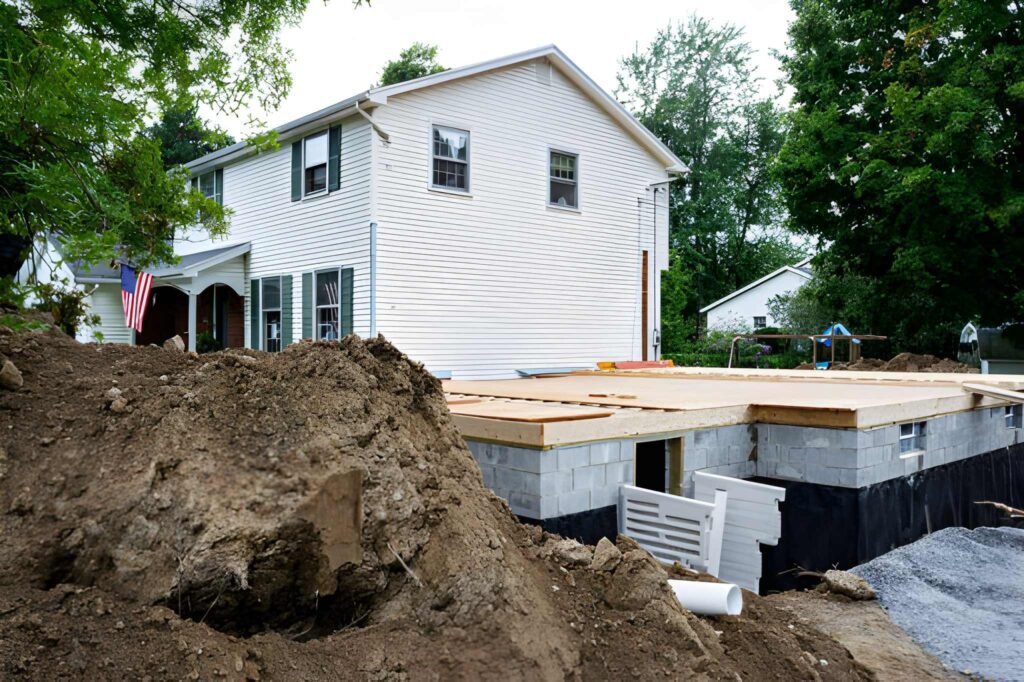
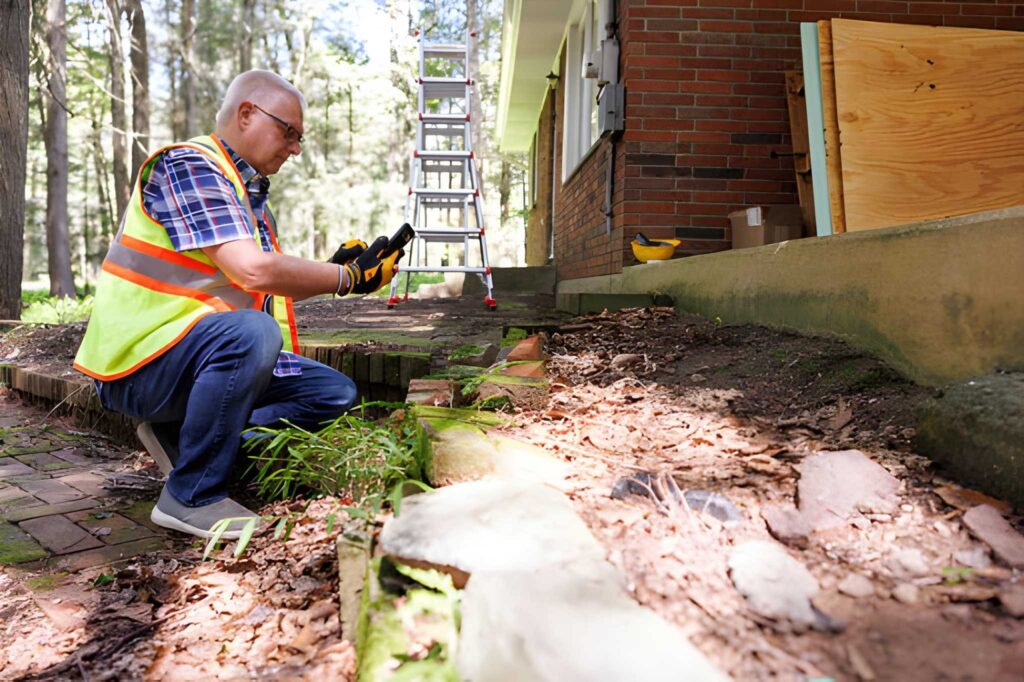
Inspect the slope and drainage. Observe how water interacts with your land during and immediately after precipitation. Water pooling near the foundation is not a cosmetic issue; it represents a **critical structural risk** that demands immediate attention. When hydrostatic pressure builds against the foundation walls, it compromises the slab or basement structure, leading to leaks and costly failures.
Soil Compaction and Quality
Highly compacted soil—often found where heavy equipment drove or children played—prevents healthy root growth and, more importantly, blocks the essential downward movement of water and air. Repairing this requires **aeration** before any seeding or fertilization can succeed. Furthermore, investing in a soil testing kit reveals deficiencies in macro-nutrients (Nitrogen, Phosphorus, Potassium) and identifies unsuitable pH levels. Attempting a lawn overhaul in acidic or overly alkaline soil guarantees failure; the soil must be amended first.
2. Inventorying Damage and Prioritization
Create a prioritized, actionable list of necessary repairs. Categorize damage by its impact on safety, structural integrity, and finally, aesthetics.
| Category | Example Damage | Priority |
|---|---|---|
| Critical | Major foundation grading issues, severely leaning fences, large dead trees posing fall hazards. | High |
| Structural | Cracked patio slabs, rotting deck planks, broken irrigation lines causing erosion or leaks. | Medium |
| Aesthetic | Bare lawn patches, excessive weeds, overgrown shrubs, chipped paint on exterior trim or sheds. | Low |
Phase 2: Lawn and Turf Restoration
The lawn comprises the bulk of the average American yard. Its density, color, and uniformity define the quality of the immediate landscape. Restoration is a three-step process: eliminate pests/weeds, prepare the soil, and introduce new growth.
1. Weed and Pest Management
Weeds are resource competitors. They aggressively consume the water and nutrients intended for the desirable turf. For small, isolated patches, manual physical removal remains the most effective, chemical-free method. For widespread infestations, select a **selective herbicide** engineered to target broadleaf weeds without impacting your chosen grass species. Always calibrate your sprayer and adhere strictly to label instructions to prevent turf damage.
Pests, particularly soil-dwelling grubs, cause widespread root damage that presents as irregular, dead brown patches. Since grubs migrate below the surface, the solution requires a **targeted insecticide** application, typically in late summer or early fall when the larvae are small and close to the soil surface. Misidentifying the pest or applying treatments at the wrong time wastes material and delays recovery.
Interactive: Critical Lawn Repair Techniques
Understanding the exact method for revitalization based on your lawn's specific problem is key. Click to reveal detailed technical guidance.
Timing: Aerate when the turf is actively growing. For cool-season grasses (fescue, bluegrass), this is early spring or early fall. For warm-season grasses (Bermuda, zoysia), target late spring to early summer. Aeration during dormancy can stress the lawn.
Technique: Use a core aerator machine to pull small plugs 2–3 inches deep. These plugs should be left on the surface to decompose, recycling nutrients back into the soil. Aerate high-traffic or heavily compacted areas twice, passing over the area in perpendicular directions.
Patching: For bare spots, loosen the top 1-2 inches of soil with a rake, mix in rich compost, apply seed, and gently compress the soil. The crucial final step is covering the seed lightly with straw or peat moss to maintain consistent moisture, which is non-negotiable for germination.
Overseeding: This process revitalizes a thin lawn. After aeration, spread a thin layer of high-quality grass seed (matching your existing turf) across the entire area. Seed-to-soil contact is paramount; do not simply broadcast seed onto thatch or dense turf.
Phase 3: Hardscape and Structural Repairs
Hardscapes—fences, decks, patios, and retaining walls—represent the long-term structural investment in your yard. Failures here create immediate safety hazards and significant liability concerns.
1. Fence Repair and Stabilization
The most frequent failure in a fence is the post base, where wood meets soil and moisture causes decay. To achieve a durable repair, excavate the failing post and replace it with a pressure-treated post. Use **metal post brackets** (or post sleeves) above the soil line where permitted to separate the wood from constant ground moisture, drastically extending the post's life. Replace any splintered, warped, or rotting boards immediately to prevent further structural weakening.
2. Patio and Walkway Fixes
Uneven surfaces are tripping hazards. For loose pavers, carefully remove the paver, use a straight edge to ensure the leveling sand base is flat and at the correct height, and then reset the paver firmly. After seating, sweep fine **polymeric sand** into the joints. This type of sand hardens upon misting, locking the pavers together and inhibiting weed growth. For minor concrete cracks, a flexible concrete caulk prevents water intrusion; however, for major sinking or cracks extending across the slab, the underlying base has failed, requiring professional evaluation or replacement.
Interactive Tool: Deck Sealing Cost Estimator
Protecting wooden hardscapes like decks requires regular sealing to mitigate moisture damage and UV exposure. Use this estimator to project the material cost for your deck restoration project.
Deck Sealing Material Cost Estimator
Phase 4: Drainage and Water Management (Critical Priority)
This phase is paramount for property protection. No amount of cosmetic repair can compensate for poor drainage. Uncontrolled water migration causes erosion, basement flooding, and foundation shifting, resulting in tens of thousands of dollars in structural damage.
1. Correcting Grade Slopes
The solution is simple in principle: the ground must fall away from the home. The rule of thumb dictates a minimum slope of **6 inches of drop over the first 10 feet** surrounding the foundation perimeter. Achieving this often requires importing compacted clay and high-quality topsoil. Once the grading is corrected, monitor the slope annually, as soil settles over time, naturally reducing the angle.
2. Gutter and Downspout Management
Ensure all gutters are free of debris. An overflowing gutter deposits thousands of gallons of concentrated roof runoff directly at the foundation. Downspouts must be extended a minimum of **4 to 6 feet away** from the foundation, discharging water onto a stable surface that continues the positive slope away from the house structure.
Understanding the French Drain
A French drain is an effective, sub-surface solution for managing groundwater. It involves digging a trench, lining it with permeable landscaping fabric, placing a perforated pipe inside, covering the pipe with gravel, and folding the fabric over the top. The pipe is installed with a slight downward slope, allowing both surface and sub-surface water to be collected and peacefully redirected to a proper discharge point, usually a storm drain or a dry well, far from the house structure.
Phase 5: Year-Round Maintenance Schedule
Once the **yard repair** is complete, shift your focus from restoration to asset preservation. A consistent seasonal routine minimizes the likelihood of catastrophic failure and keeps the yard in peak condition, securing maximum property value year-round.
| Season | Focus Area | Action Items |
|---|---|---|
| Spring | Recovery and Pre-Growth | Dethatch and aerate to prepare the soil. Apply pre-emergent herbicide to block summer weed seeds. Start spring fertilization with a high-nitrogen blend. Inspect irrigation system lines and emitters for leaks. |
| Summer | Watering and Growth Management | Mow high (3–4 inches) to encourage deep root growth, which dramatically improves drought resistance and shades out weeds. Water deeply and infrequently (aiming for 1 inch per week). Prune overgrown shrubs and clear debris from window wells. |
| Fall | Preparation for Dormancy | Final aeration and overseeding. Apply fall fertilizer (higher potassium content is crucial for root strength and winter survival). Rake, mulch, or remove leaves to prevent grass suffocation and mold development. |
| Winter | Protection and Structure | Disconnect and drain all exterior hose bibs. Winterize the irrigation system by professionally blowing out the lines. Inspect fences and structures after major storms, and remove heavy ice or snow loads from vulnerable branches. |
Conclusion
Yard repair and restoration is an investment in both aesthetic appeal and long-term structural integrity. By following a strategic, phased approach—from diagnostic soil testing to critical drainage correction—property owners move beyond simple maintenance to genuine asset management. A healthy, well-structured yard communicates quality and stability, ultimately securing the highest possible value for your real estate investment.