Stucco Repair: Safeguarding Your Home's Envelope and Value
An expert analysis of common stucco failures, effective remediation strategies, and essential moisture management to protect your real estate investment.
Article Navigation
Stucco's Role and Anatomy: Understanding the Traditional Barrier
Stucco is a cementitious siding material valued across the US for its durability, fire resistance, and aesthetic appeal, particularly in arid climates and Mediterranean-style architecture. However, this seemingly impenetrable barrier relies entirely on proper installation and constant integrity. When the stucco system fails, it often traps water rather than repelling it, leading to silent and extensive damage to the underlying wood framing, sheathing, and insulation. For any homeowner or investor, recognizing this vulnerability is the first step toward effective property preservation.
The Anatomy of Three-Coat Traditional Stucco
A structurally sound, traditional stucco wall is not merely a single coat of plaster. It is a system built in layers over a weather-resistant barrier (WRB), typically felt paper or house wrap. These layers function together to manage water and provide rigidity:
- The Scratch Coat: Applied directly over the metal lath (chicken wire or expanded metal) secured to the sheathing. This layer gets scratched horizontally to provide a mechanical key for the next coat to bond.
- The Brown Coat: Applied over the scratch coat, leveling the surface and building the necessary thickness (totaling about 7/8 inch across all three coats). This layer provides the bulk of the stucco’s strength.
- The Finish Coat: The final, thin layer that provides the color and texture. Its primary role is aesthetic, though it offers the final resistance to rain.
Crucially, the WRB and the lath are separated by a small void or drainage mat, intended to allow any water that penetrates the outer cement layers to drain down and out, usually via weep screeds at the base. Failure in this drainage system is the root cause of most catastrophic stucco damage.
Diagnosis: Pinpointing the Failure in Stucco Systems
Identifying stucco failure requires examining both the visible surface damage and the hidden signs of water intrusion. Surface cracks are cosmetic until they become pathways for moisture, leading to systemic structural compromise.
Types of Visible Stucco Cracks
- Hairline Cracks (Spiderwebbing): Very thin, non-structural cracks that often appear randomly. These are typically due to natural shrinkage during the curing process and are usually manageable with a sealant.
- Crazing: A network of very fine cracks caused by rapid drying or an improperly rich mix. While generally shallow, they can allow surface moisture penetration over time.
- Diagonal Cracks: These are the most alarming. They often originate near the corners of doors and windows and signify structural movement, settling, or framing instability. These require careful repair that addresses the underlying movement first.
- Horizontal Cracks: These may indicate issues with the foundation or the separation of the stucco from the substrate, often suggesting delamination or a failing bond.
Hidden Indicators of Moisture Intrusion
Moisture is the silent killer. Water infiltration is evident through symptoms that occur away from the initial crack:
Erosion Points: Look closely at areas where stucco meets a dissimilar material, such as wood trim, roof lines, decks, or foundations. These joints and flashing points are frequent entry zones for water. Also, examine areas below windows and decks for discoloration or efflorescence (white, powdery residue) which indicates chronic moisture wicking through the wall.
Soft Sheathing: During repair preparation, or during a professional inspection, a probe test involves lightly tapping the stucco. A hollow, dull sound suggests the stucco has delaminated from the brown coat or that the sheathing behind the lath is soft due to rot. This requires full removal and replacement of the compromised area.
Assessing Crack Severity: Interactive Guide to Action
The required repair effort directly correlates with the crack width. Use this interactive guide to determine the classification and necessary next steps for your stucco damage. Measurements are typically taken in millimeters (mm) or inches.
Stucco Crack Severity Gauge
Current Crack Width: 1.0 mm
Classification: Hairline Crack (Minor)
Required Action: Clean, seal with thin, flexible caulk (e.g., polyurethane). Monitor area yearly.
Core Repair Strategies: Patching, Bonding, and Resurfacing
The goal of stucco repair is to re-establish a seamless, monolithic protective layer that is properly integrated with the drainage system. Repairs must utilize materials compatible with the existing stucco to ensure proper chemical and physical bonding.
The Patching Protocol for Small Areas
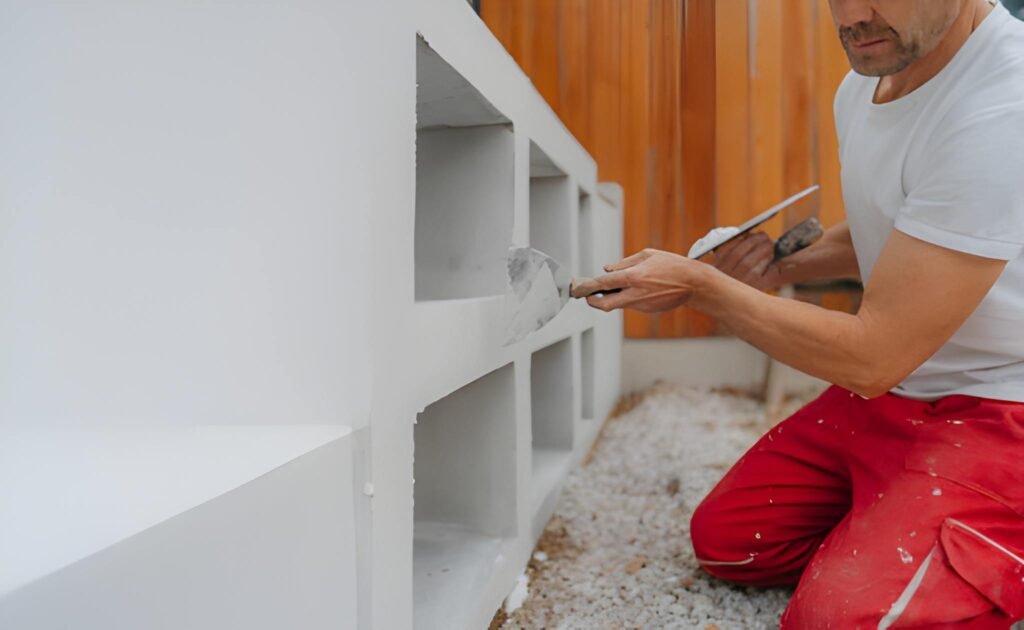
- Undercutting: For small, damaged areas (less than one square foot), professional repair involves "undercutting" or cutting the edges of the hole at a slight angle toward the substrate. This creates a mechanical key for the new patch to hold onto, preventing the patch from falling out.
- Bonding Agent: Before applying new stucco mix, the exposed edges of the old stucco must be dampened and treated with an acrylic bonding agent. This ensures the new cement mortar adheres chemically and prevents the existing stucco from rapidly drawing moisture out of the patch, which would weaken the repair.
- Layered Application: The new stucco is applied in layers (scratch, brown, finish) to match the thickness of the surrounding wall. Attempting to apply the full thickness in a single application leads to shrinkage, cracking, and eventual failure.
For larger areas where the lath is exposed or where wood rot must be repaired, the process requires removing the affected stucco, replacing the sheathing and framing underneath, installing new WRB, and then reapplying the three coats of stucco to the necessary thickness. This is complex and usually requires a skilled mason.
EIFS and Synthetic Stucco: A Specialized Repair Challenge
Exterior Insulation and Finish Systems (EIFS), often called synthetic stucco, present a distinct set of repair challenges. EIFS is a multi-layered system that uses rigid foam insulation, a glass fiber reinforcement mesh, and a polymer-based synthetic finish coat. Unlike traditional stucco, EIFS is designed to be a barrier wall—it stops water at the surface.
Historically, many EIFS installations failed because water that *did* get past the barrier (at windows, doors, or penetration points) was trapped inside, leading to devastating framing rot because there was no drainage plane. Repairing EIFS requires highly specialized contractors who understand polymer-based finishes and must ensure that new flashings are installed to prevent future water entry. Repairs involve cutting out the damaged area, replacing the foam board, applying the base coat with mesh, and finally applying the textured synthetic finish coat. The materials are not interchangeable with traditional cement stucco.
| Feature | Traditional (Hard-Coat) | Synthetic (EIFS) |
|---|---|---|
| Composition | Cement, sand, lime, water. | Foam insulation, fiberglass mesh, polymer-based finish. |
| Repair Difficulty | Medium. Color/texture matching can be challenging. | High. Requires specific, expensive polymer products and expert technique. |
| Typical Failure | Cracking due to settling or poor curing. | Moisture entrapment and underlying sheathing rot due to flashing failure. |
| Approx. Cost per Sq. Ft. (Patch) | 40 to 60 USD (depending on area). | 60 to 100 USD (higher material cost, specialized labor). |
Long-Term Moisture Prevention: Protecting Your Investment
Stucco repair is only temporary if the underlying cause of failure—usually moisture—is not permanently managed. Homeowners must adopt proactive maintenance to ensure the home's water management system is functioning optimally.
The Importance of Proper Flashing and Drainage
Faulty flashing around windows, doors, and roof intersections is responsible for over 90 percent of stucco moisture failures. The flashing must act as a continuous shingle system, directing water outward over the stucco surface, not allowing it to penetrate behind the stucco itself. Any repair should include an inspection and upgrade of existing flashing. Ensure weep screeds at the base of the wall are clear of debris and paint, allowing the drainage plane to breathe and expel accumulated moisture.
Maintenance Sealing and Coating
Once all structural cracks are patched, a final preventative measure is applying a high-quality, breathable, elastomeric coating designed for masonry or stucco. This specialized paint bridges small hairline cracks and provides an added layer of water repellency without trapping moisture vapor inside the wall assembly. Using standard, non-breathable exterior paint is detrimental, as it seals the surface but prevents the wall from drying out, accelerating internal decay. Proper sealing is an essential aspect of annual maintenance, safeguarding the structural integrity of your stucco home.