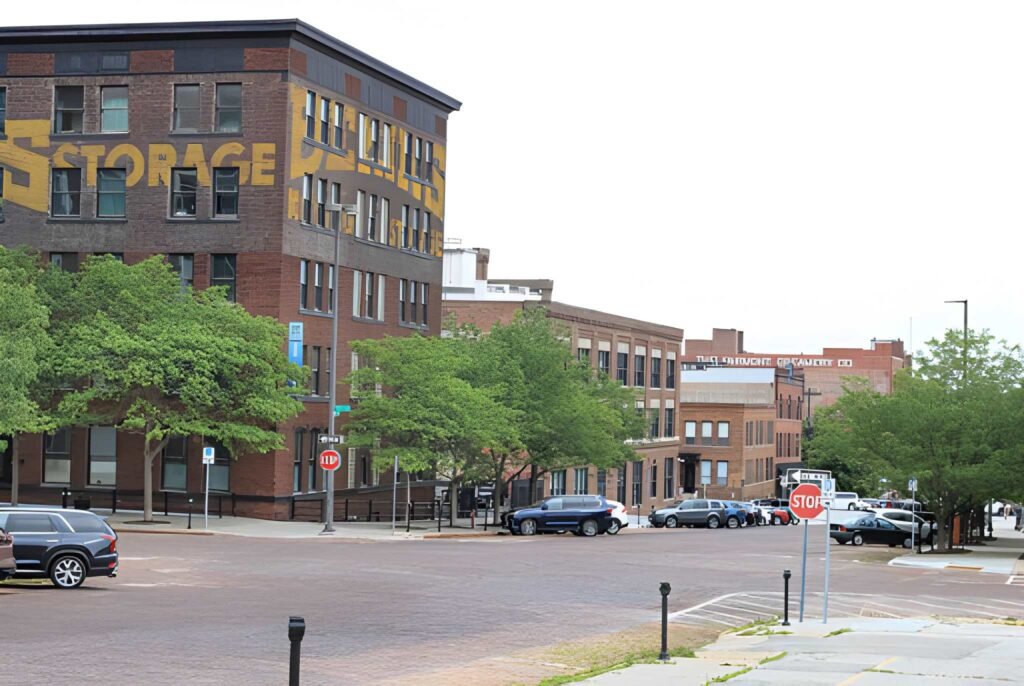

In the lexicon of commercial real estate, a “2nd generation” retail space—often called a “second-gen” box or a “vanilla shell”—is a previously occupied location being offered for a new tenant. It is not a raw, unfinished shell, nor is it a brand-new, never-used building. It is a space with a history, bearing the architectural and infrastructural imprint of its former occupant. For a business owner, this category represents a distinct set of opportunities and challenges that differ fundamentally from both ground-up construction and a first-generation build-out. The decision to lease a second-gen space is a calculated trade-off between accelerated occupancy and lower initial investment versus the compromises of adapting an existing footprint.
The essence of a second-generation space is its inherited infrastructure. The previous tenant has already invested in the core construction: walls, ceilings, flooring, lighting, electrical, plumbing, and, most critically, the restrooms. The space is likely “warm and dry,” meaning it is sealed from the elements and has functioning utilities. The degree to which these existing elements are useful to the incoming tenant defines the value proposition.
The Spectrum of Second-Generation Conditions
Not all second-gen spaces are created equal. They exist on a spectrum from “turnkey” to “demolition-ready.”
- The Turnkey (or Near-Turnkey) Space: This is the ideal scenario for a successor tenant in the same or a similar industry. A new sandwich shop moving into a former sandwich shop, or a boutique taking over from another boutique. The existing layout, counter, lighting, and floor plan may require only cosmetic updates—a fresh coat of paint, new signage, and a deep clean. The savings in time and tenant improvement (TI) costs can be substantial.
- The Vanilla Shell with Specialized Infrastructure: This is the most common and complex scenario. The space has the basic finishes but contains remnants of the previous tenant’s business. A former restaurant will have a full kitchen hood, grease traps, and gas lines. A former salon will have plumbing stubs for shampoo stations. For a tenant who needs this infrastructure, it is a windfall, saving tens of thousands of dollars. For a tenant who does not, it is a liability that must be removed at their own expense.
- The “As-Is” Shell Requiring Full Demolition: In some cases, the landlord offers the space in its post-occupancy state, with the previous tenant’s build-out still intact. The incoming tenant is responsible for all demolition and disposal. While this provides a blank slate, it adds a significant, upfront, non-recoverable cost before any new construction can even begin.
The Financial Calculus: The TI Allowance and the “As-Is” Credit
The negotiation around a second-generation space revolves around the cost of modification. The standard tool is the Tenant Improvement (TI) Allowance—a sum of money the landlord provides to the tenant to customize the space.
- The Standard TI Allowance: The landlord may offer a standard allowance, say $20-$40 per square foot, regardless of the space’s condition. The tenant uses these funds for their new build-out. If the existing layout is largely usable, this allowance can go far.
- The “As-Is” Credit or Abated Rent: A more strategic approach for a space requiring significant demolition is to negotiate an “as-is” credit. Instead of a TI allowance, the landlord provides a direct monetary credit or several months of free rent to offset the tenant’s cost of demolishing the previous build-out. This is often a better financial deal for the tenant, as it provides cash flow relief during the most capital-intensive phase.
The Strategic Advantages
- Speed to Market: This is the paramount advantage. A second-gen space can often be open for business in 30-90 days, compared to 6-12 months for a ground-up construction or a raw shell. This allows a business to capture market opportunity quickly and start generating revenue.
- Reduced Capital Outlay: Even with modifications, the cost is typically lower than building from a cold shell. The core expenses of drywall, framing, and basic MEP (Mechanical, Electrical, Plumbing) are already sunk costs.
- Proven Location: The space has a history of operation. This provides tangible data on foot traffic, parking adequacy, and demographic support that a new development cannot offer.
The Inherent Challenges and Due Diligence Imperatives
The risks in a second-gen space are often hidden beneath the surface. A rigorous investigation is non-negotiable.
- The HVAC System: Determine the age, condition, and maintenance history of the heating and cooling system. In most leases, the tenant assumes responsibility for this costly equipment upon possession. A 15-year-old rooftop unit on its last legs is a $15,000-$25,000 liability.
- Code Compliance: The existing build-out may not meet current building, fire, or ADA (Americans with Disabilities Act) codes. The cost of bringing the space up to code—adding wheelchair-accessible ramps, updating exit signs, or modifying restrooms—falls on the new tenant. A code review by a qualified architect or contractor is essential.
- The “Ghost in the Machine”: Specialized infrastructure from a previous use can be a curse. The cost to remove a commercial kitchen hood, fill in a grease trap, or cap off extensive plumbing can be surprisingly high. Get firm quotes for this work before signing a lease.
- Aesthetic Limitations: The existing column spacing, ceiling height, and window placement are fixed. A business must be willing to work within this inherited architectural framework.
| Consideration | First-Generation (Raw) Shell | Second-Generation Space |
|---|---|---|
| Build-Out Timeline | 6-12 months | 1-3 months |
| Tenant Improvement Cost | Very High ($80-$200+/SF) | Moderate to High ($30-$100+/SF) |
| Design Flexibility | Total creative freedom. | Constrained by existing layout and infrastructure. |
| Key Due Diligence | Soil tests, utility availability, site planning. | HVAC condition, code compliance, cost of demolishing/adapting old build-out. |
| Ideal For | A business with a highly specific, custom design and ample capital/time. | A business seeking speed, lower upfront cost, and a proven location; especially ideal for a successor use. |
A second-generation retail space is an exercise in adaptive reuse at the micro-level. It is not a blank canvas but a palimpsest, with the ghost of a previous business visible beneath the surface. The successful tenant is part archaeologist, uncovering the space’s history and liabilities, and part pragmatist, creatively adapting the existing framework to a new purpose. For the right business—one that can leverage the inherited infrastructure or efficiently reconfigure it—a second-generation space offers a faster, more capital-efficient path to market, turning the legacy of a past enterprise into the foundation for a new one.