
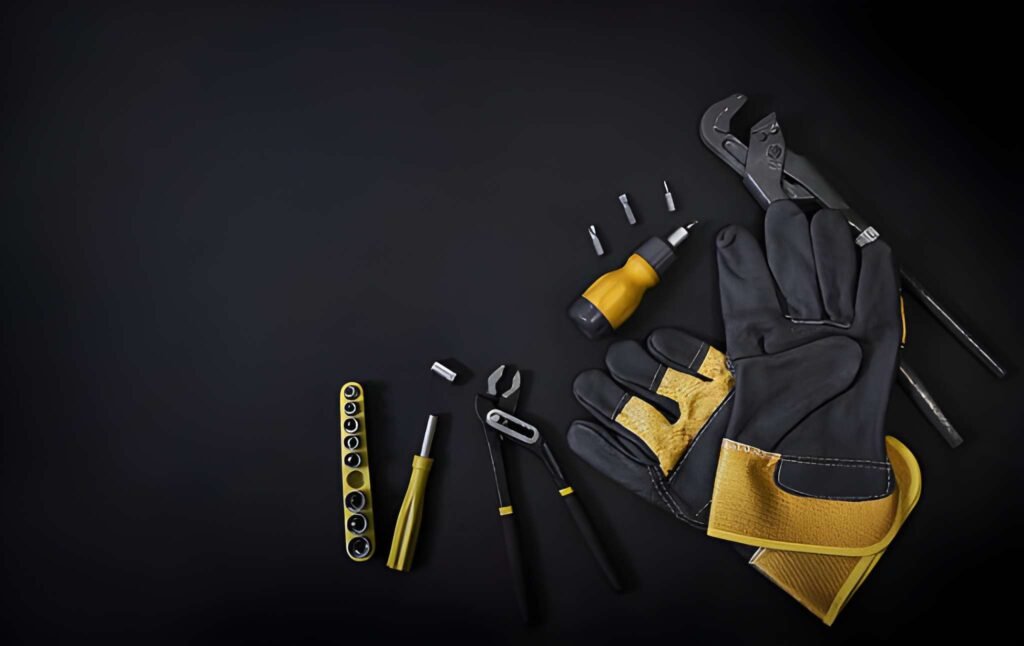
A house is a complex system in constant, subtle motion. It settles, shifts, expands, and contracts. To maintain it, to shape it, to repair it, requires more than just random implements; it demands a curated collection of force and precision. The right tool kit does not just assemble parts; it extends capability. It turns frustration into fluency and transforms a daunting repair into a series of manageable, logical steps. At the center of this modern toolkit, the power drill stands as the undisputed monarch. It is the primary source of rotational force, the workhorse that bridges the gap between raw material and finished repair. Building a top-rated kit is not about amassing the most tools, but about selecting the right ones—tools that offer reliability, ergonomics, and a clear path from problem to solution.
This kit is designed for the serious homeowner, the diligent landlord, or the aspiring DIYer who understands that quality is not a luxury but a form of efficiency. Cheap tools fail at critical moments, strip fasteners, break under strain, and ultimately cost more in time, frustration, and replacement. The tools listed here represent a blend of professional-grade durability and prosumer accessibility. They are investments in the long-term health of your home and your own capacity to care for it.
The Command Center: The Drill/Driver Combo Kit
The heart of the kit is not a single drill, but a combination: a cordless drill/driver and an impact driver. These two tools represent a fundamental division of labor, and using the correct one for the task is the first mark of competency.
The Drill/Driver: This is your tool for precision hole-making and for driving smaller fasteners. Its key feature is a adjustable clutch. This clutch disengages the motor once it senses a certain amount of torque, preventing you from over-driving a screw and stripping its head, sinking it too deep into drywall, or snapping it in two. You use the drill/driver for drilling into wood, metal, and plastic, and for tasks like assembling furniture, installing cabinet hardware, or hanging pictures where control is paramount.
The Impact Driver: This is your tool for brute rotational force. It combines direct rotation with concussive, hammer-like blows from behind. This mechanism allows it to generate immense torque in a very small, lightweight package. The sound is a distinct, rapid-fire brrrrrp. You use the impact driver for driving long screws or lag bolts into dense wood, for removing stubborn, over-torqued fasteners, and for any heavy-duty assembly like building a deck, framing a wall, or constructing furniture. It lacks a clutch, so it is a poor choice for delicate work.
The Top-Tier Choice: A Brushless 18V/20V Max Platform
The current standard for performance and versatility is an 18-volt or 20-volt Max (they are functionally the same) cordless platform with brushless motors. Brands like DeWalt, Milwaukee, Makita, and Bosch lead this category.
- Why Brushless? Brushless motors are more efficient, more powerful, and longer-lasting than their brushed counterparts. They generate less heat and adjust their power output based on the demand, which extends battery life.
- Why a Platform? Committing to a single battery ecosystem (e.g., all DeWalt 20V Max tools) is crucial. The batteries are the most expensive component. This allows you to share batteries between your drill, impact driver, and future tools like a circular saw, leaf blower, or job site radio.
- Specific Kit Recommendation: A DeWalt DCD799D1 & DCF809D1 Combo Kit or a Milwaukee M18 Fuel 2998-22 Kit are exemplary choices. They offer compact, powerful brushless tools, two high-capacity batteries, a fast charger, and a durable carrying case.
The Essential Hand Tools: The Foundation of Force and Finesse
Power tools are useless without the hand tools that prepare, finish, and complement them. This collection covers the vast majority of mechanical tasks in a home.
The Hammer: A 16-ounce curved claw hammer is the universal standard. Look for a forged steel head and a hickory or fiberglass handle. The hammer is for driving nails, obviously, but also for persuasion—gently tapping a workpiece into alignment, seating a joint, or, with the claw, for demolition.
The Multibit Screwdriver: Instead of a drawer full of individual screwdrivers, a high-quality multibit driver with a robust, magnetic bit holder and a comprehensive set of bits is far more efficient. It should include multiple sizes of Phillips (#1, #2, #3), flathead, Square Drive (Robertson), Torx, and hex bits. A comfortable, grippy handle with a cap that allows for applying pressure with your palm is essential.
The Adjustable Wrenches: Two sizes cover most plumbing and mechanical fasteners: a 6-inch and a 10-inch. Also known as crescent wrenches, these are for nuts and bolts. The jaw must be sharp and tight-fitting to avoid rounding off the corners of a bolt. A good rule is to pull toward the adjustable jaw to prevent it from loosening and slipping.
Pliers: The Three Pillars of Grip
- Slip-Joint Pliers: These are your general-purpose grabbers, with a pivot that adjusts to grip larger or smaller objects. Ideal for holding nuts, bending wire, and gripping irregular shapes.
- Needle-Nose Pliers: For precision work in confined spaces—straightening a bent electrical terminal, retrieving a dropped screw, or bending a small wire loop.
- Tongue-and-Groove Pliers (Channellocks): The plumber’s best friend. Their adjustable, parallel jaws provide immense leverage for gripping pipes, large nuts, and fittings. A 10-inch or 12-inch model is indispensable for any sink or toilet repair.
The Tape Measure: A 25-foot, 1-inch wide tape measure is the standard. Look for a blade with clear, fractional markings and a sturdy, locking mechanism. The hook at the end should have a little bit of play—this is intentional, to account for its own thickness when taking inside and outside measurements.
The Utility Knife: For scoring drywall, cutting carpet, opening boxes, and trimming vinyl flooring. A retractable blade is safer, and a model with a metal housing and a comfortable grip will last a lifetime.
The Level: A 2-foot aluminum level is the most versatile. It is long enough to ensure doors and shelves are straight, yet short enough to fit in a toolbox. Look for vials that are easy to read and securely mounted. Magnetic levels are incredibly useful for hands-free work on metal studs or appliances.
The Socket Set: A 3/8-inch drive socket set with both metric and SAE (standard) sizes, ranging from about 6mm to 19mm and 1/4″ to 3/4″, will handle almost every bolt in a home, from furniture assembly to appliance repair. A reversible ratchet is the core of this set.
The Critical Supporting Cast: Measurement and Layout
Accuracy is everything. A mistake in measurement can waste material and hours of labor.
The Combination Square: This is a precision instrument far superior to a simple carpenter’s square for most home repairs. It combines a 90-degree square, a 45-degree miter square, and a precision ruler (typically 12 inches) all in one. It is used for marking cut lines, checking for squareness, and transferring measurements with a high degree of accuracy.
The Stud Finder: For hanging anything heavy—shelves, TVs, cabinets—you must find the wooden studs behind the drywall. A simple magnetic stud finder that locates the drywall nails is cheap and reliable. For a more advanced option, a digital stud finder with AC wire detection and deep-scanning modes can also locate pipes and electrical wiring, adding a critical safety layer.
The Drill’s Ecosystem: Bits and Accessories
A drill is only as good as the bit it turns. Investing in high-quality bits prevents stripped screws, burnt wood, and shattered masonry.
Driver Bits: A robust set of impact-rated driver bits is non-negotiable. The #2 Phillips and Robertson/Square Drive bits will see the most use. Impact-rated bits are hardened to withstand the concussive force of an impact driver without snapping.
Drill Bits: The Holy Trinity
- Twist Drill Bits (HSS): High-Speed Steel bits are for metal and plastic. A small set from 1/16″ to 1/4″ covers most needs.
- Brad-Point Bits: These are for wood. They have a sharp central point and spurs on the sides that score the wood grain for a clean, splinter-free hole. They are far superior to twist bits for woodworking.
- Masonry Bits: These have a carbide tip for drilling into brick, concrete, or block. They are essential for installing concrete anchors for anything from handrails to wall mounts.
Other Critical Accessories:
- A Magnetic Bit Holder: A short extension that holds screwdriver bits, keeping your hands free and allowing you to start screws in tight spaces.
- Countersink Bits: These drill a pilot hole and create a conical recess in one step, allowing you to drive a screw flush with or below the surface of the wood.
- Step Bits (Unibit): For drilling large, clean holes in thin metal (e.g., electrical boxes, sheet metal). They are expensive but produce a flawless hole without walking or grabbing.
Storage and Organization: The Kit’s Home
A disorganized toolbox is a useless toolbox. Tools must be protected from damage and moisture, and they must be easy to find.
The Container: A hard-shell tool box with a removable top tray is a classic for a reason. It keeps everything organized and portable. For a larger kit, a tool bag with multiple pockets offers more flexible storage. For the ultimate in organization, a modular system like the DeWalt TSTAK or Milwaukee PACKOUT allows you to build a custom, interlocking storage solution that can grow with your collection.
Maintenance: Keep tools clean and dry. Wipe down metal surfaces with a light oil (like 3-in-1 oil) occasionally to prevent rust. Periodically charge your drill batteries, even if you haven’t used them, to keep the cells active.
This collection is more than a list of items; it is a system. The drill and impact driver provide the power, the hand tools provide the finesse, and the measurement tools provide the intelligence. Together, they form a core arsenal capable of tackling about eighty percent of all common home repairs, from a squeaky floorboard to a built-in bookshelf. It is an investment not just in tools, but in self-reliance, empowering you to maintain your domain with confidence and skill.