The Comprehensive Guide to Mortar and Brick Repair (Repointing)
Mortar is more than just the glue holding bricks together; it is the sacrificial material designed to protect the harder, more valuable brick or stone. When mortar joints deteriorate—a natural process caused by freeze-thaw cycles, wind erosion, and water—it allows moisture to penetrate the wall structure, leading to brick spalling, efflorescence, and eventual structural failure. The process of removing damaged mortar and replacing it with new, durable material is known as **repointing** (or tuckpointing) and is crucial for the longevity of any masonry building.
Contents Overview
Phase 1: Diagnosis and Mortar Matching
The most critical error in repointing is using a modern, hard mortar mix on an older, softer brick wall. New mortar is typically composed of Portland cement, which is much harder and less permeable than historic lime-based mortars. If the repair mortar is stronger than the surrounding brick, the brick will spall and crack instead of the mortar absorbing the stress.
1. Assessing Deterioration
Inspect the joints: any joint where the mortar is receded, crumbling, powdery, or allows water to stand should be repointed. Repointing is necessary when the deterioration depth is greater than the joint width (e.g., if the joint is 3/8" wide, the mortar should be removed if damage exceeds 3/8" deep).
2. Mortar Type Selection (The Sacrificial Principle)
For most residential repairs, a pre-mixed Type N mortar is appropriate for modern homes. However, for historic buildings (pre-1930s), a more flexible, lime-heavy mix (often Type O or K) is required. The cardinal rule: **The new mortar must be softer and more permeable than the brick.**
| Mortar Type | Composition (Cement:Lime:Sand) | Use Case |
|---|---|---|
| Type N | 1 : 1 : 6 | General purpose; above-grade, non-loadbearing walls (most common residential). |
| Type S | 1 : 1/2 : 4 1/2 | Below-grade, foundations, structural walls, retaining walls (high strength). |
| Type O | 1 : 2 : 9 | Historic restoration, soft brick, interior walls (low strength, high flexibility). |
Phase 2: Mortar Removal (Joint Preparation)
The success of the repair hinges on creating a clean, deep void for the new mortar to bond to.
1. Cutting the Joints
The damaged mortar should be removed to a consistent depth of approximately **two to two-and-a-half times the width of the joint**, or until sound, original mortar is reached. This is typically 3/4 to 1 inch deep.
- Method 1 (Hand Tools): Use a brick chisel and a small sledgehammer or a margin trowel. This is slow but safer for the brick.
- Method 2 (Power Tools): Use a small angle grinder fitted with a diamond blade. **Caution:** This method generates high dust and heat, which can damage the brick edge. Use a dust shroud and proceed carefully to avoid chipping or widening the joint opening.
2. Cleaning and Rinsing
Once the mortar is removed, the joint must be cleaned. Use a stiff-bristled brush (not wire, which can leave rust streaks) or a small chisel/pick to scrape away all remaining dust and loose debris. Finally, **drench the joints with water** until they are saturated. This prevents the old, dry brick from sucking the moisture out of the new mortar, which would cause it to cure too quickly and crack.
Phase 3: Mixing and Application
Mortar should be mixed in small, manageable batches to ensure consistency and prevent premature curing. Only mix what you can use within 90 minutes.
1. Mixing Consistency
Mix the dry ingredients first, then add clean water slowly until the mixture is cohesive, stiff, and slightly crumbly—like damp earth. The mortar should hold its shape when pressed but not be so wet that it slumps or smears. Too much water weakens the final product. Allow the mortar to "slake" (rest for 10-15 minutes) before the final mix.
2. Application Technique (Filling the Joint)
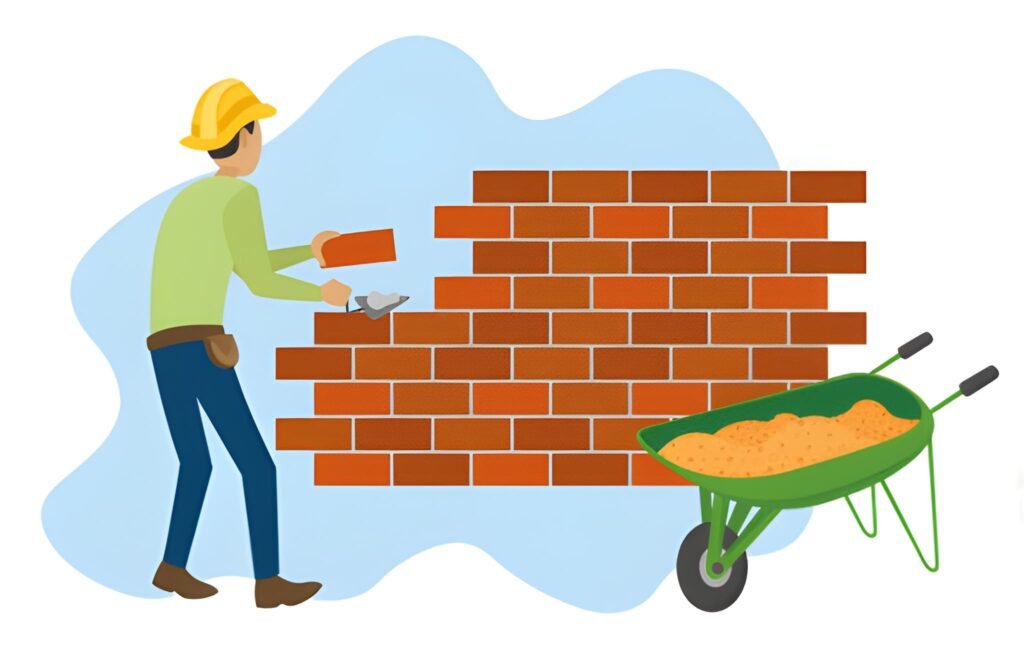
Using a mortar hawk (or board) to hold the fresh mix, use a pointing trowel or a small tuck-pointer to force the mortar into the horizontal (bed) joints first. Pack the mortar firmly in layers, starting with the back of the joint and working toward the front. The goal is to completely eliminate any air pockets. Once the bed joints are full, move to the vertical (head) joints.
Curing vs. Drying
Mortar does not dry; it **cures** through a chemical reaction called hydration. This process requires water. If the mortar dries out too fast, it will not reach its full strength. Proper curing requires maintaining moisture, often for several days.
Phase 4: Tooling and Curing
Tooling the joint provides compaction, weather resistance, and the final aesthetic finish.
1. Timing the Tooling
Tooling is done when the mortar is "thumbprint hard"—it should be firm enough that a thumbprint leaves only a slight mark and no moisture is drawn to the surface. This is typically 30 minutes to 3 hours after application, depending on weather.
2. Selecting the Joint Profile
Use a specific jointing tool (e.g., a convex jointer, rake jointer, or flat tool) to match the profile of the original mortar joint. The **concave joint** is the most common and weather-resistant profile, as it sheds water effectively. Tool the joint to compact the mortar, leaving a smooth, consistent finish.
3. Curing and Aftercare
The most important step after tooling is curing. Immediately after tooling, lightly brush away any excess mortar crumbs from the brick face. For the next 3–7 days, the repair must be kept damp. Mist the wall lightly with water several times a day or cover the wall with heavy plastic sheeting or burlap to slow the moisture evaporation, ensuring the mortar cures properly.
Interactive Tool: Mortar Volume Estimator
Use this tool to calculate the estimated volume of dry mortar mix needed for your repointing project based on the area of the wall and a standard joint size.
Mortar Volume Estimator (Cubic Feet)
Estimates volume needed for 3/8" wide joints removed to 3/4" depth.
Specialized Masonry Repairs
1. Fixing Cracks in Brick or Stone
If the crack extends through the brick units themselves, this is typically a structural problem requiring professional analysis. For hairline cracks that only appear in the mortar, remove the damaged section to the proper depth, ensure the crack has not reopened (if it has, there is still movement), and repoint the joint as normal. Never use caulk to fill a mortar joint; it traps moisture.
2. Replacing Spalled or Damaged Bricks
If a brick is damaged, it must be replaced. Use a masonry saw to cut the mortar joints around the damaged brick and carefully chisel it out. Clean the opening thoroughly. Saturate the surrounding brick with water, butter the replacement brick with the appropriate mortar mix, and slide it gently into place. Repoint the remaining perimeter joints immediately.
Conclusion
Repointing is a high-impact maintenance project that protects the underlying structure from water damage while dramatically improving curb appeal. By prioritizing the correct mortar chemistry (soft mortar on soft brick) and adhering to the three-step sequence—removal, application, and wet curing—property owners can ensure their masonry remains solid, stable, and beautiful for the next generation.
(This is an estimate. Purchase material based on your supplier's product yield data and add 10% for waste.)
`; resultDiv.innerHTML = resultHTML; }