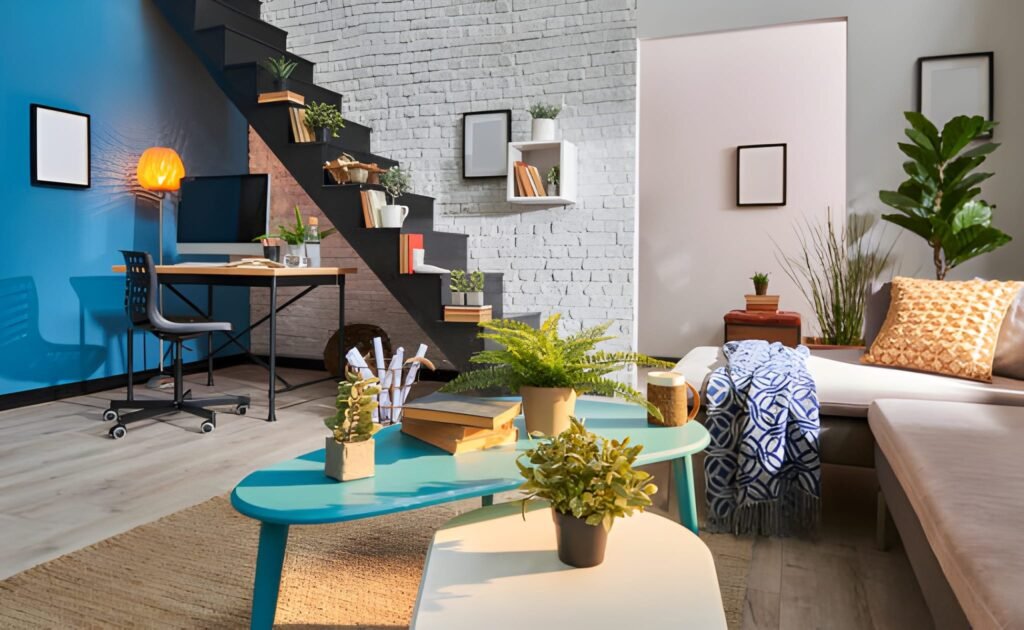
Transforming a space requires more than a good eye; it demands a strategic approach grounded in principles that professionals use daily. These ten tips move beyond fleeting trends to focus on fundamental concepts that create rooms which feel intentional, harmonious, and uniquely personal.
Embrace the Power of a Focal Point.
Every well-designed room has a natural anchor, a spot that draws the eye and gives the space a sense of purpose. This could be an architectural feature like a fireplace or a large window with a view. If one doesn’t exist, create one. A bold piece of art, a striking media console, or a dramatically styled bookshelf can serve as this centerpiece. Arrange your key furniture to complement this focal point, giving the room structure and hierarchy.
Invest in a Quality, Large-Scale Area Rug.
One of the most common mistakes is selecting a rug that is too small. A rug should anchor the seating area, not float like an island in the middle of the room. Ensure your rug is large enough that the front legs of your sofa and chairs can rest comfortably on it. This grounds the furniture, defines the zone, and creates a sense of cohesion and luxury.
Layer Your Lighting.
A single, harsh overhead light flattens a room and kills ambiance. Instead, think in layers. Combine ambient lighting (general, overall light from ceiling fixtures on a dimmer), task lighting (focused light for reading or working from lamps), and accent lighting (dramatic light to highlight art or architecture from picture lights or spots). This triad allows you to sculpt the light for any mood or time of day.
Create Visual Flow with Repetition.
A home feels disjointed when each room exists in a vacuum. Create a sense of flow by repeating a key element. Carry a single color—even in small doses—from one room to the next. Echo a material, like the warm tone of wood, in floorings, furniture legs, and picture frames. This repetition creates a subtle, satisfying rhythm that ties your entire home together.
Edit Your Belongings Ruthlessly.
Clutter is the enemy of good design. A space cannot breathe when surfaces are covered and shelves are overflowing. Commit to a regular purge. If an item is not useful, beautiful, or deeply meaningful, it is likely detracting from your space. Clear surfaces and organized storage allow the beauty of your core pieces and the architecture itself to take center stage.
Utilize Mirrors Strategically.
A mirror is a powerful tool for manipulating light and space. To amplify natural light and create the illusion of depth, place a large mirror on a wall perpendicular to a window. It will reflect the light and view, effectively doubling the visual square footage. In a narrow entryway, a mirror on the long wall can make the passage feel significantly wider.
Paint with Purpose.
Paint is the most transformative and cost-effective tool available. To alter proportions, paint the ceiling a light color to make it feel higher, or a dark, moody color to make a tall room feel more intimate. Don’t forget the fifth wall—the ceiling—as an opportunity to introduce a soft hue or a crisp white to reflect light. For a cohesive look, consider painting your trim the same color as your walls, just in a different sheen.
Incorporate a Variety of Textures.
A room that is monochromatic in color can still be deeply engaging if it is rich in texture. Texture provides visual weight and tactile interest. Combine the rough weave of a jute rug with the soft pile of a wool throw, the cool smoothness of a marble side table, and the sleek sheen of a metal lamp. This contrast is what makes a room feel layered, sophisticated, and inviting.
Float Your Furniture.
Resist the urge to push all your furniture against the walls. This often creates a dead space in the middle and makes conversation difficult. Floating your sofa, even just a few inches away from the wall, with a console table behind it, creates a more intimate seating arrangement and makes the room feel larger and more dynamic.
Curate, Don’t Decorate.
Shift your mindset from filling a space to collecting pieces with purpose. Instead of buying a matching set of accessories, acquire objects over time that have a story or a singular aesthetic appeal. A single, striking piece of pottery on a shelf is more impactful than a cluster of generic vases. This approach results in a home that feels personal, curated, and authentically yours.