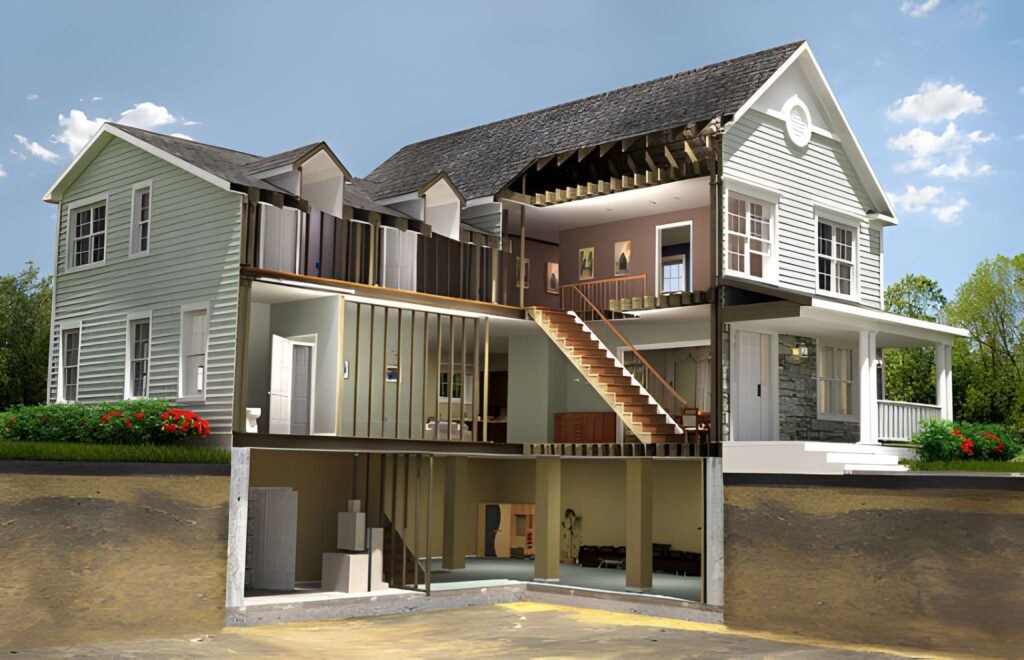
Structural Integrity: Advanced House Leveling and Foundation Repair
Foundation failure represents the most severe financial hazard for a property owner. Unlike cosmetic issues, structural instability compromises the physical integrity of the entire home, rendering it ineligible for standard financing and instantly depreciating its market value. Advanced house leveling and foundation repair refer to highly specialized, engineered solutions required when superficial repairs or basic moisture management prove insufficient. These methods are designed to counteract deep soil movement, expansive clay, and historical settlement, transforming a liability into a stable, insurable, and marketable asset.
Article Navigation
Advanced Diagnosis: When Settling Becomes Failure Core Method 1: Underpinning and Pier Systems Core Method 2: Slab Jacking and Polyurethane Injection The House Leveling and Stabilization Process The Cost, Financing, and Real Estate Value ImpactAdvanced Diagnosis: When Settling Becomes Failure
Normal, minor settling occurs in all homes. Advanced structural failure, known as differential settlement, occurs when one section of the foundation moves significantly more than the others. This imbalance transfers immense strain to the upper structure.
Key Indicators Demanding Structural Intervention
- Severe Interior Cracks: Drywall cracks that are continuous, run across ceilings, or radiate from window and door corners wider than 1/4 inch. These cracks often reappear immediately after cosmetic repair attempts.
- Sticking Doors/Windows: Doors that consistently rub or stick at the top corner, or windows that become severely difficult to open, indicate the house frame is pulled out of square.
- Sloping Floors: Measured differences in floor height exceeding 1 inch over 20 feet. This often presents as severe stair-step cracks in exterior brick or masonry.
- Basement/Crawl Space Movement: Concrete floors that have visibly cracked and moved vertically, or concrete basement walls showing pronounced horizontal bowing (usually greater than 1.5 inches).
Core Method 1: Underpinning and Pier Systems
Underpinning is the process of installing new structural support elements beneath an existing foundation to transfer the structural load from unstable surface soils to deeper, more competent soil or bedrock.
Types of Underpinning Systems
| System Type | Mechanism | Application |
|---|---|---|
| Steel Piers (Pilings) | Hydraulically driven deep into the ground until refusal (hitting bedrock or dense soil). | Used for severe, deep settlement problems, common in Texas, California, and expansive clay regions. |
| Helical Piers (Screwed Piles) | Screwed into the ground like a large screw until pressure resistance is achieved. | Suitable for lighter loads, tighter access, or areas where vibration must be minimized. |
| Concrete Piers (Pressed Piles) | Pre-cast concrete cylinders pressed into the ground using hydraulic jacks. | Economical option, but often less deep and less reliable than steel, common in moderate settlement areas. |
The House Lifting and Leveling Stage
Once the piers are installed to the desired depth, they are connected to the foundation perimeter via brackets. Hydraulic jacks are then simultaneously engaged across all piers. The house is incrementally lifted back toward its original horizontal plane, a slow process that minimizes damage to the upper structure. Shims or concrete blocks are then placed between the pier cap and the foundation bracket to lock the house into its new, stable position.
Core Method 2: Slab Jacking and Polyurethane Injection
Slab jacking, or "mud jacking," is a non-invasive technique used to raise settled concrete slabs (such as garage floors, patios, or basement floors) and sometimes the edges of monolithic slab foundations.
Polyurethane Foam vs. Cementitious Grout
- Traditional Mud Jacking (Grout): Injects a cementitious slurry beneath the slab through drilled holes. It is heavy, cures slowly, and the material itself can contribute to further settlement over time.
- Polyurethane Injection: Injects high-density expanding foam beneath the slab. This is the **advanced method**. The foam is extremely light, expands rapidly to fill voids completely, and cures quickly, allowing for immediate use of the area. This is highly precise and reduces the risk of adding excess weight to unstable soil.
Advanced Geotechnical Solutions
In addition to structural lifting, advanced repair often involves geotechnical solutions to manage the soil itself. This includes installing **root barriers** to prevent large trees from drying out the soil beneath the slab, or installing **French drains** and external membranes to prevent water from saturating expansive clay soils, which swell and cause uplift.
The House Leveling and Stabilization Process
Foundation leveling is a precise, multi-stage project that demands careful oversight to ensure stability and minimize cosmetic damage.
Key Stages of a Structural Repair Project
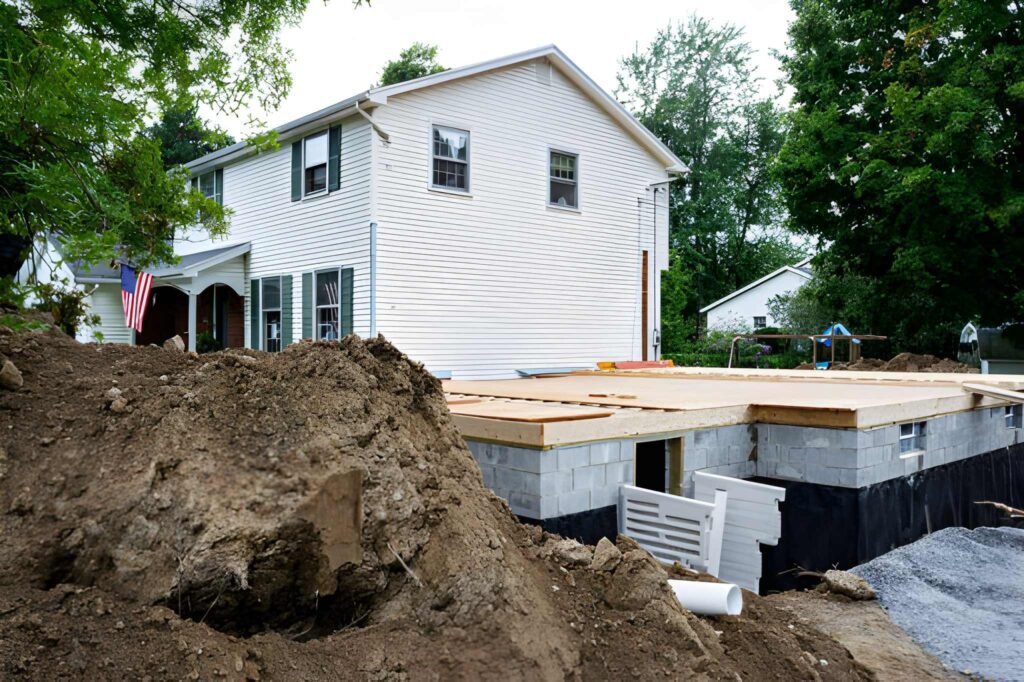
Exterior landscaping and concrete near the foundation perimeter are removed or temporarily moved. Piers are installed from the exterior and sometimes from the interior, requiring controlled, limited access excavation.
Piers are driven or screwed to the target depth. The system must be allowed to settle, and any injected grout or foam must cure before lifting begins.
The house is slowly raised in carefully measured increments. Over-lifting is avoided, as it can cause significant damage to plumbing, chimneys, and the roof structure. Laser levels constantly monitor the height changes.
The final height is locked in place using steel plates and shims. The site is backfilled, and a lifetime, transferable warranty is issued to the homeowner. This warranty is crucial for future sales.
The Cost, Financing, and Real Estate Value Impact
Foundation repair is a high-cost intervention, but its ROI is absolute: it restores the home’s function and secures its place in the market.
Structural Repair Cost Averages
Costs are heavily determined by the number of piers required and the depth of the stable soil, varying greatly across different US soil regions.
| Repair Method | Average US Cost Range (2024 Estimate) | Primary Advantage |
|---|---|---|
| Steel Pier Underpinning (Per Pier) | $$1,500 - $$3,000 | Deep stability; permanent, verifiable repair. |
| Total Pier Project (Typical Home) | $$10,000 - $$40,000+ | Corrects severe differential settlement. |
| Polyurethane Slab Jacking (Total) | $$900 - $$6,000 | Non-invasive leveling for settled interior slabs. |
| Structural Engineer Report | $$500 - $$1,500 | Mandatory. Secures permits and provides a non-biased remediation plan. |
Financing, Transferability, and ROI
Failure to repair a foundation makes the home ineligible for most conventional, FHA, or VA financing. The home can only be sold to cash buyers or those willing to assume the risk.
- ROI: While the cost is high, the financial return is typically 100% or more, as the repair removes the single largest discount factor and allows the house to qualify for financing at its full, unimpaired market value.
- Warranty: A lifetime, transferable warranty from the repair contractor is mandatory. This warranty is a key document that ensures buyer confidence and appraisal clearance during the sale process.
- Negotiation: Proactive repair removes the buyer's negotiation leverage. If the problem is addressed and warrantied, the buyer cannot request significant price reductions based on structural risk.
Advanced house leveling and foundation repair are complex, high-investment projects that require engineering precision. By addressing systemic failure with permanent solutions like steel underpinning and modern stabilization techniques, the homeowner transforms a critical liability into a structural asset. This process is the ultimate protection of equity, ensuring the home maintains its stability, eligibility for financing, and maximum value in the US real estate market.