The Refrigerant Drain: Analyzing AC Leak Repair Costs
A definitive breakdown of diagnostic methods, repair options, and total financial outlay for residential AC refrigerant leaks.
Table of Contents
Introduction: The Invisible AC Threat
A leaking residential air conditioning system presents one of the most frustrating and financially ambiguous house repairs. Unlike a broken fan or a clogged drain line, a refrigerant leak is an invisible threat, identifiable primarily by a system's diminished cooling capacity or frequent cycling. Refrigerant (or coolant) is the essential fluid that absorbs heat from the home and releases it outside. When a leak occurs, the system's efficiency drops dramatically, leading to increased utility bills and potential failure of the compressor—the most expensive component of any AC unit.
Repairing a refrigerant leak is typically a multi-phase process that involves three distinct financial transactions: 1) diagnosis and leak detection, 2) the physical repair of the leak, and 3) recharging the system with the appropriate refrigerant. Property owners must understand that the price varies wildly based on the leak location, the repair method, and the specific type of refrigerant required. Treating the symptom (adding more coolant) without fixing the source is not only illegal due to EPA regulations but guarantees repeated, costly failures.
Leak Causes and Common System Locations
Refrigerant leaks are rarely caused by a sudden event. They are typically the result of slow corrosion, vibration, or metal fatigue over time.
Primary Causes of Refrigerant Leaks
- Formic Acid Corrosion: This is the leading cause of leaks in modern copper evaporator coils. Chemical reactions from volatile organic compounds (VOCs) within the home create formic acid, which slowly eats pinholes in the copper tubing. This is an internal, difficult-to-detect issue.
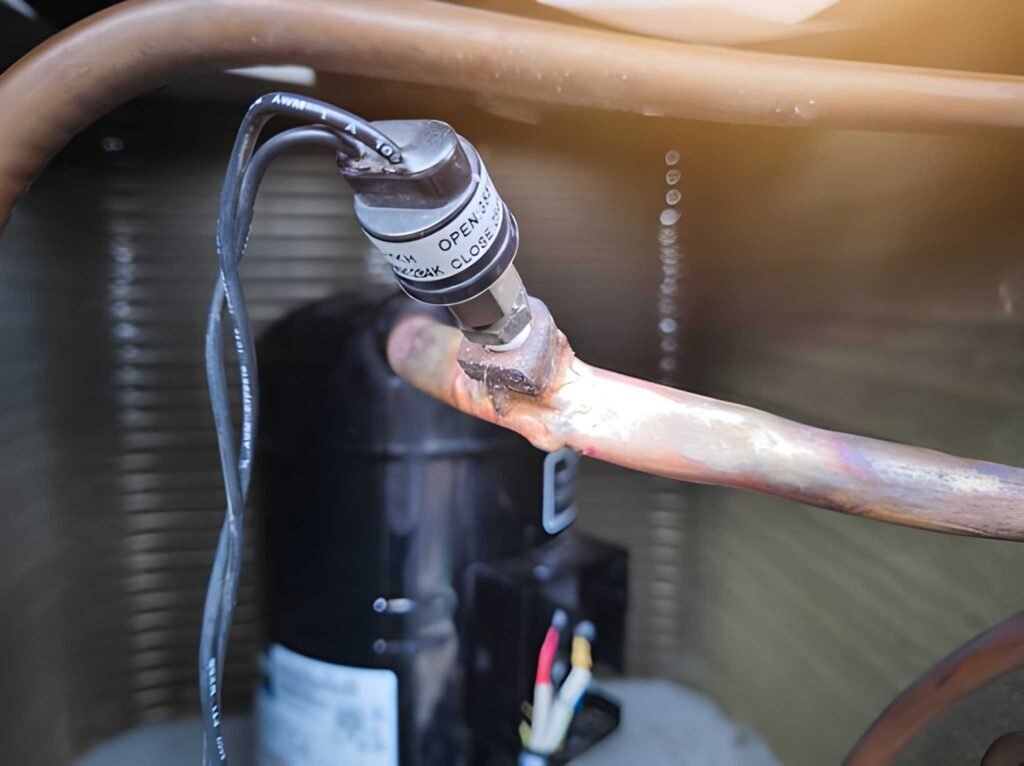
- Vibration and Fatigue: Constant vibration of the outdoor condenser unit can cause metal fatigue at braised (welded) joints or flare fittings on the copper line set.
- Manufacturer Defects: Less common, but sometimes a coil may leak due to a small fault from the factory.
Location Matrix: Impact on Repair Cost
The location of the leak is the most powerful determinant of the total repair cost.
| Location | Access Difficulty | Typical Repair Method | Cost Driver |
|---|---|---|---|
| Service Valve / Flare Fitting | Easy (Outdoor unit) | Tightening or replacing the valve core/fitting. | Labor time is minimal; low cost. |
| Line Set (Exposed) | Moderate (Attic/Crawlspace) | Brazing the copper tubing or cutting out and replacing a section. | Labor for welding/brazing and line access. |
| Evaporator Coil | High (Indoor Air Handler/Furnace) | Full replacement of the coil. | High material cost and extensive labor for removal and installation. |
Diagnosis: The Mandatory First Step
Before any repair cost can be quoted, a technician must locate the leak using specialized equipment. This detection process is billed separately from the repair itself.
Leak Detection Methods and Costs
Electronic Sniffer (Most Common)
Uses sensitive sensors to detect the chemical presence of refrigerant escaping the system. Quickest method for large leaks, but can struggle with minor, internal leaks.
Typical Cost: $150 – $350 (Often included in a standard service call fee).
Nitrogen Pressure Test
The technician removes the remaining refrigerant and pressurizes the system with inert nitrogen. They then use soap bubbles or a sniffer to pinpoint the leak. Mandatory for accurate leak confirmation.
Typical Cost: $250 – $500.
UV Dye Injection
Involves injecting fluorescent dye into the system. The dye mixes with the refrigerant oil, and after running the unit for a few days, the leak point glows brightly under UV light. Necessary for tiny, slow leaks.
Typical Cost: $300 – $600 (Requires two trips).
The Cost of Lost Cooling
A system running low on refrigerant operates inefficiently, but worse, it stresses the **compressor**. When coolant levels drop below 20 percent, the compressor loses the lubricating oil carried by the refrigerant, leading to overheating and mechanical failure. A failed compressor replacement can easily cost $2,000 to $4,500, making prompt leak repair a vital preventive maintenance step.
Repair Cost Breakdown by System Component
These figures represent the repair cost *after* the diagnostic fee has been paid and *before* the cost of recharging the system.
Brazing and Line Set Repair
Brazing (high-heat welding) copper tubing is the standard fix for line set leaks. This repair requires specific licenses and equipment, and should never be attempted by an amateur.
Typical Cost: $400 – $1,200. This includes materials, labor (2-4 hours), and the process of pulling a deep vacuum on the line after the weld is complete.
Evaporator Coil Replacement
If the leak is in the evaporator coil (the indoor component), replacement is almost always required. The coil is often a custom part for the air handler.
Typical Cost: $1,500 – $3,500. This includes the coil, 4-8 hours of specialized labor, refrigerant recovery, vacuuming, and nitrogen testing.
Condenser Coil Replacement
If the leak is in the outdoor condenser coil, replacement is also necessary.
Typical Cost: $1,800 – $4,000. This higher cost reflects the size and complexity of the outdoor unit's heat exchange component.
The Financial Impact of Refrigerant Type
The final, unavoidable cost is recharging the system. The type of refrigerant required significantly influences the total bill.
R-22 (Freon) vs. R-410A (Puron)
Systems manufactured before 2010 typically use R-22 (Freon), which has been phased out due to environmental regulations.
- R-410A (Modern): $50 – $120 per pound. Widely available and cheaper.
- R-22 (Phased Out): $150 – $300 per pound. Supply is limited, making it extremely costly.
A standard 3-ton AC unit typically requires 6 to 10 pounds of refrigerant.
R-22 Total Recharge Cost Example
Assume a 3-ton system requires 8 pounds of R-22 at $200 per pound.
Recharge Cost = 8 pounds x $200/pound = $1,600
This high cost makes repair of an R-22 system financially questionable, often forcing a full unit replacement.
Repair vs. Replace: The Cost Analysis
As a real estate expert, the decisive factor is the age of the unit, especially when facing an evaporator coil leak or dealing with an R-22 system.
The 50 Percent Rule of Thumb
If the total estimated repair cost (including detection, parts, labor, and recharge) exceeds **50 percent of the cost of a new replacement unit**, opt for replacement. A new, high-efficiency unit (typically $5,000 – $10,000 installed) provides a 10-year parts warranty, significantly lower operating costs, and eliminates the risk of future failures on an aging system.
Investment Consideration
Replacing an old HVAC system often provides a higher return on investment (ROI) and greater peace of mind for buyers than a costly repair, especially if the home is being prepared for sale or rental.
Conclusion: Preventing Future Loss
The cost to repair an AC leak is highly variable, ranging from a few hundred dollars for a minor fitting adjustment to several thousand for a coil replacement and refrigerant recharge. By insisting on a detailed leak detection report before authorizing any work and carefully weighing the cost of the repair against the age and refrigerant type of the existing unit, property owners move confidently from crisis to solution. For aging R-22 systems, the financial logic overwhelmingly favors replacement, securing long-term cooling efficiency and future property valuation.