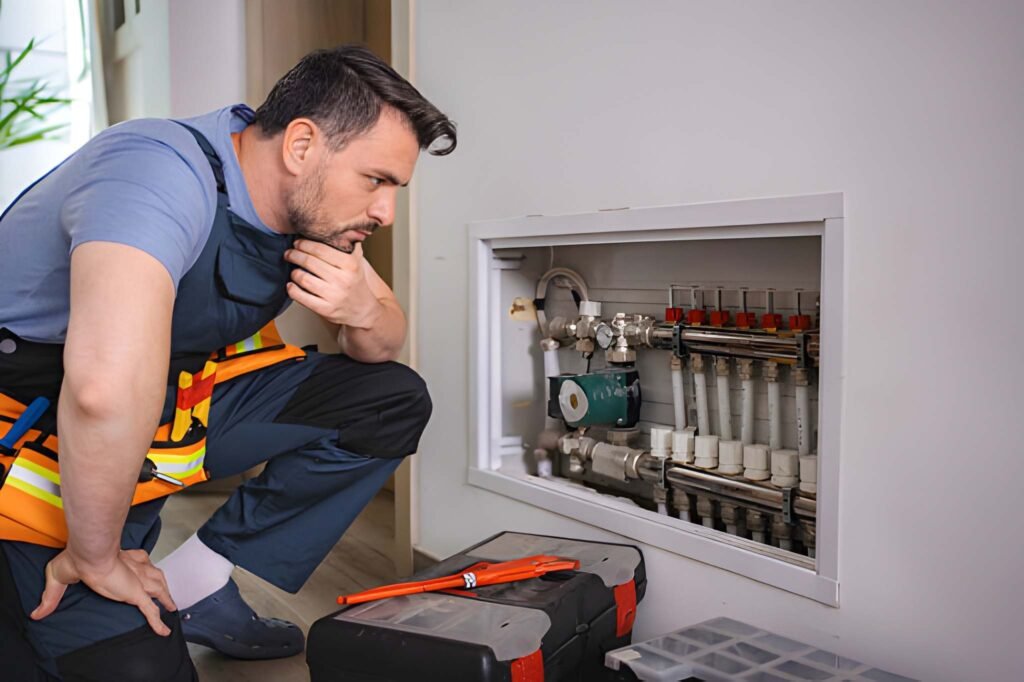
A heating system failure, especially during cold weather, constitutes a home maintenance emergency. Repairing these complex systems—whether furnace, boiler, or heat pump—requires a systematic approach that prioritizes safety, accurate diagnosis, and an understanding of when professional intervention is mandatory. The repair process is a hierarchy, moving from simple, user-serviceable tasks to complex, licensed-technician-only procedures.
The Diagnostic Hierarchy: Troubleshooting from Simple to Complex
Before any repair is attempted, always start with the simplest and safest potential causes.
Step 1: Verify System-Wide Basics
- Check the Thermostat: Is it set to “HEAT” and a temperature higher than the current room temperature? Are the batteries dead (if applicable)? This is the most common “failure” point.
- Check the Power: Is the furnace or boiler switch (a light-switch-like toggle on or near the unit) in the “ON” position? Has the circuit breaker or fuse for the system tripped or blown? Check your main electrical panel.
- Check the Fuel Source: For gas or oil systems, is the supply valve open? Is the propane tank empty? For all systems, ensure the gas and water (for boilers) supply valves are open.
Step 2: Address System-Specific Safety Checks
- For All Systems: Locate and press the “reset” button on the unit itself (not the thermostat) once. If it trips again immediately, a deeper problem exists—do not continue resetting it.
- For High-Efficiency Furnaces & Boilers (PVC Exhaust Pipes): Check the exterior termination pipes for obstructions like snow, ice, or leaves. A blocked exhaust will shut the system down for safety.
Common Repairs by System Type
For Forced-Air Furnaces (Gas, Oil, Electric):
| Symptom | Likely Cause | DIY or Pro? | Repair Action |
|---|---|---|---|
| Furnace doesn’t turn on. | Dirty flame sensor. | DIY (Carefully). | The flame sensor is a thin, metallic rod in front of the burner assembly. Turn off power & gas. Gently clean its tip with fine sandpaper or steel wool. |
| Blower runs, no heat. | Gas: Ignition failure (pilot light, hot surface ignitor). | Pro for Gas. DIY for Electric. | A professional will test and replace the ignitor or gas valve. For an electric furnace, a DIYer can test and replace sequencers or heating elements if comfortable with high-voltage. |
| Furnace cycles on/off frequently. | Dirty air filter. | DIY. | Replace the filter. A clogged filter restricts airflow, causing the furnace to overheat and shut down prematurely. |
| No airflow from vents. | Blower motor capacitor failure. | Pro. | The capacitor gives the blower motor the jolt to start. A failed capacitor is a common and relatively inexpensive repair for a technician. |
| Gas smell or carbon monoxide alarm. | EMERGENCY. Gas leak or cracked heat exchanger. | Pro. Immediately. | Evacuate the house and call your gas company and a licensed HVAC technician. Do not operate any switches. |
For Boiler Systems (Hot Water or Steam):
| Symptom | Likely Cause | DIY or Pro? | Repair Action |
|---|---|---|---|
| No heat from radiators/baseboards. | Low water pressure. | DIY. | Check the system’s pressure gauge on the boiler. If it’s below 12-15 PSI, use the feed valve to slowly add water until pressure is restored. |
| Gurgling or banging sounds (Hydronic). | Air in the lines. | DIY. | Bleed the air from the radiators using a radiator key until water squirts out. |
| Boiler cycles constantly. | Faulty aquastat or circulator pump. | Pro. | The aquastat (water temperature control) or the pump that moves water has failed. Requires professional diagnosis and replacement. |
| Leaking water. | Failed pressure relief valve, pump seal, or corrosion. | Pro. | Any leak requires immediate professional attention to prevent water damage and system failure. |
| Some radiators cold (Steam). | Stuck vents or uneven slope. | DIY. | Replace clogged steam vents on the radiators. Ensure radiators are sloped slightly back toward the pipe. |
For Heat Pump Systems:
| Symptom | Likely Cause | DIY or Pro? | Repair Action |
|---|---|---|---|
| System blows cold air in heat mode. | Reversing valve failure or refrigerant leak. | Pro. | The reversing valve directs refrigerant flow for heating/cooling. A leak or valve failure requires a certified technician to handle refrigerant. |
| Ice buildup on outdoor coil. | Defrost cycle failure or low refrigerant. | Pro. | The system has a defrost cycle to melt ice. If it fails, the coil freezes. This is a complex electrical/refrigerant issue. |
| Reduced heating capacity. | Dirty coils or failing compressor. | Pro. | Outdoor coil must be clean. A struggling compressor requires professional diagnosis and is a costly repair. |
The Decision: DIY vs. Calling a Professional
You can likely handle: Thermostat battery/basic settings, replacing air filters, resetting breakers/switches, clearing exhaust/intake obstructions, bleeding radiators, and adding water to a boiler.
You must call a licensed HVAC professional for:
- Any issue involving natural gas or propane: This includes pilot lights, gas valves, and heat exchangers. Risk of explosion or carbon monoxide poisoning is extreme.
- Any issue involving electrical components beyond a simple switch or breaker (e.g., capacitors, transformers, control boards).
- Any issue involving refrigerant (legally requires an EPA certification).
- Any suspected problem with the heat exchanger. A cracked exchanger can leak lethal carbon monoxide into the airstream.
- Any water leak from a boiler.
- If you have performed the basic checks and the system still fails to operate.
The Professional Service Call: What to Expect
A reputable HVAC technician will:
- Perform a Safety Check: Test for gas leaks and carbon monoxide.
- Systematically Diagnose: Use multimeters, manometers, and other tools to test electrical components, gas pressure, and system pressures.
- Provide a Detailed Estimate: Explain the faulty component, the cost of the part and labor, and the necessity of the repair.
- Discuss Options: For an older system with a costly repair (e.g., a failing compressor), they may advise on the cost-benefit of repair versus replacement.
Cost Ranges for Common Professional Repairs
- Furnace Ignitor or Flame Sensor Replacement: $150 – $400
- Blower Motor Capacitor Replacement: $200 – $450
- Circulator Pump Replacement (Boiler): $500 – $1,200
- Thermostat Replacement (Programmable): $150 – $400
- Heat Pump Reversing Valve Replacement: $600 – $1,800
- Refrigerant Leak Repair and Recharge: $500 – $2,000+
Heating system repair is a balance between basic maintenance and acknowledging the limits of DIY. Safety must be the overriding principle. By methodically checking the simple things first—thermostat, power, and filters—you can potentially resolve the issue quickly. For anything involving gas, complex electricity, refrigerant, or persistent problems, investing in a professional HVAC technician is not an expense; it is an investment in the safety, efficiency, and longevity of your home’s heating system.