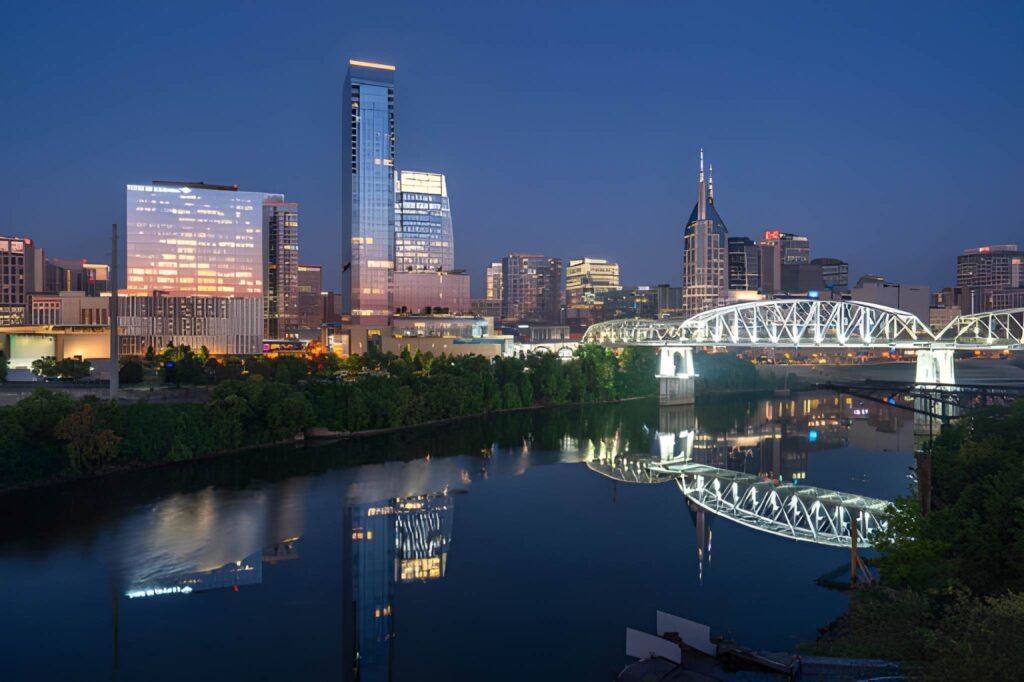
Nashville is a city living a double life. It is the historic, soulful “Music City” of country music lore, and it is the explosive “It City,” a boomtown of cranes, tech hubs, and skyrocketing costs. Living in Nashville today means navigating the tension between its cherished traditions and its relentless, often disruptive, growth. It is a place where world-class healthcare and education institutions anchor a diversifying economy, all while the strum of a guitar remains the city’s enduring soundtrack. This guide moves beyond the Broadway honky-tonks to examine the intricate realities of life in the capital of Tennessee, from its transformed housing market to its evolving cultural identity, providing a clear-eyed view of what it truly means to build a life in this dynamic and demanding city.
The Nashville Vibe: Life in a City of Two Beat
Life in Nashville is defined by its energy and its contradictions. The pace is fast and ambitious, fueled by a constant influx of new residents and capital. The vibe is a unique blend of Southern hospitality and entrepreneurial hustle; it’s a city where you can have a friendly conversation with a stranger while simultaneously networking. The creative energy is palpable, but it has expanded far beyond country music to encompass tech, fashion, and art. Yet, a deep sense of tradition persists in the unassuming meat-and-threes, the legendary recording studios, and the steadfast neighborhoods. Your experience is hyper-local, dictated by whether you live in a rapidly gentrifying urban village, a quiet family-friendly suburb, or one of the trendy “small towns within the city.” It’s a place that demands resilience and adaptability, offering immense opportunity to those who can keep up.
The Price of Popularity: Cost of Living
Nashville’s cost of living has skyrocketed, transforming it from an affordable Southern secret into one of the most expensive cities in the Southeast. The primary driver is housing, which has appreciated at a rate far outpacing local wages.
A detailed budget for a single professional living in a one-bedroom apartment in a popular area like Germantown or 12 South might look like this:
- Rent: $1,900 (for a 700-800 sq ft apartment)
- Utilities (Electricity – high due to AC, Gas, Internet): $220
- Groceries: $400
- Dining & Entertainment: $600 (a major social focus)
- Transportation (Car Payment, Insurance, Gas – a near-necessity): $650
- Miscellaneous: $300
This creates a baseline monthly expenditure of approximately $4,070. To afford this comfortably (using the standard guideline that rent should not exceed 30% of gross income), your pre-tax annual income would need to be at least $76,000.
This calculation is shown as:
\text{Required Annual Income} = \frac{\$1,900 \times 12}{0.3} = \$76,000This figure is increasingly difficult for those not in high-paying industries, creating a significant affordability squeeze.
A City of Distinct Districts: Best Neighborhoods
Choosing a neighborhood in Nashville is a declaration of values and lifestyle, each with a vastly different character and price point.
- Urban Core:
- Downtown / SoBro (South of Broadway): The tourist and entertainment epicenter. High-rise condos, hotels, and the famed Broadway honky-tonks. Energetic, noisy, and expensive.
- Germantown: A historic neighborhood north of Capitol Hill now filled with chef-driven restaurants, boutique shops, and renovated homes. Walkable, chic, and highly desirable.
- The Gulch: A transformed industrial area now a dense district of luxury high-rises, upscale retail, and trendy restaurants. The epitome of Nashville’s new, sleek identity.
- South Nashville:
- 12 South / Belmont-Hillsboro: Trendy, walkable districts with bungalow-lined streets, popular boutiques, and some of the city’s best restaurants. A mix of students, young professionals, and families. Very expensive.
- Wedgewood-Houston (WeHo): The current frontier of art and cool. A former industrial zone now home to art galleries, craft breweries, and creative offices. Rapidly gentrifying.
- East Nashville: Across the Cumberland River, this area is the heart of Nashville’s indie and artistic spirit. Known for its dive bars, music venues, and a strong sense of community amidst intense gentrification. A mix of historic homes and new builds.
- West Nashville / The Suburbs:
- Sylvan Park: A beloved, established neighborhood with a popular main street (Murphy Rd) and a family-friendly, community-oriented feel.
- Belle Meade: An independent city surrounded by Nashville. The historic epicenter of old money, with sprawling estates and a prestigious zip code.
- Brentwood & Franklin: Affluent suburbs to the south with top-rated public schools, massive shopping centers, and master-planned communities. A long commute but a high quality of life.
The Sunbelt Gamble: Renting vs. Buying
The decision to rent or buy in Nashville is a high-stakes calculation in a volatile market.
Renting offers flexibility in a transient city and avoids the massive upfront costs of a down payment and high property taxes. However, rising rents offer little long-term stability.
Buying is a bet on long-term appreciation in a market that has seen unprecedented growth. However, the barrier to entry is now extremely high. The median home price puts a 20% down payment out of reach for many.
The financial break-even point is now longer due to high prices and property taxes. A simplified formula illustrates the calculation:
\text{Break-Even Point (years)} = \frac{\text{Total Upfront Costs}}{\text{Annual Rent} - (\text{Annual Mortgage Interest} + \text{Annual Property Taxes} + \text{Annual Insurance} + \text{Annual Maintenance})}Upfront costs include down payment and closing costs. The high property tax component is a critical and ongoing factor.
The Diversified “Health-tainment” Economy: Job Market and Career Opportunities
Nashville’s economy is no longer just music; it’s a powerful and diversified machine.
- Healthcare & BioScience: The city’s largest sector. Dubbed “Silicon Valley for Healthcare,” it is home to HCA Healthcare, Community Health Systems, and over 500 other healthcare companies. Vanderbilt University Medical Center is a world-class academic medical center and a top employer.
- Music & Entertainment: The historic core. Everything from record labels and publishing houses to touring and production companies. Highly competitive and often lower-paying outside the top tiers.
- Higher Education: Vanderbilt University is a top-ranked private research university and a massive economic and cultural anchor.
- Automotive Manufacturing: Nissan North America has its headquarters in nearby Franklin, and General Motors has a large plant in Spring Hill.
- Technology: A rapidly growing sector, with Amazon establishing a major Operations Hub and many tech startups drawn by the talent pool and business-friendly environment.
Educational Landscape: Best Schools and Universities
Metro Nashville Public Schools (MNPS) is a district of extremes, with a few excellent magnet schools and many struggling neighborhood schools. This has created a competitive landscape for charter schools and a strong culture of private schooling, which can be expensive.
For higher education, Nashville is an elite destination:
- Vanderbilt University: A prestigious private research university and the city’s intellectual anchor.
- Belmont University: A private Christian university known for its music business and entertainment industry programs.
- Tennessee State University (TSU): A public historically black university (HBCU).
- Lipscomb University and Fisk University are other well-regarded private institutions.
The Commute: Transportation and Gridlock
Nashville’s infrastructure has catastrophically failed to keep pace with its growth. The city is notoriously car-dependent, and traffic congestion is among the worst in the nation. While the WeGo Public Transit system provides bus service, it is insufficient for most residents’ needs. A car is an absolute necessity for the vast majority. Commute times are a major quality-of-life issue, with a 10-mile drive easily taking 45 minutes or more during rush hour. The lack of a comprehensive public transit system is the city’s most significant liability.
The Housing Market: A Tactical Overview
The Nashville housing market is one of the most competitive in the nation, characterized by low inventory, intense bidding wars, and rapid price appreciation.
- Average Home Prices: As of late 2023, the median sale price for a home in the Nashville-Davidson-Murfreesboro-Franklin metro is approximately $470,000. This figure has cooled from its peak but remains extremely high.
- Most Affordable Areas to Buy a Home: Look to the northern and eastern periphery: Madison, Antioch, and Hermitage. These areas offer relative value but come with longer commutes and variable school districts.
- Luxury Real Estate Hotspots: Belle Meade, Forest Hills, Green Hills, and new construction in The Gulch and Germantown command the highest prices.
- Rental Market: Extremely competitive with low vacancy rates. Rent prices have soared. Landlords typically require proof of income at 3x the monthly rent.
- Best Places to Invest & Future Growth Neighborhoods: Investment is pushed to the fringes. North Nashville (around TSU), Donelson, and Inglewood are seen as the next frontiers for development as the core becomes unaffordable.
The Cultural Repertoire: Things to Do
| Activity Category | Iconic Examples | Hidden Gems |
|---|---|---|
| Cultural Attractions | Country Music Hall of Fame, Ryman Auditorium, Parthenon (full-scale replica) | National Museum of African American Music, Frist Art Museum, Lane Motor Museum |
| Parks & Outdoors | Centennial Park, Radnor Lake State Park, Percy Warner Park | Shelby Bottoms Greenway, Beaman Park, Love Circle for skyline views |
| Food & Drink | Hot Chicken (Prince’s, Hattie B’s), Southern Food, Meat-and-Threes | City House, Rolf and Daughters, Butcher & Bee |
| Nightlife | Broadway Honky-Tonks, rooftop bars in The Gulch, music venues in East Nashville | Robert’s Western World (classic honky-tonk), The 5 Spot, The Basement East |
Annual Festivals and Events: CMA Fest, Tin Pan South Songwriters Festival, AmericanaFest.
Shopping: From the high-end shops of Green Hills Mall to the boutiques of 12 South and the vintage finds in East Nashville.
Quality of Life & Relocation Essentials
- Raising a Family: Challenging within the city core due to costs and school variability. Many families are pushed to the suburbs (Williamson County – Franklin, Brentwood) for top-tier public schools and more space.
- Crime and Safety: Property crime is a widespread issue. Violent crime is typically concentrated in specific, economically disadvantaged areas. Overall, crime rates are comparable to other cities of its size.
- Healthcare and Hospitals: World-class healthcare is available through Vanderbilt University Medical Center, Ascension Saint Thomas, and TriStar Health.
- Weather and Climate: A humid subtropical climate. Summers are long, extremely hot, and humid. Winters are generally mild but can bring ice storms. Spring is the most pleasant season but brings a risk of severe thunderstorms and tornadoes.
- Cost of Utilities: For a 1,800 sq ft house, average monthly costs are:
- Electricity (NES): $150 – $250+ (high in summer with AC)
- Water/Sewer: $70 – $100
- Internet: $80 – $100
- Condo/HOA Fees: Common in newer developments.
The Relocation Checklist
- Secure a High-Paying Job: This is non-negotiable. Have an offer in hand with a salary that meets the city’s high financial demands, ideally in healthcare or tech.
- Choose Your Neighborhood Based on Commute: Your daily drive will majorly impact your quality of life. Use Google Maps to test commute times during rush hour from potential homes.
- Get a Car: You will need a reliable one. Factor in insurance and gas.
- Prepare for the Heat: Invest in a high-quality AC system for your home and car.
- Manage Expectations: Be prepared for traffic, high costs, and a culture that is evolving rapidly away from its traditional roots.
The Final Verdict: Pros and Cons of Living in Nashville
Pros:
- A dynamic, booming economy with abundant high-paying job opportunities, particularly in healthcare.
- A vibrant cultural and music scene that is unmatched by any other U.S. city.
- A generally friendly and welcoming population.
- No state income tax, a significant financial benefit for high earners.
- Beautiful greenways and parks, and proximity to nature.
Cons:
- An extremely high cost of living, with housing costs that have far outpaced wage growth for most.
- Catastrophic traffic congestion and a failed public transportation system.
- Oppressive heat and humidity for a significant portion of the year.
- The rapid growth and gentrification are eroding the city’s unique character and authenticity.
- Intense urban sprawl and a lack of cohesive planning.
Living in Nashville is a choice to prioritize career opportunity, a vibrant social scene, and cultural amenities over affordability, easy commutes, and a sense of historic preservation. It is a city for the ambitious and the resilient, offering a front-row seat to explosive growth and all the chaos and opportunity that comes with it. For those who can secure a high income and tolerate the traffic, it remains a land of possibility. For everyone else, it is a cautionary tale of what happens when a city becomes a victim of its own success.