
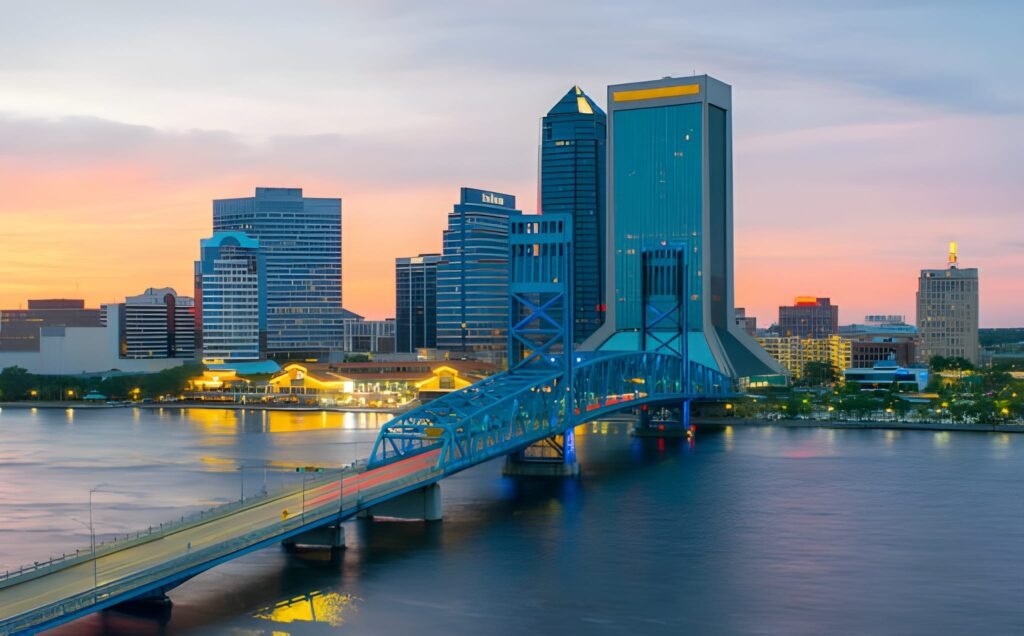
Jacksonville is a city of staggering scale and surprising contrasts. It is the largest city by landmass in the contiguous United States, a sprawling metropolis where gleaming downtown towers give way to vast maritime forests and miles of Atlantic beaches. Living in Jacksonville means embracing a city that is both a major commercial port and a relaxed beach town, a place with a deep Southern heritage that is simultaneously a modern, growing hub for finance and healthcare. This guide moves beyond the surface to examine the intricate realities of life in the River City, from its unbeatable affordability and sprawling suburbs to its challenges with transit and urban cohesion, providing a clear-eyed view of what it truly means to build a life in this bold, and often overlooked, Florida anchor.
The Jax Vibe: Life in a City of Seven Bridges
Life in Jacksonville is defined by its geography and its decentralized layout. The St. Johns River physically and culturally divides the city, connected by a series of iconic bridges. The pace is decidedly laid-back and Southern; there’s a focus on outdoor life, family, and enjoying the simple pleasures. The vibe is unpretentious, friendly, and practical. It’s a military town (home to Naval Air Station Jacksonville and Mayport Naval Station), a corporate town (with multiple Fortune 500 HQs), and a beach town all at once. Your experience is hyper-local, dictated by which of its massive “sub-cities” you call home—be it the urban core of San Marco, the beach vibes of Atlantic/Neptune Beach, or the suburban sprawl of the Southside. The energy is one of steady growth and quiet confidence, less about flash and more about building a solid, affordable life.
The Florida Value: Cost of Living
Jacksonville’s most powerful asset is its affordability, especially within the context of Florida. It offers a sun-and-beach lifestyle at a cost of living that is among the most manageable of any major coastal city in the U.S.
A detailed budget for a single professional living in a one-bedroom apartment in a popular area like Riverside or at the Beaches might look like this:
- Rent: $1,400 (for a 700-800 sq ft apartment)
- Utilities (Electricity – high due to AC, Gas, Internet): $220
- Groceries: $370
- Dining & Entertainment: $450
- Transportation (Car Payment, Insurance, Gas – a necessity): $600
- Miscellaneous: $250
This creates a baseline monthly expenditure of approximately $3,290. To afford this comfortably (using the standard guideline that rent should not exceed 30% of gross income), your pre-tax annual income would need to be at least $56,000.
This calculation is shown as:
\text{Required Annual Income} = \frac{\$1,400 \times 12}{0.3} = \$56,000This accessibility is a primary driver attracting families, military personnel, and retirees.
A City of Mega-Hoods: Best Neighborhoods
Given its immense size, choosing a neighborhood is the most critical decision. Each area feels like its own town.
- Southbank / Downtown: The urban core. The Southbank features museums and apartments with skyline views. Downtown is the government and financial center, with new residential developments slowly adding life outside of business hours.
- Northbank / Urban Core:
- Riverside & Avondale: Historic districts with beautiful early 20th-century architecture, tree-canopied streets, and a vibrant main street (King Street) with restaurants and boutiques. The epicenter of Jacksonville’s hip and walkable culture.
- San Marco: An upscale, charming neighborhood with a quaint town square, independent shops, and excellent restaurants. Family-friendly and centrally located.
- The Beaches:
- Jacksonville Beach, Neptune Beach, Atlantic Beach: Three distinct but connected communities with a laid-back, surf-centric vibe. A world away from the city feel, with their own rules and culture. Popular with young professionals, families, and tourists.
- Southside / Mandarin:
- Southside: A massive commercial and residential corridor. Home to the St. Johns Town Center (high-end outdoor mall), countless chain restaurants, and sprawling suburbs. Convenient but lacks character.
- Mandarin: A quiet, affluent, family-oriented suburb on the St. Johns River with good schools and a historical feel.
- St. Johns County:
- While not in Duval County, St. Johns County (including Nocatee, Ponte Vedra, and St. Johns) is essentially Jacksonville’s premier suburb. It boasts the absolute top-rated public schools in Florida but comes with a higher cost of living and a longer commute.
The Sunbelt Calculation: Renting vs. Buying
The decision to rent or buy in Jacksonville is heavily weighted towards buying for those planning to stay, thanks to affordable prices and strong inventory.
Renting offers flexibility to explore the city’s vast geography and is a common choice for the large military population. The rental market is competitive in the most desirable walkable areas.
Buying is a strong and achievable long-term financial move. The barrier to entry is low. A 20% down payment on a median-priced home is a realistic goal for many households. However, buyers must factor in homeowners insurance, which is high due to hurricane and flood risk.
The financial break-even point is typically 5-7 years. A simplified formula illustrates the calculation:
\text{Break-Even Point (years)} = \frac{\text{Total Upfront Costs}}{\text{Annual Rent} - (\text{Annual Mortgage Interest} + \text{Annual Property Taxes} + \text{Annual Insurance} + \text{Annual Maintenance})}Upfront costs include down payment and closing costs. The high cost of insurance is a critical and often surprising factor for newcomers.
The Diversified Economy: Job Market and Career Opportunities
Jacksonville’s economy is a robust and diversified mix of sectors, insulating it from market swings.
- Finance & Insurance: A massive sector. The city is a national hub for back-office financial operations. FIS Global, Deutsche Bank,
- VyStar Credit Union, and Black Knight are major employers.
- Healthcare: A huge and growing sector. Mayo Clinic Florida is a world-renowned medical center and a top employer. Baptist Health and Ascension St. Vincent’s are also massive systems.
- Logistics & Distribution: The Port of Jacksonville (JAXPORT) is one of the largest in the U.S., supporting thousands of jobs in logistics, warehousing, and transportation.
- Military: Naval Air Station Jacksonville (NAS Jax) and Naval Station Mayport are enormous economic drivers, employing both active duty and civilian personnel.
- Corporate Headquarters: Home to CSX Corporation (railroads) and Dollar General (regional HQ).
Educational Landscape: Best Schools and Universities
Duval County Public Schools is a large and varied district. Quality can vary significantly, with high-performing magnet schools and struggling neighborhood schools. This has fueled demand for charter schools.
For higher education, Jacksonville is a strong regional center:
- University of North Florida (UNF): A public university known for its business and nursing programs.
- Jacksonville University (JU): A private university on the river with a strong marine science program.
- Florida State College at Jacksonville (FSCJ): A large state college providing vital workforce training and associate degrees.
Getting Around: Transportation and Reality
Jacksonville is the archetype of car-dependent sprawl. Its immense geographic size makes a personal vehicle an absolute necessity for the vast majority of residents. Public transportation, through the Jacksonville Transportation Authority (JTA) bus system and the elevated Skyway monorail in downtown, is limited and impractical for most daily needs. Traffic congestion is a significant issue, particularly on the key bridges across the St. Johns River (I-95, I-10, Buckman, Dames Point) and on the I-295 beltway during rush hour.
The Housing Market: A Tactical Overview
The Jacksonville housing market is hot, characterized by high demand from inbound migration, low inventory, and rising prices, though it remains affordable by national standards.
- Average Home Prices: As of late 2023, the median sale price for a home in the Jacksonville metro is approximately $305,000. This provides access to single-family homes, a key draw.
- Most Affordable Areas to Buy a Home: Look to the Westside and Northside: Orange Park, Oakleaf, and North Jacksonville. These areas offer significant value but often come with longer commutes.
- Luxury Real Estate Hotspots: Ponte Vedra Beach (gated golf communities), San Marco, and waterfront properties along the St. Johns River and Intracoastal Waterway command premium prices.
- Rental Market: Competitive, with prices rising steadily. Landlords typically require proof of income at 3x the monthly rent.
- Best Places to Invest & Future Growth Neighborhoods: Investment follows infrastructure. Northwest Jacksonville near the port, Springfield (a historic neighborhood north of downtown undergoing renewal), and Oakleaf are seen as having strong potential for appreciation.
The Cultural Repertoire: Things to Do
| Activity Category | Iconic Examples | Hidden Gems |
|---|---|---|
| Cultural Attractions | Cummer Museum of Art & Gardens, Museum of Science & History (MOSH), Jacksonville Zoo and Gardens | Riverside Arts Market, Karpeles Manuscript Library Museum, James Weldon Johnson Park |
| Parks & Outdoors | Kathryn Abbey Hanna Park, Little Talbot Island State Park, Jacksonville-Baldwin Rail Trail | Treaty Oak Park, Big Talbot Island (Boneyard Beach), Huguenot Memorial Park |
| Food & Drink | Safe Harbor Seafood, The Bearded Pig BBQ, Maple Street Biscuit Company | Hawkers Asian Street Food, The French Pantry, Singleton’s Seafood Shack (Mayport) |
| Nightlife | Riverside (King St.), Jacksonville Beach bars, Downtown sports bars | Underbelly (live music), The Volstead (speakeasy), Lemon Bar (at the beaches) |
Annual Festivals and Events: The Players Championship (PGA golf in Ponte Vedra), Jacksonville Jazz Festival, One Spark (innovation festival).
Shopping: From the luxury of St. Johns Town Center to the boutiques of Riverside and the massive Orange Park Mall.
Quality of Life & Relocation Essentials
- Raising a Family: Excellent in the suburbs (especially St. Johns County) with top-tier schools. The city offers great parks, the zoo, and family-friendly beaches. The affordable cost of living makes raising a family here less financially stressful.
- Crime and Safety: Property crime is the most common issue. Violent crime is typically concentrated in specific, economically disadvantaged areas on the North and West sides. Researching specific neighborhoods is crucial.
- Healthcare and Hospitals: World-class healthcare is available through Mayo Clinic Florida and major systems like Baptist Health and Ascension St. Vincent’s.
- Weather and Climate: Humid subtropical climate. Summers are long, extremely hot, and humid. Winters are mild and short. The primary environmental concern is the hurricane season (June 1 – November 30), which requires serious preparation.
- Cost of Utilities: For a 1,800 sq ft house, average monthly costs are:
- Electricity (JEA): $150 – $250+ (extremely high in summer due to AC)
- Water/Sewer: $70 – $100
- Internet: $80 – $100
- Condo/HOA Fees: Common in newer communities.
The Relocation Checklist
- Secure Employment: Have a job lined up. The economy is strong and diverse.
- Choose Your Neighborhood Based on Lifestyle: Your daily life will be dictated by your location. Decide if you want urban walkability (Riverside), beach life, or suburban convenience.
- Get a Car: You will absolutely need a reliable one. Factor in insurance and gas.
- Research Flood Zones: Before you buy or rent, check FEMA flood maps. Avoid properties in high-risk zones (AE, VE) unless you are prepared for high insurance costs.
- Prepare for the Heat: Invest in a good AC system for your home and car. Learn to embrace indoor and water-based activities during the summer.
The Final Verdict: Pros and Cons of Living in Jacksonville
Pros:
- A very affordable cost of living, especially for a coastal Florida city.
- A strong, diverse economy with ample job opportunities across multiple sectors.
- Easy access to beaches, waterways, and outdoor activities.
- No state income tax, a significant financial benefit.
- A generally family-friendly atmosphere with a relaxed pace of life.
Cons:
- Extreme urban sprawl and a total reliance on cars, with significant traffic congestion.
- Oppressive heat and humidity for a significant portion of the year.
- A real and annual threat from hurricanes.
- The public school system in Duval County is highly variable.
- The city’s size and decentralization can lead to a lack of a cohesive urban identity.
Living in Jacksonville is a choice to prioritize affordability, outdoor lifestyle, and career opportunity over dense walkability and robust public transit. It is a city of immense potential, offering a sun-drenched, relaxed path to a high quality of life. For those who can master their commute and secure a good job, it provides a welcoming and dynamic place to build a future and put down roots. It is the ideal city for those who want the Florida lifestyle without the South Florida price tag.