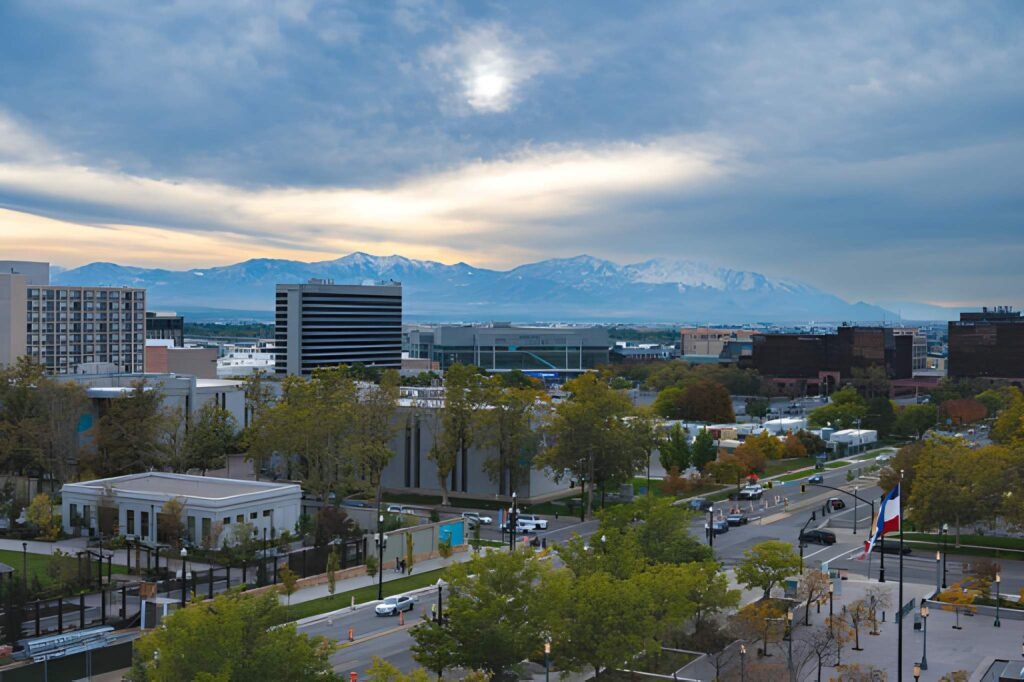
Salt Lake City is a city of profound juxtaposition. It is the global headquarters of a major world religion and a burgeoning secular tech hub. It is a place of conservative values and a surprisingly progressive urban core. It is a gateway to some of the planet’s most breathtaking natural landscapes, all accessible from a clean, orderly, and rapidly growing metropolitan area. Living in Salt Lake City means navigating these contrasts, embracing a lifestyle where world-class skiing, hiking, and biking are mere minutes away from a diversifying job market and a evolving cultural scene. This guide moves beyond the stereotypes to examine the intricate realities of life in the Crossroads of the West, from its unique culture and air quality challenges to its economic boom and outdoor paradise.
The SLC Vibe: Life Between the Mountains and the Metro
Life in Salt Lake City is defined by its geography and its culture. The pace is active, healthy, and family-oriented. The vibe is polite, orderly, and clean, reflecting the strong influence of The Church of Jesus Christ of Latter-day Saints (LDS Church), even for those who are not members. There is a pervasive focus on outdoorsmanship; conversations often revolve around ski conditions, hike recommendations, or bike trails. The energy in the urban core is changing rapidly, with a influx of young professionals and tech workers creating a more diverse, secular, and cosmopolitan atmosphere in neighborhoods like Downtown and Sugar House. It’s a city of stark contrasts: incredibly friendly and safe, yet grappling with the social and environmental growing pains of its own success.
The Rising Price of Paradise: Cost of Living
Salt Lake City’s cost of living has risen sharply, transforming from a hidden affordable gem into a moderately expensive city, driven almost entirely by a booming housing market.
A detailed budget for a single professional living in a one-bedroom apartment in a popular area like Sugar House or The Avenues might look like this:
- Rent: $1,500 (for a 600-700 sq ft apartment)
- Utilities (Electricity, Gas, Internet): $180
- Groceries: $380
- Dining & Entertainment: $450
- Transportation (Many use public transit; car costs estimated): $500
- Miscellaneous: $250
This creates a baseline monthly expenditure of approximately $3,260. To afford this comfortably (using the standard guideline that rent should not exceed 30% of gross income), your pre-tax annual income would need to be at least $60,000.
This calculation is shown as:
\text{Required Annual Income} = \frac{\$1,500 \times 12}{0.3} = \$60,000This is becoming a challenge as wages, outside of tech and finance, have not kept pace with housing inflation.
A City of Distinct Districts: Best Neighborhoods
Your choice of neighborhood in SLC will significantly impact your daily experience, from urban walkability to suburban quiet.
- Downtown: The urban core, home to the LDS Temple Square, City Creek Center mall, and a growing number of residential high-rises. It’s the center for arts, nightlife (such as it is), and government.
- The Avenues: A historic, quiet neighborhood on the foothills just north of downtown. Features beautiful, older homes, tree-lined streets, and a mix of students, professionals, and families. Highly walkable with great views.
- Sugar House: A trendy, walkable district southeast of downtown with a beloved main street, parks (Sugar House Park), and a mix of boutiques and restaurants. Popular with young professionals and families. Rapidly becoming more expensive.
- Marmalade & Capitol Hill: Adjacent to downtown, these areas are known for their historic homes and proximity to the Utah State Capitol building. Quieter than downtown but with easy access.
- 9th & 9th: A charming, hip commercial node surrounded by a relaxed residential area. Known for its unique local shops, restaurants, and a strong community feel.
- The Suburbs:
- Millcreek: A more affordable area between SLC proper and the southern suburbs, now its own incorporated city. Offers a mix of suburban and urban feels.
- Cottonwood Heights, Holladay, Sandy: Family-friendly suburbs at the mouth of the canyons, providing quick access to skiing and hiking. Excellent schools and more conservative.
- Daybreak (South Jordan): A massive, master-planned community southwest of the city. Modern amenities, designed for walkability, and popular with young families.
The Western Calculation: Renting vs. Buying
The decision to rent or buy in Salt Lake City is complex, given the rapid appreciation of recent years.
Renting offers flexibility to explore different neighborhoods and avoids the massive upfront costs in a volatile market. It’s a good choice for newcomers.
Buying has been a tremendous wealth-building tool for those who bought before the boom. Now, the barrier to entry is high, though still below coastal cities. Competition is fierce, and buyers often face bidding wars.
The financial break-even point is typically 5-7 years. A simplified formula illustrates the calculation:
\text{Break-Even Point (years)} = \frac{\text{Total Upfront Costs}}{\text{Annual Rent} - (\text{Annual Mortgage Interest} + \text{Annual Property Taxes} + \text{Annual Insurance} + \text{Annual Maintenance})}Upfront costs include down payment and closing costs. The potential for long-term appreciation remains a strong motivator for buyers.
The Silicon Slopes Economy: Job Market and Career Opportunities
Salt Lake City’s economy is one of the fastest-growing and most diversified in the nation, far beyond its historical mining roots.
- Technology (“Silicon Slopes”): The dominant growth sector. The area from Provo to Salt Lake City is a major tech hub, home to Adobe, Qualtrics, Domo, Pluralsight, and thousands of startups. The draw is a highly educated workforce and a lower cost of doing business than California.
- Healthcare & BioScience: A massive employer. Intermountain Healthcare and the University of Utah Health are top-ranked systems and major drivers of research and employment.
- Finance & Professional Services: A growing sector with companies like Goldman Sachs and Discover Financial Services establishing major operational centers.
- Outdoor Recreation & Manufacturing: A natural fit. Companies like Black Diamond, Skullcandy, and Backcountry.com are headquartered in the area.
Educational Landscape: Best Schools and Universities
The Salt Lake City School District has some excellent schools but overall faces challenges, leading to high demand for charter schools and school choice programs. The highest-rated public schools are typically in the suburbs (e.g., Canyons School District, Park City).
For higher education, the region is an elite hub:
- University of Utah (The U): A top-tier public research university and a major economic engine, particularly in medicine, technology, and law.
- Westminster College: A private liberal arts college known for its small class sizes and beautiful campus.
- Salt Lake Community College (SLCC): A vital community college system providing workforce training and pathways to four-year degrees.
- Brigham Young University (BYU) in Provo and Utah State University in Logan are also within the broader ecosystem.
Getting Around: Transportation and Reality
Salt Lake City has one of the best public transportation systems in the American West. The TRAX light rail system provides comprehensive access to the airport, University of Utah, downtown, and many suburbs. The FrontRunner commuter rail connects SLC to cities from Ogden to Provo. This makes a car-free lifestyle possible for many urban dwellers. However, for accessing the canyons for recreation, a car is still essential. Traffic congestion on the I-15 corridor is a significant and worsening issue during rush hour.
The Housing Market: A Tactical Overview
The Salt Lake housing market is one of the hottest in the nation, characterized by low inventory, intense competition, and rapidly appreciating prices.
- Average Home Prices: As of late 2023, the median sale price for a home in the Salt Lake City metro is approximately $550,000. This has risen dramatically over the past decade.
- Most Affordable Areas to Buy a Home: Look to the west side: West Valley City, Kearns, and Magna. These areas offer more value but are further from the canyons and the urban core.
- Luxury Real Estate Hotspots: The Avenues, Federal Heights,
- East Bench areas, and the ski towns of Park City and Deer Valley command the highest prices.
- Rental Market: Competitive with low vacancy rates. Rent prices have soared. Landlords typically require proof of income at 3x the monthly rent.
- Best Places to Invest & Future Growth Neighborhoods: Investment is pushed to the west side and older suburbs. Rose Park, Glendale, and Poplar Grove are seen as having strong potential for appreciation as the east side becomes unaffordable.
The Cultural Repertoire: Things to Do
| Activity Category | Iconic Examples | Hidden Gems |
|---|---|---|
| Cultural Attractions | Natural History Museum of Utah, Utah Museum of Fine Arts, Temple Square | Leonardo Museum, Tracy Aviary, Gilgal Sculpture Garden |
| Parks & Outdoors | Liberty Park, Red Butte Garden, Bonneville Shoreline Trail | Memory Grove Park, International Peace Gardens, hiking in Millcreek Canyon |
| Food & Drink | Pastrami Burgers (Crown Burger), Fry Sauce, Mexican food | Pretty Bird (hot chicken), Feldman’s Deli, beer from local breweries (Epic, Uinta) |
| Nightlife | Bars and clubs on Main Street, beer bars | Under Current Bar, Whiskey Street, live music at The State Room |
Annual Festivals and Events: Sundance Film Festival (in Park City), Utah Arts Festival, Days of ’47 Rodeo, and the Greek Festival.
Shopping: From the high-end City Creek Center to the local boutiques of Sugar House and 9th & 9th.
Quality of Life & Relocation Essentials
- Raising a Family: Excellent in the suburbs with top-tier schools. The city is incredibly safe and offers countless outdoor activities for families. The strong community focus, both LDS and non-LDS, is a major draw.
- Crime and Safety: Salt Lake City has a very low violent crime rate. Property crime (theft, car break-ins) is the most common issue and is concentrated in specific areas.
- Healthcare and Hospitals: World-class healthcare is available through Intermountain Healthcare and University of Utah Health.
- Weather and Climate: A semi-arid climate with four distinct seasons. Summers are hot and dry. Winters are cold and bring significant snow to the valleys, with even more in the mountains. The city’s biggest environmental challenge is the wtime inversion, where cold air traps pollution in the valley, creating periods of very poor air quality in January and February.
- Cost of Utilities: For a 1,800 sq ft house, average monthly costs are:
- Electricity (Rocky Mountain Power): $100 – $150
- Gas (Dominion Energy): $100 – $200 (in winter)
- Water/Sewer: $60 – $90
- Internet: $80 – $100
The Relocation Checklist
- Secure Employment: The economy is strong, so have a job lined up, ideally in tech, healthcare, or finance.
- Understand the Culture: Research the role of the LDS Church in everyday life. While the urban core is diverse, its influence is pervasive in politics, business, and social norms.
- Choose Your Location Based on Lifestyle: Decide if you prioritize mountain access (east side), affordability (west side), or urban walkability (Downtown, Sugar House).
- Consider Your Transportation: You can likely live with one less car thanks to TRAX, but you’ll still want a vehicle for recreation.
- Prepare for the Inversion: Be mentally prepared for the winter air quality issues. Those with respiratory conditions should take note.
The Final Verdict: Pros and Cons of Living in Salt Lake City
Pros:
- Unbeatable access to world-class outdoor recreation (skiing, hiking, biking) right on the doorstep.
- A strong, diverse, and rapidly growing economy with abundant job opportunities.
- A very low crime rate and a clean, well-maintained city.
- A great public transportation system for a Western city.
- A family-friendly atmosphere with a high quality of life.
Cons:
- Serious air quality issues during the winter temperature inversions.
- A rapidly rising cost of living, particularly for housing.
- The cultural and social influence of the LDS Church can be a pro or con, but it is inescapable.
- A limited nightlife and bar scene due to unique alcohol laws.
- Growing traffic congestion and sprawl in the valleys.
Living in Salt Lake City is a choice to prioritize an active, outdoor lifestyle and career opportunity over nightlife and perfect air quality. It is a city that offers a stunning natural setting, a thriving economy, and a safe, clean environment. For those who love the mountains and can adapt to its unique cultural landscape, it provides one of the most balanced and rewarding lifestyles in the American West. For those sensitive to air pollution or seeking a 24/7 metropolitan vibe, its challenges may prove significant.