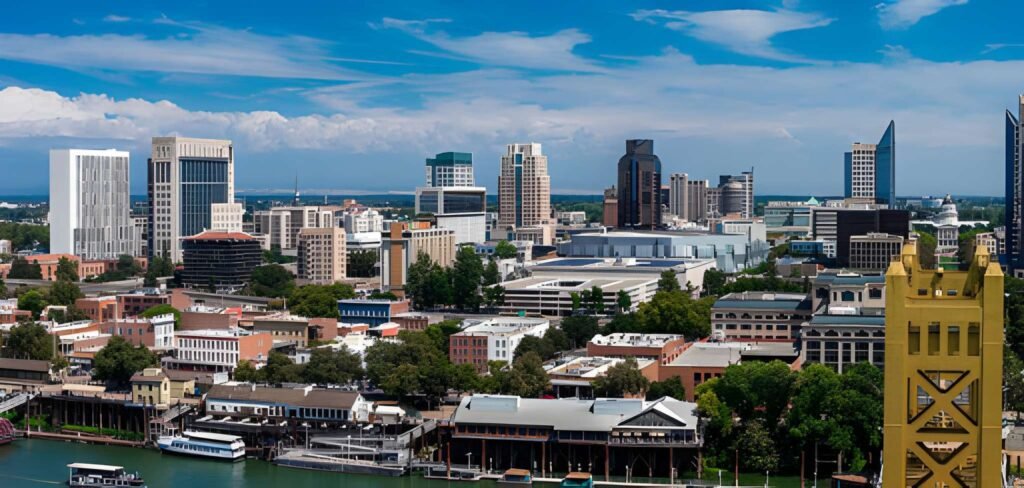
Sacramento is a city shedding its skin. Long dismissed as a mere government town or a stopover on the way to Lake Tahoe, California’s capital is now a destination in its own right. Living here means participating in the reinvention of a city that is leveraging its central location, relative affordability, and rich agricultural heritage to forge a new identity. It is a place of scorching summer heat, lush tree canopies, and a burgeoning food scene, all set within a framework of California history. This guide moves beyond the capitol dome to explore the reality of building a life in a city that offers a genuine, attainable California lifestyle without the coastal premium.
The Central Valley Advantage: Location and Affordability
Sacramento’s value proposition is its location at the confluence of the Sacramento and American Rivers and at the crossroads of Northern California. It is a two-hour drive to the Bay Area, Silicon Valley, Lake Tahoe, and the Napa Valley. This centrality is its greatest asset. The city’s affordability, while eroding, remains its primary draw. It represents one of the last major affordable anchors within the state, a place where middle-class homeownership is still within reach, albeit increasingly challenged by an influx of Bay Area refugees and remote workers.
The California Compromise: Cost of Living in the Capital
Sacramento’s cost of living is high by national standards but remains a relative bargain within California. This “California Compromise” means paying less for housing but still facing the state’s high income and sales taxes. The trade-off is clear: more square footage and a yard for the price of a coastal condo, but longer, hotter summers and a less glamorous zip code.
A detailed monthly budget for a professional living in a one-bedroom apartment in a central neighborhood like Midtown or East Sacramento reveals the balance:
- Rent: $1,600 – $1,900
- Utilities (Electricity – AC is critical): $150 – $300 (summer peak)
- Water/Sewer/Trash: $100
- Internet: $80
- Groceries: $400
- Gasoline & Car Maintenance: $250 (a car is essential, but some areas are bikeable)
- Dining & Entertainment: $500 (the farm-to-fork scene is a major draw)
This puts a baseline monthly expenditure between $3,080 and $3,530, not including savings or California’s high state income tax. This relative affordability is the city’s primary magnet.
The Government-Plus Economy: Job Market and Career Opportunities
While state government is the stable, anchoring force of the economy, Sacramento has diversified significantly into healthcare, education, and technology.
- Government: As the state capital, government is the largest employer. This includes everything from the California State Legislature and various agencies to the countless lobbying firms, trade associations, and legal services that support the political ecosystem. These jobs provide stability and solid benefits.
- Healthcare: UC Davis Health is a world-class academic medical center and a top employer, driving a massive healthcare and research sector. Sutter Health and Dignity Health also operate large hospital networks in the region.
- Technology: A growing tech scene has taken root, particularly in cybersecurity and agricultural technology (AgTech), leveraging the proximity to UC Davis and the state’s agricultural heartland. Bay Area companies have also expanded operations here for the lower costs.
- Education: UC Davis and California State University, Sacramento (Sac State) are major employers and engines of innovation and talent development.
This blend creates a relatively stable job market that is less susceptible to boom-and-bust cycles than other California cities.
A City of Trees and Neighborhoods: Finding Your Home
Sacramento is known for its dense urban forest and its distinct, grid-based neighborhoods, each with a strong identity.
- Midtown: The cultural and social heart of the city. This grid of streets between the Capitol and Highway 50 is packed with historic Victorian and Craftsman homes, converted into apartments and boutiques. It’s defined by its restaurants, bars, art galleries, and a vibrant LGBTQ+ scene. It is walkable, bikeable, and highly desirable for young professionals.
- East Sacramento (“East Sac”): An affluent, established neighborhood known for its beautiful, well-kept homes, tree-lined streets, and the iconic Fab 40s mansions. It’s family-friendly yet close to the action, with a charming commercial strip along J Street.
- Land Park: Adjacent to William Land Park, this neighborhood is a top choice for families. It features stunning Tudor and Spanish Revival homes, highly-rated schools, and direct access to the park’s zoo, golf course, and walking paths.
- Curtis Park: A historic neighborhood with a mix of charming bungalows and modern infill homes. It has a strong community feel, a popular village-style shopping center, and is popular with young families and professionals.
- Tahoe Park: A more affordable, up-and-coming neighborhood just south of East Sac. It offers smaller, post-WWII homes and a strong sense of community, with increasing numbers of young families moving in.
- The Pocket: A suburban-style neighborhood nestled in a bend of the Sacramento River. It’s popular with families for its larger lots, good schools, and greenbelts, though it lacks the walkability of the central grid.
- North Natomas: A master-planned area near the airport offering newer, more affordable housing, chain retail, and good freeway access. It appeals to first-time homebuyers but feels far removed from Sacramento’s historic core.
The Capital Calculation: Renting vs. Buying
The decision to rent or buy in Sacramento is heavily influenced by its status as California’s affordability valve. The market has heated up significantly but remains accessible compared to the coast.
The Case for Renting: Renting offers flexibility to explore different neighborhoods, from the urban energy of Midtown to the suburban calm of the Pocket. It also frees residents from the burden of high AC costs and exterior maintenance during the intense summer heat.
The Case for Buying: For those committed to the area, buying is the primary path to building equity and achieving homeownership in California. Sacramento’s relative affordability and steady demand from state workers and Bay Area migrants have made real estate a strong long-term investment.
A Simplified Financial Comparison:
Consider a $500,000 home in East Sacramento.
- Renting: Monthly rent for a similar property: ~$2,400. This is a pure expense.
- Buying:
- Down Payment (20%): $100,000
- Mortgage Principal & Interest (30-year fixed at 7%): ~$2,660/month
- Property Taxes (Sacramento County, effective rate ~0.8%): \frac{0.8}{100} \times 500,000 = \$4,000 per year, or ~$333/month
- Homeowners Insurance: ~$100/month
- Total Monthly Cost (P&I + Taxes + Insurance): ~$3,093
This calculation shows that buying can be competitive with renting. The principal portion of the mortgage payment builds equity, making homeownership a compelling goal for those who can manage the down payment.
The Housing Market: Victorians, Bungalows, and Ranch Homes
Sacramento’s housing stock is a timeline of California architecture, from Gold Rush-era homes to post-war ranches.
Average Home Prices: The median home price in the city of Sacramento is typically between $450,000 and $500,000.
Most Affordable Areas to Buy a Home: The most affordable options are typically found in South Sacramento, Del Paso Heights, and North Sacramento. These areas offer entry into the market but require thorough research on specific blocks and investment in updates.
Luxury Real Estate Hotspots: The luxury market is concentrated in:
- East Sacramento (Fab 40s): Historic estates on massive, manicured lots.
- Granite Bay: An incorporated suburb with top-rated schools, equestrian properties, and luxury homes surrounding private lakes and golf courses.
- Folsom & El Dorado Hills: Affluent suburbs to the east with master-planned communities, excellent schools, and proximity to Folsom Lake.
Rental Market: The market is competitive, driven by government workers, students, and new arrivals. Expect to pay:
- 1-Bed Apartment: $1,400 – $1,800+
- 3-Bed Single-Family Home: $2,200 – $2,800+
Investing in the Capital: Real Estate Investment and Growth
Sacramento’s continued role as an affordability hub within California makes it a strong market for long-term investment.
- Best Places to Invest: Neighborhoods on the cusp of gentrification, such as Oak Park (which has already seen significant investment) and North Sacramento, still offer potential for appreciation. Areas with good access to light rail are also smart bets.
- Future Growth Neighborhoods: The Railyards project, a massive 240-acre redevelopment just north of downtown, is the largest urban infill project in the nation and is poised to transform the city’s core with new housing, retail, and a new MLS stadium.
The Commute: Freeways, Grids, and Light Rail
Sacramento’s transportation is a mix of car-centric sprawl and a surprisingly functional central grid.
- The Car: This is the primary mode of transport for most residents. The freeway system (I-5, I-80, US-50, Highway 99) is the region’s circulatory system, and traffic congestion, particularly on the bridges and during commute hours, is a significant issue.
- Light Rail: The Sacramento Regional Transit (SacRT) light rail system is useful for specific commutes, particularly from the eastern suburbs into downtown and to the UC Davis Medical Center.
- Biking/Walking: The central grid of Midtown and downtown is exceptionally bikeable and walkable. The American River Bike Trail (Jedediah Smith Memorial Trail) is a 32-mile paved path that is a commuter corridor and recreational jewel.
Life in the Central Valley: Farm-to-Fork and River City Culture
Sacramento’s culture is unpretentious, active, and deeply connected to its agricultural roots and river location.
- The Farm-to-Fork Capital: This is not just a slogan. Sacramento sits in the heart of the nation’s most productive agricultural region. The restaurant scene is defined by incredible, fresh, local produce. The Farm-to-Fork Festival is a major annual event.
- The River Lifestyle: The American and Sacramento Rivers are central to life. Activities include rafting, kayaking, fishing, and biking along the levees.
- The Arts Scene: The Crocker Art Museum is the oldest public art museum in the West. The Sacramento Theatre Company and B Street Theatre offer professional productions. Second Saturday art walks in Midtown are a monthly tradition.
- Sports: Home to the Sacramento Kings (NBA) and the soon-to-arrive Sacramento Republic FC (MLS), providing a major-league energy to the downtown core.
The Family Equation: Schools, Safety, and Suburbs
The quest for top-rated schools is a primary driver for families to move to the suburbs.
- Best Schools & Universities: The Sacramento City Unified School District is a mixed bag, with some excellent magnet programs but overall performance that lags behind many suburban districts. The top-rated public school districts are in the suburbs: San Juan Unified, Elk Grove Unified, and most notably, Davis Joint Unified and Rocklin Unified. For higher education, UC Davis is a top-tier public research university, and Sac State is a large comprehensive university.
- Best Suburbs: For families, the premier destinations are Davis (a college town with a stellar school district and bike-friendly culture), Folsom, Rocklin, and Roseville. They offer excellent schools, more space, and community amenities.
- Raising a Family & Safety: Crime rates are higher in the central city and southern parts of the county. The eastern suburbs (Folsom, El Dorado Hills) and suburbs like Roseville consistently report very low crime rates.
The Practicalities: Extreme Heat, Healthcare, and Relocation
- Weather and Climate: Sacramento has a Mediterranean climate with a key difference: extreme summer heat. Summers are hot and dry, with temperatures consistently exceeding 95°F from June through September, often reaching 105°F. The “Delta Breeze” can provide relief in the evenings. Winters are cool, foggy, and rainy.
- Healthcare: The region is a major healthcare hub, anchored by UC Davis Medical Center, a nationally ranked academic hospital. Sutter Medical Center and Kaiser Permanente also operate large, high-quality networks.
- Relocation Checklist:
- Prioritize Air Conditioning: A functioning, efficient AC system is non-negotiable. Check it thoroughly in any home you consider.
- Understand the Commute: If working outside your neighborhood, test the commute during rush hour.
- Embrace the Layers: Mornings can be cool, even in summer, but afternoons are hot. Layering is key.
- Explore the Rivers: Invest in a raft or kayak, or simply enjoy the bike trails to fully experience the city.
- Engage Locally: Sacramento thrives on neighborhood associations and community events. Getting involved is the best way to connect.
Sacramento is a city for realists who love California but are priced out of its fantasy. It offers a genuine, grounded lifestyle where you can own a home, enjoy incredible food, and have access to some of the state’s best natural attractions. Living here requires a tolerance for heat and a willingness to look past the state government facade to discover a city with a rich history, a vibrant present, and a compelling future. It is the California that actually works for the many, not just the few.