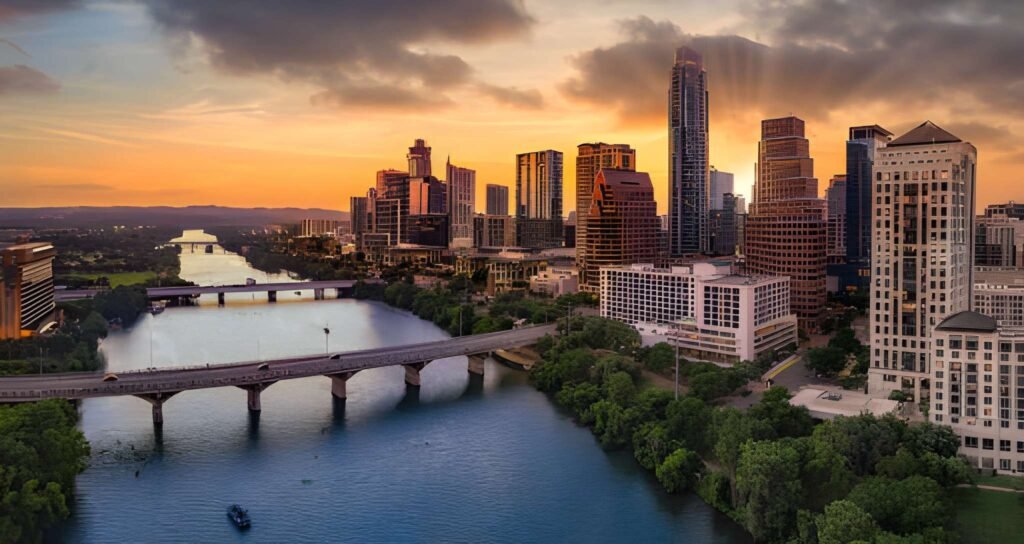
Austin exists in the American imagination as a promised land of live music, tech wealth, and quirky liberalism nestled in the heart of Texas. The reality is a city in the throes of a profound identity crisis, grappling with the consequences of its own explosive success. Living in Austin today means navigating a landscape of gleaming new high-rises and shuttered dive bars, of legendary natural springs and soul-crushing traffic, of immense opportunity and staggering cost. This guide moves beyond the “Keep Austin Weird” slogan to examine the intricate, often contradictory realities of life in the capital city, from its transformed housing market to its evolving cultural soul, providing a clear-eyed view of what it truly means to build a life in a boomtown that is rapidly maturing.
The Austin Vibe: Life in a City Selling Its Soul
The ethos of Austin has always been a delicate balance between laid-back college town, government seat, and music capital. That balance is now tilted. The energy is still creative and entrepreneurial, but it is increasingly dominated by a tech-driven, career-focused hustle. The vibe is less about keeping it weird and more about keeping up. The pace is fast, fueled by ambition and the constant influx of new arrivals. While the legendary friendliness persists, it can feel more transactional, less rooted in a shared counterculture. The city’s heart still beats in its greenbelts, its lake, and its legendary breakfast tacos, but its skyline is now defined by corporate logos. Living here means accepting this tension: embracing the world-class amenities and opportunities while mourning the loss of the scrappy, weird city that attracted them in the first place.
The Price of Popularity: Cost of Living
Austin’s cost of living has skyrocketed, transforming it from an affordable oasis into one of the most expensive cities in the Sunbelt. The primary driver is housing, which has appreciated at a rate far outpacing local wages.
A detailed budget for a single professional living in a one-bedroom apartment in a central neighborhood like East Austin or Clarksville might look like this:
- Rent: $1,800 (for a 600-700 sq ft apartment)
- Utilities (Electricity – high due to AC, Gas, Internet): $250 (summer electricity can be exorbitant)
- Groceries: $400
- Dining & Entertainment: $600 (a major social focus)
- Transportation (Car Payment, Insurance, Gas – a near-necessity): $700
- Miscellaneous: $300
This creates a baseline monthly expenditure of approximately $4,050. To afford this comfortably (using the standard guideline that rent should not exceed 30% of gross income), your pre-tax annual income would need to be at least $72,000.
This calculation is shown as:
\text{Required Annual Income} = \frac{\$1,800 \times 12}{0.3} = \$72,000This figure is a baseline for a modest lifestyle and is increasingly out of reach for the artists and musicians who built the city’s culture.
Neighborhoods: From Funky to Fancy
The story of Austin’s transformation is written in its neighborhoods, where skyrocketing property values have reshaped communities.
- Central/Downtown:
- Downtown: The ever-expanding skyline of high-rises, hotels, and tech offices. Home to the Capitol and the famed 6th Street (dirty) and Rainey Street (formerly houses, now high-rises) nightlife districts.
- East Austin: The epicenter of change. A historically Black and Hispanic neighborhood that has become the city’s trendiest district, with craft cocktail bars, Michelin-recognized restaurants, and skyrocketing property values amidst ongoing gentrification.
- Clarksville & Old West Austin: Charming, historic neighborhoods just west of downtown with beautiful bungalows, tree-lined streets, and extreme proximity to downtown at an extreme cost.
- South:
- South Congress (SoCo): A major tourist drag that has evolved from funky boutiques to high-end national brands, with a carnival-like atmosphere.
- South Lamar (SoLa) & Barton Hills: Popular, centrally located neighborhoods with a mix of apartments, renovated homes, and easy access to Zilker Park and Barton Springs.
- North:
- The Domain: A massive, master-planned “second downtown” in North Austin. A forest of high-rise apartments, corporate offices (Indeed, Amazon, Facebook), and upscale shopping. Feels more like a corporate campus than a traditional neighborhood.
- Hyde Park: A historic neighborhood north of the University of Texas with beautiful early 20th-century homes and a quiet, academic feel.
The Texas-Sized Gamble: Renting vs. Buying
The decision to rent or buy in Austin is a high-stakes calculation in a volatile market.
Renting offers flexibility in a transient city and avoids the massive upfront costs of a down payment and the notoriously high property taxes. However, rents have risen dramatically, offering little long-term stability.
Buying is a bet on long-term appreciation in a market that has seen unprecedented growth. However, the barrier to entry is now extremely high. The median home price puts a 20% down payment out of reach for many, even with dual high incomes.
The financial break-even point is now longer due to high prices and property taxes. A simplified formula illustrates the calculation:
\text{Break-Even Point (years)} = \frac{\text{Total Upfront Costs}}{\text{Annual Rent} - (\text{Annual Mortgage Interest} + \text{Annual Property Taxes} + \text{Annual Insurance} + \text{Annual Maintenance})}Upfront costs include down payment and closing costs. The high property tax component is a critical and ongoing factor.
The Silicon Hills Economy: Job Market and Career Opportunities
Austin’s economy is dominated by the technology sector, which has fundamentally reshaped the city’s demographics and culture.
- Technology: Dubbed “Silicon Hills,” Austin is a major tech hub. It is home to the headquarters of Dell Technologies (in nearby Round Rock) and Tesla’s Gigafactory, and hosts massive campuses for Apple, Google, Amazon, Meta, and Oracle. Jobs span engineering, sales, marketing, and operations.
- Semiconductors & Advanced Manufacturing: A historic strength, with Samsung building a $17 billion fab and NXP Semiconductors having a major presence.
- Education & Government: The University of Texas at Austin is a massive employer and talent pipeline. State government provides a stable, though less glamorous, employment base.
- Music & Creative Industries: The core of the city’s brand, though it now employs far fewer people and is struggling with the rising cost of living that pushes artists out.
Educational Landscape: Best Schools and Universities
Austin Independent School District (AISD) faces challenges with underfunding and declining enrollment in the urban core as families are priced out. The highest-performing schools are often in the more affluent central neighborhoods or in the suburbs.
For higher education, Austin is an elite destination:
- University of Texas at Austin (UT): A flagship public research university and a top-ranked institution, particularly for business, engineering, and computer science.
- St. Edward’s University: A private Catholic university known for its liberal arts curriculum.
- Austin Community College (ACC): A vital community college system providing workforce training and pathways to four-year degrees.
The Commute: Transportation and Gridlock
Austin’s infrastructure has utterly failed to keep pace with its growth. The city is notoriously car-dependent, and traffic congestion is among the worst in the nation. While Capital Metro provides bus service and a limited commuter rail line, public transportation is insufficient for most residents’ needs. A car is an absolute necessity for the vast majority. Commute times are a major quality-of-life issue, with a 10-mile drive easily taking 45 minutes or more during rush hour.
The Housing Market: A Tactical Overview
The Austin housing market is one of the most volatile and competitive in the nation, characterized by low inventory, intense bidding wars, and rapid price appreciation.
- Average Home Prices: As of late 2023, the median sale price for a home in the Austin-Round Rock metro is approximately $550,000. This figure has cooled from its peak but remains extremely high.
- Most Affordable Areas to Buy a Home: Look to the outskirts: Pflugerville, Manor, Del Valle, and Hays County to the south. These areas offer relative value but come with brutal commutes.
- Luxury Real Estate Hotspots: Tarrytown, West Lake Hills (an independent city with top schools), and Central Austin neighborhoods like Old Enfield and Pemberton Heights. Waterfront properties on Lake Austin command extreme premiums.
- Rental Market: Extremely competitive with low vacancy rates. Rent prices have soared. Landlords typically require proof of income at 3x the monthly rent.
- Best Places to Invest & Future Growth Neighborhoods: Investment is pushed to the fringes. Creedmoor to the south, Manor to the east, and Liberty Hill to the north are seen as the next frontiers for development as the core becomes unaffordable.
The Cultural Repertoire: Things to Do
| Activity Category | Iconic Examples | Hidden Gems |
|---|---|---|
| Cultural Attractions | The Bullock Texas State History Museum, LBJ Presidential Library, Blanton Museum of Art | The Contemporary Austin – Laguna Gloria, Mexic-Arte Museum, Harry Ransom Center |
| Parks & Outdoors | Zilker Park, Barton Springs Pool, Lady Bird Lake Hike-and-Bike Trail | McKinney Falls State Park, Barton Creek Greenbelt, Mount Bonnell |
| Food & Drink | Franklin Barbecue, Breakfast Tacos (Veracruz All Natural), Food Trucks | Uchi/Uchiko (sushi), Texas Chili Parlor, Jewboy Burgers |
| Nightlife | Live Music on Red River St, Rainey Street, Dirty 6th | The White Horse (honky-tonk), The Continental Club, Elephant Room (jazz) |
Annual Festivals and Events: South by Southwest (SXSW), Austin City Limits (ACL) Music Festival, and Pecan Street Festival.
Shopping: From the quirky boutiques of South Congress to the luxury of The Domain and the alternative finds on North Loop.
Quality of Life & Relocation Essentials
- Raising a Family: Challenging within the city core due to costs and school variability. Many families are pushed to the suburbs (Round Rock, Leander, Dripping Springs) for more space and highly-rated schools.
- Crime and Safety: Property crime (car break-ins, package theft) is a widespread issue. Violent crime is typically concentrated in specific areas. Overall, crime rates are comparable to other cities of its size.
- Healthcare and Hospitals: High-quality healthcare is available through systems like Ascension Seton, St. David’s HealthCare, and the Dell Medical School at UT Austin.
- Weather and Climate: The climate is a major factor. Summers are long, extremely hot, and humid, with temperatures consistently over 100°F for weeks. Winters are mild and short. The region is prone to flash floods and severe thunderstorms.
- Cost of Utilities: For a 1,800 sq ft house, average monthly costs are:
- Electricity (Austin Energy): $180 – $300+ (extremely high in summer due to AC)
- Water/Sewer: $80 – $120
- Internet: $80 – $100
- Condo/HOA Fees: Common in newer developments.
The Relocation Checklist
- Secure a High-Paying Job: This is non-negotiable. Have an offer in hand with a salary that meets the city’s high financial demands, ideally in tech.
- Choose Your Neighborhood Based on Commute: Your daily drive will majorly impact your quality of life. Use Google Maps to test commute times during rush hour from potential homes.
- Get a Car: You will need a reliable one. Factor in insurance and gas.
- Prepare for the Heat: Invest in a high-quality AC system for your home and car. Learn to embrace indoor and water-based activities during the summer.
- Manage Expectations: Be prepared for traffic, high costs, and a culture that is evolving rapidly away from its “weird” roots.
The Final Verdict: Pros and Cons of Living in Austin
Pros:
- A dynamic, booming economy with abundant high-paying job opportunities, particularly in tech.
- A vibrant cultural scene with world-class live music, food, and festivals.
- Abundant outdoor activities and green spaces, from swimming holes to hiking trails.
- A generally young, educated, and active population.
- No state income tax, a significant financial benefit for high earners.
Cons:
- An extremely high cost of living, with housing costs that have far outpaced wage growth for most.
- Soul-crushing traffic and a failed public transportation system make car ownership a necessity.
- Oppressive heat for a significant portion of the year.
- The loss of the city’s unique “weird” character to corporate homogenization and gentrification.
- Intense urban sprawl and a lack of cohesive planning.
Living in Austin is a choice to prioritize career opportunity, a vibrant social scene, and outdoor amenities over affordability, easy commutes, and a sense of historic place. It is a city for the ambitious and the resilient, offering a front-row seat to explosive growth and all the chaos and opportunity that comes with it. For those who can secure a high income and tolerate the traffic, it remains a land of possibility. For everyone else, it is a cautionary tale of what happens when a city becomes a victim of its own success.