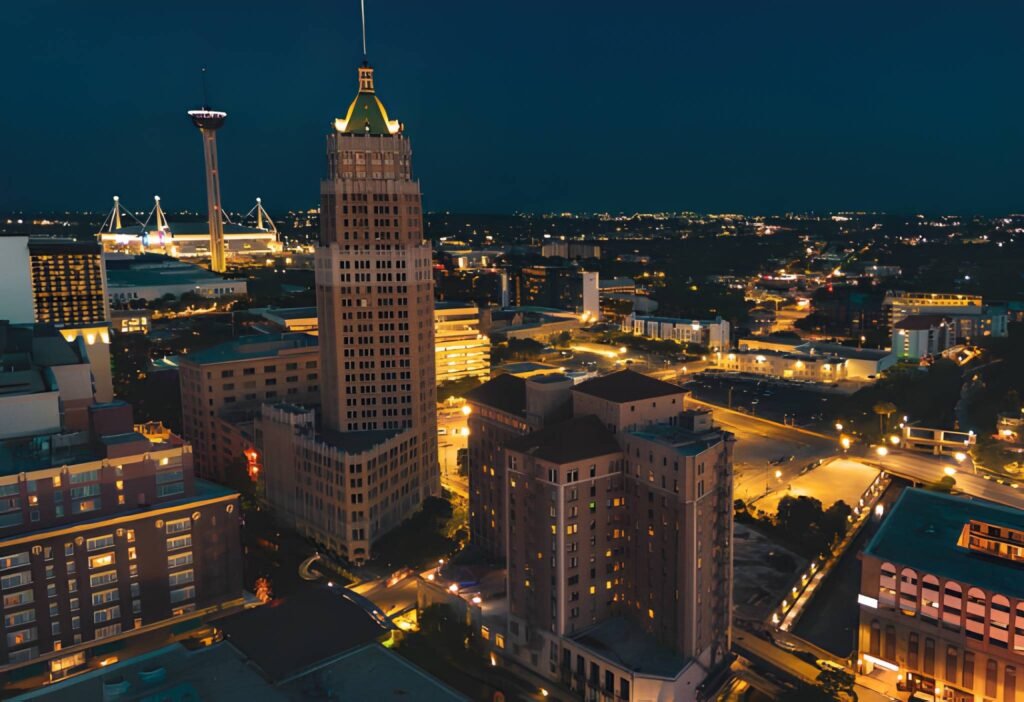
San Antonio is a city that cradles its history while enthusiastically embracing its future. It is a place where 18th-century Spanish missions stand as UNESCO World Heritage Sites amidst a booming 21st-century skyline. Living in San Antonio means experiencing a unique blend of Mexican and Texan cultures, a relaxed pace of life, and a cost of living that makes it one of the most attractive major cities in the U.S. This guide moves beyond the tourist-centric River Walk to examine the intricate realities of life in the Alamo City, from its affordable housing and military presence to its burgeoning tech scene and quintessential Tex-Mex cuisine, providing a clear-eyed view of what it truly means to build a life in this sun-drenched, friendly metropolis.
The San Antonio Vibe: Life in a City of Fiesta and Family
Life in San Antonio is characterized by a laid-back, family-oriented sensibility. The pace is slower, more focused on community, good food, and outdoor living than on a relentless urban hustle. The energy is friendly and welcoming, with a strong emphasis on tradition—from the city-wide celebration of Fiesta to Friday night high school football. The cultural fabric is deeply influenced by its Tejano heritage, creating a atmosphere that feels distinct from other Texas cities. It’s a military town, home to Joint Base San Antonio, which brings a constant flow of a diverse, transient population. The vibe is unpretentious and practical; success is measured by quality of life, not status. While downtown bustles with tourism, the city’s soul is in its sprawling, neighborhood-focused suburbs and its vibrant, locally-owned restaurants.
The Sunbelt Value: Cost of Living
San Antonio’s greatest strength is its affordability. It offers a major city experience—professional sports, cultural institutions, an international airport—with a cost of living well below the national average for similar metros.
A detailed budget for a single professional living in a one-bedroom apartment in a popular area like the Pearl or Alamo Heights might look like this:
- Rent: $1,300 (for a 700-800 sq ft apartment)
- Utilities (Electricity – high due to AC, Gas, Internet): $220 (summer electricity is a major cost)
- Groceries: $350
- Dining & Entertainment: $450 (a central part of the social fabric)
- Transportation (Car Payment, Insurance, Gas – a necessity): $600
- Miscellaneous: $250
This creates a baseline monthly expenditure of approximately $3,170. To afford this comfortably (using the standard guideline that rent should not exceed 30% of gross income), your pre-tax annual income would need to be at least $52,000.
This calculation is shown as:
\text{Required Annual Income} = \frac{\$1,300 \times 12}{0.3} = \$52,000This accessibility is a primary driver of the city’s rapid growth, attracting families and remote workers.
A City of Distinct Districts: Best Neighborhoods
San Antonio is a sprawling city, and your choice of neighborhood dictates your lifestyle, from urban chic to suburban calm.
- Central/Downtown:
- Pearl District: The epicenter of San Antonio’s urban renaissance. A transformed brewery complex now housing top-tier restaurants, boutique shopping, a hotel, and the Culinary Institute of America. Walkable, trendy, and expensive by SA standards.
- King William Historic District: South of downtown, this area features stunning 19th-century mansions and is the city’s first official historic district. A beautiful, quiet, and affluent neighborhood with a strong sense of preservation.
- Southtown: Adjacent to King William, this artsy, eclectic area is filled with galleries, studios, and unique eateries. It has a bohemian, creative vibe.
- North Central:
- Alamo Heights: An affluent, independent city surrounded by San Antonio. Known for its excellent public school district, beautiful homes, and upscale shopping at The Quarry.
- Olmos Park: Another wealthy enclave known for its Tudor-style homes and park-like setting.
- The Dominion: A master-planned, guard-gated community for the ultra-affluent, featuring a country club and golf course.
- Northwest:
- The Medical Center: A massive hub of hospitals, research facilities, and UTSA, creating a dense area of apartments, traffic, and commercial activity. Popular with medical professionals and students.
- Westside:
- Woodlawn Lake: A historic, predominantly Hispanic neighborhood with a strong sense of community, a beautiful lake park, and more affordable housing options.
The Texas-Sized Opportunity: Renting vs. Buying
The decision to rent or buy in San Antonio is heavily weighted towards buying for those planning to stay, thanks to a healthy inventory of affordable homes.
Renting offers flexibility to explore different areas of the vast city and is a low-commitment option for the large military and student population. The rental market is competitive but offers good value.
Buying is a strong and achievable long-term wealth-building strategy. The barrier to entry is low. A 20% down payment on a median-priced San Antonio home is a realistic goal for many households. Property taxes are notably high in Texas, but the lack of a state income tax helps offset this.
The financial break-even point is typically 4-6 years. A simplified formula illustrates the calculation:
\text{Break-Even Point (years)} = \frac{\text{Total Upfront Costs}}{\text{Annual Rent} - (\text{Annual Mortgage Interest} + \text{Annual Property Taxes} + \text{Annual Insurance} + \text{Annual Maintenance})}Upfront costs include down payment and closing costs. The high property tax component is a critical factor in this equation.
The Diverse Economy: Job Market and Career Opportunities
San Antonio’s economy is a mix of traditional pillars and emerging sectors, providing stability and opportunity.
- Military & Defense: The city’s largest economic driver. Joint Base San Antonio (JBSA – Lackland, Fort Sam Houston, Randolph) is one of the largest military installations in the U.S., employing thousands in both uniform and civilian roles.
- Healthcare & Bioscience: A massive and growing sector. The South Texas Medical Center is one of the largest medical complexes in the U.S., home to UT Health San Antonio, Methodist Healthcare, and the South Texas Veterans Health Care System.
- Tourism & Hospitality: A perennial industry driven by the River Walk, The Alamo, and a robust convention business.
- Financial Services: USAA, a Fortune 500 company providing financial services to military members and their families, is headquartered in and is a major employer in the city.
- Technology & Cybersecurity: A rapidly growing sector. Port San Antonio is transforming a former airbase into a tech and aerospace hub, attracting companies like Boeing and NASA has a significant presence.
Educational Landscape: Best Schools and Universities
The San Antonio Independent School District (SAISD) and other city districts have variable quality. This has led to high demand for charter schools and school choice programs. The highest-rated public school districts are typically in the suburban independent cities (Alamo Heights, North East ISD).
For higher education, San Antonio is a strong regional center:
- University of Texas at San Antonio (UTSA): A large public research university and a key driver of the city’s talent pipeline, particularly in cybersecurity.
- Trinity University: A prestigious private liberal arts university known for its rigorous academics and beautiful campus.
- University of the Incarnate Word (UIW): A private Catholic university.
- Texas A&M University-San Antonio and a network of community colleges round out the educational offerings.
The Commute: Transportation and Reality
San Antonio is a car-dependent city. Its vast geographic sprawl makes a personal vehicle an absolute necessity for the vast majority of residents. While VIA Metropolitan Transit provides bus service, its reach is limited. Traffic congestion has become a significant issue, particularly on the inner loop (Loop 410) and the outer loop (Loop 1604) during rush hour. Commute times are a major quality-of-life consideration.
The Housing Market: A Tactical Overview
The San Antonio housing market is hot, characterized by rising prices due to high demand from inbound migration, though it remains affordable by national standards.
- Average Home Prices: As of late 2023, the median sale price for a home in the San Antonio-New Braunfels metro is approximately $315,000. This provides access to single-family homes, a key draw.
- Most Affordable Areas to Buy a Home: Look to the south and west sides: Southside, Westside, and areas outside Loop 1604 like Von Ormy. These areas offer significant value but often come with longer commutes.
- Luxury Real Estate Hotspots: The Dominion, Alamo Heights, Olmos Park, and Stone Oak in the far north central area are the premier addresses for luxury living.
- Rental Market: Competitive, with prices rising steadily. Landlords typically require proof of income at 3x the monthly rent.
- Best Places to Invest & Future Growth Neighborhoods: Investment follows infrastructure and development. The Port San Antonio area, the I-35 South corridor, and the Northeast Side near the new Toyota plant are seen as having strong potential for appreciation.
The Cultural Repertoire: Things to Do
| Activity Category | Iconic Examples | Hidden Gems |
|---|---|---|
| Cultural Attractions | The Alamo, San Antonio Missions National Historical Park, Witte Museum | McNay Art Museum, San Antonio Museum of Art, The DoSeum (for kids) |
| Parks & Outdoors | San Antonio River Walk, Brackenridge Park, Phil Hardberger Park | Friedrich Wilderness Park, Government Canyon State Natural Area, Confluence Park |
| Food & Drink | Tex-Mex (Mi Tierra, Rosario’s), Barbacoa, Puffy Tacos | 2M Smokehouse (BBQ), Bakery Lorraine, The Esquire Tavern (oldest bar on the Riverwalk) |
| Nightlife | River Walk bars, the Pearl District, the St. Mary’s Strip | Jazz, TX (speakeasy), The Squeezebox (dive bar), La Rumba (salsa dancing) |
Annual Festivals and Events: Fiesta San Antonio (a 10-day city-wide party), Witte Museum’s Dinosaur Ball, the Texas Folklife Festival, and Ford Holiday River Parade.
Shopping: From the luxury of The Shops at La Cantera to the historic Market Square and the massive North Star Mall.
Quality of Life & Relocation Essentials
- Raising a Family: San Antonio is an excellent family city. The affordable cost of living, plethora of parks, family-friendly activities (zoo, theme parks), and generally safe environment are major draws.
- Crime and Safety: Property crime is the most common issue. Violent crime rates are near the national average and are typically concentrated in specific, economically disadvantaged areas. Standard urban vigilance is advised.
- Healthcare and Hospitals: High-quality healthcare is available through the massive South Texas Medical Center and systems like Methodist Healthcare and Baptist Health System.
- Weather and Climate: The climate is a major factor. Summers are long, extremely hot, and humid from May to October. Winters are mild and short, with occasional freezing rain. The region is prone to droughts and flash floods.
- Cost of Utilities: For a 1,800 sq ft house, average monthly costs are:
- Electricity (CPS Energy): $150 – $250+ (extremely high in summer due to AC)
- Water/Sewer: $70 – $100
- Internet: $80 – $100
- Condo/HOA Fees: Common in newer master-planned communities.
The Relocation Checklist
- Secure Employment: Have a job lined up. The economy is growing, but local wages can be lower than in other tech hubs.
- Choose Your Neighborhood Based on Commute: Traffic is a real issue. Test-drive your potential commute during rush hour before committing.
- Get a Car: You will absolutely need one. Factor in insurance and gas.
- Prepare for the Heat: Invest in a good AC system for your home and car. Learn to embrace indoor and water-based activities during the peak summer months.
- Embrace the Culture: Learn to love Tex-Mex, understand the significance of the Spurs, and be prepared to celebrate Fiesta.
The Final Verdict: Pros and Cons of Living in San Antonio
Pros:
- A very affordable cost of living, especially for housing.
- A rich, unique cultural and historical heritage.
- A strong, diverse economy with pillars in military, healthcare, and growing tech.
- A family-friendly atmosphere with great amenities and a relaxed pace of life.
- No state income tax, a significant financial benefit.
Cons:
- Oppressive heat and humidity for a significant portion of the year.
- A car-dependent culture with growing traffic congestion.
- Public schools are highly variable in quality, often necessitating research or private options.
- While growing, the cultural and nightlife scene is not as robust as in larger metros like Austin or Houston.
- Urban sprawl can lead to a lack of a centralized, cohesive urban core.
Living in San Antonio is a choice to prioritize lifestyle, affordability, and family over dense walkability and a frenetic pace. It is a city on the rise, offering a sun-drenched, culturally rich path to a high quality of life. For those who can handle the heat and secure a good job, it provides a welcoming, authentic, and deeply affordable place to build a future and put down roots.