Washington, D.C. exists in a category of its own. It is not just a city; it is an idea, a global symbol of power and democracy. But beyond the marble monuments and the political theater lies a dynamic, deeply layered city of distinct neighborhoods, world-class culture, and a complex local identity. Living in D.C. means navigating the intersection of the transient world of politics and the enduring communities of residents who call the District home. It is a city of fierce ambition, but also of quiet, tree-lined streets and vibrant local traditions. This guide moves beyond the postcard image to explore the reality of life in the nation’s capital.
The Dual City: Federal Power and Local Life
To understand Washington, D.C. is to recognize its dual nature. The federal government is the undeniable engine of the economy, drawing interns, staffers, lobbyists, and diplomats from across the globe. This creates a transient, highly educated, and often work-obsessed population. Yet, simultaneously, a strong sense of local culture thrives in the city’s neighborhoods. Longtime residents, artists, entrepreneurs, and a growing community of families are deeply invested in the District’s unique identity, separate from the federal apparatus. This tension between the temporary and the permanent defines the D.C. experience.
The Cost of Power: Living Expenses in the District
Washington, D.C. is one of the most expensive cities in the United States. The high cost of living is driven by robust demand from high-earning professionals and constrained housing supply. The lack of representation in Congress (the District has no voting representatives) also impacts local finances, contributing to the tax burden.
A detailed monthly budget for a young professional living in a one-bedroom apartment in a desirable neighborhood like Logan Circle or Adams Morgan might look like this:
- Rent: $2,400 – $2,800
- Utilities (Electricity, Gas): $120 – $200
- Internet: $80
- Groceries: $450
- Transportation (Metro): $150 – $250 (assuming daily commute)
- Dining & Entertainment: $700 (dining out is a core D.C. activity)
This puts a baseline monthly expenditure between $4,100 and $4,780, not including savings, healthcare, or personal spending. This high baseline necessitates a strong salary to live comfortably within the District’s boundaries.
The Professional Landscape: Job Market and Career Opportunities
The job market is dominated by the federal government and its supporting industries. However, D.C. has successfully diversified its economy.
- Government & Public Policy: This is the core. Opportunities range from federal agencies (State Department, EPA, NIH) to Capitol Hill staff positions, lobbying firms (K Street), and think tanks (Brookings Institution, Heritage Foundation).
- Technology & Consulting: The D.C. metro area is a major tech hub, often called “Silicon Swamp.” Companies like Amazon (with its HQ2 in Arlington), Microsoft, and Google have massive footprints. Management consulting firms (McKinsey, Booz Allen Hamilton) and defense contractors (Lockheed Martin, Northrop Grumman) are also major employers.
- Non-Profit & NGOs: As the heart of the non-profit world, D.C. hosts thousands of organizations, from international development groups to local advocacy centers.
- Healthcare & Education: Institutions like Johns Hopkins Medicine, MedStar Health, and Children’s National Hospital are major employers. The concentration of universities (Georgetown, GW, Howard, American) also provides a stable base of academic jobs.
Networking is not just encouraged; it is essential for career advancement in most D.C. fields.
A City of Villages: Finding Your Neighborhood
D.C. is a collection of fiercely independent neighborhoods, each with its own personality. Choosing one is the most important decision a new resident will make.
- Logan Circle/Shaw: The epicenter of modern D.C. cool. Historic row houses sit alongside sleek new apartment buildings, top-tier restaurants, and vibrant nightlife on the 14th Street corridor. It attracts young professionals who want to be in the middle of it all.
- Adams Morgan: Known for its chaotic, international flair. The main drag, 18th Street, is a dense collection of dive bars, global eateries, and music venues. It’s less polished than other areas, offering a gritty, energetic vibe popular with a younger crowd.
- Georgetown: The city’s oldest and most prestigious neighborhood. Cobblestone streets, Federal-style architecture, high-end shopping on M Street, and the serene C&O Canal define its character. It feels separate from the rest of D.C., attracting diplomats, old-money families, and students from Georgetown University.
- Capitol Hill: A study in contrasts. The monumental grandeur of the Capitol building gives way to a family-friendly residential community with Eastern Market at its heart—a bustling hub for groceries, crafts, and weekend brunch. It’s popular with Hill staffers and families who value community and history.
- DuPont Circle: A historic, cosmopolitan hub. The circle itself is a meeting point for all of D.C., surrounded by embassies, bookstores, and cafes. The neighborhood has a strong LGBTQ+ history and a sophisticated, intellectual vibe.
- Petworth/Bloomingdale: These rapidly changing neighborhoods north of U Street offer a more residential feel with beautiful, relatively more affordable row houses. They feature a growing number of excellent restaurants and a strong sense of community among young families and professionals.
- Navy Yard: The city’s most dramatic transformation story. Once an industrial wasteland, it is now a master-planned district of luxury apartments, Nationals Park, and waterfront parks. It feels new, clean, and bustling, but lacks the historic character of other neighborhoods.
The Capital Conundrum: Renting vs. Buying
The D.C. market is expensive and competitive for both renters and buyers. The decision often comes down to the length of your intended stay and your tolerance for risk.
The Case for Renting: The transient nature of D.C.’s population makes renting extremely common. It offers flexibility for those on two-year fellowships, Hill rotations, or diplomatic postings. The high cost of entry for buying also pushes many to rent longer than they might in other cities.
The Case for Buying: For those committed to staying 5+ years, buying can be a wise investment. D.C. real estate has proven remarkably resilient. Row houses, in particular, hold their value extremely well. Building equity helps offset the high cost of rent and provides stability in a city known for flux.
A Simplified Financial Comparison:
Consider a $650,000 one-bedroom condo in Logan Circle.
- Renting: Monthly rent: ~$2,600. This is a pure expense.
- Buying:
- Down Payment (20%): $130,000
- Mortgage Principal & Interest (30-year fixed at 7%): ~$3,460/month
- Property Taxes (D.C. rate ~0.55%): \frac{0.55}{100} \times 650,000 = \$3,575 per year, or ~$298/month
- Homeowners Insurance & Condo Fee: ~$500/month
- Total Monthly Cost: ~$4,258
While the monthly outlay is higher for buying, a significant portion of the mortgage payment builds equity. The break-even point is typically around the 5-year mark, after which owning becomes financially advantageous compared to renting an equivalent property.
The Housing Market: Row Houses, Condos, and Suburban Estates
The D.C. housing stock is defined by its iconic row houses, though new condo developments are constantly reshaping the skyline.
Average Home Prices: The median sale price in the District consistently ranks among the highest in the nation, typically hovering between $600,000 and $650,000.
Most Affordable Areas to Buy a Home: True affordability within the District limits is found in neighborhoods east of the Anacostia River (e.g., Anacostia, Congress Heights) and in parts of Northeast D.C. (e.g., Deanwood, Michigan Park). These areas offer potential for appreciation but require careful research and community engagement.
Luxury Real Estate Hotspots: The luxury market is concentrated in:
- Georgetown: Historic mansions and large, renovated row houses command multi-million dollar prices.
- Kalorama: An enclave of embassies and diplomatic residences, home to presidents and power players.
- Massachusetts Avenue Heights: Another embassy row with staggering, palatial homes.
- The West End: New, ultra-luxury high-rise condos with hotel-like amenities and sky-high prices.
Rental Market: The rental market is fast-paced and competitive. Many buildings offer 1-2 months free on a 13-15 month lease to attract tenants, effectively lowering the monthly cost. Expect to pay:
- Studio: $1,800 – $2,200
- 1-Bed: $2,200 – $2,800+
- 2-Bed: $3,000 – $4,000+
Investing in the Capital: Real Estate Investment and Growth
D.C.’s constrained geography and steady demand make it a strong market for long-term investment.
- Best Places to Invest: Neighborhoods on the cusp of transformation remain the best bets. Anacostia and its surrounding areas are the focus of massive public and private investment, with new streetcars, parks, and developments planned. Ivy City and Brentwood are also seeing significant commercial and residential influx.
- Future Growth Neighborhoods: The St. Elizabeths East campus redevelopment in Ward 8 is a monumental project set to bring new jobs, housing, and amenities. The continued expansion of the Wharf in Southwest is also creating a new, high-end destination that will ripple into adjacent areas.
The Commute: A City Built on Transit
Unlike many American cities, a car is optional—and often a hindrance—in much of D.C.
- Metrorail: The D.C. Metro is the lifeblood of the region. While it has faced reliability issues, it remains the most efficient way to travel between the District, Arlington, Alexandria, and Maryland suburbs. The system is built on a spoke-and-hub model, with lines converging in the downtown core.
- Buses: The DC Circulator provides cheap, frequent service on key routes (e.g., Georgetown-Union Station, Rosslyn-Dupont). Metrobus covers the entire region comprehensively.
- Walking & Biking: D.C. is an incredibly walkable city. Capital Bikeshare makes short trips easy, and dedicated bike lanes are expanding rapidly.
- The Car: Traffic is severe, and parking is expensive and scarce. Many residents who own a car use it only for weekend trips outside the city.
Life in the Capital: Culture, Power, and Play
The perks of living in D.C. are unparalleled.
- Free Cultural Attractions: The Smithsonian Institution’s 21 museums and the National Zoo are free to enter. From the Air and Space Museum to the African American History and Culture Museum, the wealth of knowledge is staggering.
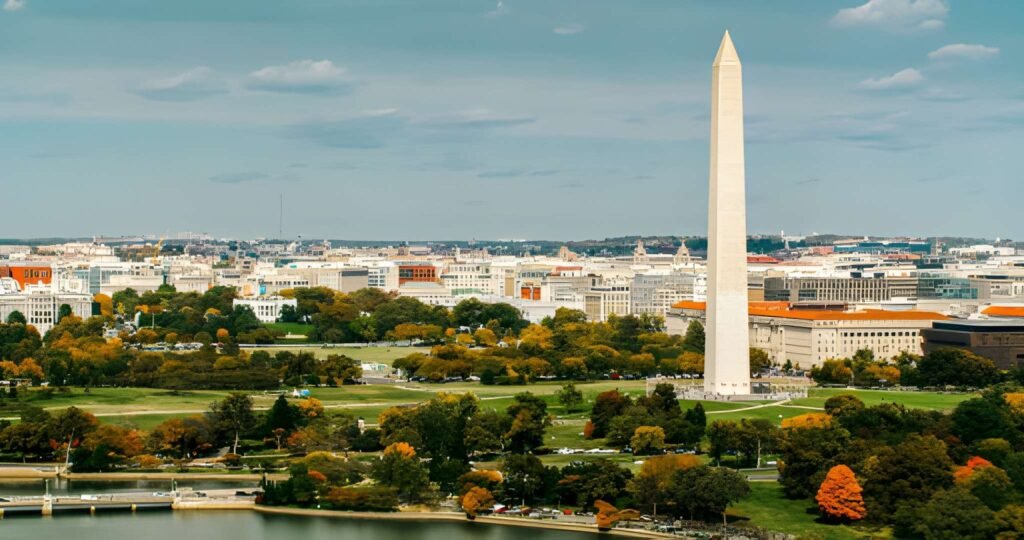
- The National Mall: This is the city’s front lawn, a two-mile expanse of monuments, memorials, and museums. It serves as a place for joggers, tourists, and protesters alike.
- Top Restaurants: The food scene has exploded in the last decade. It ranges from fine-dining temples like Minibar by José Andrés to iconic half-smokes at Ben’s Chili Bowl and international eats in Adams Morgan.
- Parks & Outdoors: Rock Creek Park is a massive, wooded oasis running through the city, perfect for hiking and biking. Theodore Roosevelt Island offers trails and silence just across the river. The C&O Canal and Capital Crescent Trail provide miles of scenic paths.
- Politics as Entertainment: Hearing a Supreme Court argument, getting a free ticket to a Senate hearing, or attending a policy talk at a think tank is all part of a typical day. The access to the machinery of government is unique.
The Family Equation: Schools, Safety, and Suburbs
The question of schools drives many families out of the District, though this trend is slowly changing.
- Best Schools & Universities: D.C. Public Schools (DCPS) are highly variable. Selective magnet high schools like School Without Walls and Benjamin Banneker are exceptional. The charter school system is vast and competitive. For higher education, D.C. is a world leader with Georgetown University, George Washington University, Howard University, and American University.
- Best Suburbs: The Maryland suburbs (Bethesda, Chevy Chase, Silver Spring) and Virginia suburbs (Arlington, Alexandria, Falls Church) offer top-ranked public school systems, more single-family homes, and easy Metro access. They are extensions of the D.C. lifestyle.
- Raising a Family & Safety: Crime is a persistent concern, with property crime being common and violent crime concentrated in specific areas. Northwest D.C. generally reports the lowest crime rates. The suburbs are almost universally considered safe, which is a primary driver of migration for families.
The Practicalities: Weather, Healthcare, and Relocation
- Weather and Climate: D.C. has a humid subtropical climate. Summers are hot and oppressively humid. Winters are generally mild but can bring paralyzing, if infrequent, snowstorms. Spring and fall are spectacular, with the cherry blossoms in April being a city-wide event.
- Healthcare: The region is home to some of the world’s best hospitals, including Johns Hopkins Hospital (in Baltimore but serving the region), MedStar Washington Hospital Center, Sibley Memorial Hospital, and the clinical centers at the National Institutes of Health (NIH).
- Relocation Checklist:
- Secure housing, understanding that competition is fierce. Have documents ready.
- Decide on your transportation plan. Will you rely on Metro, or do you need a car?
- Get a District ID or driver’s license within 30 days.
- Register your vehicle in D.C. (expensive) or find a secure off-street parking spot.
- Explore your neighborhood and the city on foot—it’s the best way to understand its rhythm.
Washington, D.C. is a city that challenges and rewards in equal measure. It demands intellectual engagement, tolerates a high cost of living, and operates at a relentless pace. But in return, it offers unparalleled access to culture, power, and a diverse, international community. It is a city for those who want to be where decisions are made, who thrive on energy, and who appreciate the deep history etched into every cornerstone. Living in D.C. is not for the faint of heart, but for those who embrace it, it is an experience like no other.