Dallas stands as a monument to ambition. It is a city that wears its prosperity on its sleeve, a sprawling testament to commerce, culture, and cosmopolitan energy deep in the heart of Texas. For those considering a move, Dallas presents a compelling, complex portrait of modern urban living. It is not a city of half-measures; its scale demands engagement, and its opportunities command attention. This guide dissects every facet of life in Dallas, from the cost of a downtown condo to the best parks for a weekend picnic, providing the clarity you need to navigate the nation’s fourth-largest metropolitan economic engine.
The Allure of the Metroplex: More Than Just a City
To understand Dallas is to first understand the Metroplex. This term refers to the Dallas-Fort Worth-Arlington metropolitan area, a colossal amalgamation of over two dozen cities and 7 million people. Dallas anchors the eastern core, distinct from its western sibling, Fort Worth, which maintains a more traditional “Cowtown” identity. This partnership creates a dual-city dynamic, offering residents the high-finance, fast-paced lifestyle of Dallas alongside the rodeos and Stockyards of Fort Worth, all within a reasonable drive.
Living here means your social and professional circles likely span multiple municipalities—a meeting in Las Colinas, a concert in Deep Ellum, a sporting event in Arlington, and dinner in Uptown all in one week is a common occurrence. The sheer size can be daunting, but it unlocks a diversity of experiences few other American cities can match.
The Financial Blueprint: Cost of Living and Economic Realities
Dallas attracts talent because it makes financial sense. Texas has no state income tax, a significant immediate boost to take-home pay. However, this is offset by property taxes that rank among the nation’s highest. The overall cost of living sits just above the national average, primarily driven by housing and transportation costs.
A detailed monthly budget for a professional living alone in a moderately upscale one-bedroom apartment in a neighborhood like Uptown or Lower Greenville might break down as follows:
- Rent: $1,800 – $2,200
- Utilities (Electricity, Water, Gas): $150 – $250 (highly variable with AC usage in summer)
- Internet (100 Mbps): $70
- Groceries: $400
- Gasoline & Car Maintenance: $300 (assuming a 30-minute commute)
- Dining & Entertainment: $600
This puts a baseline monthly expenditure between $3,320 and $4,020, not accounting for savings, healthcare, or personal spending. This calculation highlights the transportation tax; while a car is a virtual necessity, its associated costs form a major part of the Dallas budget.
The Professional Playground: Job Market and Career Opportunities
Dallas is a powerhouse. Its economy is not merely diverse; it is a leader in multiple sectors. The metroplex hosts 22 Fortune 500 company headquarters, including giants like ExxonMobil, McKesson, and AT&T. The job market thrives on several pillars:
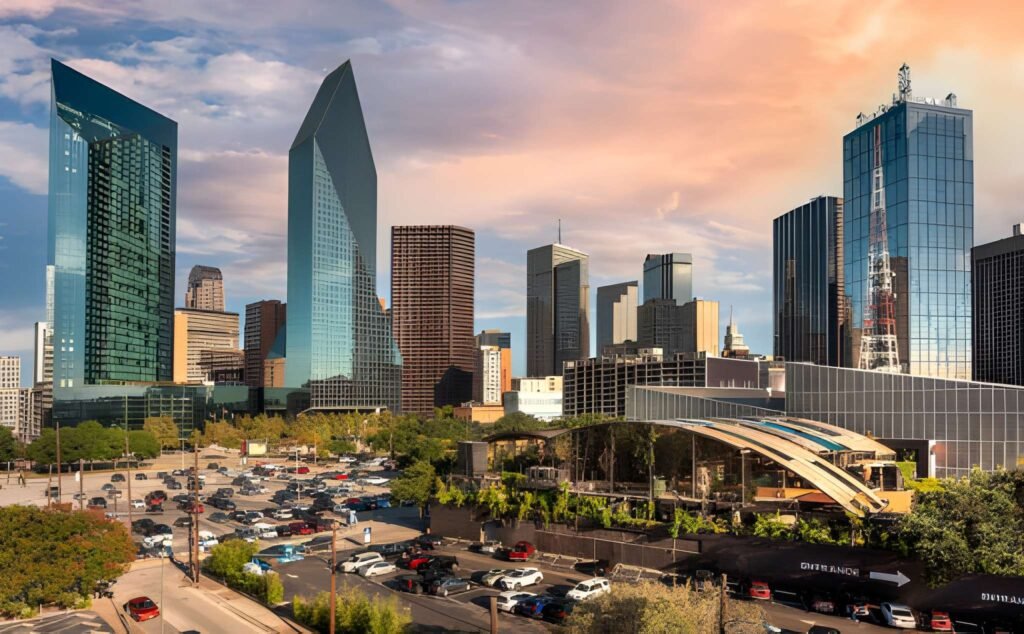
- Finance & Business Services: Dallas is a major financial hub, second only to New York for banking and financial services. The downtown skyline is dominated by names like Comerica Bank and the Federal Reserve Bank of Dallas.
- Technology & Telecom: The Telecom Corridor in Richardson is a historic base for companies like Ericsson and Samsung, while the Plano-Frisco area has become “Silicon Prairie,” attracting massive corporate campuses for Toyota, JPMorgan Chase, and Liberty Mutual.
- Defense & Aerospace: Lockheed Martin and Raytheon have a massive presence, anchoring a robust aerospace and defense industry.
- Healthcare: The Texas Medical Center, while centered in Houston, has a significant counterpart in Dallas with world-renowned institutions like UT Southwestern Medical Center and Baylor Scott & White Health.
This economic dynamism creates a strong job market with opportunities across the skill spectrum, from entry-level service positions to C-suite executives. The constant influx of corporate relocations ensures a steady demand for talent.
A Neighborhood for Every Narrative: Where to Plant Your Flag
Dallas neighborhoods possess distinct personalities. Choosing one is less about finding a house and more about selecting a lifestyle.
- Uptown: The epicenter of young professional life. High-rise apartments, trendy boutiques, and a dense concentration of bars and restaurants define this walkable, energetic district. It’s ideal for those who want to be in the heart of the action. The Katy Trail, a 3.5-mile paved path, is the neighborhood’s backyard and social runway.
- Deep Ellum: The city’s gritty, creative soul. Once a historic jazz and blues district, it has cycled through decay and rebirth to emerge as the capital of live music, avant-garde art galleries, tattoo parlors, and some of the city’s best cocktail bars. It appeals to artists, musicians, and those seeking an edgier, more eclectic vibe.
- Lower Greenville: A more mature, balanced version of Uptown. Tree-lined streets are flanked by Craftsman bungalows, patio-focused restaurants, and independent shops. It maintains a lively nightlife scene but with a stronger residential, community feel.
- Bishop Arts District: Located in the Oak Cliff area south of downtown, this neighborhood feels like a small town within the big city. Its walkable core is packed with unique boutiques, chef-driven restaurants, and coffee shops, all radiating a bohemian, locally-owned charm.
- Lakewood: East of White Rock Lake, Lakewood represents established, classic Dallas elegance. Its streets are a showcase of historic Tudors, Colonials, and Spanish Revival homes on large, manicured lots. It is a top choice for families seeking proximity to top-rated schools and abundant outdoor space.
- Preston Hollow: The definition of luxury and exclusivity. This is where Dallas’ old money and elite reside, behind gated drives and extensive security. Homes are estates, often on multiple acres. It is quiet, private, and profoundly affluent.
The Core Dilemma: Renting vs. Buying in Dallas
The decision to rent or buy hinges on personal timeline, financial flexibility, and market conditions. Dallas has seen remarkable home price appreciation over the past decade, though it remains more affordable than coastal counterparts.
The Case for Renting: Renting offers unparalleled flexibility, crucial for newcomers testing different neighborhoods or professionals who may need to relocate for career opportunities. It also frees you from the burden of high property taxes and maintenance costs. In desirable areas, the price-to-rent ratio can make renting a financially savvy choice in the short term.
The Case for Buying: For those committed to staying in Dallas for five years or more, buying has historically been a powerful wealth-building tool. It provides stability, fixed housing costs (aside from taxes and insurance), and a hedge against rising rents. While property taxes are high, the lack of state income tax still often results in a lower overall tax burden for homeowners compared to states like California or New York.
A Simplified Financial Comparison:
Consider a $500,000 condo in Uptown.
- Renting: Monthly rent: ~$2,500. This is a pure expense.
- Buying:
- Down Payment (20%): $100,000
- Mortgage Principal & Interest (30-year fixed at 7%): ~$2,660/month
- Property Taxes (Dallas County, ~2.1%): \frac{2.1}{100} \times 500,000 = \$10,500 per year, or $875/month
- Homeowners Insurance (HOA included): ~$400/month
- Total Monthly Cost: ~$3,935
This quick math shows the monthly cash outflow is higher for buying. However, the principal portion of the mortgage payment (~$580 in the first month) builds equity, and the property may appreciate. The break-even point depends heavily on appreciation rates and how long you stay. For many, the intangible benefit of ownership outweighs the initial premium.
The Housing Market: From Affordable to Opulent
The Dallas housing market is a tale of multiple cities within one.
Average Home Prices: As of late 2023, the median home price in the city of Dallas hovers around $420,000. This figure masks a wide range, from $250,000 fixer-uppers in transitioning areas to multi-million dollar estates.
Most Affordable Areas to Buy a Home: Value seekers often look to the suburbs or specific pockets of South and East Dallas. Areas like Mesquite, Garland, and Irving offer more affordable single-family homes, often in the $300,000 – $400,000 range. Within the city, neighborhoods like Casa View and Pleasant Grove present entry points into the market, though they may require more due diligence on specific blocks and investment in updates.
Luxury Real Estate Hotspots: The luxury market is concentrated in a few key areas:
- Preston Hollow: The undisputed king, with estates regularly trading for $5 million to $50 million+.
- Highland Park & University Park: These independent, incorporated cities within Dallas are renowned for their staggering wealth, impeccable landscaping, top-tier schools, and iconic architectural styles. Prices start well over $1 million for a teardown.
- Westlake & Southlake: Affluent northern suburbs known for exceptional schools and large, custom-built homes on expansive lots.
- Turtle Creek: Offers luxurious high-rise condominium living with iconic views of the downtown skyline.
Rental Market: The rental market is robust, catering to a large transient professional population. New apartment complexes with resort-style amenities are ubiquitous. Expect to pay:
- Studio/1-Bed: $1,400 – $2,200+
- 2-Bed: $1,800 – $3,500+
Prices peak in Uptown, Victory Park, and the Design District.
Investing in the Future: Real Estate Investment and Growth
Dallas’s population growth fuels a relentless demand for housing. The best investment opportunities often lie just ahead of the growth curve.
- Best Places to Invest: West Dallas and Oak Cliff (areas like Trinity Groves) continue to see massive investment and redevelopment, spurred by proximity to downtown and the success of the Bishop Arts District. The Cedars neighborhood, south of downtown, is another area with significant potential for appreciation as development pushes south.
- Future Growth Neighborhoods: Watch The Statler District and the continued expansion around The Dallas Midtown development in North Dallas. The city’s massive Trinity Park project, though long-delayed, represents a future transformative investment if fully realized.
The Commute: Public Transportation and Getting Around
Dallas is a car city. Its infrastructure was built for the automobile, and that remains the most efficient way to navigate its breadth. Traffic on major arteries like I-635 (LBJ Freeway) and US-75 can be notoriously congested during rush hours.
Dallas Area Rapid Transit (DART) operates the largest light-rail network in the United States by mileage. It is a viable option for those whose daily commute aligns with its routes—particularly for trips from the northern suburbs into downtown. The streetcar connects Bishop Arts to downtown, and the M-Line Trolley is a free service in Uptown. However, for comprehensive errands and social life, a car is non-negotiable for most residents.
Life Beyond Work: Culture, Food, and Entertainment
Dallas defies its stereotype as a materialistic, all-work city. Its cultural offerings are world-class.
- Arts District: A 68-acre, 19-block district that is the largest contiguous urban arts district in the nation. It houses the Dallas Museum of Art (free general admission), the Nasher Sculpture Center, the Crow Museum of Asian Art, the Meyerson Symphony Center, and the Winspear Opera House.
- Top Restaurants: The food scene is explosively diverse. From legendary steakhouses like Pappas Bros. to innovative Tex-Mex at José, and world-ranking barbecue at Pecan Lodge, the options are endless. Neighborhoods like Lower Greenville and Bishop Arts are culinary destinations in themselves.
- Parks & Outdoors: White Rock Lake is the city’s outdoor playground, offering biking, running, sailing, and paddleboarding. Klyde Warren Park, built over a freeway, ingeniously connects Uptown and the Arts District and is constantly buzzing with free fitness classes, food trucks, and events.
- Shopping: From the ultra-luxury of Highland Park Village (the nation’s first outdoor shopping center) to the sprawling NorthPark Center (a blend of high-end retail and renowned art), shopping is a major pastime.
- Sports: Home to the Dallas Cowboys (NFL), Dallas Mavericks (NBA), Dallas Stars (NHL), and Texas Rangers (MLB), the city lives and breathes professional sports.
The Family Equation: Schools, Safety, and Suburbs
For families, the conversation often shifts to the suburbs, driven by school districts and space.
- Best Schools & Universities: Within Dallas, the School for the Talented and Gifted consistently ranks as the top public high school in the nation. However, the overall Dallas Independent School District (DISD) is a mixed bag. This pushes many families to suburbs served by exemplary independent districts like Plano ISD, Frisco ISD, Southlake Carroll ISD, and Highland Park ISD. For higher education, Dallas is home to Southern Methodist University (SMU), a top-tier private university, and the University of Texas at Dallas (UTD), a rapidly rising public research institution.
- Best Suburbs: The northern suburbs reign supreme for family living. Frisco and Plano offer master-planned communities, top-rated schools, and immense job centers. Southlake and Highland Park offer unparalleled prestige and academic excellence. McKinney provides a more historic, “small-town” feel with rapid growth.
- Raising a Family & Safety: Crime, like in any major city, is not evenly distributed. Violent crime rates are higher in southern and southeastern sectors of the city. The northern suburbs and neighborhoods like Lakewood and Preston Hollow consistently report very low crime rates. Families prioritize access to community pools, parks, and organized sports leagues, all of which are abundant in the DFW area.
The Practicalities: Weather, Healthcare, and Relocation
- Weather and Climate: Dallas has a humid subtropical climate. Summers are long, brutally hot, and humid, with temperatures consistently in the high 90s (F) from June through September. Winters are mild, with occasional ice storms that can paralyze the city. Spring and fall are brief but glorious.
- Healthcare: The city is a major medical hub. UT Southwestern Medical Center and Baylor University Medical Center are both nationally ranked in multiple specialties. The quality of healthcare is exceptional.
- Relocation Checklist:
- Secure employment.
- Research neighborhoods intensely; visit if possible.
- Line up housing, understanding the competitive rental market.
- Plan your transportation; you will need a car.
- Set up utilities (often deregulated, so you can choose your electric provider).
- Register your vehicle and obtain a Texas driver’s license within 90 days.
- Explore and embrace the scale and diversity of your new home.
Dallas is a city of relentless energy and undeniable opportunity. It rewards ambition, demands a sense of adventure, and offers a quality of life that is both comfortable and stimulating. It is not a quiet city, nor a simple one. It is a magnum opus of American growth, and for those who can navigate its scale, it offers a rich and rewarding place to call home.