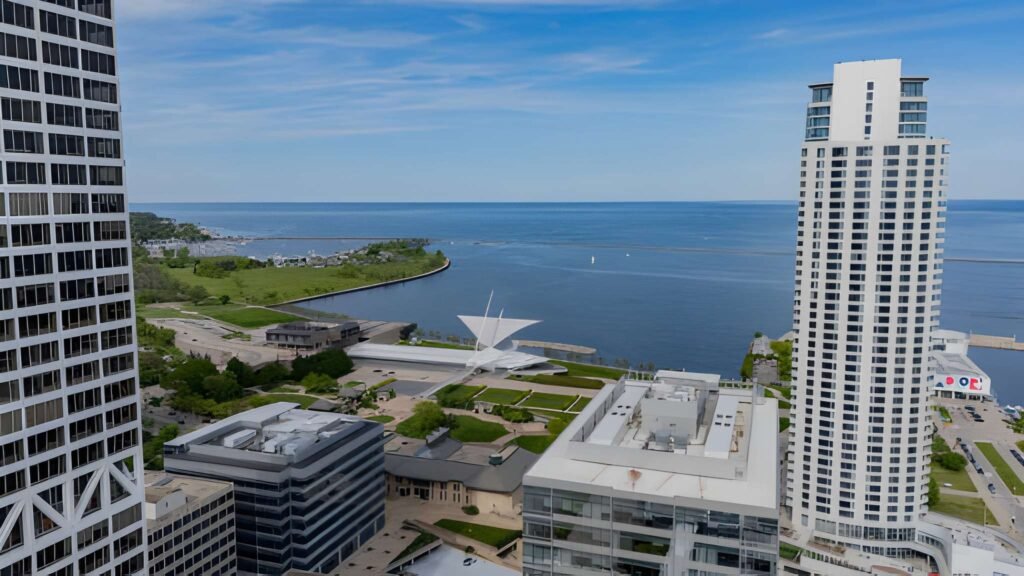
Milwaukee is a city of unshakable authenticity. It is a place where a proud blue-collar industrial past seamlessly blends with a vibrant, creative present. Living in Milwaukee means engaging with a city that is unpretentious, affordable, and rich in culture—from its legendary breweries and summer festivals to its stunning lakefront and world-class art museum. It is a city of neighborhoods, each with a distinct ethnic heritage and a strong sense of community. This guide moves beyond the stereotypes of beer and brats to examine the intricate realities of life in the Cream City, from its industrial reinvention to its harsh but beautiful winters, providing a clear-eyed view of what it truly means to build a life in this resilient and rewarding Great Lakes metropolis.
The Milwaukee Vibe: Life in a City of Built, Not Bought
Life in Milwaukee is defined by its practicality, its community spirit, and its ability to have a very good time. The pace is steady and grounded—a reflection of its manufacturing roots—but infused with a creative energy from its universities and artists. The vibe is friendly, unassuming, and fiercely loyal. This is a city where people make things: from beer and machinery to art and music. The cultural fabric is deeply influenced by its German, Polish, and other European immigrant communities, visible in its architecture, its Catholic churches, and its corner taverns. Summers are cherished and celebrated with an intensity born from surviving the winter, transforming the lakefront into a continuous party. It’s a city that feels both substantial and manageable, offering big-city amenities without the big-city ego or price tag.
The Affordability Advantage: Cost of Living
Milwaukee’s greatest strength is its affordability. It offers a genuine urban experience with a cost of living that is among the lowest for a major U.S. city, particularly when it comes to housing.
A detailed budget for a single professional living in a one-bedroom apartment in a popular area like the East Side or Bay View might look like this:
- Rent: $1,100 (for a 700-800 sq ft apartment)
- Utilities (Electricity, Gas, Internet): $200 (heating is a significant winter cost)
- Groceries: $350
- Dining & Entertainment: $400 (a strong and affordable bar and restaurant scene)
- Transportation (Car Payment, Insurance, Gas): $500 (a car is highly useful)
- Miscellaneous: $250
This creates a baseline monthly expenditure of approximately $2,800. To afford this comfortably (using the standard guideline that rent should not exceed 30% of gross income), your pre-tax annual income would need to be at least $44,000.
This calculation is shown as:
\text{Required Annual Income} = \frac{\$1,100 \times 12}{0.3} = \$44,000This accessibility is a primary driver attracting students, artists, and young professionals.
A City of Neighborhoods: Best Places to Live
Milwaukee’s identity is found in its patchwork of distinct, proud neighborhoods.
- East Side: A vibrant, dense area bordering Lake Michigan and home to the University of Wisconsin-Milwaukee. Includes Brady Street (eclectic, hip), North Avenue (student-friendly), and Lower East Side (historic). Walkable and full of energy.
- Downtown & Third Ward: The urban core. Downtown features the financial district and Deer District (around the Fiserv Forum). The Historic Third Ward is a transformed warehouse district with loft condos, art galleries, upscale boutiques, and the Milwaukee Public Market. The city’s trendiest and most expensive area.
- Bay View: A formerly working-class, now hipster-friendly neighborhood south of downtown. Known for its strong community feel, independent shops and restaurants on Kinnickinnic Avenue, and its relaxed, creative vibe.
- Walker’s Point: South of the Third Ward, this area is the heart of Milwaukee’s LGBTQ+ community and a culinary hotspot, known for its incredible and diverse concentration of restaurants.
- Riverwest: A racially and economically diverse, politically progressive neighborhood with a strong punk and artist community. Known for its cooperatives, bike-friendliness, and vibrant DIY culture.
- Washington Heights & Story Hill: Family-friendly, middle-class neighborhoods west of downtown known for their beautiful bungalows, quiet streets, and strong sense of community.
The Buyer’s Market: Renting vs. Buying
The decision to rent or buy in Milwaukee is heavily skewed towards buying, thanks to a stable market of incredibly affordable, often historic housing stock.
Renting offers flexibility to explore different neighborhoods and is a low-commitment way to experience the city. The rental market is soft, with plenty of options in duplexes (a Milwaukee staple) and small apartment buildings.
Buying is an exceptionally achievable goal. The barrier to entry is remarkably low. A 20% down payment on a median-priced city home is a realistic target for many single professionals and couples. Milwaukee’s housing stock is full of beautiful, solidly built cream-city brick homes and charming bungalows.
The financial break-even point is very short, often around 3-5 years. A simplified formula illustrates the compelling math:
\text{Break-Even Point (years)} = \frac{\text{Total Upfront Costs}}{\text{Annual Rent} - (\text{Annual Mortgage Interest} + \text{Annual Property Taxes} + \text{Annual Insurance} + \text{Annual Maintenance})}Upfront costs include down payment and closing costs. The low purchase price is the dominant variable making buying so advantageous.
The Industrial Reinvention: Job Market and Career Opportunities
Milwaukee’s economy is undergoing a significant transformation from traditional manufacturing to a more diversified base.
- Advanced Manufacturing & Water Technology: Still a core strength. Companies like Harley-Davidson, Johnson Controls, and Rockwell Automation are headquartered here. Milwaukee is a global hub for water technology research and companies, earning it the nickname “The Water Capital of the World.”
- Healthcare & BioScience: A massive and growing sector. Advocate Aurora Health and Froedtert Health are major employers. The Medical College of Wisconsin is a key driver of research and innovation.
- Finance & Insurance: Northwestern Mutual and Associated Banc-Corp are headquartered in the city, providing a stable base of white-collar jobs.
- Hospitality & Tourism: A significant industry driven by the lakefront, festivals, and cultural attractions.
- Education: Marquette University (a prestigious Jesuit institution) and UW-Milwaukee are major employers and cultural anchors.
Educational Landscape: Best Schools and Universities
Milwaukee Public Schools (MPS) faces significant challenges, leading to high demand for charter schools and school choice programs. The highest-rated public schools are often in the suburbs.
For higher education, Milwaukee is a strong hub:
- Marquette University: A top-ranked private Jesuit university known for its business, law, and engineering programs.
- University of Wisconsin-Milwaukee (UWM): A large public research university and the second-largest in the UW system.
- Milwaukee School of Engineering (MSOE): A prestigious private university known for its engineering and technical programs.
- Alverno College and Mount Mary University are well-regarded private institutions.
Getting Around: Transportation and Reality
Milwaukee is a car city, but its scale makes it more navigable than most. While the Milwaukee County Transit System (MCTS) provides bus service, and The Hop offers a free streetcar route in the downtown core, a car is highly useful for most residents. Traffic congestion is mild compared to larger metros. The city is very bikeable, with an expanding network of bike lanes, and the Oak Leaf Trail provides a fantastic recreational path along the lakefront and through county parks.
The Housing Market: A Tactical Overview
The Milwaukee housing market is a buyer’s haven, characterized by ample supply and some of the most attractive home prices of any major U.S. city.
- Average Home Prices: As of late 2023, the median sale price for a home in the city of Milwaukee is approximately $140,000. The metro-wide median is higher, around $280,000, pulled up by the affluent suburbs.
- Most Affordable Areas to Buy a Home: Much of the city offers incredible value. Areas like Clintonville, Silver City, and Martin Drive offer well-built homes often well under $200,000.
- Luxury Real Estate Hotspots: The suburbs of Whitefish Bay, Shorewood, and Wauwatosa are the premier addresses for luxury living, with top-rated schools. In the city, the Third Ward and Historic Water Tower District command premium prices.
- Rental Market: Soft and favorable to renters. It’s easy to find a spacious one-bedroom in a good neighborhood for well under $1,200. Landlords are typically less stringent with requirements.
- Best Places to Invest & Future Growth Neighborhoods: Investment follows development. Harbor District (redevelopment of former industrial lakefront), Bronzeville (cultural district), and Clarke Square are seen as having strong potential for appreciation.
The Cultural Repertoire: Things to Do
| Activity Category | Iconic Examples | Hidden Gems |
|---|---|---|
| Cultural Attractions | Milwaukee Art Museum, Harley-Davidson Museum, Milwaukee Public Museum | Villa Terrace Decorative Arts Museum, Mitchell Park Horticultural Conservatory (The Domes) |
| Parks & Outdoors | Bradford Beach, Veterans Park, Grant Park | Whitnall Park, Havenwoods State Forest, Milwaukee River Greenway |
| Food & Drink | Cheese Curds, Frozen Custard (Kopp’s, Leon’s), Beer (Miller, Lakefront, Sprecher) | Bavarian-style beer halls, Polish restaurants, James Beard-nominated eateries |
| Nightlife | Water Street and Old World Third Street bars, breweries | Jazz Estate, Bryant’s Cocktail Lounge (oldest cocktail lounge), dive bars everywhere |
Annual Festivals and Events: Summerfest (“The World’s Largest Music Festival”), German Fest, Polish Fest, Irish Fest, and Bastille Days.
Shopping: From the high-end shops of the Third Ward to the antiques on Vliet Street and the global goods at Milwaukee Public Market.
Quality of Life & Relocation Essentials
- Raising a Family: Excellent in the inner-ring suburbs with top-tier schools (Shorewood, Whitefish Bay, Wauwatosa). The city offers great parks, museums, and family-friendly activities, but the school situation requires careful navigation.
- Crime and Safety: Like any city, crime is not evenly distributed. Property crime is common. Violent crime is concentrated in specific, economically disadvantaged areas on the north and south sides. Researching specific neighborhoods is crucial.
- Healthcare and Hospitals: World-class healthcare is available through Froedtert Hospital & the Medical College of Wisconsin and Advocate Aurora Health.
- Weather and Climate: A classic four-season climate with dramatic extremes. Summers are glorious—warm, sunny, and humid, perfect for lakefront activities. Winters are long, bitterly cold, gray, and can bring significant lake-effect snow. Spring and fall are short.
- Cost of Utilities: For a 1,500 sq ft home, average monthly costs are:
- Electricity (We Energies): $100 – $150
- Gas (We Energies): $150 – $250 (in winter)
- Water/Sewer: $40 – $60
- Internet: $70 – $100
The Relocation Checklist
- Secure Employment: Have a job lined up. The economy is diversifying but can still be challenging.
- Choose Your Neighborhood Meticulously: Milwaukee is a block-by-block city. Visit at different times of day. Talk to potential neighbors.
- Get a Car: You will likely need one. Ensure it is prepared for winter with good tires.
- Invest in Serious Winter Gear: A heavy, warm coat, waterproof boots, gloves, and a hat are non-negotiable.
- Embrace the Culture: Go to a festival, visit a brewery, cheer for the Bucks or Brewers, and learn to love fried cheese curds.
The Final Verdict: Pros and Cons of Living in Milwaukee
Pros:
- Exceptionally affordable cost of living, especially for housing.
- A rich cultural scene with world-class museums, festivals, and a renowned brewery culture.
- A beautiful lakefront and extensive park system.
- A strong sense of community and authentic, unpretentious character.
- A manageable scale with short commutes and easy navigation.
Cons:
- Harsh, long winters that can be physically and mentally challenging.
- Significant economic and racial segregation, often along geographic lines.
- A struggling public school system within the city limits.
- The pace of change can be slower than in more dynamic coastal cities.
- A state income tax and high property taxes relative to home values.
Living in Milwaukee is a choice to prioritize authenticity, community, and affordability over glamour and perfect weather. It is a city that rewards those who invest in it—both financially and emotionally—with a high quality of life, career opportunities in advanced industries, and a deep sense of belonging. For those who can bundle up for its winters and appreciate its gritty charm, it offers one of the most sustainable and rewarding urban experiences in the United States.