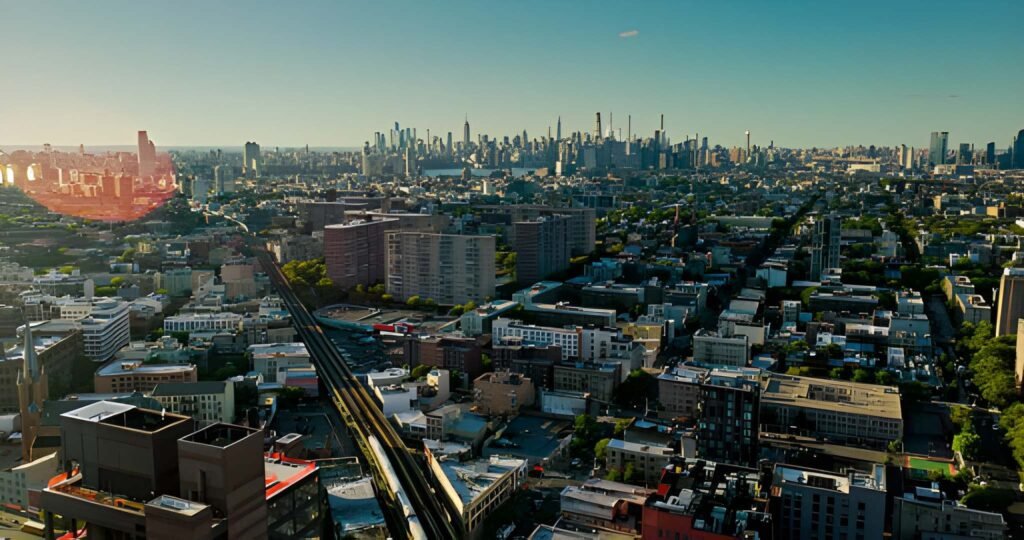
Brooklyn is not merely a borough of New York City; it is a global capital of culture, a universe of distinct villages, and a state of mind. Living in Brooklyn means engaging with a density of experience unmatched in American life—a relentless, vibrant, and often exhausting collision of art, food, ambition, and humanity. It is a place of profound contradiction: both fiercely traditional and relentlessly innovative, both unaffordably expensive and surprisingly scrappy. This guide moves beyond the caricatures of hipsters and brownstones to examine the intricate realities of life in the borough of kings, from its stratospheric cost of living to its unparalleled neighborhood character, providing a clear-eyed view of what it truly means to build a life across the East River.
The Brooklyn State of Mind: Life in the Borough
Life in Brooklyn is defined by its neighborhoods. Each one—from Greenpoint to Bay Ridge—operates as a self-contained village with its own main street, cultural identity, and social codes. The pace is fast but less frantic than Manhattan; it’s a hustle infused with a sense of community and style. There is a pervasive creative energy, a sense that everyone is working on a project—a novel, a startup, a ceramicist collective, a perfect sourdough loaf. This is balanced by deep-rooted, multi-generational communities that provide a stable backbone against the constant churn of newcomers. The vibe is confident, self-assured, and often dismissive of Manhattan’s perceived pretensions. Your daily experience is hyper-local: your bodega, your coffee shop, your park, your train stop. It is a place where you can find a 100-year-old Italian social club, a Michelin-starred restaurant, and a cutting-edge art gallery within a three-block radius.
The Price of Admission: Cost of Living
Living in Brooklyn commands a premium, though it often provides slightly better value than comparable living situations in Manhattan. The financial reality is the central, organizing principle of life.
A detailed budget for a single professional living in a one-bedroom apartment in a desirable neighborhood like Park Slope or Williamsburg might look like this:
- Rent: $3,400 (for a 600-700 sq ft apartment)
- Utilities (Electricity, Gas, Internet): $200
- Groceries: $450
- Dining & Entertainment: $600 (a central part of the social fabric)
- Transportation (Unlimited MetroCard): $132
- Miscellaneous: $350
This creates a baseline monthly expenditure of approximately $5,132. To afford this comfortably (using the standard guideline that rent should not exceed 30% of gross income), your pre-tax annual income would need to be at least $136,000.
This calculation is shown as:
\text{Required Annual Income} = \frac{\$3,400 \times 12}{0.3} = \$136,000For a couple or a family, these numbers scale significantly, especially when factoring in childcare, which can easily exceed $2,500 per month per child.
A Borough of Villages: Best Neighborhoods
Your choice of neighborhood is the most critical decision you will make, as it will define your daily routine, social circle, and commute.
- North Brooklyn:
- Williamsburg: The epicenter of early 21st-century hipster culture, now fully matured into a high-end district of luxury condos, rooftop bars, and destination dining. Excellent subway access and a vibrant, if expensive, energy.
- Greenpoint: Historically Polish, now a mix of old-world charm and new-wave trendiness. Slightly quieter than Williamsburg, with a beautiful waterfront park and fantastic dining scene.
- Bushwick: The current frontier of artistic energy. Covered in massive street murals, filled with artist lofts, DIY music venues, and a thriving nightlife. Rapidly gentrifying and becoming more expensive.
- West/Central Brooklyn:
- Park Slope: The epitome of Brooklyn brownstone living. Family-friendly, progressive, with beautiful architecture, Prospect Park, and a thriving main street on 7th Avenue. Highly desirable and expensive.
- Cobble Hill & Carroll Gardens: Charming, low-slung neighborhoods with tree-lined streets, boutique shopping, and some of the borough’s best restaurants. A refined, quieter, and very expensive atmosphere.
- Gowanus: A former industrial zone now transforming into a hub of tech offices, Whole Foods, and new residential developments built along the (slowly) cleaning Gowanus Canal.
- South Brooklyn:
- Ditmas Park: An architectural anomaly with blocks of grand, free-standing Victorian homes. A diverse, family-oriented community with a suburban feel and a fantastic food scene on Cortelyou Road.
- Bay Ridge: A historically Norwegian and Italian middle-class enclave with a strong community feel, excellent family-owned restaurants, and a beautiful waterfront promenade.
- East Brooklyn:
- Bed-Stuy & Crown Heights: Historic centers of Black culture in NYC, with stunning Stuyvesant Heights and Crown Heights North offering beautiful brownstones. Areas of intense gentrification, creating a complex mix of old and new.
The Eternal Debate: Renting vs. Buying
The decision to rent or buy in Brooklyn is a monumental financial calculation, accessible only to a very small fraction of the population.
Renting offers flexibility in a transient environment and is the only viable option for most. The rental market is fiercely competitive, with rent-stabilized apartments being a coveted, life-changing asset that provides long-term stability.
Buying is a stratospheric financial commitment. The median sale price for a home often exceeds $900,000. A 20% down payment alone is $180,000—a sum that represents a lifetime of savings for most. Those who can buy are often leveraging generational wealth or immense dual incomes.
The financial break-even point is extremely long due to the massive upfront cost. A simplified formula illustrates the daunting math:
\text{Break-Even Point (years)} = \frac{\text{Total Upfront Costs}}{\text{Annual Rent} - (\text{Annual Mortgage Interest} + \text{Annual Property Taxes} + \text{Annual Maintenance} + \text{Common Charges})}Upfront costs include the colossal down payment and high closing costs. This equation often pushes the break-even point beyond 7-10 years.
The Economic Engine: Job Market and Career Opportunities
Brooklyn’s economy is no longer just a bedroom community for Manhattan; it is a powerhouse in its own right.
- Technology & Innovation: The “Brooklyn Tech Triangle” encompassing Dumbo, Downtown Brooklyn, and the Brooklyn Navy Yard is a massive hub for tech startups, creative agencies, and manufacturing innovators.
- Creative Industries: A massive community of artists, writers, filmmakers, designers, and musicians call Brooklyn home, drawn by its creative energy and networking opportunities.
- Healthcare & Education: Major systems like NYU Langone Hospital-Brooklyn and Maimonides Medical Center, along with universities like Pratt Institute and NYU Tandon, provide a stable base of employment.
- Food & Artisanal Manufacturing: Brooklyn is a global brand in craft food, from small-batch distilleries in Red Hook to artisanal cheesemakers. This is a significant, though often lower-paying, sector.
- Professional Services & Finance: Many who live in Brooklyn still commute to jobs in Manhattan’s financial, legal, and consulting firms.
Educational Landscape: Best Schools and Universities
New York City’s public school system is the largest in the nation, with immense variation in quality. Admission to the top-tier public schools is fiercely competitive and often exam-based. This has created a robust ecosystem of private and parochial schools in Brooklyn, which come with steep tuition costs.
For higher education, Brooklyn is an elite destination:
- Pratt Institute: A prestigious private art and design school.
- NYU Tandon School of Engineering: The engineering school of New York University, located in Downtown Brooklyn.
- Long Island University (LIU Brooklyn): A private university with a strong pharmacy and health sciences program.
- St. Joseph’s University, New York: A private university with a campus in Clinton Hill.
Getting Around: Public Transportation and Commuting
Brooklyn is served by an extensive network of MTA subway lines and buses, making car ownership unnecessary and often burdensome for most residents. The average commute time for Brooklynites is about 45-60 minutes. The borough’s walkability and bike-friendliness (aided by Citi Bike) are major assets. The primary commuting challenge is the reliability of the subway system, which can be plagued by delays and service changes.
The Housing Market: A Tactical Overview
The Brooklyn housing market is intensely competitive, characterized by high prices, low inventory, and fierce competition.
- Average Home Prices: As of late 2023, the median sale price for a home in Brooklyn is approximately $950,000. This figure includes everything from condos to brownstones.
- Most Affordable Areas to Buy a Home: Look to the southern and eastern edges: Sheepshead Bay, Midwood, Canarsie, and East New York. These areas offer relative value but often come with longer commutes.
- Luxury Real Estate Hotspots: Brooklyn Heights (the original gold coast), Dumbo (with its iconic Manhattan views), Cobble Hill, and Park Slope command the highest prices. New developments along the Williamsburg and Greenpoint waterfronts are also luxury hotspots.
- Rental Market: The rental market is tight. Competition is fierce for desirable units, and landlords can be strict with requirements (credit score > 700, income at 40x the monthly rent). Rent-stabilized apartments are the holy grail.
- Best Places to Invest & Future Growth Neighborhoods: Investment looks toward neighborhoods next to already-hot areas. Bedford-Stuyvesant (sections further from the G train), Crown Heights (east of Nostrand Ave), Sunset Park, and Ridgewood (technically Queens but culturally Brooklyn) are seen as having strong potential for appreciation.
The Cultural Repertoire: Things to Do
| Activity Category | Iconic Examples | Hidden Gems |
|---|---|---|
| Cultural Attractions | Brooklyn Museum, Brooklyn Academy of Music (BAM), New York Transit Museum | Morbid Anatomy Museum, Green-Wood Cemetery (historical tours), Pioneer Works |
| Parks & Outdoors | Prospect Park, Brooklyn Bridge Park, Brooklyn Botanic Garden | Sunset Park, Marine Park, The Greenway |
| Food & Drink | Peter Luger Steak House, Di Fara Pizza, L&B Spumoni Gardens | Lucali (pizza), Win Son (Taiwanese), countless new-wave eateries |
| Nightlife | Music venues in Williamsburg, bars in Greenpoint, clubs in Bushwick | Barbès (global music), Sunny’s Bar in Red Hook, The Bell House |
Annual Festivals and Events: The West Indian American Day Carnival (Labor Day), Atlantic Antic street fair, and the DUMBO Arts Festival are major draws.
Shopping: From the luxury boutiques of Williamsburg to the indie designers of Cobble Hill and the discount stores of Fulton Mall.
Quality of Life & Relocation Essentials
- Raising a Family: Brooklyn can be a fantastic place for families, with incredible parks, museums, and cultural exposure. However, it is logistically challenging and expensive, with the search for quality schooling being the primary concern driving many to the suburbs.
- Crime and Safety: Crime rates vary immensely by neighborhood. Property crime (car break-ins, package theft) is a widespread issue. Violent crime is concentrated in specific, economically disadvantaged neighborhoods. Researching specific neighborhoods is crucial.
- Healthcare and Hospitals: World-class medical facilities are available, including NYU Langone Hospital-Brooklyn, Maimonides Medical Center, and NewYork-Presbyterian Brooklyn Methodist Hospital.
- Weather and Climate: Brooklyn experiences four distinct seasons. Summers are hot and humid. Winters are cold and can bring significant snow. Spring and fall are generally pleasant.
- Cost of Utilities: For a 700 sq ft apartment, average monthly costs are:
- Electricity (ConEdison): $80 – $120
- Gas (National Grid): $100 – $180 (very high in winter for heat)
- Water/Sewer: Often included in rent; if not, ~$40-$60
- Internet: $70 – $100
The Relocation Checklist
- Secure a High-Paying Job: This is non-negotiable. Have an offer in hand with a salary that meets the borough’s extreme financial demands.
- Line Up Housing from Afar: The rental market moves fast. Be prepared to commit to an apartment sight-unseen or secure temporary housing for a month-long search.
- Assemble Your Documents: Have digital copies of your photo ID, recent pay stubs, employment letter, bank statements, and tax returns ready to send instantly to landlords.
- Understand the Lease: NYC leases are complex. Review policies on guarantors (required if you don’t meet the 40x income threshold), subletting, and maintenance.
- Embrace the Lifestyle: Be prepared to walk, take the subway, and explore the incredible diversity of food and culture at your doorstep.
The Final Verdict: Pros and Cons of Living in Brooklyn
Pros:
- Unmatched access to culture, food, and entertainment.
- A robust public transit system that makes car ownership optional.
- A dense, diverse, and ambitious population that fosters connection and opportunity.
- A dynamic job market across multiple creative and tech industries.
- A strong sense of community and identity within distinct neighborhoods.
Cons:
- An extremely high cost of living, particularly housing.
- Crowded, noisy, and often stressful living conditions.
- The physical infrastructure (subways) can be aging and unreliable.
- Can feel isolating and impersonal, especially for new arrivals.
- The pace of life leads to burnout for some.
Living in Brooklyn is a choice to prioritize experience, culture, and ambition over space and financial comfort. It is a demanding, expensive, and often exhausting place to live. But for those who sync with its rhythm, it offers a depth and richness of life that is the ultimate reward.