In the world of interior design, where grand visions must be translated into buildable, functional realities, the 1:4 scale model stands as an indispensable and profoundly powerful tool. This practice, where one-quarter of an inch on a drawing or model equals one foot in actuality, is not a mere academic exercise. It is the primary language through which designers conduct spatial symphonies, testing harmony and discord before a single piece of drywall is hung or a single dollar is spent on furniture. Working with 1:4 scale furniture is the crucial bridge between the abstract idea and the tangible space, a method for problem-solving that reveals truths which floor plans and digital renderings can often obscure.
The fundamental strength of the 1:4 scale lies in its perfect balance of detail and manageability. At this ratio, a standard 30-inch by 60-inch desk translates to a tangible block of 5/8-inch by 1 1/4-inches. A generous 84-inch sofa becomes a 1 3/4-inch long form. This scale is large enough to convey the essential mass and proportion of a piece, yet small enough to allow for an entire room layout to be manipulated on a single sheet of foam core. This physical, hands-on interaction is where its magic resides. A designer can pick up a scaled sofa, move it from against the long wall to a floating position, and immediately assess the impact on circulation paths. They can place a scaled rug underneath it and see, with visceral clarity, whether its size adequately anchors the seating group or if it appears as a lonely postage stamp. This kinesthetic learning—the act of moving and seeing—engages the brain in a way that sliding pixels on a screen cannot replicate.
The process begins with the creation of a precise 1:4 scale floor plan. This drawing, rendered with painstaking accuracy, becomes the base layer of the experiment. It includes not only the room’s perimeter but the exact placement of all immutable elements: doors, showing their swing arc; windows, noting sill height; built-in features like fireplaces; and electrical outlets. This plan is then transferred onto a sturdy base material, such as foam core or Gatorboard. The subsequent step is the procurement or creation of the 1:4 scale furniture itself. Designers often use pre-made wooden blocks, meticulously cut to the dimensions of their specified furniture. Others build a library of scaled items from thick cardstock or use specialized, reusable plastic templates. The key is that each block is a perfect volumetric representation of the real-world object.
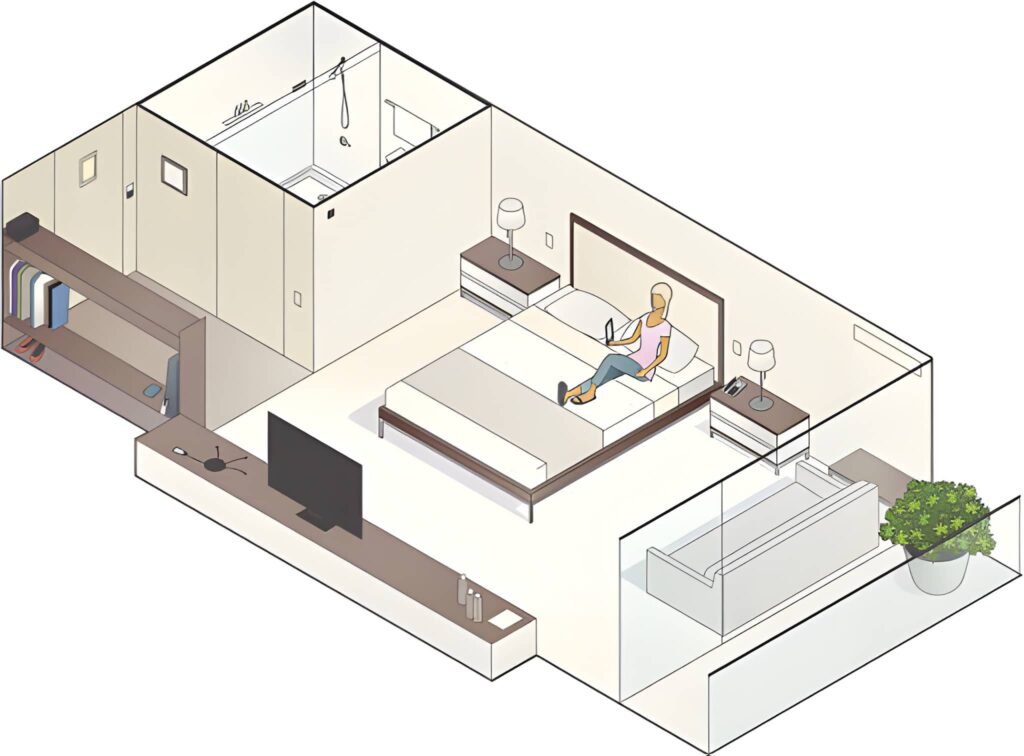
With the stage set, the designer begins the work of spatial choreography. This is where theory meets reality. A floor plan might suggest a king-size bed will fit in a room, but the scale model reveals whether there will be adequate space for nightstands and, crucially, enough room to walk comfortably on either side. The model forces answers to critical questions. Does the traffic flow naturally from the entry to the main seating area? Is there a clear and logical path from the kitchen to the dining table? Does a proposed console table behind a sofa create an awkward, unnavigable gap, or does it establish a pleasing sense of layering? The scale model makes the invisible—the space we move through—visible and quantifiable.
The following table illustrates the translation of common furniture pieces into their 1:4 scale dimensions, highlighting the level of detail this scale allows:
| Furniture Piece | Standard Dimensions (Inches) | 1:4 Scale Dimensions (Inches) |
|---|---|---|
| Standard Sofa | 84″ L x 36″ D x 34″ H | 1.75″ L x 0.75″ D x 0.71″ H |
| Armchair | 32″ L x 32″ D x 34″ H | 0.67″ L x 0.67″ D x 0.71″ H |
| Coffee Table (Rectangular) | 48″ L x 24″ D x 18″ H | 1.00″ L x 0.50″ D x 0.38″ H |
| Dining Chair | 18″ L x 20″ D x 36″ H | 0.38″ L x 0.42″ D x 0.75″ H |
| King Bed | 76″ L x 80″ D | 1.58″ L x 1.67″ D |
| Standard Doorway | 36″ Wide | 0.75″ Wide |
The utility of the scale model extends powerfully into client communication. Most clients struggle to read a two-dimensional floor plan. They cannot visualize spatial volume from a line drawing. Presenting a physical scale model, however, is transformative. The client can look down into the miniature room, a perspective that intuitively mimics how we experience a space. They can immediately understand the proposed layout, the relationship between pieces, and the overall sense of spaciousness or intimacy. This tangible representation demystifies the design process, builds trust, and prevents costly misunderstandings. A client who sees that a proposed sectional will dominate their living room in the model is far less likely to be shocked and disappointed when the actual furniture arrives. It turns an abstract proposal into a shared, concrete vision.
In professional practice, the 1:4 scale model is often the final checkpoint before finalizing furniture orders and construction documents. It is a tool for cross-disciplinary coordination, allowing the interior designer to ensure their layout works in harmony with the architect’s lighting plan or the mechanical engineer’s HVAC register placements. While powerful 3D modeling software has become ubiquitous, the most effective designers often use a hybrid approach. They may create a digital model for rendering and client presentation, but they will almost always return to the physical scale model to validate the fundamental proportions and circulation. The unmediated physicality of the model provides a truth that the manipulable camera angles of a digital rendering can sometimes distort.
Mastering the use of 1:4 scale furniture is, therefore, a rite of passage in a designer’s education and career. It cultivates a disciplined eye for proportion and a deep, intuitive understanding of human ergonomics and movement. It is a practice of humility, as the model frequently reveals flaws in a initially brilliant idea, forcing a redesign on a sheet of foam core rather than with a crew of movers and thousands of dollars in merchandise. In the end, this simple, analog tool—a base, a paper plan, and a set of carefully measured blocks—remains one of the most sophisticated technologies in the interior designer’s arsenal, a timeless method for ensuring that a design not only looks right on paper, but feels right in the world.