Structural Integrity and Fire Prevention: What Every US Homeowner Needs to Know About Chimney Maintenance
Table of Contents
The Critical Role of the Chimney in Home Safety and Structure
Many homeowners view the chimney purely as an aesthetic feature or a seasonal amenity. However, from a real estate perspective, the chimney is a critical structural and mechanical system. Its primary role involves safely venting combustion byproducts—smoke, gases, and dangerous carbon monoxide—out of the home. When this system fails, the risks escalate quickly, threatening fire, structural damage, and deadly indoor air quality issues. For any property transaction, the chimney inspection often carries significant weight, directly impacting insurability and overall valuation.
Ignoring chimney maintenance is never a cost-saving measure. Small, neglected issues like hairline cracks in the crown or failing mortar joints rapidly progress due to weather exposure. Water intrusion, the most common enemy of any home structure, finds easy entry points in a damaged chimney, leading to expensive repairs like warped interior ceilings, rusted dampers, and compromised masonry. Proactive, preventative repair is always the most economical strategy.
The Anatomy of a Chimney: Components Requiring Attention
Effective chimney repair begins with understanding the function of each core component. Damage to one element often stresses others, creating a cascade effect that compromises the entire stack.
Key Areas of Chimney Maintenance
The crown is the slab of masonry or concrete on the very top of the chimney, designed to shed water away from the flue and the chimney walls. When the crown cracks, water infiltrates the stack structure, freezing and expanding (spalling) the bricks below. Crown repair or replacement is a fundamental protective measure.
The flue liner (clay tile, metal, or concrete) seals the flue chamber, preventing intense heat and corrosive gases from directly contacting the combustible materials of the home structure. Cracks or damage in the liner are immediate fire hazards. Liner replacement, often done with a stainless steel sleeve, is a critical safety repair.
The damper seals the fireplace when not in use, preventing conditioned air from escaping and wildlife from entering. The chase cover (found on pre-fabricated chimneys) seals the top opening. Rusting or warping of these metal components compromises energy efficiency and allows water and debris into the system, requiring repair or replacement.
Understanding Common Chimney Problems and Causes
Chimneys endure constant exposure to harsh elements—rain, snow, ice, and wind—coupled with intense internal temperature fluctuations. The most frequent issues stem from these two primary forces: water damage and thermal stress.
Deteriorated Mortar Joints (Tuckpointing)
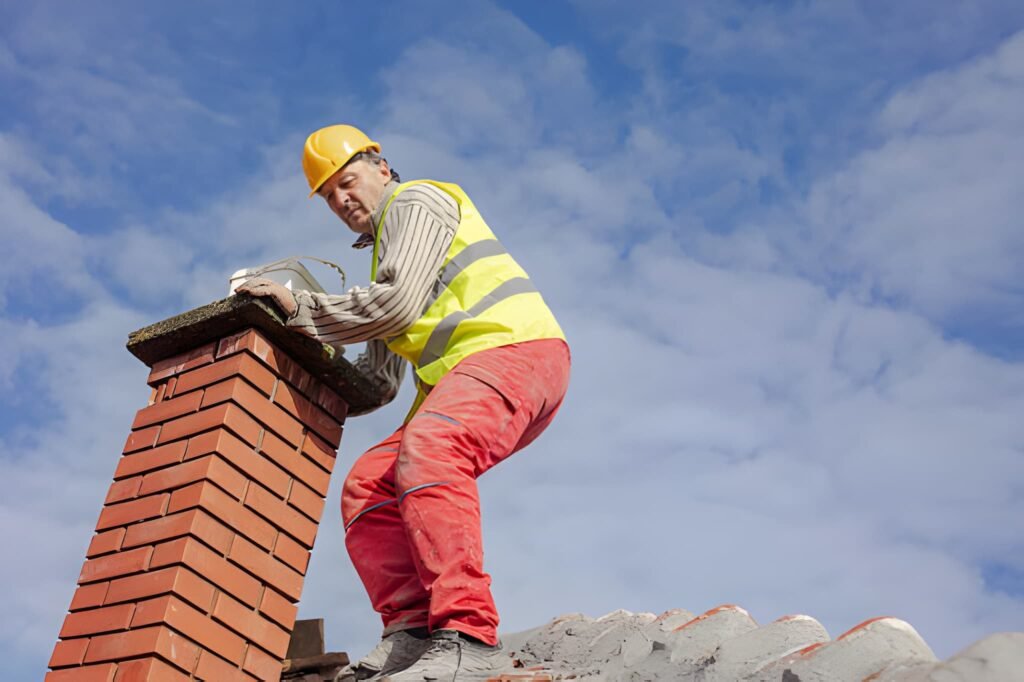
The mortar between bricks naturally degrades over time, becoming porous and crumbling. This is particularly prevalent on the chimney’s exposed vertical surface. When joints fail, water penetrates the masonry, accelerating deterioration. Tuckpointing is the skilled repair process of removing old, damaged mortar and replacing it with fresh mortar, restoring structural integrity and water resistance. It is a necessary repair to prevent full chimney reconstruction.
Creosote Build-up and Flue Blockage
Creosote, a tarry, highly flammable residue, accumulates inside the flue when wood is burned inefficiently. Layered creosote is the leading cause of chimney fires. While cleaning (sweeping) removes superficial build-up, heavy, glazed deposits require specialized chemical treatments or mechanical scraping (such as rotary tools). A cracked flue liner combined with heavy creosote presents an extreme fire risk where repair becomes immediately mandatory.
Flashing Failure
Flashing is the metal sheeting that creates a watertight seal where the chimney stack meets the roof line. Because the roof and chimney settle and expand at different rates, this is a prime area for leaks. Failed flashing often leads to noticeable water damage inside the attic or ceilings. Repair involves replacing the damaged metal and resealing the joints to ensure proper overlap and drainage.
Comparison of Chimney Issues and Cost Estimates
| Repair Type | Severity / Cause | Typical US Cost Range ($) | Impact on Home Safety |
|---|---|---|---|
| Tuckpointing (Minor) | Deteriorated mortar joints, water penetration | 500 – 2,500 | Low (Structural integrity) |
| Chimney Crown Repair | Cracked crown, direct water infiltration | 800 – 3,000 | Medium (Water damage prevention) |
| Flue Liner Replacement | Cracked tiles, fire hazard from heat transfer | 2,500 – 7,000+ | High (Fire prevention, carbon monoxide venting) |
| Chimney Repointing/Rebuild (Full) | Severe structural deterioration, leaning chimney | 5,000 – 15,000+ | Critical (Structural stability) |
Note: Costs vary widely based on chimney height, accessibility, material, and regional labor rates.
Essential Chimney Repair Methods
The appropriate repair method depends entirely on the component damaged and the extent of the deterioration. A professional inspection must precede any major work to diagnose the root cause accurately.
Masonry Restoration (Tuckpointing)
For brick chimneys showing general wear, tuckpointing revitalizes the masonry without rebuilding the entire structure. The technician grinds out or removes the old mortar to a consistent depth and packs the void with new, correctly formulated mortar. This process significantly extends the chimney's life and is a key maintenance task for older homes, preserving the look and functionality of the stack.
HeatShield or Flue Resurfacing
When clay tile liners suffer only minor damage or cracks, resurfacing offers a less invasive alternative to full liner replacement. This process involves applying a specialized ceramic or cementitious mixture to the interior of the flue, creating a seamless, airtight, and fire-resistant barrier. This is a cost-effective solution for liners that are structurally sound but compromised by age or minor cracks.
Stainless Steel Liner Installation
For severely damaged clay tile flues, particularly those used with wood stoves or high-efficiency furnaces, installing a stainless steel liner is the standard modern repair. This method involves dropping a durable, corrosion-resistant steel tube down the existing flue space. The liner isolates the exhaust from the masonry and ensures optimal drafting performance, mitigating both fire risk and carbon monoxide seepage.
The Economics of Proactive Chimney Maintenance
From a real estate investment perspective, chimney repair costs adhere to the principle: spend a little now to avoid spending a lot later. A Level 2 chimney inspection typically costs between $150 and $500. This small expense can identify minor water damage that a simple $1,000 crown repair can fix. Ignoring that issue can easily lead to a $10,000 internal rebuild within a few years due to widespread water damage and freezing cycles.
The Cost of Delay: Chimney Damage Estimator
Estimate the potential cost escalation when ignoring a small repair.
When to Call a Certified Chimney Professional
While minor tasks like light sweeping can be homeowner duties, any repair involving the masonry, the flue liner, or structural stability requires a certified professional. Certification from organizations like the Chimney Safety Institute of America (CSIA) signifies adherence to industry standards and best safety practices.
The Inspection Standards (NFPA 211)
The National Fire Protection Association (NFPA) Standard 211 governs chimney inspections and maintenance. Professionals operate under three levels of inspection:
Level 1: Routine annual check-up during sweeping.
Level 2: Mandatory when purchasing or selling a property, following a property change (like new appliance installation), or after an operational malfunction. This involves video scanning of the flue interior.
Level 3: Reserved for extreme issues where internal damage is suspected and requires partial removal of the chimney structure to access the damaged areas.
For homeowners, the Level 2 inspection is the benchmark for determining the necessity and scope of most chimney repairs. A detailed report from this inspection provides the necessary documentation for insurance, sale, or planning maintenance budgets.
Critical Safety Fact: Carbon Monoxide Risk
A damaged or blocked flue is a direct pathway for deadly carbon monoxide gas to enter living spaces. Unlike smoke, CO is colorless and odorless. Flue liner cracks and chimney blockages (often caused by nests or debris) prevent safe exhaust venting. Annual inspection and prompt repair of the flue system is a life-safety issue, not just a property maintenance issue.
The investment in proactive chimney repair safeguards not only the physical structure of the home but also the well-being of its occupants and the longevity of the investment. For US homeowners, maintaining the integrity of the chimney stack—from the crown and flashing to the critical flue liner—is a fundamental responsibility that prevents minor decay from morphing into catastrophic, uninsurable damage. Consult with a CSIA-certified professional annually; this single act of vigilance secures the entire system.