The dream of homeownership, intertwined with a growing desire for environmental stewardship, finds a compelling modern expression in the eco prefab home. The idea of a brand-new, energy-efficient dwelling, constructed in a controlled factory and delivered for under $100,000, presents a powerful solution to the dual crises of housing affordability and climate change. This vision, promoted across digital media and corporate marketing, invites a serious examination. The journey to acquiring such a home is less a simple purchase and more a complex navigation of nuanced definitions, stark trade-offs, and often unstated additional costs. The promise is real, but its fulfillment demands a clear-eyed understanding of the entire process, from factory floor to finished foundation.
Deconstructing the Price Tag: Base Model Versus Turn-Key Reality
The most critical concept to grasp in this market is the profound difference between the manufacturer’s base price and the final turn-key cost. A company may advertise a stylish 600-square-foot modular or panelized home for $80,000. This figure, however, almost always represents a specific and limited scope. It is the cost of the physical structure itself, as it leaves the factory. It includes the walls, roof, windows, doors, and perhaps pre-installed electrical wiring and plumbing chases. It is the shell and core. It is not the complete home, ready for you to turn the key and move in.
The path from that base price to a fully realized, legally occupiable dwelling involves a series of significant, and often escalating, expenses known as “soft costs” and “site costs.” Ignoring these is the primary reason budgets for affordable prefab projects derail. The advertised price is the seed; the final cost is the mature tree, requiring a substantial and nourishing investment in the ground in which it is planted.
These site costs can be broadly categorized. First is land acquisition. The $100,000 home requires a parcel of land to sit upon, a cost that varies astronomically across the United States. A rural plot in Kansas may cost $15,000, while a similar-sized lot in a developed part of Colorado could exceed $150,000. This single variable alone can shatter the under-$100k dream unless land is already owned. Second are site development expenses. This includes a site survey, soil testing, and the critical process of securing permits from local municipal authorities. Permit fees, impact fees, and architectural review costs can range from a few thousand dollars to tens of thousands, depending on the jurisdiction.
The third, and often most volatile, category is utility installation and foundation work. The factory-built home needs a foundation—a slab, crawlspace, or basement. Excavation, concrete work, and labor represent a major cost. Furthermore, the site must be connected to utilities: water, sewer or a septic system, electricity, and possibly natural gas. If municipal water and sewer are not available at the property line, the cost of drilling a well and installing a septic system can easily reach $20,000 to $40,000. Bringing electrical power from the road to the building site can cost thousands more, especially if a long trench must be dug.
Table: The Anatomy of a Prefab Home’s Total Cost
| Cost Component | Typical Price Range | Description & Considerations |
|---|---|---|
| Manufacturer’s Base Price | $50,000 – $90,000 | The “sticker price” for the core structure, often for a 1-2 bedroom, <800 sq ft model. |
| Land Acquisition | $0 – $200,000+ | Highly variable. The most common barrier to the under-$100k total project. |
| Site Development & Permits | $5,000 – $25,000 | Includes site survey, soil tests, and municipal permit fees (building, electrical, plumbing). |
| Foundation | $10,000 – $30,000 | Cost depends on type (slab vs. basement) and site topography. |
| Utility Hookups | $5,000 – $40,000+ | Septic/well can be very expensive. Electrical service drop and panel installation. |
| Shipping & Crane Rental | $5,000 – $20,000 | Distance from factory is key. A crane is needed to set modular units. |
| Final Assembly & Finishing | $10,000 – $30,000 | Connecting modules, finishing roof connections, interior trim, appliance installation. |
| Contingency Fund (10-20%) | $10,000 – $25,000 | Essential for unexpected issues like rocky soil, weather delays, or material price increases. |
When all these factors are tallied, the final cost of a home advertised for $80,000 can easily land between $150,000 and $250,000. This is not a failure of the product, but a reflection of the complete process of creating a home. The prefab model offers efficiency in construction, but it does not eliminate the traditional costs and challenges of site work.
Defining the “Eco” in Affordable Prefab
The term “eco” or “green” in this context is not a single standard but a spectrum of features and philosophies. For homes in this price bracket, the ecological benefits are often rooted in fundamental building science and material efficiency rather than high-tech gadgetry.
The primary ecological advantage of prefab construction is waste reduction. Building in a factory allows for precision cutting of materials. Lumber, sheathing, and insulation are used with a level of accuracy impossible in a stick-built site, where weather and on-site cutting lead to significant waste destined for a landfill. This controlled environment also allows for a much tighter building envelope. Gaps and seams that lead to air leakage in conventional homes are minimized, creating a structure that is inherently more energy-efficient from the start.
The materials themselves define the “eco” character. Many manufacturers in this niche focus on using FSC-certified lumber, ensuring it comes from responsibly managed forests. Structural Insulated Panels (SIPs) are a common feature, providing exceptional levels of insulation in a single, efficient component. Low-VOC (Volatile Organic Compound) paints and finishes are standard for better indoor air quality. The eco-focus is often on passive design strategies: optimizing window placement for natural light and solar heat gain, designing for natural cross-ventilation, and creating a highly insulated shell that reduces the need for large, energy-guzzling HVAC systems.
You are less likely to find integrated solar arrays or geothermal wells in a sub-$100k base model, as these technologies represent a significant upfront cost. However, the efficient shell is designed to be “solar-ready,” meaning its electrical load is low enough that adding solar panels later becomes a more feasible and cost-effective upgrade. The ecology here is one of lean, smart consumption and long-term operational efficiency, not just a collection of branded green features.
Navigating the Market: Types and Trade-Offs
The world of affordable eco prefab is not monolithic. Several distinct product types exist, each with its own set of advantages, limitations, and cost structures.
Panelized homes are a common entry point. The factory pre-cuts and sometimes pre-assembles walls, which are then shipped in flat panels to the site for erection by a local crew. This method reduces on-site labor time and waste while allowing for significant design flexibility. Kit homes represent an even more hands-on approach. Popularized by companies like Rocio Romero, these systems provide all the necessary materials and highly detailed instructions, often relying on the owner to serve as the general contractor and/or provide a significant amount of the labor to achieve cost savings.
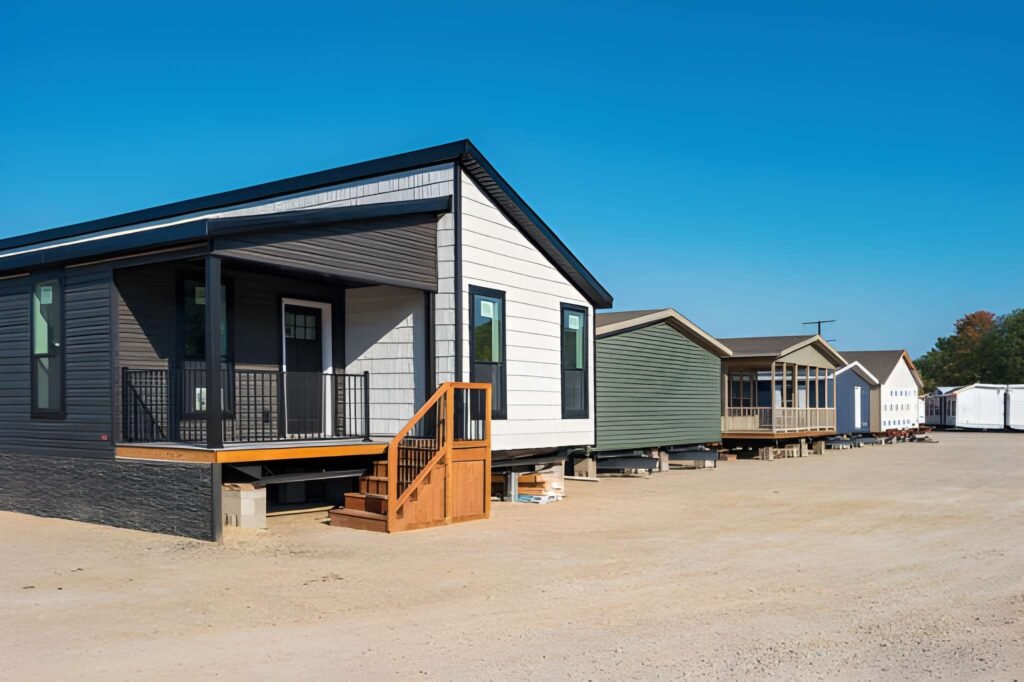
Modular homes are the most complete factory-built option. They are constructed in three-dimensional sections or “modules” in a factory, complete with interior finishes, plumbing, and electrical fixtures. These modules are then transported to the site, placed on a foundation by a crane, and bolted together. While often associated with higher base prices than panelized or kit homes, they offer speed of on-site assembly and a very high level of finish consistency.
The trade-offs are real. A lower base price almost always correlates with a smaller square footage. Living comfortably under 1,000 square feet requires a deliberate approach to space and possession, embracing a philosophy of minimalism. Design customization is another key variable. The most affordable models are often catalog designs with limited options for modification. Every change to a floor plan, window size, or exterior finish typically carries an additional engineering and materials cost. The most budget-conscious path is to select a standard model and alter one’s own desires to fit it, rather than the other way around.
Table: Comparison of Affordable Prefab Home Types
| Type | Base Price Range (for small models) | Key Characteristics | Ideal For |
|---|---|---|---|
| Panelized (SIPs or Wood Frame) | $60,000 – $90,000 | Walls built in factory, assembled on site. Fast enclosure, excellent insulation. | Those seeking a balance of efficiency and some design flexibility, with a local builder. |
| Kit Home | $40,000 – $80,000 | Materials and plans provided. High owner/builder involvement required. | The highly motivated, hands-on owner who can act as their own GC and/or provide sweat equity. |
| Small Modular | $80,000 – $120,000+ | Complete 3D modules; fastest on-site installation; highest factory finish. | Those prioritizing speed and a turn-key level of finish from the factory, with a higher base budget. |
| Tiny House (on Wheels or Foundation) | $50,000 – $100,000 | Extreme space efficiency; mobility (if on wheels); often bypasses some building codes. | Those committed to a minimalist lifestyle and willing to navigate potential zoning complexities. |
The Invisible Hurdles: Zoning, Financing, and Mindset
Beyond the financial and physical realities lie procedural and psychological challenges that can be just as formidable.
Zoning is the first major legal hurdle. Many municipal zoning codes have minimum square footage requirements for single-family homes, sometimes 1,000 square feet or more. These laws were written decades ago and can effectively outlaw a 600-square-foot modern prefab home, no matter how well-built. Some areas also have restrictive architectural review boards or covenants that dictate aesthetic styles, potentially clashing with the modern, minimalist design of many eco-prefabs. Thorough due diligence on the local zoning code and any subdivision restrictions is a non-negotiable first step before any purchase.
Financing this type of project can also be more complex than securing a standard mortgage for an existing home. A construction-to-permanent loan is typically required. This is a two-phase loan: it first covers the costs of construction (factory build, site work, assembly) and then converts to a standard mortgage once the certificate of occupancy is issued. Lenders perceive more risk in this process and will require detailed plans, a firm budget, and an approved builder. They will disburse funds in stages as milestones are met, not as a single lump sum.
Finally, the required mindset is one of patience, flexibility, and project management. The process from selecting a model to moving in can take 12 to 24 months. There will be delays for permits, weather, and supply chain issues. The owner must be prepared to make hundreds of decisions, from the location of light switches to the finish on kitchen faucets. This is not a passive consumer experience; it is an active, demanding, and often stressful undertaking that requires resilience and strong organizational skills.
A Viable Path, With Discipline
An eco prefab home for a total project cost under $100,000 is a challenging target, but it is not entirely mythical. It is achievable under a specific and disciplined set of conditions. The most likely scenario involves a combination of factors: owning the land free and clear, selecting a very small, simple panelized or kit model, locating in an area with low permit fees and easy utility access, and providing a substantial amount of sweat equity by acting as the general contractor and performing finishing labor.
The true value of these homes is not found in an elusive, impossibly low price point, but in their inherent efficiency, reduced environmental impact, and thoughtful design. They represent a conscious choice to live with less physical space and a lower carbon footprint. For those willing to navigate the complex journey, the reward is a home that is not only affordable to purchase but also inexpensive to operate, a personal space that aligns with a values-driven vision of sustainability and mindful living. The promise of the eco prefab home is not a cheap one, but for the right person, it is a profoundly valuable one.