Specialized Residential Structures & Maintenance
A-Frame Roof Repair: Cost, Strategy, and Unique Structural Challenges
The A-Frame structure, iconic for its high pitch and efficient use of materials, presents a set of maintenance problems entirely unique to its design. Since the roof constitutes the majority of the external walls, its integrity is paramount. Repairing an A-Frame roof demands specialized access planning, stringent water mitigation protocols, and a higher capital reserve than standard roof systems. We detail the essential considerations for assessing damage and executing a durable repair.
Article Contents
1. The A-Frame Anatomy and Risk Factors
In a conventional home, the wall protects the structure from lateral rain and wind, and the roof handles precipitation. In an A-Frame, the roof performs both functions, creating amplified vulnerabilities at key points.
Common Failure Points
Due to the extreme angle and minimal overhang, water and snow are constantly pressed against the joints, leading to frequent and hidden damage:
- Eave-to-Foundation Seal: This junction, where the roof meets the perimeter wall or foundation, is highly prone to water penetration. Leaks here can quickly compromise the sill plates and basement components.
- Dormers and Skylights: Any penetration in an A-Frame roof must be perfectly flashed. Because the roof pitch is often severe, water moves faster, forcing it behind poorly sealed flashing and leading to internal rot that is difficult to detect without thermal imaging.
- Gable End Wind Uplift: The large triangular gable ends are susceptible to high wind loads, which can cause lifting and damage to the ridge cap and surrounding shingles or panels.
Structural Context: The Foundation Joint
Imagine the A-Frame as a tent. Where the tent touches the ground is the most vulnerable point. In a house, this eave-to-foundation joint often receives direct backsplash from rain and is where ice dams force water inward. Repair here requires meticulous flashing, sealant replacement, and sometimes structural repair of load-bearing wood members.
2. Repair Cost Driver: Labor and Access
For any A-Frame repair, the highest cost component is often labor, driven by necessary safety protocols and access equipment.
Specialized Labor and Rigging
Standard roofing contractors may not have the experience or equipment needed for the 60-degree pitch typical of an A-Frame. Repair requires specialists who utilize safety ropes, harnesses, and custom scaffolding or lifts. This specialized labor commands a premium, which can add **20 percent to 40 percent** to the overall labor estimate compared to a low-slope roof repair.
- Safety Requirements: Steep-pitch work demands safety rigging, adding setup time and daily overhead costs.
- Material Handling: Transporting materials (shingles, metal panels) up the steep face of the roof requires mechanical assistance or manual labor, increasing project duration.
The Diagnostic Premium
Because A-Frame damage often begins far from where the leak manifests inside the home, effective repair requires an extensive diagnostic process, often involving water testing or invasive investigation. A proper contractor should spend significant time locating the source of water intrusion before providing a fixed repair quote.
3. Material Selection: Asphalt vs. Metal
The A-Frame design benefits greatly from certain materials that optimize water runoff and durability on steep slopes.
Asphalt Shingles: Higher Risk, Lower Initial Cost
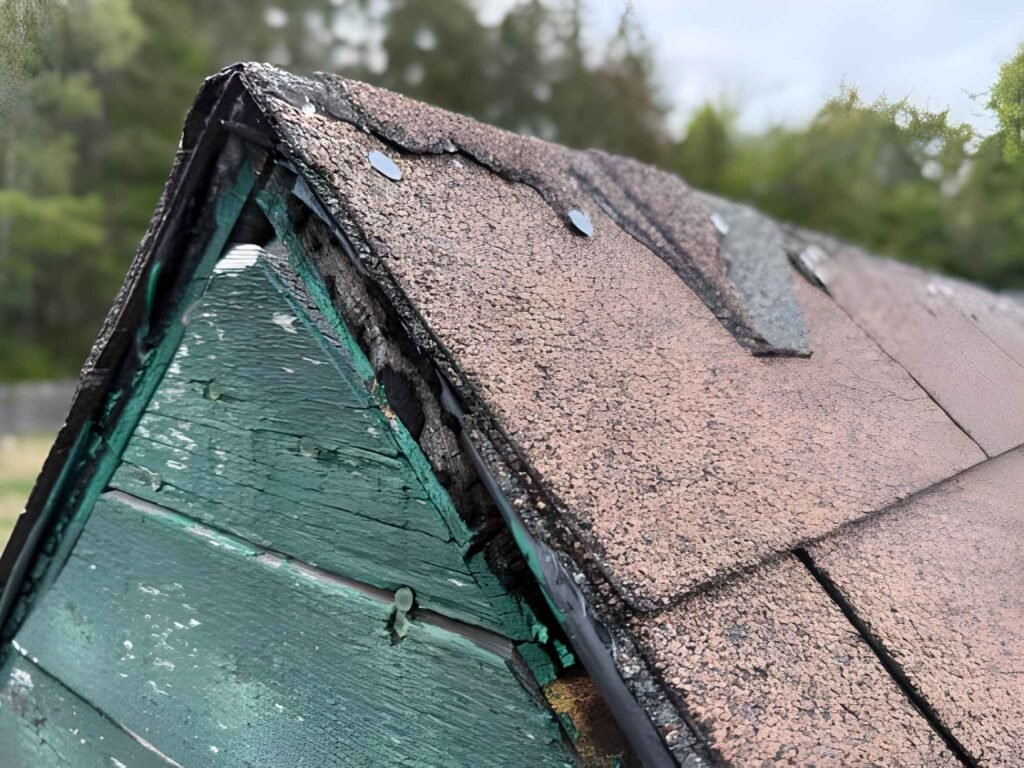
While affordable, standard asphalt shingles are less ideal for A-Frame pitches. Water rushes down quickly, but the primary weakness is at the seams and overlaps. Maintenance involves frequent checks for shingle slippage and ensuring every overlap is sealed perfectly. Life expectancy is typically reduced on such steep slopes due to increased wind exposure.
Metal Roofing: Higher Cost, Superior Performance
Standing seam metal roofing is generally considered the superior long-term solution for A-Frames. Its benefits justify the higher initial material cost:
- Seamless Water Runoff: Large panels minimize seams, virtually eliminating leaks caused by water moving sideways.
- Longevity: Metal roofs last 40 to 70 years, drastically reducing the frequency of costly, specialized A-Frame access labor.
- Snow Shedding: The slick surface rapidly sheds snow, minimizing the risk of heavy snow load and ice dam formation.
4. Addressing Water Mitigation and Eaves
A successful A-Frame repair focuses heavily on the hidden components designed to handle water overflow and freezing conditions.
The Mandatory Ice and Water Shield
Regardless of the final roofing material, a high-quality ice and water shield membrane should be installed under the primary roofing material, extending from the eave all the way up the roof slope. For A-Frames, experts recommend installing this membrane up to the ridge cap due to the severity of runoff and wind-driven rain.
- Defense against Ice Dams: This membrane is self-sealing and waterproof, preventing water from infiltrating the roof deck when ice dams form at the gutter line in cold climates.
- Wind-Driven Rain Barrier: It prevents water from entering through wind-lifted shingle tabs during severe weather, protecting the integrity of the wall structure underneath.
Gutter Installation and Maintenance
Gutters on an A-Frame are crucial but often difficult to maintain due to their low position near the ground. Blocked gutters force water to pool directly at the foundation joint, causing the most destructive rot and foundation damage. Regular, professional cleaning is mandatory maintenance that protects the roof deck itself.
5. Valuation Impact and Maintenance Records
The quality of the A-Frame roof directly dictates the property’s market value and insurability.
Appraisal and Insurance Assessment
Appraisers place heightened scrutiny on A-Frame roof condition. A history of water damage or visible deferred maintenance on the roof will trigger a negative valuation adjustment. Insurance companies may require specific material types (like fire-resistant metal) in certain wildfire-prone areas, refusing coverage or dramatically increasing premiums if substandard materials are used.
When selling an A-Frame home, provide buyers with meticulous documentation of the roof history. Warranties, engineer sign-offs, and photos showing the proper installation of the ice and water shield are essential for securing buyer confidence and a smooth mortgage approval process.
6. Interactive Repair Budget Planner
Use this tool to calculate the estimated cost for a major A-Frame re-roof project. Costs are typically calculated per square (100 square feet of roof area).
This figure includes materials, specialized labor, and contingency.
Securing the A-Frame Envelope
Repairing an A-Frame roof is a critical capital expenditure that requires foresight and professional specialization. Due to the high pitch and integrated design, prioritizing high-quality materials, guaranteeing the integrity of the eave joint, and selecting contractors familiar with specialized rigging are non-negotiable. This proactive investment ensures decades of structural integrity and preserves the unique charm and value of this specialized home type.