Fixing bare spots, addressing disease, and promoting vibrant growth.
A lush, green lawn is a hallmark of a well-maintained property, but wear and tear, pests, and environmental stress inevitably lead to bare patches, thinning turf, and weed invasion. Effective lawn repair involves more than just throwing down some seed—it requires a structured, seasonal approach to ensure the new growth takes root and thrives.
✨ Golden Rule of Repair: The best time for major lawn repair (aeration, dethatching, and overseeding) is always late summer/early fall. This gives new seedlings the best chance to establish roots before winter. Spring is the second-best window.
Identify if the damage is from compaction, fungal disease, or pest activity. Treat the root cause before seeding.
Rake away dead material (dethatch). Use a garden fork or aerator to loosen compacted soil for better seed-to-soil contact.
Choose a seed blend appropriate for your climate and sun exposure. Spread a thin layer of topsoil over the seed.
Apply a starter fertilizer (high in phosphorus). Water lightly but frequently, keeping the soil surface consistently moist.
Do not mow until new grass is 3-4 inches tall. Cut at a high setting to promote deep root growth and shade out weeds.
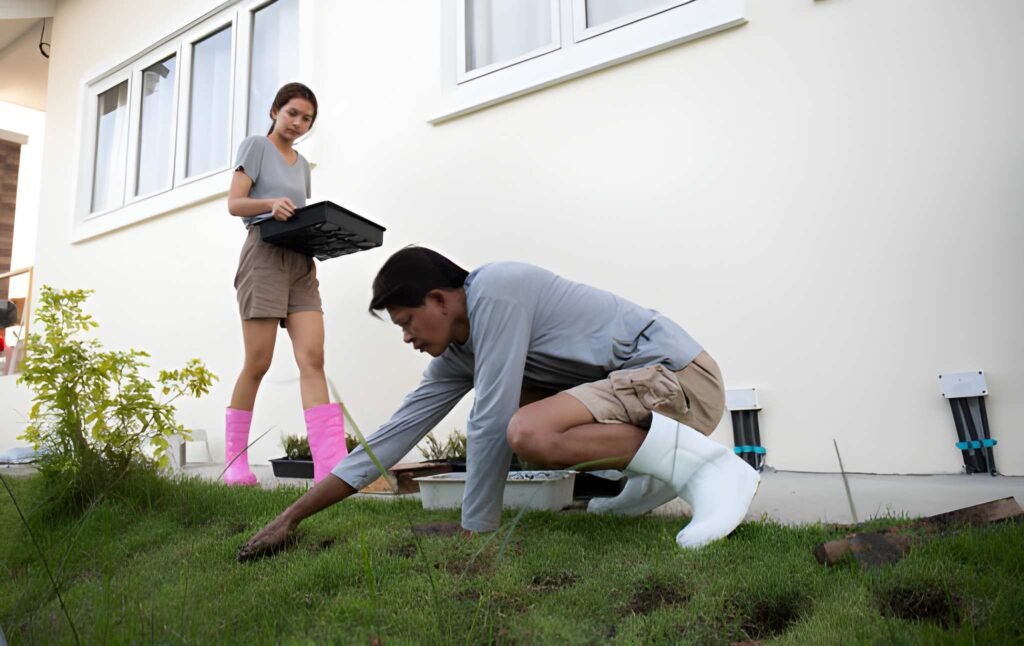
- Clean the Area: Use a hand rake to remove all dead grass, rocks, and debris. Scratch the surface of the soil vigorously to loosen it, which is vital for new root contact.
- Amend the Soil: Mix in a few inches of compost or rich topsoil, especially if the underlying soil is heavy clay.
- Apply Seed Heavily: Apply grass seed slightly heavier than recommended, as germination rates in patches can be inconsistent.
- Cover and Compact: Cover the seeds with a very thin layer (about 1/8 inch) of seed-starting mix or peat moss. Gently press the soil down with your foot or a roller to ensure maximum seed-to-soil contact.
Overseeding is the practice of spreading new grass seed directly over existing turf to improve density and color, and to introduce newer, stronger grass varieties.
- Mow the existing lawn short (1.5 inches).
- Aerate or deeply rake the entire area.
- Use a broadcast spreader to apply seed uniformly across the lawn.
- Apply a high-phosphorus (starter) fertilizer immediately after seeding.
- Keep the area consistently moist for 2-3 weeks.
Often appear as discolored circles or spots. They thrive in overly wet conditions and high humidity.
- Cure: Apply a targeted turf fungicide.
- Prevention: Water early in the morning so the grass can dry completely by nightfall. Improve air circulation.
- Key Tip: Never water after 4 PM, as prolonged moisture encourages fungal growth.
Weeds are opportunists, filling in where the lawn is weak. A thick, healthy lawn is the best defense.
- Dandelions: Use a post-emergent herbicide. For a few, hand-pull them ensuring the taproot is removed.
- Crabgrass: Use a pre-emergent herbicide in early spring (when soil temperature hits 55°F) to prevent seeds from germinating.
- Key Tip: Mow high (3-4 inches). Taller grass shades the soil, blocking the sunlight weeds need to grow.