The Hybrid Asset: Navigating the Real Estate of the Art House Car Repair Garage
Analyzing Zoning, Valuation, and the Experiential Shift in Commercial Property
Article Navigation
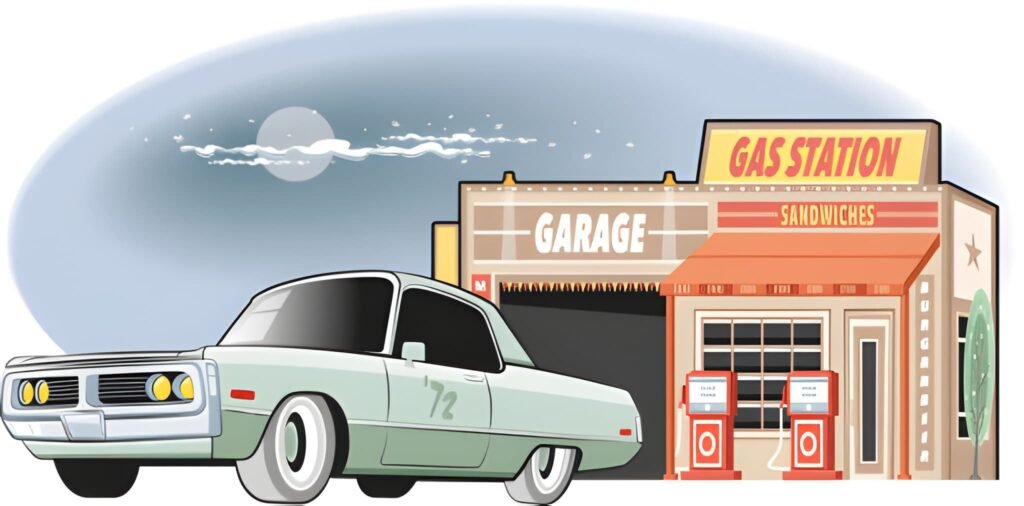
The Blended Asset: Defining the Art House Garage
The traditional car repair garage occupies a predictable position in the commercial real estate landscape—typically classified under industrial or automotive-specific zoning. It prioritizes function, access, and noise separation. The "Art House Car Repair Garage" concept, however, demands a re-evaluation of this conventional understanding. This is not simply a garage with paintings on the wall; it is a mixed-use property where the aesthetic, hospitality, and cultural elements drive customer acquisition and perceived service value, fundamentally altering its real estate profile.
As commercial real estate investors, we must recognize the primary function remains auto repair, dictating core necessities like large bay doors, lifts, specialized ventilation, and waste disposal. The "art house" component, whether it serves as a showroom for classic cars, a public gallery for local artists, or a premium client lounge, introduces retail and hospitality considerations. This blend moves the asset from a purely industrial valuation into the realm of experiential retail, affecting potential market rents, utility costs, and, crucially, zoning compliance.
The Experiential Mandate
Experiential properties command premium rents because they mitigate the risk of e-commerce competition. For the garage, this means clients who might otherwise choose mobile or chain services now choose the Art House Garage for the unique environment and associated community. This drives a higher Net Operating Income (NOI) potential, directly impacting asset valuation.
The Market Shift: Experiential Retail Meets Industrial Service
The economic forces driving this hybrid model are simple: service businesses must justify the physical visit. The US consumer market increasingly values narrative and immersion. While standard repair facilities compete solely on price and efficiency, the art house garage competes on experience, often justifying higher labor rates and service prices.
Targeting the Affluent Niche
This concept often caters to classic car owners, enthusiasts, or affluent urban demographics who perceive the art element as a sign of quality and attention to detail. The real estate selection must align with this demographic—proximal to high-income residential areas or established cultural districts, rather than deep industrial parks. This positioning is critical because it introduces pedestrian and vehicular traffic considerations not typically found in traditional garage locations.
Asset Profile Comparison
| Metric | Traditional Auto Repair | Art House Car Repair Garage |
|---|---|---|
| Primary Zoning Need | Light Industrial (M-1) or Automotive Service | Mixed-Use or Commercial/Industrial Hybrid |
| Value Driver | Efficiency, Bay Count, Low Operating Cost | Client Experience, Aesthetic Quality, Dual Revenue |
| Cap Rate Risk Profile | Higher (Tenant Risk, Single Use) | Potentially Lower (Diverse Revenue, Higher Barrier to Entry) |
| Foot Traffic Requirement | Low | Moderate to High (Gallery visitors, events) |
Site Selection and Zoning Realities
Zoning is the single most restrictive factor for this concept. Industrial service operations generate noise, require hazardous waste procedures, and deal with heavy machinery. Locating in a desirable retail or mixed-use zone (often the goal for the "Art House" appeal) typically prohibits these activities entirely or imposes severe limitations.
The Permitting Tightrope
A successful real estate strategy relies on finding a parcel in a transitional zone—often a Light Industrial (M-1) area bordering a Commercial (C) or Mixed-Use (MX) district. Here, the challenge shifts to securing a Special Use Permit (SUP) or Conditional Use Permit (CUP) that explicitly allows:
- Automotive Repair: Defined by noise and waste protocols.
- Assembly or Retail Uses: Defined by customer occupancy and non-repair sales (art, merchandise).
- Food/Beverage Service: If the lounge includes a café, this adds a further regulatory layer.
The investor or developer must present a detailed operational plan to local authorities, demonstrating noise mitigation (e.g., all grinding/welding inside soundproofed bays) and sufficient parking capacity to handle both service appointments and gallery visitors without spillover. The real value is locked in the approval of this permit.
Physical Space: The Dual-Purpose Build-Out
The design layout must be intentional and address liability. A hard visual and physical break is essential between the working industrial bays and the public gallery/lounge area. This separation is not just aesthetic; it is a safety and insurance requirement.
The Necessary Allocation of Square Footage
For a standard three-bay garage requiring roughly 4,000 square feet, the Art House model needs an additional 1,500 to 2,500 square feet dedicated solely to the public-facing area, bringing the typical footprint to 6,000+ square feet. This drives up the cost basis significantly.
Build-Out Scenario Analysis
1. Required Industrial Shell (55%)
This area demands high-capacity HVAC systems, oil/water separators, fire suppression tailored to flammable liquids, and reinforced concrete slabs for heavy loads. The real estate investment here focuses on durable, industrial-grade finishes and code compliance, optimizing for operational flow rather than aesthetics.
2. Public-Facing Gallery/Lounge (35%)
This space requires premium finishes, controlled lighting (crucial for art display), high-speed Wi-Fi, and ADA-compliant restrooms. From a valuation standpoint, this area is valued closer to prime retail or office space, significantly increasing the cost per square foot for the build-out.
3. Office and Storage/Transitional (10%)
This is the buffer zone. It needs climate control and secure storage for sensitive art inventory or high-value customer vehicles waiting for service. It maintains the separation between the messy operation and the pristine gallery.
Financial Modeling: Valuing the Hybrid Operation
Traditional commercial valuation for a garage relies on replacement cost and comparable sales of similar industrial facilities. The Art House model changes this by introducing a substantial, justifiable increase in the Net Operating Income (NOI), the central metric for income capitalization.
The Power of Dual Revenue Streams
The "art house" side—through gallery sales commissions, event rentals, or premium coffee/merchandise sales—must generate revenue that covers the added cost of the public space. If the gallery generates $40,000 per year in secondary income (after operating expenses), this revenue directly boosts the property’s value.
Valuation Impact Calculation
Scenario: Comparing Traditional vs. Hybrid Valuation
Assumptions: Cap Rate = 8% (Standard for specialized service asset)
Traditional Garage NOI:
Annual Revenue (Service) - Operating Expenses = $100,000
Traditional Value: $100,000 / 0.08 = $1,250,000
Art House Garage NOI:
Annual Revenue (Service) + Annual Revenue (Gallery) - Operating Expenses
($100,000 + $40,000) - $0 (assuming no extra Opex for simplicity) = $140,000
Hybrid Value: $140,000 / 0.08 = $1,750,000
The incremental $40,000 in gallery revenue justifies a $500,000 increase in the asset's capitalized value. This premium helps offset the higher initial build-out and site acquisition costs.
Lender Perception and Debt Financing
Lenders often categorize these properties based on their highest-risk component, which is typically the industrial use. However, a well-executed business plan showing diversified income streams and a strong commitment to service excellence can secure better debt terms. The presence of the "art house" component signals a more stable, higher-end client base and a business less susceptible to cyclical economic downturns affecting lower-margin service shops.
Execution and Long-Term Asset Stability
The long-term success of the Art House Garage as a real estate asset depends entirely on the operator's ability to maintain the integrity of both sides of the business. Any failure in the industrial operation, such as environmental violations or excessive noise complaints, compromises the commercial appeal. Conversely, a failure to maintain the gallery's cultural relevance erodes the premium pricing power of the service business.
Exit Strategy Implications
The blended nature affects the exit strategy. A traditional buyer pool for a garage asset might struggle to understand the premium valuation. Therefore, the most likely buyer is either an experienced operator looking for a turnkey experiential business or a sophisticated real estate fund specializing in mixed-use or niche retail. The property, if successfully operated, becomes a specialized asset, commanding a higher price per square foot than a simple M-1 warehouse, but also requiring a narrower set of qualified purchasers. This trade-off—higher value, lower liquidity—is a critical factor for any investor entering this space.
The Art House Car Repair Garage is a testament to the fact that specialization and experience now define value in commercial real estate. When executed correctly, the asset transcends its industrial classification, becoming a stable, high-yield investment rooted in community engagement and premium service.