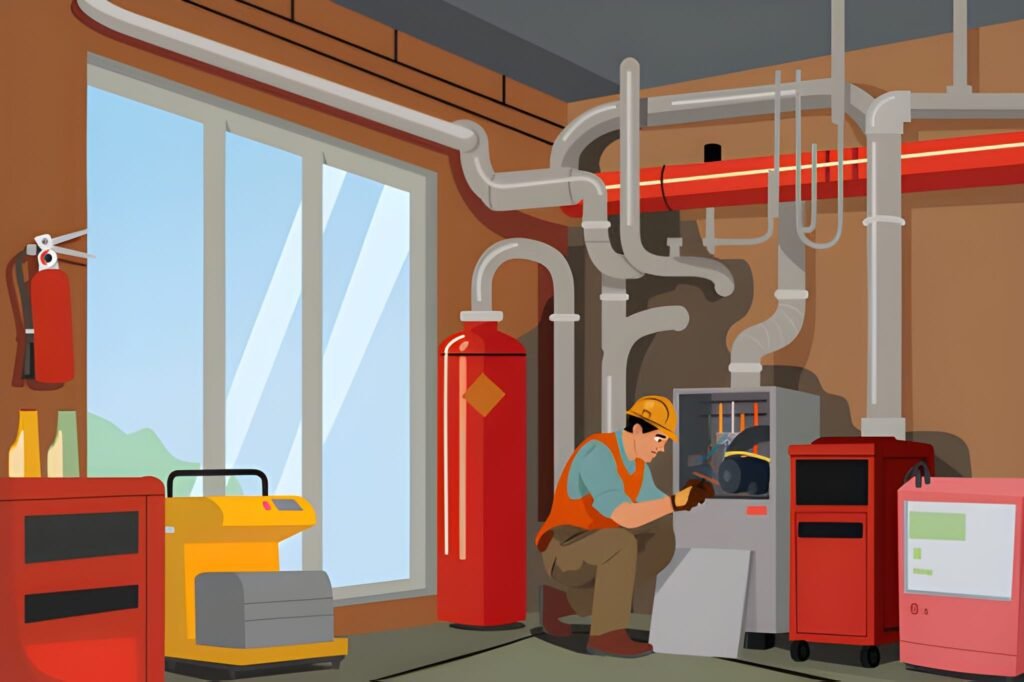
Affordable Furnace Repair: Budget Troubleshooting for Homeowners
A real estate expert's guide to low-cost diagnostics and smart spending on professional HVAC service to protect your home value.
Table of Contents
Furnace failure in the depths of winter represents a sudden, stressful, and often costly threat to a home's safety and value. The homeowner's primary goal is to restore heat affordably and quickly. Fortunately, many common furnace issues stem from simple maintenance neglect or minor component failures that do not require an expensive emergency service call. By executing effective triage, homeowners can isolate the problem, potentially fix it for free, or ensure they pay only for the necessary professional repair, protecting their budget and their investment.
1. DIY Triage: Free Fixes Before Calling a Technician
The vast majority of "no heat" calls result in a simple fix that costs the homeowner only the price of the diagnostic visit. By running through this checklist, you can resolve the issue yourself and save the service fee.
1.1. Thermostat and Power Checks
Step-by-Step Power Check
- Confirm Thermostat: Ensure the thermostat is set to "Heat," the fan is set to "Auto" (not "On"), and the temperature setting is at least five degrees higher than the current room temperature. Check batteries if it is a digital unit.
- Check the Furnace Switch: Locate the light switch near the furnace (often looks like a regular wall switch). It must be set to the "On" position. This switch is sometimes accidentally flipped off by children or during cleaning.
- Reset the Breaker: Check your main electrical panel. If the breaker controlling the furnace is tripped, reset it once. If it immediately trips again, a serious electrical fault exists, and you must call a professional.
1.2. The Air Flow Problem (Filters)
A furnace relies on unimpeded air movement to operate safely and efficiently. The most common cause of furnace shutdown is a clogged air filter.
- Safety Shutdown: A dirty filter restricts air flow across the heat exchanger. The exchanger overheats, causing the high-limit switch—a critical safety component—to trip, shutting down the burners.
- Immediate Action: Pull out the old filter. If it is visibly coated in dust and debris, replace it immediately. Running the furnace momentarily without the filter can help diagnose if the lack of air flow was the problem (do not run it long without a filter). A new filter is the highest ROI repair you can make.
2. Low-Cost Repairs You Can Handle Affordably
If the basic checks fail, the problem often lies in a few affordable, replaceable parts. These repairs usually require less than $50 in parts and can often be completed by a handy homeowner. Always shut off power at the breaker before opening the unit.
2.1. Igniter and Flame Sensor Cleaning
Modern gas furnaces use electronic ignition (hot surface igniters or pilot lights) and flame sensors to confirm a flame is present before allowing gas to flow. If the furnace attempts to ignite but shuts off shortly after, the flame sensor is likely the culprit.
Cleaning the Flame Sensor
The flame sensor is a thin metal rod located in the flame's path. Soot and carbon buildup act as insulators, preventing the sensor from detecting the flame's heat properly. Remove the sensor and gently clean the metal rod using only a **fine-grit emery board or fine steel wool**. Reinstall the sensor. This simple cleaning often restores full ignition functionality.
2.2. Condensate Drain Clogs (High-Efficiency Units)
High-efficiency (condensing) furnaces produce water as a byproduct. If the condensate drain line clogs, the overflow often trips a safety sensor, shutting down the burners.
- Symptom: Water is pooling near the furnace, or the furnace cycles but produces no heat.
- Repair Action: Flush the drain line and trap (a small U-shaped pipe) with a **solution of vinegar or a specialized algaecide solution**. Ensure the drain line is clear and water flows freely into the floor drain or pump. This is a common and easy fix.
3. Smart Spending: Strategies for Affordable Professional Service
When the problem is electrical (circuit board, motor) or involves gas lines, a professional is mandatory. Even then, smart preparation minimizes your financial exposure.
3.1. Vetting Technicians for Value
The variance in technician pricing for parts and labor is substantial. Protect your investment by selecting the right partner.
- Get an Upfront Diagnostic Fee: Ask for the exact cost of the initial visit and diagnostic, and confirm if that fee is waived or applied to the cost of the repair.
- Quote Line Items: Require the technician to provide a line-item quote detailing the cost of the part (easily verified online) and the labor time and cost. Do not accept lump-sum pricing for major components.
- Service Contracts: Consider enrolling in an annual maintenance contract during the off-season. These contracts often include a discount on repairs, a discounted service fee, and prioritized scheduling, saving money over time.
Expert Cost Comparison: Blower Motor Replacement
A new furnace blower motor costs approximately $200-$400 at retail. Installation typically requires two to four hours of labor. If a technician quotes you $1,200 for a blower motor replacement, you are paying $800 to $1,000 for labor and markup. Knowing the retail part cost gives you leverage in negotiating or seeking a second opinion.
4. Financial Analysis: Repair vs. Replacement Decision
The key financial rule in furnace repair is the "5,000 Rule" (or "2,000 Rule" for older furnaces).
The Financial Threshold
To assess the value of a major repair, multiply the furnace's age by the cost of the repair. If the resulting number exceeds 5,000 (or 2,000 for units 20 years or older), replacement offers a better return on investment.
Example: A 15-year-old furnace needs a $500 repair. (15 years x $500 = 7,500). Since 7,500 is over 5,000, replacement is the more prudent long-term financial decision, as the old unit is likely to incur additional costs soon. New, high-efficiency furnaces also dramatically improve the home's operational costs and marketability.
Expert Summary: Proactivity Pays
Affordable furnace repair is achieved through knowledge, not luck. By performing simple maintenance (filter replacement) and budget-friendly diagnostics (power and sensor checks), homeowners preempt up to 75% of potential service calls. When professional help is necessary, leverage transparent pricing and smart contractor vetting to ensure the repair cost justifies the long-term health of your home asset.