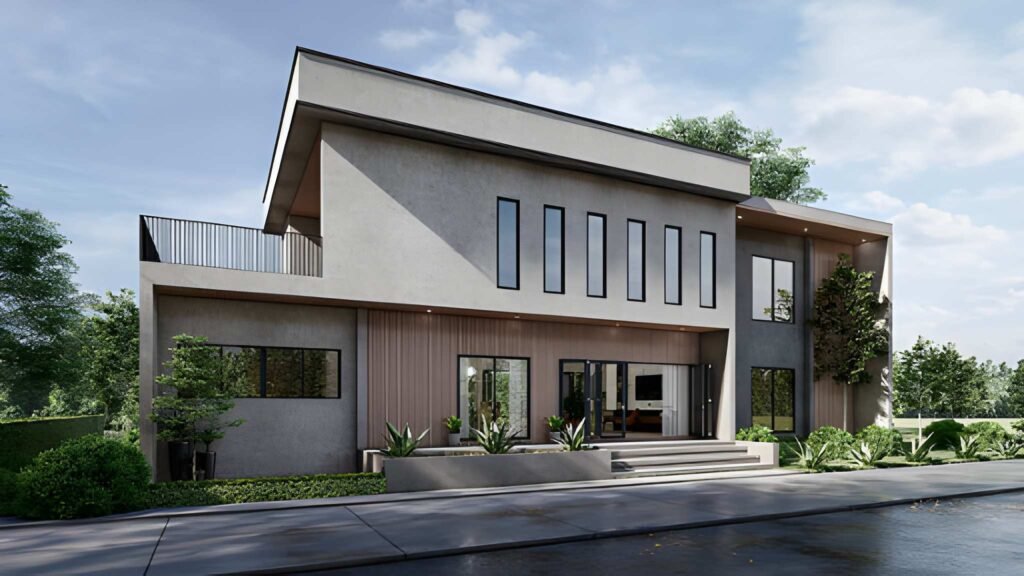
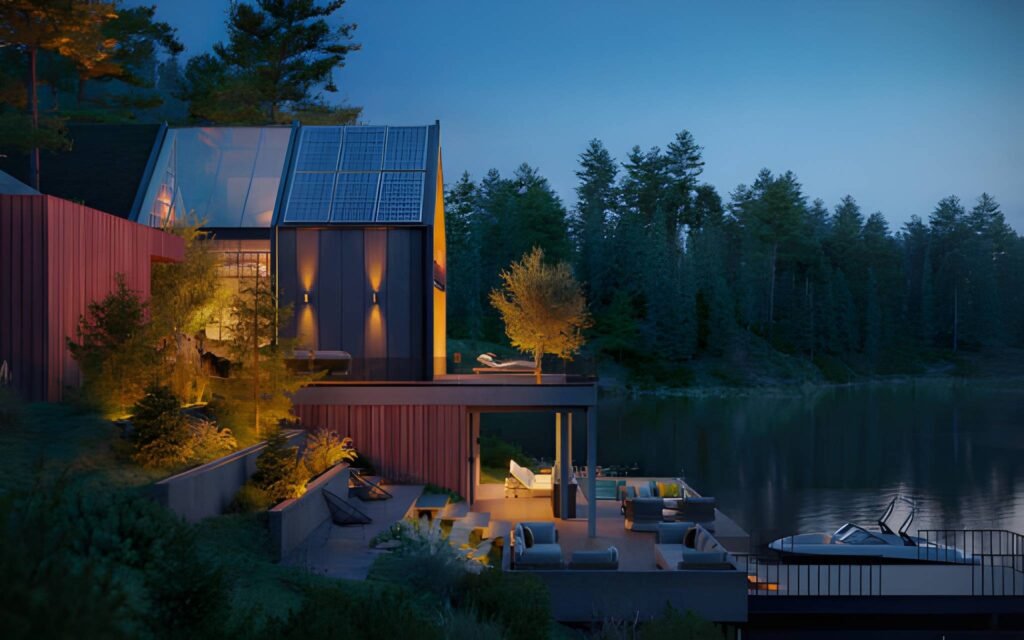
The image of an architect has long been fixed in the popular imagination: the solitary genius, sketching bold, iconic forms against a blank sky. While the pursuit of beauty remains, a new and more urgent paradigm has taken root within the profession. The eco-friendly home architect is a different kind of visionary. They are part scientist, part ecologist, and part economist, working not against nature, but in deep concert with it. Their canvas is not empty; it is a specific piece of land with its own microclimate, solar path, hydrology, and ecosystem. Their goal is not merely to place a structure upon this land, but to weave the home into the very fabric of the site, creating a living environment that gives back more than it takes.
This is a fundamental shift from architecture as object-making to architecture as system-building. These architects design not just spaces, but performance. They are tasked with orchestrating a complex interplay of energy flows, material lifecycles, and human well-being. The result is a home that is less a machine for living and more a living organism in its own right—responsive, resilient, and regenerative.
The Integrated Design Process: The Core Methodology
The work of an eco-friendly architect begins long before the first line is drawn. It is rooted in a collaborative, holistic methodology that stands in stark contrast to the conventional linear design-bid-build model.
The Charrette and The Whole-Systems Approach
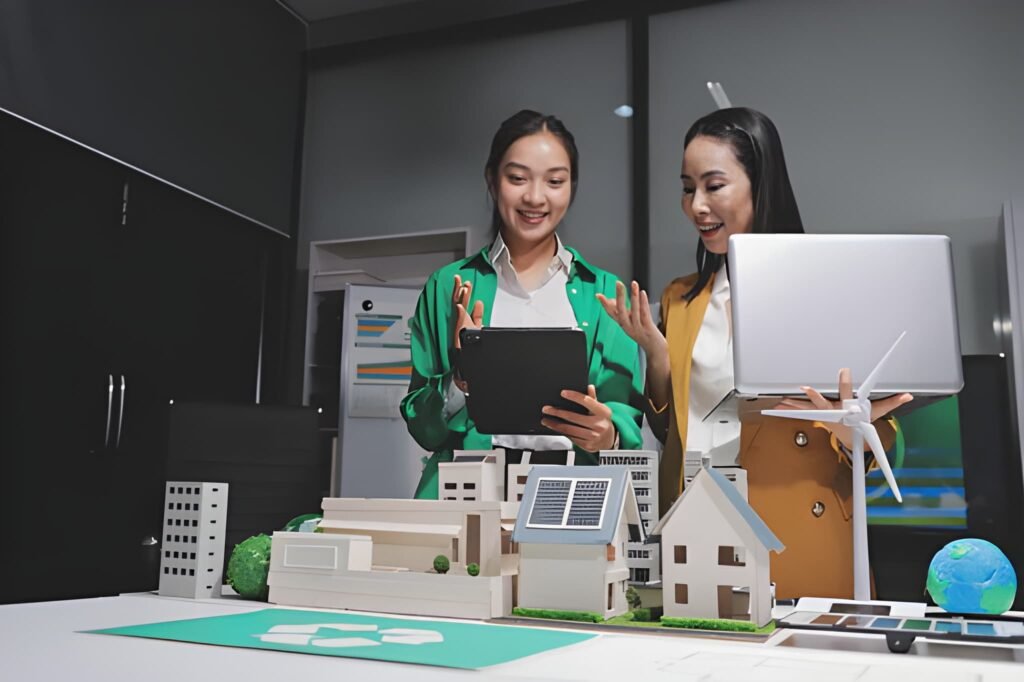
The process often starts with an intensive collaborative workshop, or charrette, that brings together the architect, the future homeowners, engineers, landscape designers, and often the builder from the very beginning. This team tackles the project not as a collection of disconnected systems, but as a single, integrated whole. They ask foundational questions: How can the building’s orientation harvest the winter sun and deflect the summer heat? How can the landscaping manage stormwater on-site? How can the structural system also serve as the finished interior aesthetic? This upfront, multidisciplinary planning prevents the costly and inefficient retrofitting of green features later on. It ensures that sustainability is not an add-on, but the core premise of the design.
Site-Specificity as a First Principle
A cookie-cutter approach is anathema to this philosophy. The architect becomes a student of the site. They conduct a detailed analysis that goes far beyond property lines. They map the solar path throughout the year to optimize passive solar gain. They study prevailing winds for natural ventilation strategies. They assess the topography and existing vegetation to minimize disruption and leverage natural shading. A home designed for a shaded, wooded lot in the Pacific Northwest will share few similarities with one designed for a sun-baked desert site in Arizona, even if both aim for the same net-zero energy goal. The architecture emerges directly from this dialogue with the place.
Building Performance Modeling
Gone are the days of guesswork in energy performance. Eco-friendly architects use sophisticated software to create digital energy models of the home during the design phase. They can simulate how the building will perform hour-by-hour, across different seasons, testing variables like window placement, insulation levels, and overhang depths. This allows them to engineer a building envelope of exacting precision, ensuring comfort and minimizing mechanical system loads before a single foundation is poured. This data-driven approach replaces assumptions with certainty, guaranteeing the home’s environmental performance.
The Architect’s Palette: Beyond Aesthetics to Performance
For the eco-friendly architect, every design decision—from the macro scale of the floor plan to the micro detail of a window frame—is evaluated through a multi-faceted lens of performance, health, and ecology.
The Mastery of the Building Envelope
The primary tool in their kit is the building envelope—the barrier between the interior and exterior. This is where the greatest battles for efficiency are won or lost. These architects specify and detail envelopes that are supremely insulated, intensely airtight, and strategically vapor-open.
They are adept with advanced systems like:
- Double-Stud Walls: Creating thick walls filled with dense-pack cellulose for a high R-value and reduced thermal bridging.
- Structural Insulated Panils (SIPS): Utilizing these factory-made panels for a fast, ultra-tight, and highly insulated shell.
- Exterior Continuous Insulation: Wrapping the structure in a layer of rigid insulation to eliminate the thermal bridges created by wood studs.
This focus on the envelope is the cornerstone of passive design, reducing the home’s energy appetite to a minimum.
The Strategic Selection of Materials
An eco-friendly architect acts as a forensic investigator of material lifecycles. They ask not just “What does it look like?” but “Where does it come from? How is it made? What does it off-gas? And where does it go at the end of its life?”
Their specifications frequently include:
- Bio-Based Materials: Cork, wool insulation, and wood fiber board, which are renewable and have low embodied energy.
- Salvaged and Reclaimed Materials: Giving a second life to lumber, brick, and metal, thereby eliminating the embodied carbon of new production.
- Low-Carbon Materials: Avoiding carbon-intensive products like concrete where possible, or specifying new innovative mixes like hempcrete or low-carbon concrete.
- Healthy Materials: Insisting on paints, adhesives, and sealants with No- or Low-VOC content to safeguard indoor air quality.
The Integration of Active and Passive Systems
The architect’s role is to seamlessly blend passive strategies with active technologies.
- Passive Solar: Designing the home’s form and glazing to capture, store, and distribute solar energy as heat in the winter, while using overhangs to block it in the summer.
- Natural Ventilation: Crafting the floor plan and window placements to facilitate cross-ventilation, cooling the home without mechanical assistance.
- Daylighting: Designing the home to be flooded with natural light, reducing the need for electric lighting during the day.
- Renewable Energy: Thoughtfully integrating technologies like solar panels (PV) and solar thermal systems into the architectural design, treating them as aesthetic elements rather than utilitarian afterthoughts.
| Traditional Architect Focus | Eco-Friendly Architect Focus |
|---|---|
| Primary Driver | Aesthetics, Square Footage, Client Program |
| Design Process | Often Linear; Architect designs, then engineers and builder are brought in. |
| Material Selection | Based on Cost, Availability, and Aesthetic. |
| Relationship to Site | The site is a setting for the building. |
| Success Metrics | Visual appeal, adherence to budget, client satisfaction. |
The Client’s Journey: A Collaborative Partnership
Working with an eco-friendly architect is a different experience. It requires a client who is not just a consumer, but a participant in a shared mission.
Defining Values Beyond the Brief
The initial conversations delve deeper than the number of bedrooms and bathrooms. The architect will ask about your lifestyle, your values, your relationship to energy and consumption, and your long-term vision for the home. Are you seeking resilience from power outages? A connection to the outdoors? A minimal maintenance burden? A legacy of health for your family? These values become the guiding principles for every technical decision that follows.
Navigating Cost and Value
These architects are upfront about the concept of “Front-Loaded Cost.” An integrated, high-performance home often requires a greater investment in design and in the building envelope itself. They reframe this not as an extra cost, but as a transfer of investment from long-term operational expenses (utility bills, replacements) to the initial capital cost. They provide detailed life-cycle cost analyses to demonstrate how a more efficient HVAC system, a better-insulated shell, and durable materials will pay dividends for decades. The goal is the lowest total cost of ownership, not the lowest initial bid.
The Search for the Right Professional
Finding a true practitioner requires looking beyond a portfolio of beautiful images. Key indicators include:
- Credentials: Look for architects who are LEED Accredited Professionals (LEED AP), or have certifications from the Passive House Institute (CPHC), or the Living Future Institute.
- Portfolio Depth: Seek out projects with published performance data—actual energy use intensity numbers, HERS scores, or net-zero certifications.
- Philosophy: In initial interviews, listen for a focus on site analysis, building science, and a collaborative process. Ask them to explain how they would approach your specific site.
The eco-friendly home architect is more than a designer; they are a steward of the future. They possess the rare ability to translate the abstract goals of sustainability into the tangible reality of a home—a home that sits lightly on the land, breathes clean air, bathes in natural light, and generates its own power. They prove that the most beautiful home is not the one that makes the boldest stylistic statement, but the one that exists in quiet, intelligent harmony with its environment. They are designing a new American dream, one that measures wealth not in square footage, but in well-being, resilience, and a legacy of responsibility.