
The quest for home comfort during the winter months carries a significant environmental and financial cost. The traditional reliance on fossil-fuel furnaces or inefficient electric resistance heating represents an outdated model, one that strains both household budgets and the planet’s resources. The emergence of a new generation of eco heaters offers a compelling alternative, moving the conversation from mere warmth to one of intelligent energy management, carbon reduction, and holistic home performance. These systems are not simple replacements; they represent a fundamental shift in the technology and philosophy of home heating. Understanding their operation, their ideal applications, and their integration into a broader home ecosystem is essential for any homeowner seeking to modernize their comfort system in an age of climate consciousness and energy volatility.
The foundational principle of eco-friendly heating is efficiency—the conversion of a unit of energy into usable heat. The gold standard for this is the heat pump, a technology that has undergone revolutionary improvements in performance and cold-weather capability. Unlike a furnace, which burns fuel to create heat, a heat pump is a device that moves heat. In its most common form, an air-source heat pump, it functions like a reversible air conditioner. Even when the outdoor air feels cold to you, it still contains thermal energy. The heat pump uses a refrigerant cycle to extract this low-grade energy from the outside air, compresses it to a higher temperature, and then releases that concentrated heat inside the home. This process is remarkably efficient. For every single unit of electrical energy it consumes, a modern cold-climate heat pump can move two to four units of heat energy from the outside in. This ratio is measured as the Coefficient of Performance (COP); a COP of 3.5, for example, means 3.5 units of heat output for every 1 unit of electricity input, representing 350% efficiency. This stands in stark contrast to a standard electric furnace or baseboard heater, which can only achieve 100% efficiency at best, converting electricity directly to heat with no amplification.
The technological leap in cold-climate air-source heat pumps has been a game-changer for colder regions of the United States. Earlier models lost efficiency and capacity as temperatures dropped into the teens and single digits. The latest generation, however, incorporates variable-speed compressors and advanced refrigerants that allow them to maintain a high COP and provide sufficient heat even when outdoor temperatures fall well below zero Fahrenheit. This makes them a viable primary heating source for a vast majority of American homes, from the temperate South to the chilly Northeast and Midwest. For the ultimate in ground-level efficiency, the geothermal heat pump, or ground-source heat pump, leverages the stable, year-round temperature of the earth just a few feet below the surface. By circulating a fluid through underground loops, it exchanges heat with the ground. While the installation involves significant upfront excavation or drilling costs, the system boasts exceptional COPs of 4 to 5 and provides unparalleled reliability and low operating costs for decades.
Supplemental and Zonal Heating Solutions
While whole-home heat pumps represent the comprehensive solution, there is a vital role for supplemental eco heaters that provide targeted, zonal warmth. These solutions are ideal for smaller spaces, poorly insulated rooms, or for reducing the thermostat on a central system while heating only the occupied spaces.
The classic wood-burning stove has been reimagined for the modern eco-conscious homeowner. The new standard is the EPA-certified wood stove or pellet stove. These are not the smoky, inefficient fireplaces of the past. Through advanced combustion engineering, they burn wood so completely that they emit up to 90% less particulate matter. They achieve this high efficiency and low pollution by using a baffle system to create a secondary burn of gases and particulates that would otherwise go up the chimney as smoke. For a carbon-neutral heating source, provided the wood is sourced from sustainably managed local forests, a modern EPA stove is a powerful and visceral way to heat a space. Pellet stoves offer even greater convenience, burning manufactured wood pellets made from compressed sawdust, a byproduct of lumber mills. They feature automated fuel feeds and thermostatic control, providing steady, consistent heat with very little hands-on management.
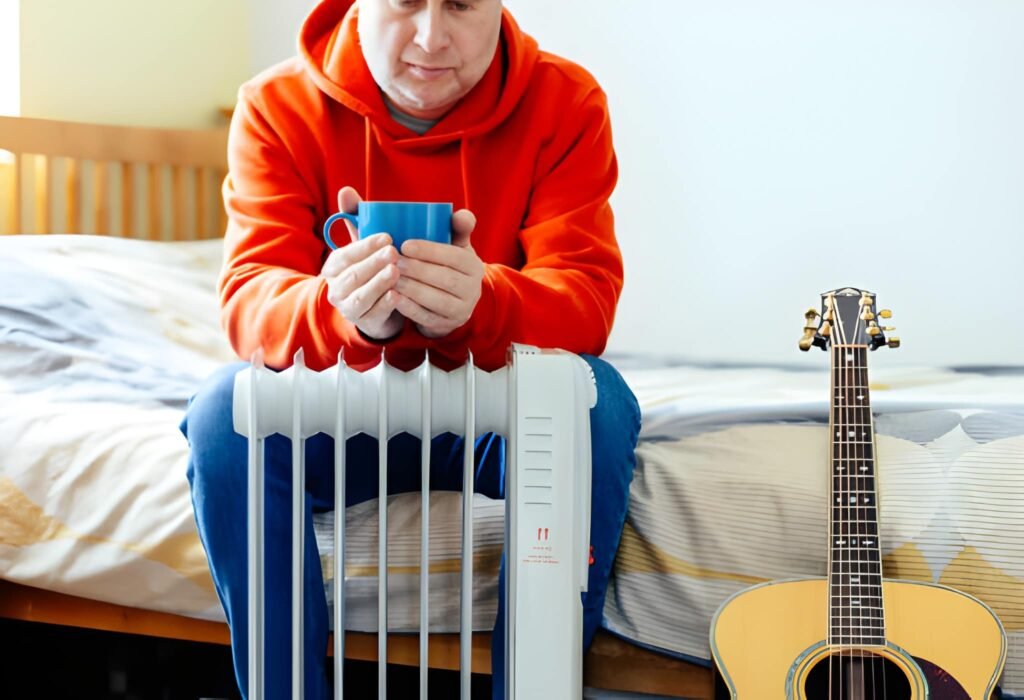
For those seeking pure electric solutions for small areas, two technologies stand apart from the wasteful, glowing-coil space heaters. Infrared heaters work by emitting a specific wavelength of light that heats objects and people directly, much like the sun warms your skin on a cold day. They do not primarily heat the air, which means the warmth is felt immediately upon entering the beam of the heater, and no energy is wasted heating empty space or air that escapes through drafts. This makes them exceptionally efficient for spot heating. The other advanced option is an oil-filled radiator. These heaters use electricity to heat a reservoir of diathermic oil, which then radiates heat steadily into the room. The key advantage is thermal retention; even after the heater cycles off, the hot oil continues to radiate warmth for a considerable time. This smooth, convective heat is comfortable and avoids the on-off cycling and dry air associated with many fan-forced heaters.
Table: A Comparative Guide to Eco Home Heating Options
| Heater Type | Core Technology | Primary Best Use | Key Considerations |
|---|---|---|---|
| Air-Source Heat Pump | Moves ambient heat from outside air to inside. | Whole-home primary heating and cooling in most US climates. | High upfront cost, requires professional installation. Efficiency drops in extreme cold (though less so in new models). |
| Geothermal Heat Pump | Exchanges heat with the stable temperature of the earth. | Ultimate whole-home efficiency for new builds or retrofits with suitable land. | Very high installation cost, but lowest operating cost. Requires significant excavation. |
| EPA-Certified Wood Stove | High-efficiency, secondary combustion of cordwood. | Supplemental, carbon-neutral heating in a main living area. | Requires a dry, seasoned wood supply and manual loading/ash cleaning. |
| Pellet Stove | Automated burn of compressed wood pellets. | Primary or supplemental heating with greater convenience than wood stoves. | Requires electricity to run fans and auger. Dependent on pellet availability. |
| Infrared Heater | Heats objects and people directly via electromagnetic radiation. | Energy-efficient spot heating for a home office, bathroom, or workshop. | Heat is directional and not felt outside its immediate beam. |
| Oil-Filled Radiator | Heats oil which then radiates warmth convectively. | Quiet, sustained background heat for a bedroom or small, enclosed room. | Slower to heat up than fan-forced models, but heat is longer-lasting. |
Integration and the Hierarchy of Efficiency
The selection of an eco heater cannot be made in a vacuum. Its performance is inextricably linked to the home it is meant to heat. The single most important factor in choosing any heating system is the quality of the building envelope. Investing in a state-of-the-art, cold-climate heat pump is a poor financial and environmental decision if the home is leaky and under-insulated. The heated air will simply escape, forcing the system to work harder and longer. The rational sequence, the hierarchy of efficiency, is non-negotiable: first, conduct a professional energy audit to identify leaks and insulation gaps. Second, air seal and insulate the attic, walls, and floors to a high standard. Third, right-size and install the high-efficiency heating system. This order ensures the new system is as small and efficient as possible, saving thousands of dollars on both the equipment cost and its lifelong operation.
Furthermore, the financial landscape for these upgrades has never been more favorable. The federal Inflation Reduction Act (IRA) offers significant incentives, including tax credits for a portion of the cost of qualifying heat pumps and biomass stoves. More impactful are the forthcoming IRA rebates, which will provide direct, point-of-sale discounts for low- and middle-income households to install heat pumps and undertake envelope upgrades. These incentives dramatically improve the return on investment and make the transition to modern, clean heating technology accessible to a much wider population.
The modern hearth is no longer a literal fire at the center of the home. It is an intelligent, efficient, and responsive system that provides comfort without guilt. Whether it is the quiet hum of a heat pump efficiently transferring ambient energy, the radiant warmth of a high-tech wood stove, or the targeted beam of an infrared panel, the new era of eco heaters offers a path to warmth that aligns with a vision of a sustainable, resilient, and economically sound home. It is a shift from simply burning fuel to managing energy with sophistication, a transition that benefits both the individual homeowner and the collective environment.