The American coastline has long been a theater for architectural expression, from the shingled cottages of New England to the stilted houses of the Carolinas. These structures often speak a language of nostalgia or brute-force resistance against the elements. On a prominent site along the Lake Erie shore near Cleveland, a new development, Clifton Pointe, proposes a different dialect altogether. It is a language of integration, not imposition; of performance, not just presence. Clifton Pointe is not merely a collection of houses. It is a statement—a carefully orchestrated argument for what twenty-first-century luxury coastal living can and should be: a seamless blend of profound environmental responsibility, architectural audacity, and resilient, enduring value.
The story of Clifton Pointe begins not with a blueprint, but with a reclamation. The site itself was a scarred, industrial parcel, a forgotten remnant of the city’s manufacturing past. The development’s first and most profound ecological act was the remediation of this brownfield. This was not a matter of simply building on degraded land, but of healing it. The process involved extracting contaminated soils, managing stormwater runoff, and preparing the ground for a new, restorative purpose. This foundational commitment sets the tone for everything that follows. These homes are not placed upon a pristine landscape; they are participants in its rehabilitation.
The Architecture of Integration: Where Design Meets Performance
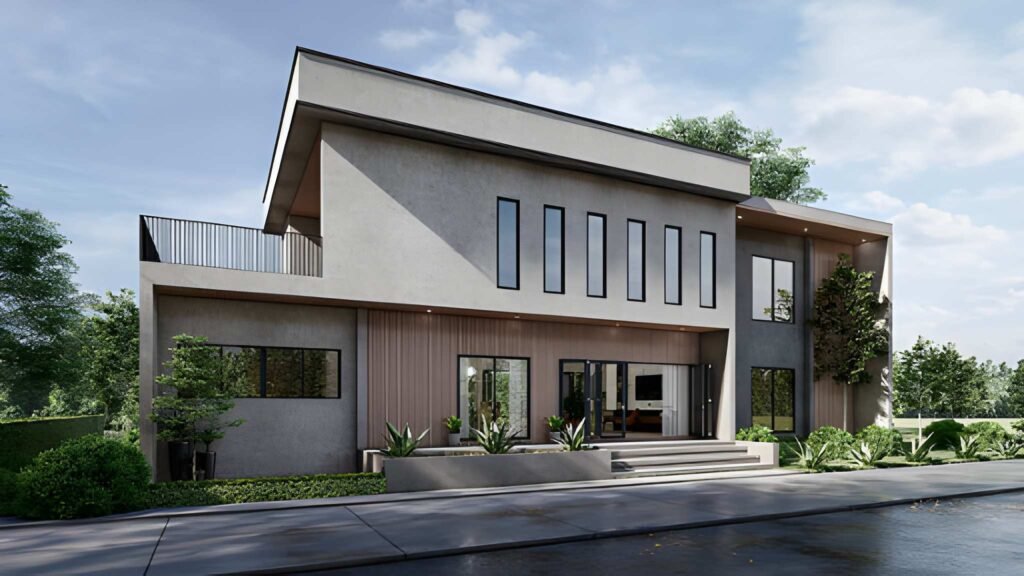
The most immediate striking aspect of Clifton Pointe is its architecture. The homes, designed by the Cleveland firm Doty & Miller, reject the faux-historical pastiche common in many luxury developments. Instead, they embrace a modern, almost elemental aesthetic. Sharp angles, flat roofs, and expansive glass walls are not mere stylistic choices; they are functional decisions driven by the site’s specific solar orientation and relationship to the lake.
The orientation of each home is a calculated act of energy management. Large glazing surfaces are strategically placed to the south, capturing the low-angled winter sun for passive solar heat gain. Deep overhangs, a hallmark of the design, are precisely calculated to shade these same windows during the high summer sun, preventing unwanted solar heat gain and reducing cooling loads. This is not a generic design replicated across lots; it is a site-specific response, a form of architectural tailoring that optimizes the free energy provided by the sun.
The materials palette furthers this narrative of performance and permanence. Standing-seam metal roofs, fiber-cement panels, and native stone are not just low-maintenance; they are durable, resilient, and often sourced with recycled content. They are selected to withstand the harsh microclimate of the lakefront—its moisture, its winds, its freeze-thaw cycles—while aging gracefully. The luxury here is found in the freedom from constant repainting and repair, a quiet value that accrues over decades.
The Unseen Engine: A Deep Dive into the Building Science
The true genius of Clifton Pointe lies beneath the surface, in the hidden systems that define its performance. This is where the project moves from being merely “green” to being a prototype of high-performance building.
The Structural Insulated Panel (SIPS) Envelope
The primary building block for these homes is the Structural Insulated Panel (SIPS). This system involves factory-engineered panels with a thick core of rigid foam insulation laminated between two structural skins, typically Oriented Strand Board (OSB). The advantages of this method are transformative.
First, it creates a building envelope of exceptional continuity. Unlike conventional stick framing, which is riddled with thermal bridges—wood studs that conduct heat outward—the SIPS wall is a monolithic blanket of insulation. There are no weak points. This results in a whole-wall R-value that is consistently high, often R-30 or greater, dramatically outperforming a standard built wall of the same thickness. The result is a home that maintains a stable, uniform temperature with minimal mechanical intervention.
Second, the SIPS system creates an exceptionally airtight building. Air leakage is the hidden energy vampire in most homes, but the precision manufacturing of SIPS and their large-panel assembly create a nearly seamless barrier. This airtightness is the critical precondition for efficiency and indoor air quality. It allows for the precise calculation of heating and cooling loads and mandates the use of a balanced mechanical ventilation system.
The Mechanical Heart: Ventilation, Geothermal, and Beyond
An airtight, super-insulated home cannot rely on random leaks for fresh air. Instead, Clifton Pointe homes employ Energy Recovery Ventilators (ERVs) or Heat Recovery Ventilators (HRVs). These systems continuously exhaust stale, moist indoor air while bringing in fresh, filtered outdoor air. In the process, the heat and humidity from the outgoing air are transferred to the incoming air, recovering up to 80% of the energy that would otherwise be lost. This ensures a constant supply of fresh air without the energy penalty, a cornerstone of healthy and efficient living.
For space conditioning, many of the homes utilize geothermal heat pump systems. These systems leverage the earth’s stable underground temperature to provide highly efficient heating and cooling. By circulating a fluid through underground loops, a geothermal heat pump can extract heat from the ground in winter and reject heat into it in summer. This technology is among the most efficient available, often delivering four units of energy for every one unit of electricity consumed. While the upfront cost is significant, its integration at Clifton Pointe is a testament to a long-term view of value and operational cost savings.
| System/Feature | Clifton Pointe Application | Luxury Benefit & Performance Impact |
|---|---|---|
| Building Envelope | Structural Insulated Panels (SIPS) | Superior comfort (no drafts, uniform temps), dramatic noise reduction, and drastically lower heating/cooling costs. |
| Air Sealing | Airtight SIPS construction with specialized tapes and sealants. | Eliminates dust and pollen infiltration, allows for precise control of indoor air quality and humidity. |
| Ventilation | Energy Recovery Ventilator (ERV) | Continuous fresh, filtered air without energy waste; critical for a healthy, airtight home. |
| Heating/Cooling | Geothermal Heat Pumps | Ultra-low operating costs, quiet operation, no external condenser units, and high reliability. |
| Water Heating | Supplemental solar thermal or heat pump water heaters | Reduces a major household energy load, leveraging free solar energy or high-efficiency heat transfer. |
| Stormwater Management | Permeable pavers, rain gardens, and on-site retention. | Protects Lake Erie water quality, reduces erosion, and manages runoff as a resource, not a waste product. |
The Socioeconomics of a New Luxury
Clifton Pointe redefines coastal luxury for a new era. The traditional markers—marble countertops, elaborate millwork—are present, but they are secondary to the core value proposition. Here, luxury is quantified in decibels of silence, parts per million of indoor pollutants, and dollars saved on utility bills.
The Calculus of Value
The initial price point of a Clifton Pointe home is a reflection of its advanced systems: the SIPS envelope, the geothermal well fields, the high-performance windows. This is not a cost to be compared with a standard production home; it is an investment in a different asset class. The homeowner is purchasing a finished structure and a decades-long promise of minimized operational expenses. In an age of energy volatility, this is a form of financial resilience. The mortgage may be higher, but the total cost of ownership—mortgage plus utilities plus maintenance—can be competitive or even superior over a 15-to-30-year horizon.
Furthermore, this type of home appeals to a growing segment of the luxury market that defines status not through square footage alone, but through intelligence and responsibility. Ownership becomes a statement of values, a demonstration that one can live with great comfort while placing a lighter hand on the planet. This “sustainability premium” is becoming increasingly legible in real estate markets, particularly among younger, affluent buyers.
Resilience and Climate Adaptation
Positioned on a Great Lakes coastline, these homes are also case studies in climate resilience. The super-insulated envelope provides a passive survivability benefit. In a power outage during a heatwave or a deep freeze, a Clifton Pointe home will maintain a safe indoor temperature for days, not hours. The durable materials are selected to withstand severe weather events. This is a form of luxury that is deeply pragmatic—the peace of mind that comes from knowing your home is a fortress of comfort and safety in the face of an increasingly unstable climate.
Clifton Pointe stands as a powerful rebuttal to the notion that environmental responsibility requires sacrifice. It argues instead for a higher level of design intelligence and execution. It proves that the most luxurious home is not the one with the most ornate details, but the one that performs the best—the one that is quiet, healthy, efficient, and resilient. It is a community built not just on a piece of land, but on an idea: that the future of American coastal living lies not in fighting the elements, but in working with them, in creating homes that are as intelligent and adaptive as the landscape they inhabit.