
The concept of the resort home is evolving. No longer defined solely by opulent finishes and manicured golf course views, a new archetype is emerging—one that seeks not to dominate its environment, but to exist in a state of profound harmony with it. The eco resort home represents a sophisticated fusion of high-design living and deep ecological responsibility. It is a property designed for retreat and rejuvenation, where the luxury is found in silence, in pristine air, in a direct and unmediated connection to a unique natural setting. This is not a crude cabin in the woods; it is a carefully considered architectural intervention that leverages advanced building science, passive design, and a philosophy of regenerative stewardship to create a sanctuary that gives back more than it takes. The appeal is a dual promise: a superior personal experience and a clear environmental conscience.
The foundational principle of the eco resort home is a radical site specificity. Unlike a suburban tract house, these homes are not designed on a blank slate and then placed onto a piece of land. The process is inverted. The land—its topography, solar path, prevailing winds, hydrology, and existing flora—dictates the design. A rigorous site analysis is the first and most critical step. Architects and ecologists walk the property to identify sensitive areas to avoid, such as wetlands or wildlife corridors, and optimal areas for development, such as south-facing slopes for solar gain or high ground for natural ventilation and views. The home is sited to minimize its visual impact, often nestled into a hillside or tucked beneath a forest canopy, using the natural landscape as a form of camouflage and thermal protection. The goal is to make the building feel as though it grew from the site, an organic extension of the place itself.
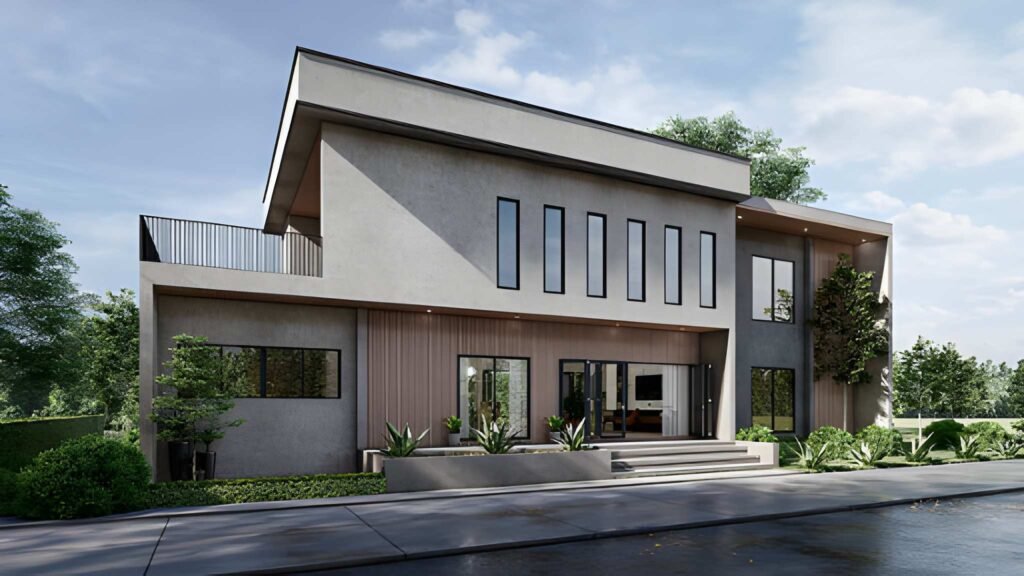
This deep integration informs the architectural language. The form follows environmental performance. Long, narrow footprints maximize exposure to cooling cross-breezes. Broad, sheltering rooflines are calculated for passive solar shading. The layout is an exercise in bioclimatic zoning, where the relationship between indoor and outdoor space is fluid and intentional. Generous, shaded terraces, screened porches, and courtyards become primary living areas, effectively doubling the usable space while requiring no mechanical conditioning. The boundary between inside and outside is deliberately blurred through the use of massive sliding glass doors, floor-to-ceiling windows, and consistent interior and exterior material palettes. The view is not merely a picture on a wall; it is an ever-changing, integral part of the home’s atmosphere.
The Material Palette: Sourcing Authenticity and Low Impact
The materiality of an eco resort home is a testament to authenticity and ecological intelligence. The selection prioritizes materials that are locally sourced, naturally durable, and have low embodied energy. This is where the aesthetic of rustic elegance meets rigorous environmental science.
The structural skeleton often celebrates local and renewable resources. Timber framing from sustainably harvested regional wood species provides both structural integrity and visual warmth. Stone, quarried from nearby sources, is used for foundation walls, fireplaces, and feature walls, its thermal mass helping to stabilize indoor temperatures. For the building envelope, high-performance systems are standard. Structural Insulated Panels (SIPs) create an ultra-tight, highly insulated shell with exceptional speed and precision. Mass timber panels offer a modern, carbon-sequestering alternative. Rammed earth walls, made from a compacted mixture of local soil and a small amount of cement, provide immense thermal mass, fire resistance, and a stunning, textured aesthetic that echoes the surrounding landscape.
Interior finishes are chosen for their sensory qualities and their non-toxic nature. Polished concrete floors or locally sourced stone tiles act as heat sinks, absorbing solar gain during the day and radiating it back at night. Walls are finished with natural clay or lime plasters, which are breathable, regulate humidity, and lack the synthetic off-gassing of conventional drywall and paint. Reclaimed wood from old barns or river salvaged logs adds character and a narrative history to ceilings and accent walls. The luxury is not in glossy, imported marbles, but in the tactile, honest beauty of materials that tell the story of their origin.
Closed-Loop Systems: The Architecture of Autonomy
A true eco resort home operates with a high degree of self-sufficiency, particularly in remote or ecologically sensitive locations where municipal infrastructure is absent or undesirable. Its systems for water, energy, and waste are designed as integrated, closed-loop cycles that mimic natural processes.
Water is the most precious resource. The strategy begins with extreme conservation through low-flow fixtures, water-efficient appliances, and native, drought-resistant landscaping (xeriscaping). The home then harvests its own supply. Rainwater is collected from the roof, filtered, and stored in large underground cisterns. This water can be purified to potable standards for drinking and cooking. Greywater from showers and sinks is treated and reused for subsurface irrigation or toilet flushing. Blackwater is processed through a modern, aerobic treatment system or a constructed wetland, which cleanses the water naturally using plants and microbes, returning it safely to the groundwater table. This holistic approach can make the home nearly water-neutral.
Energy independence is the parallel goal. After radically reducing demand through a super-insulated envelope and passive design, the home generates its own power. A rooftop or ground-mounted solar photovoltaic (PV) array is the primary source. Given the home’s likely location in an area of high natural beauty, the system’s design is carefully integrated to minimize visual impact. The energy is stored in a whole-house battery bank, ensuring power is available through the night and during periods of low sun. For backup and peak demand, a propane-powered generator may be included, though the trend is toward larger battery systems to maintain a fully renewable profile. Heating and cooling are handled by a geothermal or air-source heat pump, which provides ultra-efficient climate control by exchanging heat with the ground or air.
Table: The System Integration of an Eco Resort Home
| System | Conservation & Passive Strategy | Active Generation & Management |
|---|---|---|
| Water | Low-flow fixtures, xeriscaping, permeable surfaces. | Rainwater harvesting cisterns, greywater recycling, aerobic treatment units or constructed wetlands. |
| Energy | Passive solar design, super-insulation, air sealing, natural ventilation, daylighting. | Solar PV array, battery storage, heat pump for HVAC and hot water. |
| Waste | On-site composting, built-in recycling centers, material selection to minimize packaging. | Advanced septic systems, composting toilets, material reuse in landscape (e.g., chipped wood as mulch). |
| Comfort & Health | Cross-ventilation, thermal mass, non-toxic materials, connection to outdoors. | Energy Recovery Ventilator (ERV) for fresh air, ceiling fans, radiant floor heating, HEPA air filtration. |
The Experience of Place and Regenerative Stewardship
The ultimate value of an eco resort home transcends its physical attributes and system specifications. It is about the quality of the experience it facilitates. The design is orchestrated to heighten one’s awareness of the natural world. An open-air shower exposed to the sky, a bedroom skylight perfectly framed for stargazing, a deck that cantilevers over a forest canopy—these are the features that define the luxury of this lifestyle. The home becomes a platform for observation, a place to witness the subtle shifts of seasons, weather, and wildlife.
This connection fosters a natural inclination toward regenerative stewardship. The property management goes beyond mere maintenance to active ecological enhancement. This involves replanting native species to restore habitats, creating pollinator gardens, managing invasive species, and potentially setting aside a majority of the land as a conservation easement, permanently protecting it from future development. The home is not an isolated entity; it is a node within a larger ecological network. Owners often become contributors to citizen science projects, monitoring local wildlife or water quality, embedding their presence within a role of caretaker.
The eco resort home, therefore, is a paradigm shift in second-home ownership. It answers a growing desire for authenticity and purpose. It offers a retreat that is not an escape from responsibility, but an embrace of it. It proves that the height of luxury is not ostentatious consumption, but the profound quiet of a well-balanced system, the security of self-reliance, and the deep, abiding satisfaction of living in a way that honors and protects the very beauty that drew one there in the first place. It is a testament to the idea that a home can be both a personal sanctuary and a gift to the land it inhabits.