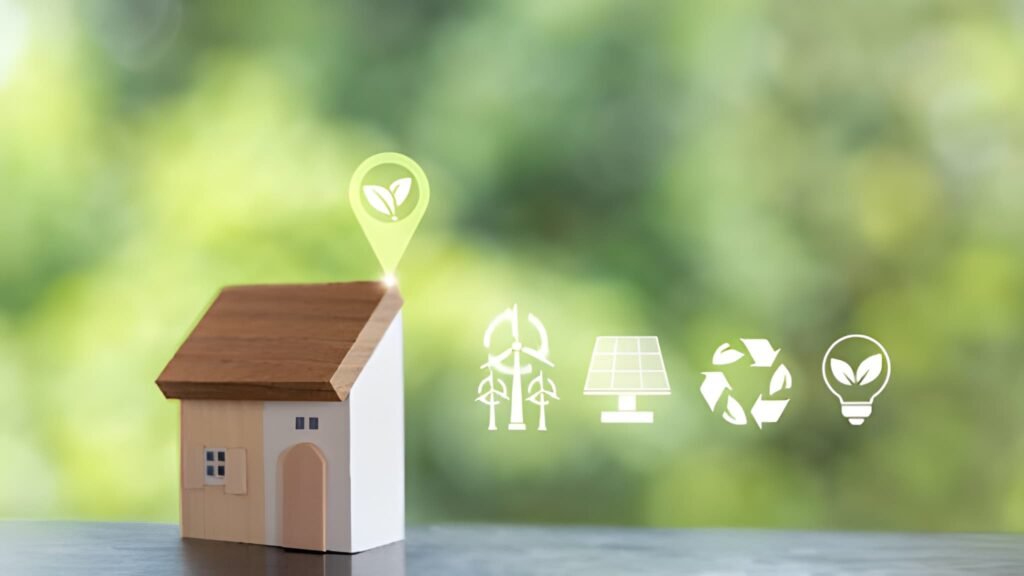
The American home is undergoing a quiet revolution, one that moves beyond mere aesthetics to embrace a deeper responsibility. Eco-friendly home design is not a style defined by a particular look; it is a philosophy, a rigorous methodology that reconsiders the entire lifecycle of a dwelling. It integrates the structure with its environment, minimizes its demand on finite resources, and creates a healthy sanctuary for its inhabitants. This approach represents a fundamental shift from viewing a house as a machine for living to seeing it as a living, breathing system itself—one that exists in a symbiotic relationship with the land, the climate, and the community. The goal is to build not just for the present, but for generations to come, creating legacies of efficiency, resilience, and well-being.
The Foundational Pillar: Passive Design and Bioclimatic Principles
Before any technology is considered, the most powerful tool for eco-friendly design is passive, bioclimatic strategy. This is the art of using the natural forces of the sun, wind, and landscape to heat, cool, and light a home, dramatically reducing its reliance on mechanical systems.
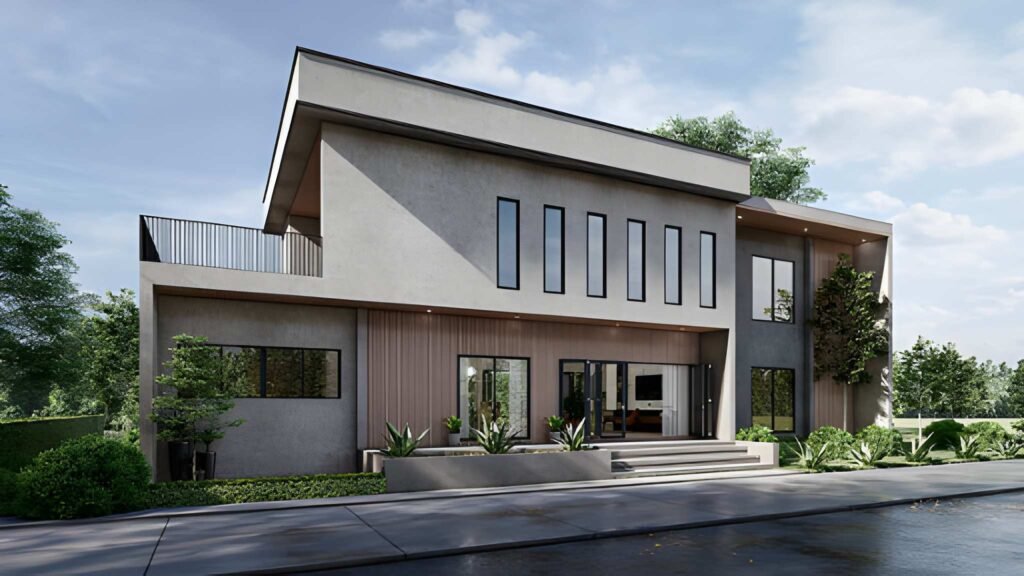
Solar orientation is the non-negotiable starting point. In the Northern Hemisphere, a long axis running east-west with the primary living spaces facing within 30 degrees of true south is ideal. This orientation maximizes exposure to the low-angled winter sun, which penetrates deep into the home, providing free solar heat gain. To manage the high summer sun, the design employs passive shading. A roof overhang of a calculated depth—specific to the home’s latitude—will block the intense summer rays while still admitting the desirable winter light. Deciduous trees on the south side act as a living seasonal system, providing a full canopy for shade in summer and shedding their leaves to allow light and warmth in winter.
Spatial zoning within the floor plan organizes rooms based on their thermal and functional needs. The “day zone”—comprising living rooms, kitchens, and dining areas—claims the prized southern exposure. The “night zone” of bedrooms and offices, which require cooler temperatures and less solar activity, is placed on the north side for stable, cool conditions. “Buffer zones,” such as garages, laundry rooms, and closets, are strategically located on the less desirable western and eastern sides. These spaces act as insulating barriers, protecting the core living areas from the harsh, low-angle sun of sunrise and sunset and from prevailing winter winds.
Natural ventilation is choreographed through the floor plan. Cross-ventilation is achieved by placing operable windows on opposite or adjacent walls, allowing prevailing breezes to flush the home of heat and stagnant air. The design can encourage stack ventilation, where hot air rises and escapes through high operable windows or clerestories, pulling cooler air in from lower openings. This passive cooling strategy can eliminate the need for air conditioning for much of the year in many climates.
Materiality and Embodied Energy: Building from the Ground Up
The very substances from which a home is constructed tell a story of its environmental impact. Eco-friendly design scrutinizes the embodied energy of materials—the total energy required to extract, process, manufacture, transport, and install them.
The structural system offers significant choices. Structural Insulated Panels (SIPs) are a high-performance option, consisting of an insulating foam core sandwiched between two structural facings, such as oriented strand board (OSB). They create an exceptionally tight, well-insulated building envelope far more quickly than conventional stick framing. For a lower-tech and often locally sourced solution, Insulated Concrete Forms (ICFs) use interlocking hollow foam blocks that are filled with concrete, resulting in massive, disaster-resilient walls with a high thermal mass and R-value. Mass timber, including Cross-Laminated Timber (CLT), represents a revolutionary approach. It sequesters carbon within the building frame, acts as a significant thermal mass to regulate interior temperatures, and is a rapidly renewable resource when sourced from sustainably managed forests.
For finishes, the principles favor natural, renewable, and non-toxic materials. Interior walls can be finished with clay or lime-based plasters, which are breathable, regulate humidity, and contain no volatile organic compounds (VOCs). Flooring choices include sustainably harvested hardwood, bamboo (a rapidly regenerating grass), cork (harvested from the bark of living trees), and polished concrete, which uses the slab’s inherent thermal mass to absorb and slowly release heat. Cabinetry and millwork should use formaldehyde-free adhesives and be constructed from FSC-certified wood or alternative materials like wheatboard or strawboard.
The Systems: Water, Energy, and Waste as Integrated Cycles
An eco-friendly home manages its core systems not as linear processes of consumption and disposal, but as integrated, cyclical loops.
Water stewardship begins with conservation. Low-flow faucets, showerheads, and dual-flush toilets are standard. The design goes further by incorporating greywater systems, which redirect water from showers, sinks, and laundry to subsurface irrigation for landscaping. Rainwater harvesting involves collecting runoff from the roof in cisterns for outdoor use or, with proper filtration, for indoor non-potable uses like toilet flushing. Permeable paving and rain gardens manage stormwater on-site, recharging the aquifer and preventing runoff pollution.
Energy systems follow a “Triple A” hierarchy: Audit, Reduce, Produce. First, the home is designed and built to the highest standards of airtightness and insulation, as verified by a blower door test. This radically reduces the heating and cooling load. Then, highly efficient equipment, such as air-source or ground-source heat pumps, is installed to meet this minimized demand. Finally, the home produces its own energy through rooftop solar photovoltaic (PV) panels. With the load so drastically reduced, a smaller, more affordable PV system can often meet all of the home’s energy needs, achieving net-zero status.
Waste is designed out of the equation from the start. Construction waste is meticulously sorted for recycling. The home itself facilitates recycling and composting with dedicated, convenient storage areas built into the kitchen layout. The landscape is designed to be regenerative, using native plants that require no chemical fertilizers or pesticides and that create habitat for local pollinators.
Table: The Spectrum of Eco-Friendly Design Strategies
| Design Focus | Passive / Low-Tech Strategies | Active / High-Tech Strategies |
|---|---|---|
| Heating & Cooling | Solar orientation, passive solar gain, thermal mass, cross-ventilation, stack effect, earth sheltering, super-insulation. | Geothermal heat pump, air-source heat pump, energy recovery ventilator (ERV), high-efficiency mini-splits. |
| Water Management | Rainwater harvesting barrels, permeable paving, xeriscaping with native plants, greywater system for irrigation. | Automated smart irrigation controllers, pressurized whole-house rainwater filtration systems, on-demand/tankless water heaters. |
| Energy Production | Solar orientation for daylighting, building form to reduce surface area. | Rooftop solar PV panels, building-integrated photovoltaics (BIPV), residential wind turbines, battery storage systems. |
| Material Health | Natural plasters, FSC-certified wood, stone, linoleum, cork, bamboo. | Low-VOC paints & sealants, formaldehyde-free cabinetry, advanced air filtration systems with HEPA/UV filters. |
Resilience and Adaptation: Designing for an Uncertain Future
Eco-friendly design is inherently forward-looking, building in the capacity to withstand and adapt to a changing climate and evolving social needs.
Durability is the first principle of resilience. This means using materials and assemblies that can withstand extreme weather events—stronger roof connections, impact-resistant windows, and elevated foundations in flood zones. It also means designing for passive survivability—the ability for a home to maintain safe and habitable interior conditions during a prolonged power outage or loss of heating fuel. A super-insulated, passively solar-heated home with a wood stove and rainwater collection can provide a critical refuge when civic systems fail.
Spatial flexibility ensures the home can adapt to different stages of life. Universal design principles—such as zero-step entries, wider doorways, and reinforced bathroom walls for future grab bars—make the home accessible to people of all ages and abilities. Flexible “bonus” rooms or accessory dwelling units (ADUs) can serve as a home office, a teenager’s suite, or a living space for an aging parent, extending the home’s useful life and reducing the need for relocation.
Ultimately, the most profound eco-friendly home designs are those that forge a deep, tangible connection between the inhabitants and their environment. Large windows that frame a specific view, interior courtyards that bring the outdoors in, and the use of local stone and timber all root the building in its place. This connection fosters an intuitive understanding of natural cycles—the path of the sun, the direction of the wind, the rhythm of the seasons. The home becomes a teacher, a daily reminder of our place within the natural world. It is not a retreat from the environment, but an engaged and harmonious partnership with it. This is the true architecture of stewardship—a design that cares for the planet, the people within, and the future they will share.