A malfunctioning door is more than an inconvenience; it is a compromise to your home’s security, energy efficiency, and comfort. Door repair is a systematic process that ranges from simple lubrication to precise carpentry, all aimed at restoring a perfect seal and smooth operation. Diagnosing the root cause of the problem is the essential first step, as treating the symptom without addressing the cause will lead to recurring issues.
The Diagnostic Phase: Identifying the Core Problem
Before grabbing tools, carefully observe the door’s behavior. The symptoms will point directly to the underlying issue.
Common Symptoms and Their Likely Causes:
- Door Sticks or Scrapes: The most common issue, caused by friction against the door frame.
- Cause: Humidity and temperature changes cause wood to swell. The house may have settled, changing the frame’s alignment. Paint buildup can also create friction points.
- Door Won’t Latch: The latch bolt doesn’t align with the strike plate on the frame.
- Cause: The door is sagging due to loose hinges, or the frame has shifted. A worn latch or strike plate can also be the culprit.
- Door is Drafty or Noisy: Air and sound leak around the perimeter.
- Cause: Failed or compressed weatherstripping, or a door that is not sealing tightly against the stop moulding.
- Hard to Open or Close: Requires significant force.
- Cause: Often a combination of sticking and misalignment, but can also be caused by a damaged hinge or a door that has swollen in its frame.
- Door Rattles or Shakes: Feels loose in the frame.
- Cause: Loose hinges or a worn-out latch mechanism.
The Repair Toolkit: Essential Items
A well-equipped toolkit makes the job efficient:
- Screwdrivers (Phillips and Flat-head)
- Hex Key (Allen Wrench) Set
- Hammer and Nail Set
- Wood Blocks
- Utility Knife
- Pliers
- Level
- Pencil
- Cordless Drill/Driver
- Planer or Belt Sander (for major adjustments)
- Chisel
Step-by-Step Repair Protocols
Address repairs in the following logical order, as fixing one issue often resolves another.
1. Repairing Loose or Sagging Doors (The Hinge Fix)
This is the first and most impactful step for most problems.
- Tighten Hinge Screws: Use the correct screwdriver to firmly tighten all screws on both the door-side and frame-side hinges. If the screws spin freely without tightening, the wood threads are stripped.
- Repair Stripped Screw Holes:
- Fill with Wood Toothpicks & Glue: Remove the screw, dip several wooden toothpicks in wood glue, and jam them into the hole. Break them off flush. Once dry, re-drive the screw. The new screw will bite into the solid wood composite.
- Use a Longer Screw: For the top hinge, replace one of the short center screws with a 3-inch long deck screw. This will bite deep into the wall stud behind the door jamb, pulling the entire frame back into alignment.
- Use a Hinge Repair Kit: These plastic or metal inserts are glued into a drilled-out hole, providing new, durable threads.
2. Fixing a Sticking Door
If tightening the hinges doesn’t solve the problem, you need to identify and eliminate the friction point.
- Identify the Rub Point: Close the door slowly and watch where it makes contact. You can also slide a piece of paper around the closed door to find where it’s pinched.
- The “Shim and Sand/Plane” Method:
- Open the door and place a wooden shim (or a paint stirrer) under the corner that is sticking to hold it firmly in the stuck position.
- Using a belt sander or a hand planer, carefully remove a small amount of material from the area that is rubbing. Work slowly. It is easy to remove too much wood, creating a gap.
- Sand the area smooth and touch up with paint or stain to seal the wood.
3. Adjusting the Latch and Strike Plate
If the door is aligned but won’t latch, the metal hardware needs adjustment.
- Mark the Misalignment: Coat the end of the latch bolt with lip balm, chalk, or a marker. Close the door and try to latch it. The mark it leaves on the strike plate shows you exactly where the latch is hitting.
- File the Strike Plate: Use a metal file to enlarge the opening of the strike plate in the direction the latch needs to go. A few millimeters of filing can make all the difference.
- Move the Strike Plate: If filing isn’t enough, you can chisel out the mortise (the recess) for the strike plate and move it slightly. Use a sharp chisel and work carefully. Re-secure it with screws.
4. Replacing Weatherstripping
Drafty doors waste energy and let in noise.
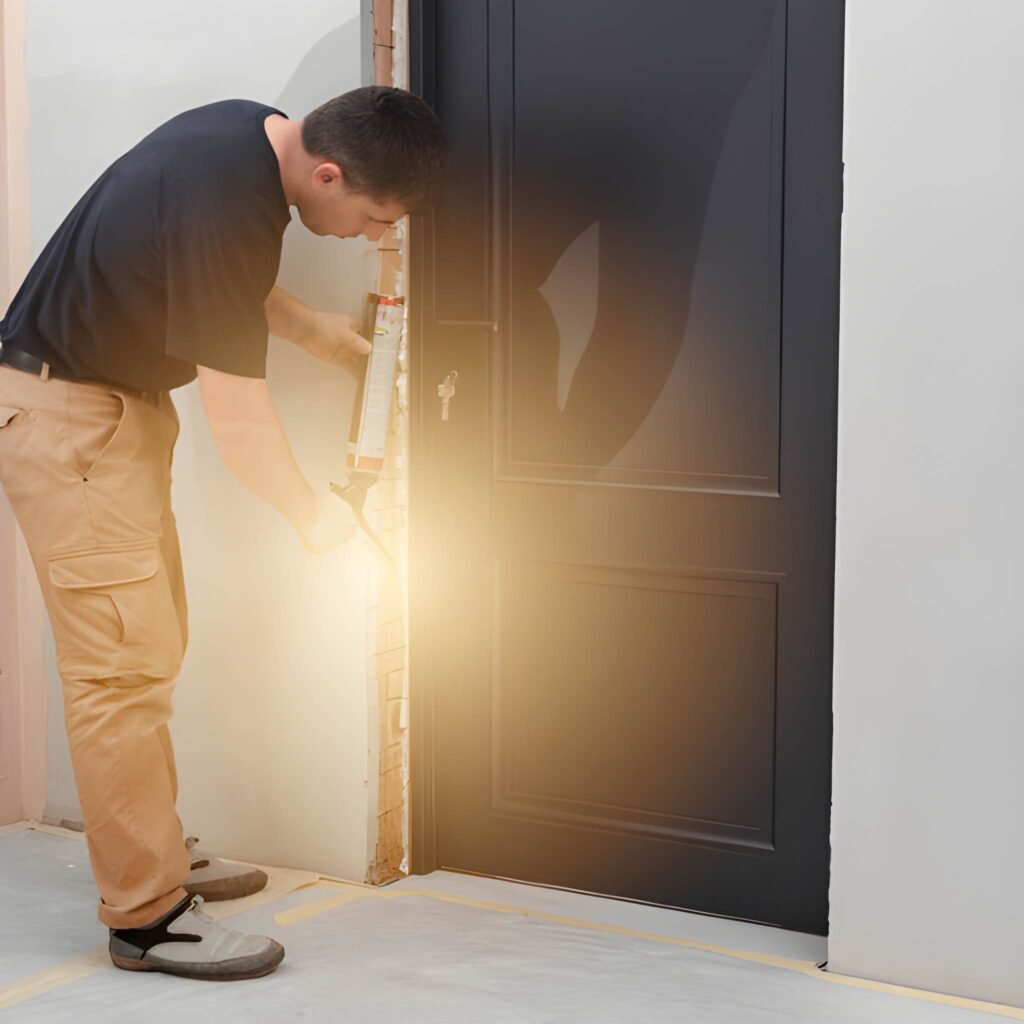
- Remove the Old: Peel off the old, brittle weatherstripping. Use a utility knife to cut through any caulk or paint seals.
- Clean the Channel: Clean the groove or surface where the new weatherstripping will sit.
- Install the New: For a kerf-in door, press the new foam-backed vinyl strip firmly into the groove around the entire frame. For a nail-on door, use the provided brads to secure a bulb-type seal to the door stop. Ensure the seal compresses slightly when the door is closed.
When a Repair Becomes a Replacement
Know when it’s time to stop repairing and start replacing.
- Severe Rot or Water Damage: If the door or frame is structurally compromised, repair is not safe or effective.
- Major Warping: A door that is twisted beyond practical realignment.
- Security Upgrade: An old, hollow-core door offers little security compared to a modern, solid-core or steel door.
- Energy Efficiency: New doors with modern weatherstripping and insulated cores can dramatically reduce heating and cooling costs.
House door repair is a satisfying and cost-effective skill that directly impacts a home’s security, comfort, and efficiency. By following a diagnostic approach—starting with the hinges, then addressing alignment, and finally fine-tuning the hardware and seals—a homeowner can systematically restore any door to perfect working order. This methodical process not only fixes the immediate problem but also provides the long-term satisfaction of maintaining a fundamental component of the home’s envelope.