The process of jacking up a house is a foundational (pun intended) technique in major structural repair, but it is not a single action. It is a carefully engineered and meticulously executed process of lifting a structure to relevel it, repair or replace its foundation, or address severe settlement. This is arguably the most dangerous phase of foundation work, where a single miscalculation can lead to catastrophic structural damage or collapse. Understanding the principles, methods, and inherent risks is essential for any homeowner considering such a project.
The Core Principle: Controlled, Incremental Lifting
The goal is not to simply hoist the house into the air. The goal is to apply controlled, equalized pressure at multiple strategic points to gradually and uniformly lift the sunken sections of the structure back to their original elevation, causing minimal stress to the building’s frame.
Key Engineering Concepts:
- Hydraulic Power: All modern structural jacking uses hydraulic systems, which provide immense, controllable force.
- Load Distribution: The immense weight of the house (a typical 1,500 sq. ft. wood-frame home can weigh 50-75 tons) must be spread out. Concentrating force on a single point will punch through floors and walls.
- Simultaneous Lift: Multiple jacks must work in concert. Lifting one corner too far or too fast will twist the frame, causing new cracks and damage throughout the structure. Professional systems use a central hydraulic pump with multiple synchronized rams.
The Professional Methodology: A Step-by-Step Process
This is not a DIY project. The following outlines the standard professional protocol.
Phase 1: Engineering Assessment and Preparation
- Precision Level Survey: A technician uses a laser level or water level to map the exact elevation of the floor and foundation throughout the house. This creates a “topographic map” of the settlement and identifies the specific low points.
- Structural Engineering: An engineer determines the cause of the failure (soil, drainage, etc.) and specifies the repair plan, including the type, number, and placement of supports.
- Site Preparation: The work area is cleared. The house is prepared by shoring up interior walls, disconnecting utilities (gas, water, sewer, electrical), and sometimes removing fragile interior finishes to prevent cracking.
Phase 2: The Underpinning and Jacking Process
This process is almost always combined with the installation of permanent supports, such as steel push piers or helical piers.
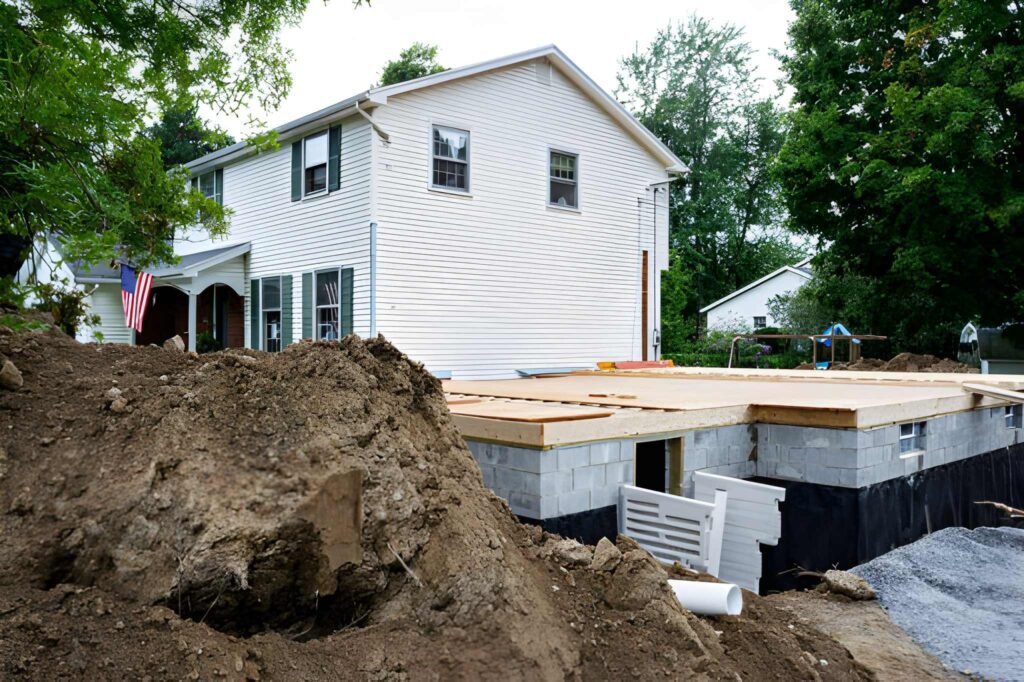
- Excavation: Pits are dug by hand or with a mini-excavator at predetermined locations along the foundation wall or beneath the foundation footing.
- Install Permanent Piers: The chosen pier system (steel push piers or helical piers) is installed down to stable, load-bearing soil or bedrock. This creates the permanent support that the house will ultimately rest on.
- Placement of Hydraulic Jacks: High-capacity (10-20 ton) hydraulic jacks are placed on top of the newly installed pier system, directly under the foundation’s footing or a strategically placed beam.
- The Synchronized Lift: This is the critical phase.
- Cribbing: Temporary stacks of solid, interlocking wooden blocks (called cribbing) are built around the jacks as a safety fail-safe.
- Incremental Lifting: The operator uses a central hydraulic pump to activate all jacks simultaneously. The lift is performed in tiny, controlled increments—often as little as 1/8 to 1/4 of an inch per lift cycle.
- Pausing and Monitoring: After each lift, work stops for several hours or even a full day. This allows the structure to settle into its new position and for technicians to monitor for any signs of undue stress. The interior is re-checked with levels.
- Repetition: This cycle of lift-pause-monitor continues over several days until the house is brought back to a level state, as confirmed by the final survey.
- Locking the Structure in Place: Once the desired height is achieved and stable, the hydraulic jacks are removed. The permanent bracket on the pier system is then locked or welded to the foundation, transferring the full weight of the house from the temporary jacks onto the permanent piers.
The Immense Risks and Why DIY is Not Advisable
The dangers of improper jacking cannot be overstated.
- Structural Collapse: The most severe risk. Uneven or rapid lifting can cause the house to twist, leading to a partial or total structural failure.
- Cascading Damage: Even if a collapse is avoided, improper jacking can cause severe new damage: shattered windows, cracked drywall and plaster, separated chimney stacks, ruptured plumbing, and misaligned door frames.
- Punch-Throughs: A jack placed in the wrong location can punch through the concrete footing or a wooden sill plate, exacerbating the problem.
- Jack Failure: Hydraulic jacks or cribbing can fail under the immense, constant load, leading to a sudden and dangerous drop.
The Role of Temporary Shoring
In some cases, temporary shoring is installed before the main lift to provide additional stability. This involves using adjustable steel posts (like Acrow props or lally columns) in the basement or crawlspace to support main beams (girders) during the work, helping to distribute the load and prevent interior damage.
Cost and Professional Imperative
Jacking a house is a major component of a foundation repair project. You cannot separate the cost of the jacking from the cost of the permanent underpinning system.
- Typical Cost: The process described above, including the installation of a permanent pier system, typically ranges from $20,000 to $50,000+ for an average single-family home. The jacking process itself is a significant portion of this labor and equipment cost.
- Hiring a Professional: This work must be performed by a licensed, insured, and highly experienced foundation repair contractor. They carry multi-million dollar liability insurance for a reason. Verify their license, insurance, and get multiple detailed quotes.
- Warranties: Reputable companies provide a transferable lifetime warranty on the piers and the workmanship, guaranteeing the lift will be permanent.
Jacking up a house is a powerful, necessary procedure to correct severe foundation settlement. However, it is a feat of structural engineering, not brute force. Its success is entirely dependent on a rigorous assessment, a methodical and patient lifting process, and the installation of a permanent, engineered support system. For a homeowner, the correct course of action is to invest in a professional structural assessment and then hire a qualified, insured contractor to execute the repair. The immense risks to life and property make this one of the most critical home repairs where professional expertise is not just recommended, it is absolutely mandatory.