
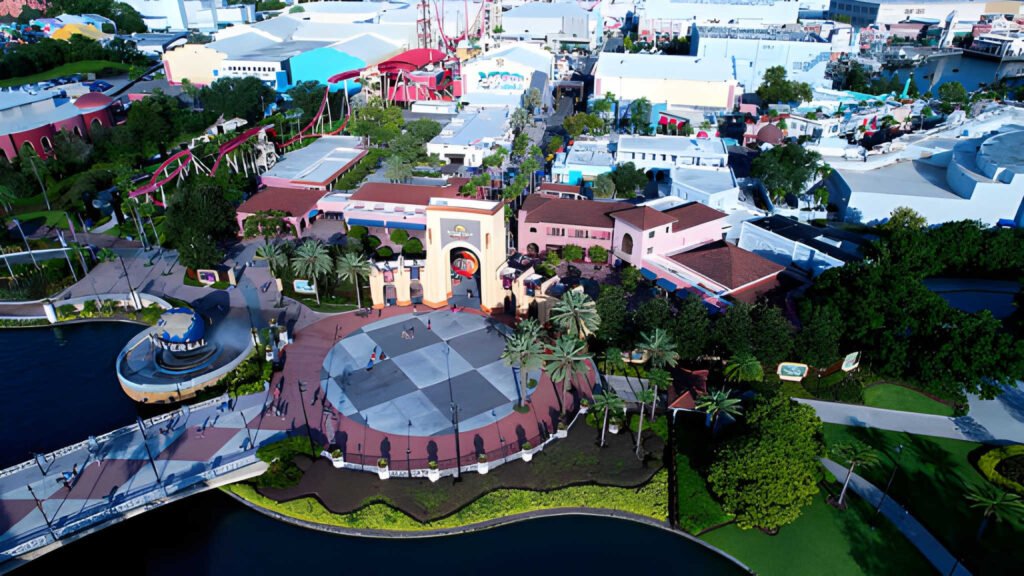
Orlando is a city of dual realities. To the world, it is a fantasyland—the undisputed theme park capital, where castles pierce the sky and costumed characters wander the streets. But for the 2.5 million people in its metropolitan area, Orlando is a working city, a sprawling Sunbelt metropolis grappling with rapid growth, a shifting economy, and the daily challenges of life in the subtropical heat. Living here means navigating the tourist traffic to find a community, trading the spectacle of the parks for the authenticity of neighborhood lakes and oak-canopied streets, and building a life in a place where the economy is both dominated by and constantly straining to escape its world-famous identity. This guide moves beyond the mouse ears to explore the tangible reality of building a life in the City Beautiful.
The Two-Orlando Paradox: Tourism Capital vs. Living City
The core of understanding Orlando is recognizing the divide between the Tourism Corridor—a stretch of International Drive and theme park properties in southwest Orange County—and the residential city. The corridor is a company town for Disney, Universal, and SeaWorld, a landscape of resorts, gift shops, and congested highways. The residential Orlando encompasses diverse suburbs, a growing downtown core, and a network of over 100 lakes. Life for residents involves leveraging the perks of the tourism economy while carving out a existence separate from its constant hustle.
The Sunshine Tax: Cost of Living in the Theme Park Capital
Orlando’s cost of living is a study in contrasts. It lacks a state income tax, providing an immediate financial benefit. However, this is offset by a relatively low-wage economy in many sectors and rising costs, particularly for housing and insurance, that outpace income growth. The “sunshine tax” is real—you pay a premium to live in a desirable climate.
A detailed monthly budget for a service professional or young couple living in a two-bedroom apartment in a suburban area like Waterford Lakes or Hunter’s Creek reveals the squeeze:
- Rent: $1,900 – $2,200
- Utilities (Electricity – AC is critical): $180 – $300 (year-round)
- Water/Sewer/Trash: $120
- Internet: $80
- Groceries: $500
- Gasoline & Car Maintenance: $350 (long commutes are common)
- Dining & Entertainment: $400 (taking advantage of resident discounts)
This puts a baseline monthly expenditure between $3,530 and $3,950, not including savings, healthcare, or unexpected costs. This budget highlights the central challenge: housing and transportation consume a massive portion of income for many.
The Hospitality Juggernaut and Beyond: Job Market and Career Opportunities
Orlando’s economy is a giant with two legs: one firmly planted in tourism, the other stepping cautiously into the future.
- Tourism & Hospitality: This is the undeniable engine. Walt Disney World, Universal Orlando Resort, and SeaWorld are the largest employers, offering hundreds of thousands of jobs in everything from entry-level service roles to sophisticated corporate positions in Imagineering, finance, and digital technology. The industry provides stability but is vulnerable to economic downturns and offers a wide range of wages.
- Aerospace & Defense: A legacy of the Space Coast, the Orlando-Cape Canaveral corridor is a major hub for aerospace and defense simulation and training. Companies like Lockheed Martin, Siemens, and Northrop Grumman have a significant presence, employing a high concentration of engineers.
- Healthcare: The growing and aging population has fueled a massive healthcare sector. AdventHealth and Orlando Health operate vast hospital networks and are among the region’s top employers, providing a stable source of high-paying jobs outside of tourism.
- Technology & Modeling, Simulation, & Training (MS&T): Building on the defense sector, UCF’s prowess in computer science and engineering has fostered a growing tech scene focused on simulation, virtual reality, and gaming.
This mix creates an economy with more depth than often perceived, though the shadow of the mouse is long and pervasive.
A City of Master-Planned Suburbs: Finding Your Community
Orlando is not a city of dense, walkable neighborhoods in the traditional sense. It is a collection of suburban villages, master-planned communities, and historic districts connected by highways.
- Downtown Orlando: The urban core is experiencing a steady renaissance, with high-rise apartments, a thriving arts scene at the Dr. Phillips Center, and a popular nightlife district on Church Street. It attracts young professionals and empty-nesters seeking a walkable lifestyle.
- Winter Park: A historic, affluent, and charming city unto itself just north of Orlando. Its brick-lined Park Avenue is a destination for upscale shopping and dining, anchored by Rollins College and a series of beautiful lakes. It represents established, classic Florida elegance.
- Lake Nona: A massive, cutting-edge “medical city” and master-planned community in southeast Orlando. It is a hub for the UCF College of Medicine, Orlando VA Medical Center, and health tech companies. It feels new, clean, and futuristic, with a focus on wellness and technology.
- Baldwin Park: Built on the site of a former naval base, this is a highly sought-after, walkable, New Urbanist community close to downtown. It features a mix of apartments, townhomes, and single-family houses centered around a village center with shops and restaurants.
- College Park: A historic neighborhood northwest of downtown known for its brick streets, large oak trees, and charming bungalows. It has a strong community feel and is popular with families and professionals who want character and proximity to the city.
- Dr. Phillips / Windermere: An upscale area southwest of Orlando, known for its luxury homes, top-rated schools, and proximity to the theme parks and restaurant row on Sand Lake Road. It is a top choice for executives and well-established families.
- Celebration: The master-planned community originally developed by Disney. It embodies a pristine, picture-perfect (some say surreal) version of small-town America, with strict architectural codes and a focus on community events.
The Florida Calculation: Renting vs. Buying
The decision to rent or buy in Orlando is heavily influenced by the state’s volatile insurance market and the influx of new residents driving up demand.
The Case for Renting: Renting offers flexibility in a transient city where many come for short-term work in the tourism industry. It also shields residents from the skyrocketing costs of homeowners insurance and property taxes, which can add hundreds of dollars to a monthly mortgage payment.
The Case for Buying: For those committed to staying long-term, buying is a way to build equity and find stability in a tight rental market. However, buyers must carefully factor in the full carrying costs, which are higher than in most other states.
A Simplified Financial Comparison:
Consider a $375,000 home in a suburb like Oviedo.
- Renting: Monthly rent for a similar property: ~$2,200. This is a pure expense.
- Buying:
- Down Payment (20%): $75,000
- Mortgage Principal & Interest (30-year fixed at 7%): ~$2,000/month
- Property Taxes (Orange County, ~0.9%): \frac{0.9}{100} \times 375,000 = \$3,375 per year, or ~$281/month
- Homeowners Insurance (High Risk): ~$300/month (a major premium)
- Total Monthly Cost (P&I + Taxes + Insurance): ~$2,581
This calculation shows the hidden cost of Florida ownership: insurance. The premium for buying is significant, and the equation only works if one is confident in long-term appreciation.
The Housing Market: Tile-Roofed Ranches and New Builds
Orlando’s housing stock is dominated by Florida-style homes: single-story ranches with tile roofs, screened lanais (porches), and often, community pools.
Average Home Prices: The median home price in the Orlando metro area has risen sharply, typically hovering between $370,000 and $400,000.
Most Affordable Areas to Buy a Home: The most affordable options are typically found in the Pine Hills area, Orlando International Airport (OIA) area, and in older neighborhoods in Sanford and Kissimmee.
Luxury Real Estate Hotspots: The luxury market is concentrated in:
- Isleworth & Bay Hill: Guard-gated communities in Windermere surrounding golf courses, home to celebrities and athletes.
- Winter Park: Historic estates on the chain of lakes.
- Lake Nona: Custom-built modern estates in gated subdivisions.
Rental Market: The market is extremely tight, driven by tourism workers and the influx of new residents. Expect to pay:
- 2-Bed Apartment: $1,800 – $2,200+
- 3-Bed Single-Family Home: $2,200 – $2,800+
Investing in the Future: Real Estate Investment and Growth
Orlando’s relentless population growth makes it a perennial candidate for investment, particularly in rental properties.
- Best Places to Invest: Areas near major employment hubs like Lake Nona and UCF have strong, consistent rental demand. Established suburbs like Oviedo and Winter Springs also offer stable returns.
- Future Growth Neighborhoods: The SunRail commuter rail corridor is a focus for transit-oriented development. The I-Drive 360 area continues to evolve beyond tourism into a mixed-use district.
The Commute: The Tyranny of I-4
Orlando’s transportation system is dominated by one infamous highway: I-4. Its congestion is legendary and a primary source of resident frustration.
- The Car: An absolute necessity. The city’s sprawl makes walking or biking for transportation impractical for most. Commutes are long, and traffic is a daily fact of life.
- Public Transit: LYNX operates a bus system, but it is often slow and not comprehensive. The SunRail commuter train is useful for a very specific north-south corridor (from DeBary to Poinciana) but does not serve the tourism areas or the airport.
- Biking/Walking: Some areas like Baldwin Park, Winter Park, and Downtown are walkable and bikeable, but these are the exception, not the rule.
Life in the Theme Park Shadow: Culture, Nature, and Resident Perks
Local life is about enjoying the benefits of the tourism economy while cultivating a separate identity.
- The Natural World: Orlando is dotted with springs, lakes, and parks. Wekiwa Springs State Park offers swimming, kayaking, and hiking just minutes from the city. The chain of lakes in Winter Park is beautiful for boat tours.
- The Arts & Culture Scene: Orlando has a surprisingly robust cultural side. The Orlando Museum of Art, Orlando Shakespeare Theater, and the Dr. Phillips Center for the Performing Arts offer world-class performances.
- The Food Scene: Goes far beyond theme park turkey legs. The city has a vibrant Vietnamese food scene in the Mills 50 district, a thriving Puerto Rican and Latin American culinary culture, and innovative chef-driven restaurants.
- Resident Perks: The major advantage is access to the parks. Annual passes for Florida residents are relatively affordable, allowing locals to pop into Epcot for dinner or spend an evening at Disney Springs without the pressure of a vacation itinerary.
The Family Equation: Schools, Safety, and Suburbs
The question of schools is the primary driver for family movement within the metro.
- Best Schools & Universities: Orange County Public Schools is one of the largest districts in the nation, with highly variable quality. The top-rated public schools are consistently in the suburbs of Seminole County (Oviedo, Winter Springs) and in Winter Park. For higher education, the University of Central Florida (UCF) is one of the largest universities in the U.S. by enrollment. Rollins College is a prestigious liberal arts school.
- Best Suburbs: For families, the premier destinations are Winter Park, Oviedo, Winter Springs, and Windermere, known for their excellent schools and community amenities.
- Raising a Family & Safety: Crime rates are higher in the tourist corridors and some urban pockets. The suburban communities, particularly in Seminole and far Orange County, report very low crime rates.
The Practicalities: Heat, Hurricanes, Healthcare, and Relocation
- Weather and Climate: Orlando has a humid subtropical climate. Summers are long, brutally hot, and humid, with daily afternoon thunderstorms from May through October. Winters are mild and delightful. The primary environmental concerns are the annual hurricane season (June-Nov) and intense humidity.
- Healthcare: The region is a major healthcare hub. AdventHealth and Orlando Health operate extensive, high-quality hospital networks. The Nemours Children’s Hospital is a top-tier pediatric facility.
- Relocation Checklist:
- Secure Housing Near Work: Your quality of life will be dictated by your commute. Live as close to your job as financially possible.
- Prepare for Hurricanes: Have a plan for hurricane season, including supplies (water, non-perishable food, generator) and knowledge of evacuation zones.
- Invest in Sun Protection: A good sunshade for your car windshield is a necessity. So is sunscreen, year-round.
- Get an E-Pass: This electronic toll pass is essential for navigating the area’s extensive toll road network.
- Embrace the “Florida Room”: A screened lanai is an essential living space for most of the year.
Orlando is a city for those who can see the magic beyond the magic kingdom. It requires patience with traffic, resilience in the face of heat and storms, and the initiative to find authentic community amidst the tourism glitz. But for those who do, it offers a vibrant, diverse, and sunny lifestyle with world-class entertainment in its backyard and natural beauty at its doorstep. Living in Orlando is about choosing the reality of Florida over the fantasy, and finding that the reality, in its own way, is pretty magical.