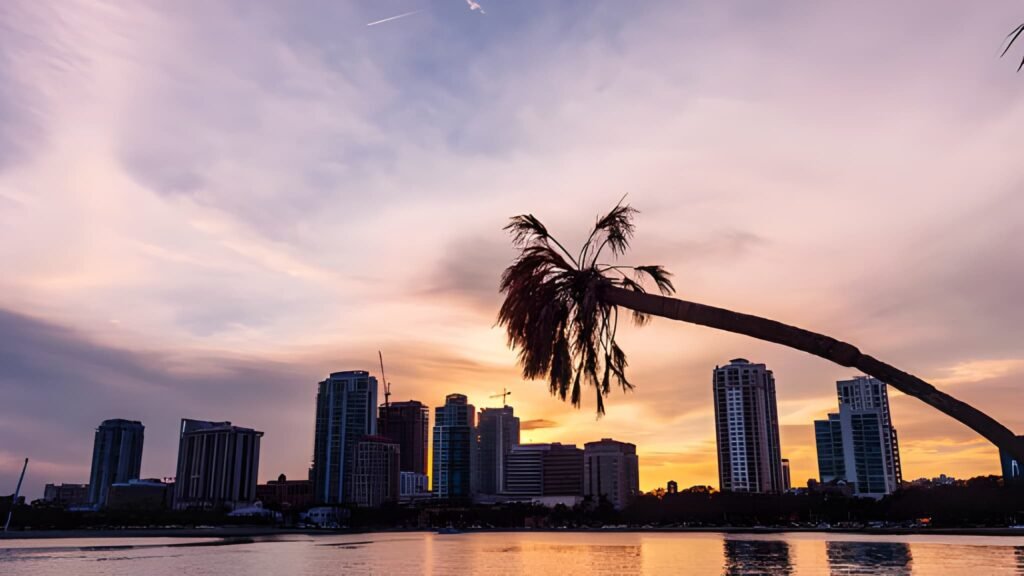
Tampa is a city shedding its skin. Long considered a quiet, family-oriented alternative to Miami, it has exploded into a sun-drenched destination for newcomers seeking Florida’s warmth without its highest price tags. Living in Tampa means embracing a lifestyle centered around the water, outdoor recreation, and a relaxed, suburban pace. It is a city of contrasts: a booming downtown skyline and endless suburban sprawl, historic Cuban enclaves and brand-new luxury high-rises, professional sports teams and serene nature preserves. This guide moves past the marketing brochures to examine the tangible realities of life in the Cigar City, from its rapidly rising costs to its burgeoning cultural scene, providing a clear-eyed view of what it truly means to build a life on Florida’s Gulf Coast.
The Tampa Vibe: Life in a Waterfront Playground
Life in Tampa is dictated by the sun and the sea. The pace is deliberately slower, more focused on weekends spent on the boat, at the beach, or gathered around a backyard grill than on a relentless urban hustle. The energy is friendly, casual, and family-oriented. While the city is experiencing massive growth and a influx of young professionals, it retains a grounded, unpretentious feel. Your experience is heavily influenced by your proximity to the water—whether it’s the Hillsborough River, Tampa Bay, or the Gulf of Mexico. The vibe is less about seeing and being seen (as in Miami) and more about enjoying a high quality of life. The cultural fabric is a rich tapestry, with deep-rooted Cuban and Italian communities in Ybor City and West Tampa influencing the city’s food, festivals, and character. It’s a city that is easy to live in, where traffic, while worsening, is still manageable compared to other major metros, and where a short drive can bring you to world-famous beaches.
The Rising Price of Sunshine: Cost of Living
Tampa’s cost of living has risen dramatically, transforming from an affordable sunbelt secret into a moderately expensive city, driven almost entirely by a soaring housing market.
A detailed budget for a single professional living in a one-bedroom apartment in a popular area like Hyde Park or Channelside might look like this:
- Rent: $1,900 (for a 700-800 sq ft apartment)
- Utilities (Electricity – high due to AC, Gas, Internet): $250 (summer electricity is a major cost)
- Groceries: $400
- Dining & Entertainment: $500
- Transportation (Car Payment, Insurance, Gas – a necessity): $750 (insurance is high in FL)
- Miscellaneous: $300
This creates a baseline monthly expenditure of approximately $4,100. To afford this comfortably (using the standard guideline that rent should not exceed 30% of gross income), your pre-tax annual income would need to be at least $76,000.
This calculation is shown as:
\text{Required Annual Income} = \frac{\$1,900 \times 12}{0.3} = \$76,000This figure highlights the affordability squeeze, as local wages have struggled to keep pace with housing inflation.
Neighborhoods: From Historic to High-Rise
Tampa’s neighborhoods are distinct, often separated by major highways and bodies of water.
- Downtown & Channel District: The urban core. A growing area with new high-rise condos and apartments, Riverwalk access, and proximity to Amalie Arena and Sparkman Wharf. More of an entertainment district than a residential neighborhood, but that is changing.
- Hyde Park: An affluent, historic neighborhood near Bayshore Boulevard. Features beautiful bungalows, tree-lined streets, and a vibrant main street (Soho) with boutiques and restaurants. Walkable and highly desirable.
- Seminole Heights: A historic neighborhood north of downtown that has become the epicenter of Tampa’s hipster renaissance. Known for its craft breweries, funky restaurants, and historic bungalows. A strong sense of community.
- Ybor City: The historic Latin quarter, founded by cigar manufacturers. Still retains its brick streets and historic architecture. A national landmark district by day and a nightlife hub by night, with a mix of clubs, bars, and iconic restaurants like the Columbia.
- West Tampa: A historically working-class, predominantly Cuban neighborhood that maintains its cultural identity with authentic bakeries and cafes. Seeing increased interest due to proximity to downtown.
- Carrollwood & Northdale: Classic, family-friendly suburbs in North Tampa with good schools, golf courses, and sprawling residential subdivisions. The epitome of suburban Florida living.
The Florida Calculation: Renting vs. Buying
The decision to rent or buy in Tampa is a complex one, given the rapid appreciation of recent years.
Renting offers flexibility to explore different neighborhoods and avoids the massive upfront costs and steep ongoing expenses of homeowners insurance and property taxes.
Buying is a bet on long-term appreciation and a hedge against rising rents. While prices have risen, the barrier to entry is still lower than in most other coastal Florida cities. However, buyers must factor in notoriously high homeowners insurance premiums due to hurricane risk.
The financial break-even point is typically 5-7 years. A simplified formula illustrates the calculation:
\text{Break-Even Point (years)} = \frac{\text{Total Upfront Costs}}{\text{Annual Rent} - (\text{Annual Mortgage Interest} + \text{Annual Property Taxes} + \text{Annual Insurance} + \text{Annual Maintenance})}Upfront costs include down payment and closing costs. The high cost of insurance is a critical and often surprising factor for newcomers.
The Evolving Economy: Job Market and Career Opportunities
Tampa’s economy is diversifying beyond its traditional bases of tourism and finance.
- Finance & Professional Services: A major hub, home to the headquarters of Raymond James Financial and a significant operations center for Citigroup, JPMorgan Chase, and other financial giants.
- Healthcare: A massive employer, with systems like BayCare Health System, AdventHealth, and Tampa General Hospital providing a stable base of high-skill jobs.
- Technology & Defense: MacDill Air Force Base is home to U.S. Central Command (CENTCOM) and U.S. Special Operations Command (SOCOM), anchoring a defense contractor ecosystem. A growing tech scene is emerging in downtown and Westshore.
- Tourism & Hospitality: Still a vital industry, driven by Busch Gardens, the Florida Aquarium, and the city’s convention business.
- Port of Tampa: One of the largest ports in the U.S., supporting jobs in trade, logistics, and shipping.
Educational Landscape: Best Schools and Universities
Hillsborough County Public Schools is one of the largest districts in the nation. Quality varies widely, with high-performing magnet programs and schools in affluent areas, and struggling schools in poorer ones. This has fueled demand for charter schools and private education.
For higher education, Tampa is a strong regional center:
- University of South Florida (USF): A major public research university and a top employer. A driving force in the local economy and innovation.
- University of Tampa (UT): A private university with a beautiful downtown campus along the river, known for its business and music programs.
- Hillsborough Community College (HCC): A vital community college system providing workforce training and pathways to four-year degrees.
The Commute: Transportation and Reality
Tampa is a car-dependent city. While the city has made efforts to improve public transit with a streetcar line in the downtown/Ybor corridor and bus services, the system is not comprehensive enough for most residents’ daily needs. The primary mode of transportation is the car, and traffic congestion has become a significant issue, particularly on the Howard Frankland Bridge connecting to St. Petersburg and on the I-275 and I-4 corridors. Commute times are a major quality-of-life consideration.
The Housing Market: A Tactical Overview
The Tampa housing market is one of the hottest in the nation, characterized by low inventory, intense competition, and rapidly appreciating prices.
- Average Home Prices: As of late 2023, the median sale price for a home in the Tampa-St. Petersburg-Clearwater metro is approximately $410,000. This figure includes condos and single-family homes across a wide area.
- Most Affordable Areas to Buy a Home: Look to the outer suburbs and older neighborhoods: Ruskin, Plant City, Town ‘n’ Country, and East Tampa. These areas offer relative value but often come with longer commutes.
- Luxury Real Estate Hotspots: Beach Park, Harbour Island, Avila (a private, guard-gated community), and new high-rise condos along the Water Street development and Bayshore Boulevard.
- Rental Market: Highly competitive with low vacancy rates. Rent prices have soared. Landlords typically require proof of income at 3x the monthly rent.
- Best Places to Invest & Future Growth Neighborhoods: Investment follows infrastructure. West Tampa (near the new Water Street development), The Heights area along the river, and Seminole Heights (east of I-275) are seen as having strong potential for continued appreciation.
The Cultural Repertoire: Things to Do
| Activity Category | Iconic Examples | Hidden Gems |
|---|---|---|
| Cultural Attractions | Tampa Museum of Art, The Florida Aquarium, Henry B. Plant Museum | Tampa Bay History Center, James Museum of Western & Wildlife Art, Ybor City Museum |
| Parks & Outdoors | Bayshore Boulevard (longest continuous sidewalk in US), Lettuce Lake Park, Curtis Hixon Waterfront Park | Honeymoon Island State Park, Weeki Wachee Springs, Al López Park |
| Food & Drink | Cuban Sandwich, Columbia Restaurant (1905 Salad), Fresh Seafood | Bern’s Steak House (and its dessert room), Brocato’s Devil Crabs, authentic Colombian food in West Tampa |
| Nightlife | Sparkman Wharf, SoHo (South Howard Ave), Nightlife in Ybor City | Armature Works (The Heights), Dive bars in Seminole Heights, Straz Center for performing arts |
Annual Festivals and Events: Gasparilla Pirate Festival (a city-wide pirate invasion), Florida State Fair, Tampa Bay Margarita Festival, and Tampa Riverfest.
Shopping: From the high-end International Plaza and Bay Street to the open-air Hyde Park Village and the massive Tampa Premium Outlets.
Quality of Life & Relocation Essentials
- Raising a Family: Tampa is an excellent family city. Many suburbs offer top-rated schools, numerous parks, and family-friendly activities like the zoo and Busch Gardens. The relaxed pace and focus on outdoor life are major draws.
- Crime and Safety: Property crime is the most common issue. Violent crime rates are near the national average and are typically concentrated in specific, economically disadvantaged areas. Standard urban vigilance is advised.
- Healthcare and Hospitals: High-quality healthcare is available through systems like Tampa General Hospital (a nationally ranked facility), BayCare, and AdventHealth.
- Weather and Climate: The climate is a major draw and a challenge. Summers are long, extremely hot, and humid from May to October, with daily afternoon thunderstorms. The threat of hurricanes is very real from June to November. Winters are idyllic—dry, sunny, and mild.
- Cost of Utilities: For a 1,800 sq ft house, average monthly costs are:
- Electricity (TECO): $180 – $300+ (extremely high in summer due to AC)
- Water/Sewer: $80 – $120
- Internet: $80 – $100
- Condo/HOA Fees: Can be high in coastal and newer communities.
The Relocation Checklist
- Secure Employment: Have a job lined up. While the economy is growing, local wages may not match those from higher-cost states.
- Get Flood and Homeowners Insurance Quotes: Before you buy or rent, understand these costs. They can be staggering and are non-negotiable.
- Choose Your Neighborhood Based on Commute: Traffic is a real issue. Test-drive your potential commute during rush hour before committing.
- Get a Car: You will almost certainly need one. Factor in insurance, which is high in Florida.
- Hurricane Prep: Understand your risk and have a plan for hurricane season, including supplies and knowledge of evacuation zones.
The Final Verdict: Pros and Cons of Living in Tampa
Pros:
- A generally affordable cost of living compared to other coastal Florida cities (though rising quickly).
- A fantastic, relaxed quality of life with endless outdoor and water-based activities.
- A thriving job market with a diversifying economy in finance, healthcare, and tech.
- No state income tax, a significant financial benefit.
- A family-friendly atmosphere with good amenities and a relatively safe environment.
Cons:
- Rapidly rising housing costs that are outpacing local wage growth.
- Oppressive heat and humidity for a significant portion of the year.
- A real and annual threat from hurricanes.
- A car-dependent culture with growing traffic congestion.
- While improving, the cultural and nightlife scene is not as robust as in larger metros.
Living in Tampa is a choice to prioritize lifestyle, climate, and opportunity over dense urbanity and robust public transit. It is a city on the rise, offering a sun-drenched, relaxed path to a high quality of life. For those who can handle the heat and secure a good job, it provides a welcoming and increasingly dynamic place to build a future.