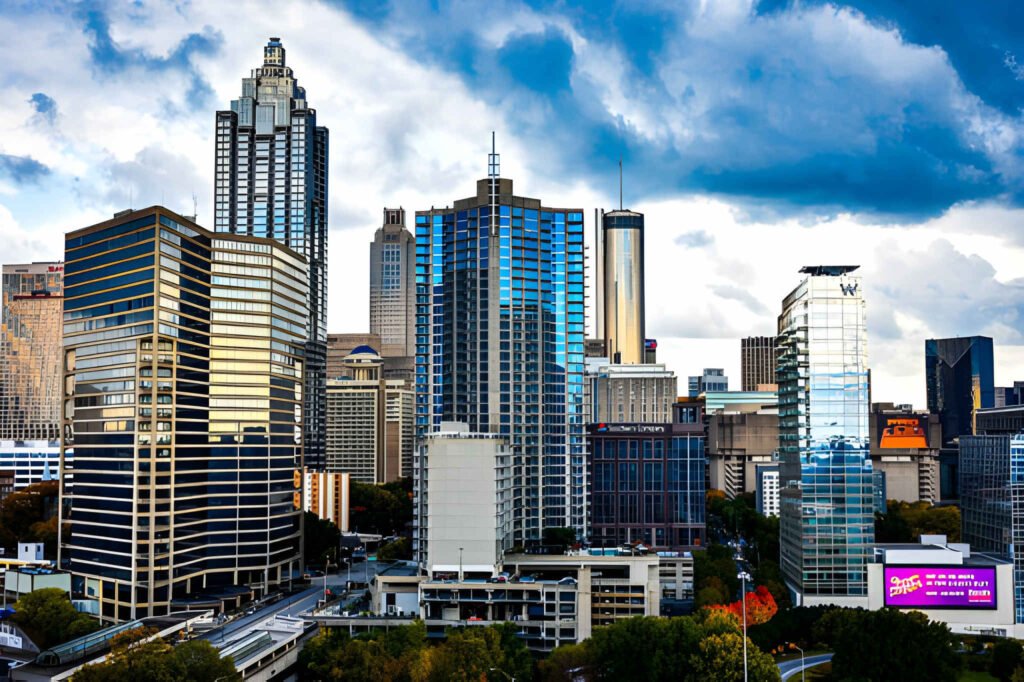
Atlanta is a city of relentless reinvention. Born from the ashes of the Civil War and forged in the fires of the Civil Rights movement, it has emerged as the undisputed capital of the New South—a sprawling, dynamic metropolis where Southern hospitality meets global ambition. Living in Atlanta means navigating a city of contrasts: lush tree canopies and relentless traffic, historic neighborhoods and gleaming skyscrapers, traditional roots and a progressive, forward-looking ethos. This guide cuts through the noise of “Hotlanta” to examine the intricate realities of life in the ATL, from its affordable suburbs to its booming film industry, providing a clear-eyed view of what it truly means to build a life in this phoenix city.
The ATL Vibe: Life in a City in a Forest
Atlanta’s unofficial motto, “the city in a forest,” is more than a slogan; it’s a defining characteristic. The urban landscape is draped in a stunning canopy of oak, pine, and magnolia trees, creating a sense of being in a verdant park rather than a concrete jungle. This natural beauty fosters an active, outdoor-oriented lifestyle, with the BeltLine trail acting as the city’s newest central artery. The vibe is a unique blend of laid-back Southern charm and a hustler’s ambition, driven by a massive influx of young professionals and corporations. It’s a Black mecca, a LGBTQ+ hub, and a international crossroads, all rolled into one. Life is often centered around your chosen enclave—from the bustling, walkable streets of Midtown to the suburban calm of Alpharetta—as the city’s vastness makes each area feel like its own town. The pace is fast but friendly; the people are ambitious but know how to enjoy a patio brunch or a hike in the North Georgia mountains.
The Sunbelt Value: Cost of Living
Atlanta offers a compelling value proposition, delivering a major metropolitan experience with a cost of living that, while rising, remains below that of coastal hubs.
A detailed budget for a single professional living in a one-bedroom apartment in a popular intown neighborhood like Old Fourth Ward or Virginia-Highland might look like this:
- Rent: $1,800 (for a 700-800 sq ft apartment)
- Utilities (Electricity – high due to AC, Gas, Internet): $220
- Groceries: $400
- Dining & Entertainment: $550 (a major social focus)
- Transportation (Car Payment, Insurance, Gas – a near-necessity): $750
- Miscellaneous: $300
This creates a baseline monthly expenditure of approximately $4,020. To afford this comfortably (using the standard guideline that rent should not exceed 30% of gross income), your pre-tax annual income would need to be at least $72,000.
This calculation is shown as:
\text{Required Annual Income} = \frac{\$1,800 \times 12}{0.3} = \$72,000This is a realistic salary for many professionals and underscores the city’s accessibility, especially when compared to salaries in similar industries in more expensive cities.
A City of Villages: Best Neighborhoods
Atlanta is a collection of fiercely independent neighborhoods, each with a distinct personality. The divide between “Intown” (inside the I-285 perimeter) and the suburbs is a major cultural and lifestyle marker.
- Intown:
- Midtown: The heart of Atlanta’s arts and LGBTQ+ community. Densely packed with high-rises, Piedmont Park, and cultural institutions. Highly walkable and vibrant.
- Buckhead: The historic epicenter of luxury and old money. Features high-end shopping (Lenox Square, Phipps Plaza), sprawling estates, and upscale condos. Traffic is notoriously bad.
- Old Fourth Ward (O4W) & Inman Park: Ground zero for the BeltLine-fueled renaissance. Trendy restaurants, craft breweries, and beautifully renovated historic homes mix with new construction. Energetic and expensive.
- Virginia-Highland & Morningside: Charming, tree-lined streets filled with bungalows, boutique shopping, and some of the city’s best restaurants. A family-friendly intown vibe.
- West End: A historic Black neighborhood with beautiful Victorian architecture, a rich cultural scene, and a strong sense of community, now experiencing gentrification.
- Suburbs:
- Decatur: A self-contained city with a liberal, small-town feel. Excellent public schools, a great downtown square, and a family-oriented atmosphere.
- Alpharetta & Roswell: Northside suburbs known for top-rated schools, massive corporate campuses, and master-planned communities. A long commute but a high quality of life.
- Sandy Springs & Dunwoody: Perimeter Center suburbs that have developed their own dense urban cores, offering a compromise between intown living and the suburbs.
The Southern Calculation: Renting vs. Buying
The decision to rent or buy in Atlanta is heavily weighted towards buying for those planning to stay, thanks to a healthy inventory of single-family homes and condos.
Renting offers flexibility to explore different intown neighborhoods and avoids the burden of a long commute while you settle in. The intown rental market is competitive.
Buying is a strong long-term financial move. The barrier to entry is lower than in any other major U.S. city. A 20% down payment on a median-priced home is a realistic goal for many dual-income households. Property taxes are relatively low, but homeowners insurance can be costly.
The financial break-even point is typically 4-6 years. A simplified formula illustrates the calculation:
\text{Break-Even Point (years)} = \frac{\text{Total Upfront Costs}}{\text{Annual Rent} - (\text{Annual Mortgage Interest} + \text{Annual Property Taxes} + \text{Annual Insurance} + \text{Annual Maintenance})}Upfront costs include down payment and closing costs. The high cost of commuting from the suburbs is a critical factor for many.
The Economic Engine: Job Market and Career Opportunities
Atlanta’s economy is a diversified powerhouse, a major reason for its sustained growth.
- Corporate Headquarters: A top-10 city for Fortune 500 and 1000 companies, including The Home Depot, UPS, Delta Air Lines, and Coca-Cola.
- Technology: A major tech hub nicknamed “Silicon Peach.” Hundreds of tech companies have established operations, from payment processing (Fiserv, Global Payments) to cybersecurity, drawn by a strong talent pipeline from Georgia Tech.
- Film & Television: The “Hollywood of the South.” A massive industry with billions in economic impact, employing thousands in production, post-production, and related services.
- Logistics & Supply Chain: Hartsfield-Jackson International Airport (the world’s busiest) and a massive network of interstates and rail lines make Atlanta a global logistics nexus.
- Healthcare & Higher Education: Major systems like Emory Healthcare and Piedmont Healthcare, alongside world-class universities, provide a stable employment base.
Educational Landscape: Best Schools and Universities
Atlanta Public Schools (APS) is a district of extremes, with a few nationally top-ranked schools and many struggling ones. This has created a competitive landscape for charter schools and magnet programs. The perception of school quality is the primary driver of movement to the suburbs.
For higher education, Atlanta is an elite destination:
- Georgia Institute of Technology (Georgia Tech): A top-ranked public research university, globally renowned for engineering and computer science.
- Emory University: A prestigious private research university with a world-class healthcare system and liberal arts college.
- Georgia State University: A massive public research university known for its innovation in downtown urban renewal and its diverse student body.
- Spelman College & Morehouse College: Historically Black colleges and universities (HBCUs) of immense historical and cultural significance, part of the Atlanta University Center consortium.
The Commute: Transportation and Traffic Reality
Traffic is Atlanta’s Achilles’ heel. The city is the archetype of car-dependent sprawl. While MARTA provides rail and bus service, its reach is limited mostly to the core intown areas and a few key corridors. For most residents, a car is an absolute necessity, and commutes on the infamous “Perimeter” (I-285) and the Downtown Connector (I-75/85) can be soul-crushing, often exceeding an hour each way. The BeltLine has revolutionized intown mobility for walkers, runners, and cyclists, but it is not a commuter solution for most.
The Housing Market: A Tactical Overview
The Atlanta housing market is hot, characterized by rising prices due to high demand and limited intown inventory, though it remains affordable by national standards.
- Average Home Prices: As of late 2023, the median sale price for a home in the Atlanta-Sandy Springs-Alpharetta metro is approximately $400,000. This provides access to single-family homes, a key draw.
- Most Affordable Areas to Buy a Home: Look to the south and southwest: College Park, East Point, Forest Park, and Clayton County. These areas offer significant value but often come with longer commutes.
- Luxury Real Estate Hotspots: Buckhead remains the classic luxury address. Tuxedo Park is particularly exclusive. New high-rise condos in Midtown and townhomes along the BeltLine in O4W command premium prices.
- Rental Market: Competitive intown, with prices rising steadily. The suburbs offer more affordable and larger rental options. Landlords typically require proof of income at 3x the monthly rent.
- Best Places to Invest & Future Growth Neighborhoods: Investment follows transit and the BeltLine. West End, Capitol View, Adair Park (near the BeltLine’s Westside Trail), and Southwest Atlanta near the Oakland City MARTA station are seen as having strong potential for appreciation.
The Cultural Repertoire: Things to Do
| Activity Category | Iconic Examples | Hidden Gems |
|---|---|---|
| Cultural Attractions | Georgia Aquarium, World of Coca-Cola, High Museum of Art | National Center for Civil and Human Rights, Trap Music Museum, Michael C. Carlos Museum |
| Parks & Outdoors | Piedmont Park, Atlanta BeltLine, Chattahoochee River National Recreation Area | Cascade Springs Nature Preserve, Doll’s Head Trail, Blue Heron Nature Preserve |
| Food & Drink | Southern Food (Busy Bee Cafe, Mary Mac’s Tea Room), James Beard-winning chefs | Buford Highway for international eats, Ponce City Market food hall, Sweet Auburn Curb Market |
| Nightlife | Clubs in Buckhead, Cocktail bars in Midtown, Dive bars in East Atlanta Village | The Clermont Lounge, Johnny’s Hideaway, Live music at The Earl |
Annual Festivals and Events: Music Midtown, Atlanta Jazz Festival, Peachtree Road Race (the world’s largest 10K), and Dragon Con (a massive sci-fi/fantasy convention) dominate the calendar.
Shopping: From the luxury of Buckhead’s malls to the alternative finds in Little Five Points and the international markets along Buford Highway.
Quality of Life & Relocation Essentials
- Raising a Family: Excellent in the suburbs with top-tier schools. Intown living is possible in areas like Decatur, Virginia-Highland, and certain APS school clusters, but it requires research and often comes at a premium.
- Crime and Safety: Property crime is a concern in most urban areas. Violent crime is concentrated in specific, economically disadvantaged neighborhoods. Researching specific neighborhoods is crucial.
- Healthcare and Hospitals: World-class. Systems like Emory Healthcare, Piedmont Healthcare, and Children’s Healthcare of Atlanta are nationally ranked.
- Weather and Climate: Humid subtropical climate. Summers are hot and humid, with temperatures often in the 90s. Winters are mild and short, with occasional ice storms that paralyze the city. Spring and fall are glorious but can bring severe thunderstorms and pollen that coats the city in a yellow-green film.
- Cost of Utilities: For a 2,000 sq ft house, average monthly costs are:
- Electricity (Georgia Power): $150 – $250 (high in summer with AC)
- Water/Sewer: $80 – $120
- Internet: $80 – $100
- Gas (if used for heating): $50 – $100 in winter
The Relocation Checklist
- Secure Employment: The economy is strong, but have a job lined up.
- Choose Your Neighborhood Based on Commute: Your daily drive will majorly impact your quality of life. Use Google Maps to test commute times during rush hour from potential homes.
- Get a Car: You will need a reliable one. Factor in insurance, tolls, and gas.
- Prepare for the Pollen: Invest in a good allergy medication if you are susceptible. The spring “pollenpocalypse” is real.
- Embrace the Culture: Explore the BeltLine, try the food on Buford Highway, and learn to both love and hate the traffic.
The Final Verdict: Pros and Cons of Living in Atlanta
Pros:
- A strong, diverse economy with abundant job opportunities across multiple sectors.
- A relatively affordable cost of living, especially for housing compared to other major metros.
- A rich cultural scene, incredible food, and a vibrant, diverse population.
- A beautiful, green “city in a forest” with plenty of outdoor activities.
- A generally mild climate with four distinct but manageable seasons.
Cons:
- Some of the worst traffic in the nation and a near-total reliance on cars.
- Sprawling geography that can lead to long commutes and a lack of cohesion.
- Humid summers and a brutal spring pollen season.
- Inequality is stark, and the quality of public schools is highly variable.
- While improving, public transportation is insufficient for most residents.
Living in Atlanta is a choice to prioritize economic opportunity, Southern culture, and a green urban environment over easy commutes and dense walkability. It is a city of immense potential and growth, offering a dynamic and affordable path to a high quality of life. For those who can master their commute and embrace its vibrant, patchwork identity, Atlanta provides a welcoming and exciting place to build a future.