1908 Architectural Preservation: Wood Column Repair and Restoration Guide
Repairing wood columns on a 1908 home requires a specialized approach rooted in historical preservation, balancing structural integrity with aesthetic fidelity. These elements are typically load-bearing, providing support to porches, balconies, or rooflines, and they often fail due to chronic moisture exposure at the base (the capital and plinth). The choice between targeted repair (patching, epoxy, splicing) and full replacement dictates the project's complexity, budget, and long-term value preservation.
The original materials, often dense species like heart pine or old-growth Douglas fir, possess a durability rarely matched by modern lumber. Therefore, the guiding principle must be **repair over replacement** whenever feasible. This interactive guide assists in diagnosing the damage, selecting appropriate conservation techniques, and preparing a thorough scope of work for specialized contractors.
Phase 1: Damage Diagnosis and Assessment
Identify the location, type, and extent of the damage to determine the necessary repair intervention. Select the characteristics that best describe the failure points.
1. Primary Failure Location
Base (Plinth/Footing)
Chronic moisture absorption; common failure point.
Capital (Top/Roofline)
Gutter overflow or flashing failure.
Mid-Shaft
Split seams, insect infestation, or impact damage.
2. Damage Type and Depth
Surface Rot / Paint Failure
Softwood exterior; structural core likely intact.
Deep Rot / Voiding
More than 50% of cross-section compromised. **STRUCTURAL.**
Insect Damage (Termite/Carpenter Ant)
Requires chemical treatment before repair.
3. Column Construction
Solid (Single Post)
Highest original strength; easier to splice/repair.
Hollow / Staved (Built-up)
Prone to seam separation; requires full internal inspection.
Decorative (Non-Bearing)
Replacement is simple; preservation is aesthetic only.
Phase 2: Preservation Verdict & Action Plan
Diagnose Damage Above
Select one characteristic from each of the three diagnostic categories to generate a preservation assessment and recommended course of action.
Phase 3: Specialized Preservation Techniques
Based on the preservation verdict, the following specialized techniques allow for repair without compromising the historic fabric of the 1908 structure. These methods require lifting the structural load temporarily (shoring) and careful material preparation.
When to Use: Surface rot (up to 1 inch deep) and crack filling where the structural core is sound.
Process: The damaged wood is carefully scraped and cleaned. A liquid penetrating epoxy consolidates the soft, degraded wood fibres, hardening them back into a structurally sound base. Deeper voids are filled with a thickened, high-density structural epoxy putty that can be sanded, shaped, and painted. This is the **most common method** for repairing column bases and capitals without full replacement.
Material Note: Ensure the epoxy system is compatible with historic wood, often requiring a slow-curing, low-viscosity resin for deep penetration.
When to Use: Rot or decay that compromises the bottom 12–24 inches of a load-bearing column.
Process: The compromised section is surgically removed (cut plumb). A new section of pressure-treated lumber or a composite base is spliced onto the remaining original shaft. For historical structures, the use of a hidden steel dowel or an internal metal bracket inserted into the core is necessary to ensure the splice carries the vertical load without relying on wood-to-wood adhesive alone. The new piece should ideally be made of historically compatible, rot-resistant wood (e.g., redwood, cedar, or composite).
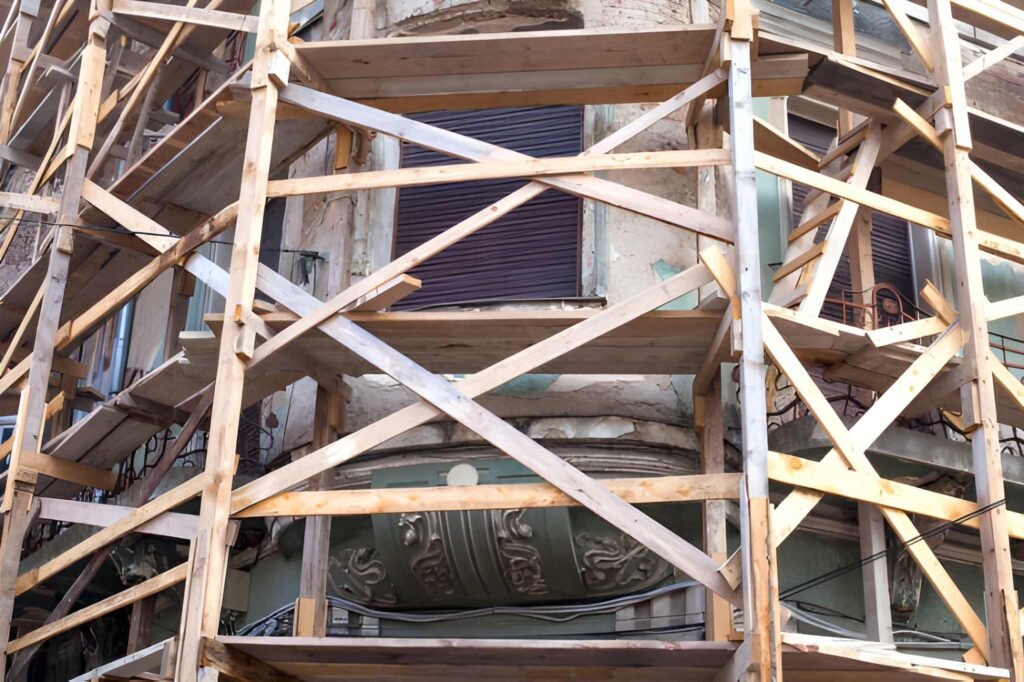
Safety Note: This technique **requires shoring the roof structure** using temporary jacks before cutting the load-bearing column.
No repair is permanent if the original moisture source is not eliminated. This is the most critical preventative step.
Action: Ensure the plinth base rests on a stone, concrete, or composite plinth that elevates the wood at least 6 inches above grade. Re-grade the surrounding porch or patio area to slope water away from the column base. Install **flashing** or a lead cap over the capital to prevent water intrusion from the roofline. Apply high-quality, oil-based primer and paint, ensuring all end-grain wood (top and bottom) is thoroughly sealed against moisture wicking.
Real Estate Impact: Documented, proactive moisture mitigation significantly enhances the long-term value and marketability of the restored element.
Phase 4: Material and Cost Analysis
The 1908 structure dictates material selection. While replacement is a last resort, if necessary, choosing the right material ensures longevity and aesthetic consistency. The following table compares options for replacement shafts.
Replacement Material Comparison
| Material | Preservation Score | Cost/Longevity | Notes |
|---|---|---|---|
| New Heart Pine/Cedar | High | High Cost / High Longevity | Best match for historic aesthetics. Requires diligent sealing; suitable for splicing. |
| FRP (Fiberglass Reinforced Polymer) | Low (Aesthetic Match Only) | Moderate Cost / Excellent Longevity | Zero maintenance; completely impervious to rot. Used when preservation fails or when durability is paramount. |
| Pressure-Treated Wood (Modern) | Medium | Low Cost / Moderate Longevity | Least durable option for exposed historical columns. Requires heavy priming and frequent inspection. |
Financial Scope and Contractor Selection
The cost of repair is highly dependent on labor specialization. Structural splicing and complex epoxy work require craftsmen trained in preservation carpentry, demanding higher hourly rates ($75 - $125+ per hour) compared to general carpentry.
A preservation project should always be managed by a contractor who provides **a detailed Scope of Work (SOW)** that includes: 1) Temporary shoring procedures. 2) Specific material call-outs (e.g., brand/type of epoxy). 3) A plan for eliminating the moisture source. A low bid often indicates a generalized approach that will lead to premature failure of the repair. Investing in the correct specialized labor guarantees the longevity of the historical asset.