Seattle does not simply exist; it simmers. It is a city of profound contradictions, where relentless drizzle fuels impossibly green landscapes, and a deep-seated Nordic reserve clashes with world-disrupting technological ambition. Living here means making peace with the gray, investing in a quality rain shell, and understanding that the famous “Seattle Freeze” is often just a slow thaw. In return, the city offers a breathtaking natural playground, a thriving economy that has reshaped the modern world, and a cultural ethos that prizes authenticity, coffee, and a specific type of understated cool. This guide delves into the reality of life in the Emerald City, a place of immense opportunity and equally immense challenge.
The Evergreen Economy: More Than Just Amazon
While Amazon and Microsoft are the twin titans that define Seattle’s modern economy, the city’s roots run deeper into aerospace, coffee, and a fiercely independent ethos. The presence of these tech behemoths has created a gravity well of talent, investment, and venture capital, transforming the city’s skyline and cost of living. However, the city’s identity remains a complex blend of its blue-collar maritime history and its white-collar digital future. This tension between old and new Seattle is palpable in its neighborhoods, its politics, and its daily life.
The Cost of Ambition: Living Expenses in the Emerald City
Seattle’s cost of living is among the highest in the nation, driven almost exclusively by a housing market supercharged by high-paying tech jobs. Washington State has no income tax, a significant financial benefit, though it leads to high sales and B&O (business and occupation) taxes to fund state services.
A detailed monthly budget for a tech professional living in a one-bedroom apartment in a central neighborhood like South Lake Union or Capitol Hill illustrates the financial reality:
- Rent: $2,200 – $2,700
- Utilities (Electricity, Heat): $120 – $180
- Internet: $80
- Groceries: $450
- Transportation (ORCA Pass): $99 (for full regional transit access)
- Dining & Entertainment: $700 (a robust foodie scene is a major draw)
This puts a baseline monthly expenditure between $3,649 and $4,209, not including savings, healthcare, or personal spending. This high baseline means a high salary is necessary to live comfortably within the city limits.
The Innovation Engine: Job Market and Career Opportunities
Seattle’s job market is dominated by technology, but it is far from a one-industry town.
- Technology: This is the undisputed king. Amazon’s urban campus in South Lake Union and Microsoft’s sprawling headquarters in nearby Redmond employ tens of thousands each. This ecosystem supports a massive network of other tech giants (Google, Facebook, Apple, Salesforce) and thousands of startups and mid-size companies (Tableau, Zillow, Expedia).
- Aerospace & Advanced Manufacturing: The Boeing Company remains a foundational employer, with major facilities in Everett and Renton. This legacy supports a robust advanced manufacturing and logistics sector.
- Retail & E-Commerce: Costco and Starbucks are headquartered in the area, and Nordstrom was founded in downtown Seattle. These companies provide a huge number of corporate jobs in logistics, marketing, and supply chain management.
- Healthcare & Life Sciences: The University of Washington Medical Center and Fred Hutchinson Cancer Research Center are world-leading institutions that drive a significant bio-tech and global health sector.
This economic diversity creates a strong job market, though competition is fierce for the most coveted roles at top companies.
A City of Distinct Villages: Finding Your Neighborhood
Seattle’s neighborhoods are isolated by hills and water, giving each a strong, distinct identity. Your choice will define your daily experience.
- Capitol Hill: The historic heart of Seattle’s counterculture and LGBTQ+ community. It is densely packed with restaurants, bars, music venues, and coffee shops. It’s vibrant, walkable, and constantly evolving, attracting a mix of students, artists, and young professionals.
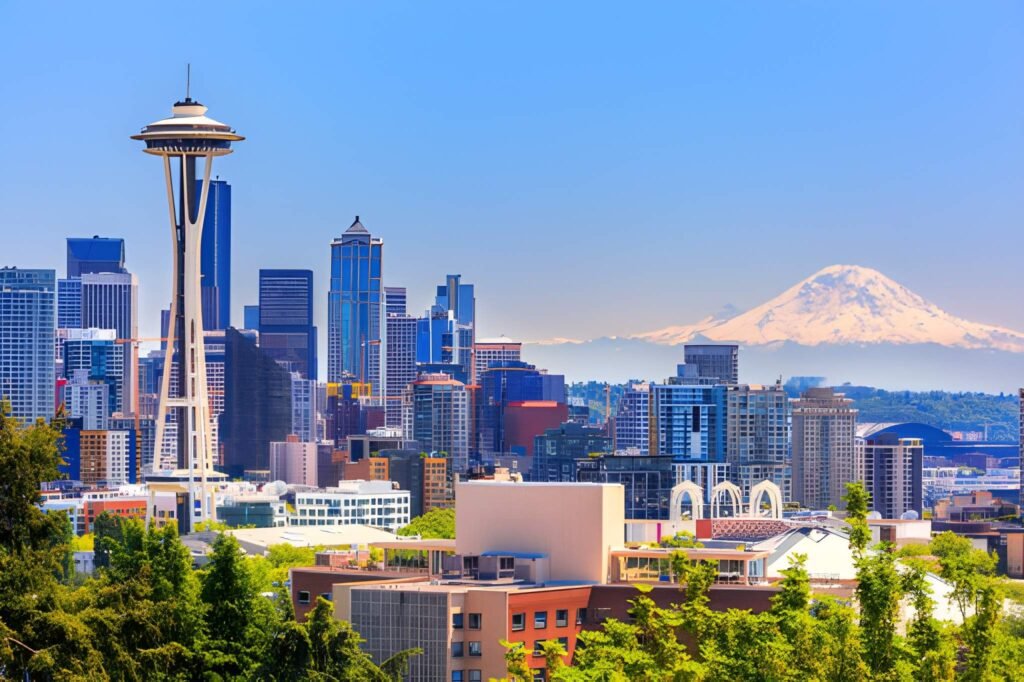
- Queen Anne: Divided into Upper and Lower, this neighborhood offers stunning views of the Space Needle and Elliott Bay. Upper Queen Anne is more residential and family-oriented, with a quaint village-like core. Lower Queen Anne (now often called “Uptown”) is closer to the Seattle Center and has a more urban feel.
- Fremont: Self-branded as “The Center of the Universe,” this neighborhood is quirky, creative, and home to tech offices. It features public art like the Fremont Troll, a Sunday market, and a lively brewery scene. It attracts a mix of engineers and artists.
- Ballard: Once a独立的 Scandinavian fishing village, it still retains its nautical charm with a working locks and a large marina. Its historic downtown is now a destination for some of the city’s best restaurants, breweries, and boutiques. It’s popular with young families and professionals.
- South Lake Union (SLU): The epicenter of Seattle’s transformation. Once an industrial zone, it is now Amazon’s company town, a forest of gleaming glass biotech labs and apartment towers. It feels new, clean, and bustling on weekdays but can be quiet on weekends.
- West Seattle: A peninsula separated from downtown by the Duwamish Waterway, it feels like a separate town. Its crown jewel is Alki Beach, with its boardwalk and views of the downtown skyline. It offers more affordable single-family homes and a laid-back, beachy vibe.
- The Eastside (Bellevue, Kirkland, Redmond): Not a Seattle neighborhood but a critical part of the metro equation. These cities across Lake Washington are home to Microsoft, Expedia, and a massive concentration of tech wealth. They offer top-rated schools, master-planned communities, and a more suburban, corporate feel that contrasts sharply with Seattle’s grittier energy.
The Pacific Northwest Calculation: Renting vs. Buying
The Seattle housing market is notoriously competitive and expensive. The decision to rent or buy is a major financial milestone.
The Case for Renting: Renting offers flexibility, crucial for newcomers testing neighborhoods or tech workers who may change jobs frequently. It also provides a hedge against a market that can be volatile. The high cost of entry for buying makes renting a long-term reality for many.
The Case for Buying: For those committed to staying 5+ years, buying has been an incredibly powerful wealth-building tool. Seattle’s constrained geography (water and mountains) limits sprawl, and its strong job growth creates relentless demand. Building equity helps offset rising rental costs.
A Simplified Financial Comparison:
Consider a $750,000 condo in Capitol Hill.
- Renting: Monthly rent for a similar property: ~$2,800. This is a pure expense.
- Buying:
- Down Payment (20%): $150,000
- Mortgage Principal & Interest (30-year fixed at 7%): ~$3,990/month
- Property Taxes (King County, effective rate ~0.85%): \frac{0.85}{100} \times 750,000 = \$6,375 per year, or ~$531/month
- Homeowners Insurance & HOA Fee: ~$700/month
- Total Monthly Cost: ~$5,221
This calculation shows a significant monthly premium for buying. However, the principal portion of the mortgage payment (~$700 in the first month) builds equity. The break-even point is typically around 5-7 years, after which owning becomes financially advantageous compared to renting an equivalent property.
The Housing Market: Bungalows, View Condos, and Waterfront Estates
The Seattle housing stock is a mix of classic Craftsman bungalows, mid-century ramblers, and new, dense urban construction.
Average Home Prices: The median home price within the city of Seattle is consistently one of the highest in the U.S., typically hovering between $800,000 and $850,000.
Most Affordable Areas to Buy a Home: Affordability is found in the city’s southern neighborhoods like South Park, Georgetown, and Rainier Valley, or in farther-flung suburbs like Burien or Shoreline. These areas offer access to the city with longer commutes and more potential for future appreciation.
Luxury Real Estate Hotspots: The luxury market is concentrated in:
- Medina & Clyde Hill: The ultimate Eastside addresses, home to Bill Gates and other tech billionaires, with sprawling, private compounds on Lake Washington.
- Laurelhurst & Madison Park: Waterfront and view properties in these established Seattle neighborhoods command multi-million dollar prices.
- Downtown/Belltown: Ultra-luxury high-rise condos with panoramic sound and mountain views.
- Queen Anne: Historic homes with some of the best views in the city.
Rental Market: The market is competitive, with a large supply of new apartment buildings in areas like SLU and Denny Triangle. Expect to pay:
- Studio: $1,700 – $2,200
- 1-Bed: $2,100 – $2,800+
- 2-Bed: $2,800 – $3,800+
Investing in the Emerald City: Real Estate Investment and Growth
Seattle’s geographic constraints and economic strength make it a perennial candidate for long-term real estate investment.
- Best Places to Invest: Areas with upcoming light rail expansions are prime targets. The Judkins Park station area, connecting the Central District and the Eastside, is poised for growth. Northgate has already seen significant investment with its new light rail station and redevelopment.
- Future Growth Neighborhoods: The Mount Baker and Rainier Beach areas in South Seattle, slated for light rail expansion, are seeing increased developer interest. The continued development of the Denny Triangle and the reimagining of the Seattle Center campus are also major growth areas.
The Commute: Hills, Water, and the Emerald City’s Arteries
Seattle’s topography makes transportation a unique challenge.
- Public Transit: King County Metro operates an extensive bus system, and Sound Transit runs the Link light rail, which is expanding dramatically. A light rail line now connects Northgate to downtown and the airport, with extensions to the Eastside, Lynnwood, and Tacoma underway. The system is becoming increasingly viable for more commuters.
- The Car: Traffic is among the worst in the nation. The geography creates infamous chokepoints like the I-5 and I-90 interchanges and the SR 520 and I-90 floating bridges. A car is still necessary for many errands and weekend trips, but a commute by car can be soul-crushing.
- Ferries: The Washington State Ferries system is a vital commuting route for residents of Bainbridge Island, Bremerton, and the Kitsap Peninsula, offering a beautiful, if sometimes delayed, alternative to driving.
- Biking/Walking: Seattle is a hilly city, making biking challenging for some. However, the Burke-Gilman Trail provides a 27-mile mostly flat pathway for cyclists and pedestrians, connecting several neighborhoods.
Life in the Gray: Culture, Coffee, and the Great Outdoors
Seattle’s culture is introverted, active, and deeply connected to its environment.
- The Coffee Culture: This is more than a stereotype; it’s a fundamental part of the social fabric. Beyond Starbucks, the city is filled with independent roasters and cafes that serve as unofficial offices and meeting spots.
- The Great Outdoors: This is the primary draw. Within the city, Discovery Park, Green Lake, and Golden Gardens offer immense green spaces. Within a short drive, you can be hiking in the Cascade Mountains or on the Olympic Peninsula. The proximity to nature is Seattle’s greatest amenity.
- The Music Scene: The legacy of Nirvana, Pearl Jam, and Jimi Hendrix is everywhere. While the era of grunge is past, the city still has a vibrant live music scene in venues like The Showbox and Neumos.
- The Food Scene: Seattle is a seafood paradise, with salmon, Dungeness crab, and oysters being staples. The restaurant scene is innovative and heavily influenced by fresh, local, and sustainable ingredients. The food truck and brewery scenes are also top-notch.
- The “Seattle Freeze”: The cultural phenomenon where locals are famously friendly but slow to form deep friendships. It’s not unfriendliness, but rather a cultural reserve and a contentment with existing social circles. Breaking through requires initiative and patience.
The Family Equation: Schools, Safety, and Suburbs
The quest for top-rated schools is a primary driver for many families to look to the suburbs.
- Best Schools & Universities: Seattle Public Schools are a mixed bag, with some highly sought-after programs but overall performance that lags behind many Eastside districts. The suburbs of Bellevue, Lake Washington (Kirkland/Redmond), and Shoreline are known for their excellent public school systems. For higher education, the University of Washington is a world-class public research university and a top employer.
- Best Suburbs: Bellevue (urban and high-tech), Kirkland (waterfront charm), Redmond (Microsoft central), Shoreline, and Bothell are top choices for families seeking more space and top schools. The islands (Bainbridge, Vashon) offer a slower, rural pace with a ferry commute.
- Raising a Family & Safety: Property crime, especially car break-ins and package theft, is a significant issue in many Seattle neighborhoods. Violent crime rates are generally lower on the Eastside and in the northern suburbs. The city has been grappling with a visible homelessness crisis, which impacts perceptions of safety in certain downtown-adjacent areas.
The Practicalities: Rain, Healthcare, and Relocation
- Weather and Climate: Seattle has a marine west coast climate. It is not the rainfall volume that defines it (it gets less rain than New York City), but the duration. The winters are characterized by months of gray skies and a persistent, light drizzle. Summers, however, are absolutely perfect—sunny, dry, and warm with long daylight hours, making the “Juneuary” gloom a distant memory.
- Healthcare: The region is a major healthcare hub. The University of Washington Medical Center and Swedish Medical Center are nationally ranked in numerous specialties. The presence of the Fred Hutch research center also places it at the forefront of cancer treatment.
- Relocation Checklist:
- Secure housing, understanding that neighborhood choice is paramount.
- Invest in a high-quality waterproof jacket (Gore-Tex is a local uniform).
- Plan your commute; if working on the Eastside, consider living there to avoid the cross-lake bridge traffic.
- Get a reusable coffee cup and an ORCA card.
- Embrace the outdoor lifestyle; it’s the best way to combat the winter grays.
Seattle is a city that rewards those who lean into its unique rhythm. It demands a tolerance for weather and a proactive approach to social life. But for those who appreciate natural beauty, intellectual stimulation, and a culture that values authenticity over pretense, it offers a deeply rewarding place to live. It is a city of evergreens and ever-ambition, where the rain nourishes both the forests and the ideas that have changed the world.