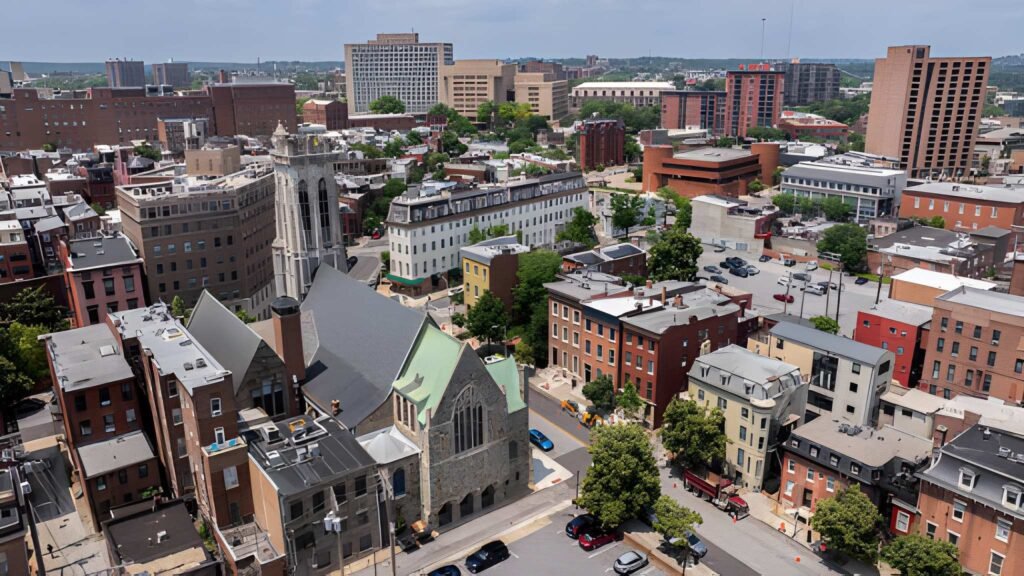
Baltimore is a city of undeniable character, a place where grand American history, world-class institutions, and stark urban challenges coexist on a human scale. Living in Baltimore means engaging with a city that is unapologetically authentic, deeply affordable, and fiercely proud. It is a city of neighborhoods—or, as locals call them, “ahmbs”—each with a distinct identity and a powerful sense of community. This guide moves beyond the headlines to examine the intricate realities of life in Charm City, from its shockingly low cost of living to its complex social fabric, providing a clear-eyed view of what it truly means to build a life in this misunderstood and deeply rewarding American city.
The Baltimore State of Mind: Life in a City of Neighborhoods
Life in Baltimore is defined by its parochialism. Residents don’t just say they’re from Baltimore; they’re from Federal Hill, from Hampden, from Canton. This hyper-local identity fosters a powerful sense of belonging and community support that is rare in American cities. The pace is slower, more conversational; people have time to talk. The vibe is gritty, witty, and self-deprecating, with a defiant pride known locally as “Baltimore.” It’s a blue-collar city with white-collar institutions, a place where a Johns Hopkins researcher and a longshoreman might share a beer at the same corner bar. The city possesses a raw, creative energy—a breeding ground for artists, filmmakers, and musicians drawn by the low costs and lack of pretense. It’s a city that demands you to look past its surface flaws to discover its immense charm, hence its nickname.
The Affordability Advantage: Cost of Living
Baltimore’s most powerful asset is its affordability. It offers a historic, coastal city experience at a cost of living that feels like a relic from another era, especially for those coming from the Northeast Corridor.
A detailed budget for a single professional living in a one-bedroom apartment in a popular neighborhood like Federal Hill or Hampden might look like this:
- Rent: $1,400 (for a 700-800 sq ft apartment)
- Utilities (Electricity, Gas, Internet): $200
- Groceries: $350
- Dining & Entertainment: $450 (a strong bar and restaurant scene)
- Transportation (Many walk/bike; car costs estimated): $400 (insurance is high)
- Miscellaneous: $250
This creates a baseline monthly expenditure of approximately $3,050. To afford this comfortably (using the standard guideline that rent should not exceed 30% of gross income), your pre-tax annual income would need to be at least $56,000.
This calculation is shown as:
\text{Required Annual Income} = \frac{\$1,400 \times 12}{0.3} = \$56,000This accessibility is a primary driver attracting artists, remote workers, and young professionals.
A City of “Ahmbs”: Best Neighborhoods
Your choice of neighborhood is the single most important factor in your Baltimore experience.
- Inner Harbor & Downtown: The tourist core, with attractions like the National Aquarium. Mostly offices and high-rises; less residential but changing with new developments.
- South Baltimore:
- Federal Hill & Locust Point: Popular with young professionals and post-grads. Bustling with bars and restaurants on Cross Street, close to the harbor and stadiums. Has a lively, fratty energy.
- Riverside & South Baltimore: Slightly quieter than Fed Hill, with a mix of row homes and a strong community feel. Great access to parks and the water.
- Southeast Baltimore:
- Fells Point & Canton: Historic waterfront neighborhoods. Fells Point has cobblestone streets, historic pubs, and a maritime feel. Canton is more modern, with a large square and a vibrant, party-oriented social scene.
- Highlandtown: A historic working-class, predominantly Greek and Hispanic neighborhood that is now a hotspot for artists and entrepreneurs, offering incredible value.
- North Baltimore:
- Hampden: The quirky, hipster heart of Baltimore. Known for its unique boutiques, fantastic restaurants, and the annual HonFest. A mix of artists, young families, and lifelong residents.
- Charles Village & Remington: Home to Johns Hopkins University. Charles Village has colorful “painted lady” row homes and a academic vibe. Remington is a rapidly gentrifying area with acclaimed restaurants.
- Mount Vernon: The city’s historic cultural center. Features beautiful architecture, the Washington Monument, the Walters Art Museum, and a growing LGBTQ+ community. Sophisticated and walkable.
- West Baltimore: Areas like Pigtown and Hollins Market are seeing investment due to proximity to downtown and the University of Maryland BioPark, but much of the West Side suffers from extreme disinvestment and poverty.
The Buyer’s Market: Renting vs. Buying
The decision in Baltimore is heavily skewed towards buying due to incredibly low purchase prices, making homeownership an achievable goal for many.
Renting offers flexibility to explore different neighborhoods and is a low-commitment way to experience the city. The rental market is soft, with plenty of options.
Buying is where Baltimore stands apart. It is possible to purchase a move-in ready rowhome in a stable, desirable neighborhood for under $300,000. This low barrier to entry is the city’s biggest draw.
However, the financial calculation must include:
- High Property Taxes: Though rates are high, the low assessment values keep the absolute dollar amount manageable for most.
- High Insurance: Homeowners and auto insurance rates are above the national average.
- Maintenance Costs: Baltimore’s housing stock is old. Roofs, plumbing, and electrical systems require vigilant upkeep.
The break-even point can be very short due to low purchase prices. The formula must account for this:
\text{Break-Even Point (years)} = \frac{\text{Total Upfront Costs}}{\text{Annual Rent} - (\text{Annual Mortgage Interest} + \text{Annual Property Taxes} + \text{Annual Insurance} + \text{Annual Maintenance})}The Anchor Institution Economy: Job Market and Career Opportunities
Baltimore’s economy is anchored by massive, stable institutions that provide a buffer against economic downturns.
- Healthcare & BioScience: The undisputed core. Johns Hopkins Hospital and The University of Maryland Medical System are not just hospitals; they are city-sized economic engines, employing tens of thousands in research and patient care.
- Education: Johns Hopkins University (JHU) is a world-renowned research university. Other major institutions include the University of Maryland, Baltimore (UMB) and Loyola University Maryland.
- Government & Military: A significant number of federal, state, and city government jobs. The presence of Fort Meade (home to the NSA) nearby is a major employer for those with security clearances.
- Professional Services: A robust ecosystem of law, finance, and consulting firms supports the anchor institutions.
- Port of Baltimore: A major port for automobile and farm equipment shipping, supporting thousands of blue-collar jobs in logistics and trade.
Educational Landscape: Best Schools and Universities
Baltimore City Public Schools faces profound challenges. While there are a handful of excellent magnet and charter schools (e.g., Baltimore Polytechnic Institute), the system overall is underfunded and struggling. This is the primary reason families with means often move to the surrounding counties.
For higher education, Baltimore is an elite destination:
- Johns Hopkins University (JHU): A world-class private research university, consistently ranked among the top national universities.
- University of Maryland, Baltimore (UMB): A premier public health, law, and human services university.
- University of Baltimore (UB): A public university focused on business, law, and public affairs.
- Loyola University Maryland & Maryland Institute College of Art (MICA): A respected private Jesuit university and a top-ranked art school, respectively.
The Commute: Transportation and Reality
Baltimore is a drivable city. While it has a public transit system (buses, a subway line, and a light rail line), its reach is limited and reliability can be an issue. The Charm City Circulator provides free bus service in the central core. For most residents, a car is a necessity for daily life. Traffic congestion is mild compared to Washington, D.C., or Philadelphia. Commute times are generally manageable, and parking is far easier and cheaper than in other major Northeast cities.
The Housing Market: A Tactical Overview
The Baltimore housing market is one of the most affordable for a major city on the East Coast, characterized by a large inventory of historic rowhomes.
- Average Home Prices: As of late 2023, the median sale price for a home in Baltimore City is approximately $190,000. This is the key number that draws people in.
- Most Affordable Areas to Buy a Home: Much of the city is affordable. Areas like Highlandtown, Lauraville, and Patterson Park offer incredible value and strong community bonds.
- Luxury Real Estate Hotspots: Roland Park (the historic epicenter of old money), Homeland, and Guilford feature grand single-family homes and manicured lawns. Waterfront condos in Harbor East and Fells Point also command premium prices.
- Rental Market: Soft and favorable to renters. It’s easy to find a spacious one-bedroom in a good neighborhood for well under $1,500. Landlords are typically less stringent with requirements than in other cities.
- Best Places to Invest & Future Growth Neighborhoods: Investment follows anchor institutions. Station North (arts district), Greenmount West, and Pigtown (near UMB BioPark) are seen as having strong potential for appreciation as development pushes outward.
The Cultural Repertoire: Things to Do
| Activity Category | Iconic Examples | Hidden Gems |
|---|---|---|
| Cultural Attractions | The Walters Art Museum, Baltimore Museum of Art, American Visionary Art Museum | Baltimore Museum of Industry, B&O Railroad Museum, Evergreen Museum & Library |
| Parks & Outdoors | Patterson Park, Druid Hill Park, Inner Harbor Promenade | Cylburn Arboretum, Gwynns Falls Trail, Fort McHenry |
| Food & Drink | Maryland Blue Crabs, Berger Cookies, Pit Beef | Thames Street Oyster House, Ekiben (Asian fusion), Papermoon Diner |
| Nightlife | Bars in Fells Point, music venues in Station North, clubs in Power Plant Live | The Crown, WC Harlan (speakeasy), Ottobar |
Annual Festivals and Events: Artscape (one of the largest free arts festivals in the US), Light City, HonFest, and Preakness Stakes (the second leg of the Triple Crown).
Shopping: From the high-end boutiques of Harbor East to the quirky finds in Hampden’s “Avenue” and the antiques in Fells Point.
Quality of Life & Relocation Essentials
- Raising a Family: Challenging within the city limits due to the public school system. Many families who stay navigate the charter/magnet lottery or opt for private schools. The surrounding counties (Howard, Baltimore) are the primary choice for families seeking strong public schools.
- Crime and Safety: This is Baltimore’s most significant challenge. Property crime is widespread. Violent crime is concentrated in specific, economically disadvantaged areas but can spill over. Vigilance, situational awareness, and researching specific blocks are non-negotiable.
- Healthcare and Hospitals: World-class. Johns Hopkins Hospital is consistently ranked among the best hospitals in the world. The University of Maryland Medical Center is also a top-tier facility.
- Weather and Climate: A humid subtropical climate. Summers are hot and humid. Winters are cold and can bring snow and ice. Spring and fall are pleasant.
- Cost of Utilities: For a 1,200 sq ft rowhome, average monthly costs are:
- Electricity (BGE): $120 – $180
- Gas (BGE): $150 – $250 (in winter)
- Water/Sewer: $80 – $120 (a significant and rising cost)
- Internet: $70 – $100
The Relocation Checklist
- Secure Employment: Have a job lined up, ideally with one of the anchor institutions.
- Choose Your Neighborhood Meticulously: Baltimore is a block-by-block city. Visit at different times of day. Talk to potential neighbors.
- Get a Car: You will need a reliable one. Factor in the higher-than-average insurance costs.
- Embrace the Community: Baltimore rewards those who get involved. Attend neighborhood association meetings, shop locally, and engage with your neighbors.
- Manage Expectations: Be prepared for the visible inequality, the city’s infrastructural challenges, and a level of grit that is part of its character.
The Final Verdict: Pros and Cons of Living in Baltimore
Pros:
- Exceptionally affordable housing, making homeownership a realistic goal.
- A strong, stable economy anchored by world-class healthcare and education institutions.
- A rich history, vibrant arts scene, and incredible character.
- A strong, authentic sense of community and fierce civic pride.
- A manageable scale and drivable streets with minimal traffic compared to other Northeast cities.
Cons:
- Significant challenges with crime and public safety in many areas.
- A public school system that is largely failing its residents.
- City services that can be slow and unreliable compared to the counties.
- High property taxes and insurance rates relative to home values.
- The physical scars of blight and abandonment are widespread.
Living in Baltimore is a conscious choice to embrace authenticity, community, and affordability over polish and ease. It is not for everyone. It requires resilience, a willingness to engage, and an eye for potential. But for those who choose to invest in it—both financially and emotionally—Baltimore offers a deeply rewarding, character-rich life that is increasingly rare in modern American cities. It is a place where you can make a mark, afford a home, and become part of a story much larger than yourself.