
The foundation of a truly sustainable home is not laid with its first concrete pour, but with the first line of its floor plan. The arrangement of rooms, the placement of windows, the flow of space—these initial design decisions lock in a home’s environmental performance for decades. An eco-friendly floor plan operates as a passive machine, working in concert with its site and climate to minimize energy consumption, maximize comfort, and reduce its overall footprint. This approach moves beyond simply selecting green materials and into the realm of architectural strategy, where orientation, form, and spatial relationships become the primary tools for achieving sustainability. It is a holistic philosophy that considers sun paths, wind patterns, and the daily rhythms of life to create a dwelling that is not just built on the land, but is intelligently integrated with it.
The Primacy of Passive Design
Before considering any active system like solar panels or high-efficiency furnaces, the most impactful green strategy is passive design. This is the art and science of using the natural environment to heat, cool, and light a home, with little to no mechanical assistance. The floor plan is the engine of this strategy.
Solar orientation is the single most critical factor. In the Northern Hemisphere, a southern exposure is a tremendous asset. A well-designed floor plan places the most frequently used living spaces—the kitchen, living room, and dining area—along this southern facade. These rooms benefit from the low-angle winter sun, which penetrates deep into the space, providing free solar heat gain. To manage the high summer sun, the design incorporates passive shading elements. A roof overhang of a calculated depth, based on the home’s latitude, will block the intense summer rays while still admitting the winter light. Deciduous trees on the south side provide a similar effect, offering shade in the summer and allowing light through in the winter after they shed their leaves.
The concept of zoning within the floor plan is equally important. This involves grouping rooms with similar thermal and functional needs. Day-use areas like the living room and kitchen form the “day zone,” positioned for solar gain and natural light. Night-use areas like bedrooms and offices form the “night zone.” These spaces, which require less solar heating and more quiet, are ideally placed on the northern side of the home, where temperatures are cooler and more stable. Buffer spaces, such as garages, laundry rooms, and closets, are strategically located on the western and eastern sides. These rooms act as thermal insulators, protecting the core living spaces from the less desirable, low-angle heat of the rising and setting sun. This thoughtful zoning creates a thermal hierarchy that reduces the load on the HVAC system.
Natural ventilation is another principle dictated by the floor plan. Cross-ventilation is achieved by placing operable windows on opposite or adjacent sides of a room. This allows prevailing breezes to sweep through the space, flushing out hot air and providing cooling without air conditioning. The floor plan should facilitate this airflow by creating open pathways, perhaps using transom windows or high clerestory windows that allow hot air to stratify and escape. A well-ventilated floor plan considers the local wind patterns and channels them for comfort.
Fundamental Layouts for Efficiency
Certain fundamental architectural forms lend themselves naturally to eco-friendly design. The choice among them involves a balance of efficiency, cost, and aesthetic preference.
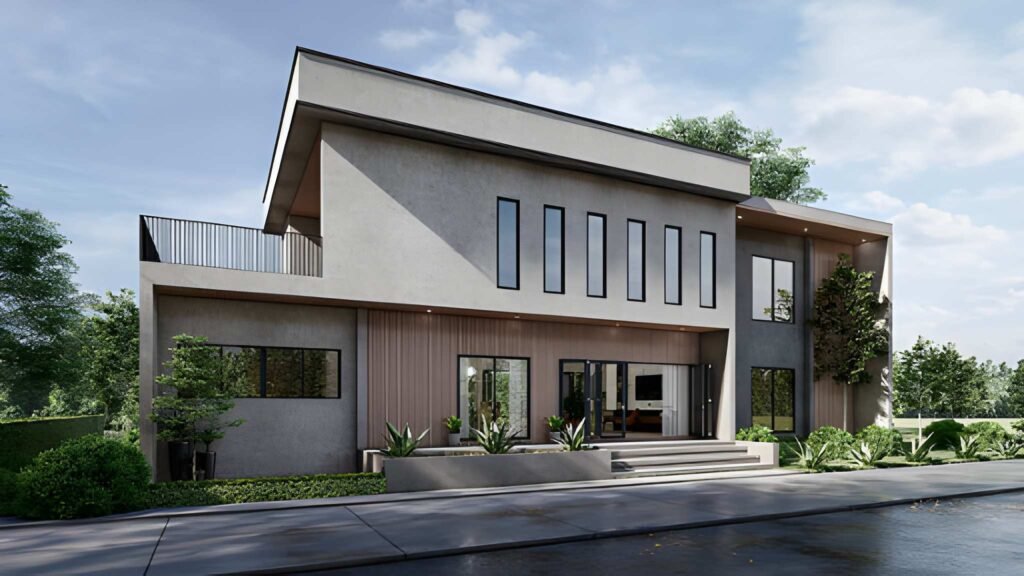
The simple rectangular or square footprint is one of the most efficient forms. It minimizes the surface-area-to-volume ratio, meaning there is less exterior wall and roof area through which heat can escape or enter. A two-story design compounds this efficiency, further reducing the footprint and the roof area for a given amount of square footage. While a simple box might seem mundane, it provides a highly cost-effective and thermally efficient shell that can be made dynamic with thoughtful detailing and site placement.
The open floor plan is a powerful tool in the sustainable arsenal. By reducing the number of interior partitions, it allows light and air to penetrate deep into the home’s core. An open living, dining, and kitchen area on the south side can be flooded with daylight, eliminating the need for electric lights during the day. This layout also promotes thermal transfer; heat gained from the sun in one area can naturally circulate to warm adjacent spaces. However, the modern open plan must be tempered with acoustic consideration. The use of partial walls, built-in shelving as dividers, or strategically placed sliding barn doors can define spaces without completely closing them off, maintaining the benefits of openness while allowing for privacy and noise control.
Table: Core Eco-Friendly Floor Plan Layouts
| Layout Type | Key Characteristics | Sustainability Advantages | Potential Challenges |
|---|---|---|---|
| Simple Rectangular Footprint | Compact, 2-story preferred, minimal protrusions. | Excellent surface-area-to-volume ratio; reduced heat loss/gain; cost-effective to build and insulate. | Can be perceived as bland; requires creative design to avoid a “boxy” feel. |
| Open Plan with Zoning | Fluid living spaces; defined thermal zones (day, night, buffer). | Maximizes daylight penetration and natural ventilation; allows for passive solar heating distribution. | Requires careful acoustic design; can lack privacy; may lead to heating/cooling entire space when only part is in use. |
| Courtyard or “U” Shape | Home wraps around a central outdoor space. | Creates a sheltered microclimate; provides daylight and ventilation from two or more sides for many rooms. | Larger footprint increases exterior wall area and cost; can be land-intensive. |
| Linear / “Shotgun” | Narrow and deep floor plan, often aligned east-west. | Ideal for narrow urban lots; facilitates superb cross-ventilation; allows daylight to front and back. | Can feel cramped if too narrow; requires careful window placement for privacy on tight lots. |
The courtyard plan, where the home wraps around a central outdoor room, is another compelling model. This layout provides multiple facets of the home with southern exposure and allows for cross-ventilation from several directions. The courtyard itself becomes a temperate microclimate, protected from winds and often featuring landscaping that provides evaporative cooling. While its footprint is larger than a simple rectangle, its ability to bring light and air into the heart of the home is unparalleled.
Key Rooms Reimagined
An eco-friendly floor plan reconsiders the design of individual rooms to enhance their performance and reduce their resource consumption.
The Great Room as a Solar Collector: The modern “great room” is most effective when it is positioned as the home’s thermal heart. Located on the southern side, with ample high-performance glazing, it becomes a sunspace. Thermal mass inside this room is crucial for moderating temperature swings. A dark-colored concrete slab floor or an interior brick or stone wall will absorb heat during the day and slowly radiate it back throughout the night, smoothing out the daily temperature cycle.
The Kitchen as a Functional Core: The kitchen’s placement is about more than proximity to the garage. In a sustainable plan, it is often open to the southern great room to share light and heat. Key considerations include placing the refrigerator and pantry on interior or northern walls to reduce their cooling load. A “working porch” or mudroom off the kitchen provides an airlock entry, preventing conditioned air from escaping every time a door is opened. Ample windows over the sink and prep areas provide task lighting and ventilation for cooking odors and heat.
Bedrooms as Quiet Sanctuaries: As part of the “night zone,” bedrooms benefit from a location on the north or east side of the home. East-facing bedrooms capture the gentle morning sun, while north-facing ones remain cool and dark, ideal for sleeping in. Operable windows on at least two walls should be a standard for cross-ventilation, providing fresh air and cooling night-time breezes. Thoughtful placement away from street noise and active day zones ensures acoustic privacy.
The Strategic Bathroom: Bathrooms are major consumers of water and energy (for hot water and ventilation). Grouping bathrooms back-to-back, or “stacking” them in a two-story plan, simplifies plumbing runs, reducing both initial material costs and long-term heat loss from pipes. Locating them on interior walls also helps, but requires a high-quality ventilation system with timer switches or humidity sensors to efficiently remove moisture and prevent mold, without wasting energy by running continuously.
Incorporating Adaptive and Flexible Spaces
The greenest home is one that can adapt over time, avoiding the need for a future addition or, worse, demolition. Flexible floor plans build in resilience to changing family needs and lifestyles.
The concept of the “room that is not a room” is powerful. An alcove off the living area can serve as a home office, a reading nook, or a play space. A flex room near the entryway might be a formal dining room, a guest bedroom, or a home office. Designing these spaces with non-load-bearing walls or large openings allows their function to evolve.
The Murphy bed is a classic space-saving solution, but the principle extends further. Built-in, wall-mounted desks and fold-down tables can create a functional office that disappears when not in use. Loft spaces in a room with a high ceiling can provide a secluded sleeping area or storage, effectively doubling the utility of a room’s volume. These strategies often allow a smaller, more efficient overall floor plan to live much larger, reducing the resource consumption from the outset.
Outdoor living spaces are a critical extension of the floor plan. A covered porch, a screened-in patio, or a deck directly accessible from the main living area effectively increases the usable square footage of the home for much of the year. By creating comfortable outdoor rooms, the pressure to build a larger, conditioned interior space is reduced. These areas provide a direct connection to nature, enhancing well-being and encouraging passive cooling through outdoor living during temperate seasons.
Material and System Integration
The floor plan must be designed with the integration of specific systems and materials in mind. A plan that calls for a polished concrete floor for thermal mass must be supported by a structural design that can handle the load. The placement of the mechanical room is a critical, yet often overlooked, decision. It should be located centrally to minimize the length of duct and pipe runs, improving efficiency and reducing heat loss. In a two-story home, placing the HVAC system on the second floor, or using a stacked design with two small units, is often more efficient than trying to force air from a basement unit up to the top of the house.
The roof design is dictated by the floor plan, and vice-versa. A simple, strong roofline is easier to insulate effectively and less prone to leaks. It also provides an ideal, uninterrupted plane for solar panels. The floor plan should be conceived in tandem with the roof design to ensure that southern roof faces are large and unshaded, ready to host a future PV array.
In the end, an eco-friendly floor plan is a master plan for a life of lower impact and higher comfort. It is a thoughtful diagram that acknowledges the path of the sun, the direction of the wind, and the way a family moves through its day. It proves that the most powerful green technology is not a gadget bolted onto a conventional house, but the intelligent configuration of the house itself. It is the silent, constant workhorse of sustainability, performing its duty every minute of every day, without a single watt of electricity.